
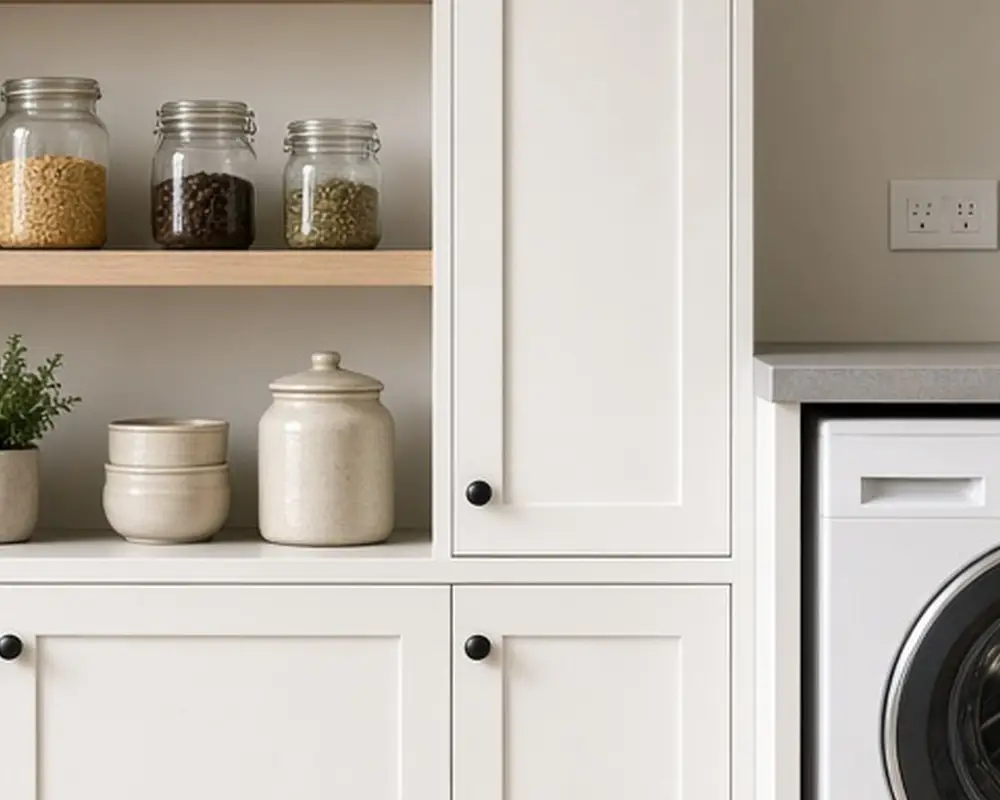
11 Shared Pantry and Laundry Walls for Tight Floor Plans

On this page15 sections
- Three ground rules
- Split the wall down the middle
- Counter over the machines, shelves above
- Closed cabinets for chemicals
- Glass-front pantry doors
- A pull-out pantry beside the washer
- Bulk storage up high
- Curtain or doors to hide both
- Pegboard for tools and mops
- Hamper in a base drawer
- Labels on everything
- Light and ventilation
- Making it feel like one design
- When the space is a closet, not a wall
- Quick questions
In a lot of small homes and apartments, there is one utility wall, and it has to do two jobs. The washer hookups are there, and so is the only spot for extra food storage. Builders often call this a pantry laundry, and it can be either a clever multitasking space or a confusing mess where rice sits beside bleach.
The difference is planning. A shared wall works when each function has a clear zone, the materials suit both food and water, and nothing chemical can drip onto anything edible. The eleven ideas below help you divide one wall, or one small room, into two sensible halves. They work whether you are renovating, building out a closet, or simply rearranging shelves you already have.
As an Amazon Associate I earn from qualifying purchases.
Three ground rules
Separate vertically and horizontally. Laundry chemicals should never sit above food. Keep detergents low or on their own side, and food on its own shelves.
Choose wipeable surfaces. Flour dust, detergent spills, and lint all end up on shelves. Laminate, painted wood with a hard finish, and glass are easy to wipe clean.
Plan for moisture and heat. Dryers give off warmth and washers can leak. Keep dry goods in airtight containers and away from the vent.
1. Split the wall down the middle
The simplest layout: machines on one side, pantry shelving on the other, with a tall divider panel or a narrow cabinet between them. The panel acts as a splash guard and a visual line between the zones. Put the pantry on the side farthest from the dryer vent, since warmth speeds up the staling of crackers, cereals, and flour. If the machines are side by side, a narrow cabinet between the laundry and pantry sections can hold the iron, a lint roller, and cleaning cloths, items that are neither food nor chemicals. Run the divider panel from floor to ceiling if you can, so it reads as part of the cabinetry rather than an afterthought, and seal its edges where it meets the floor to keep washer drips from wicking into the wood.
2. Counter over the machines, shelves above
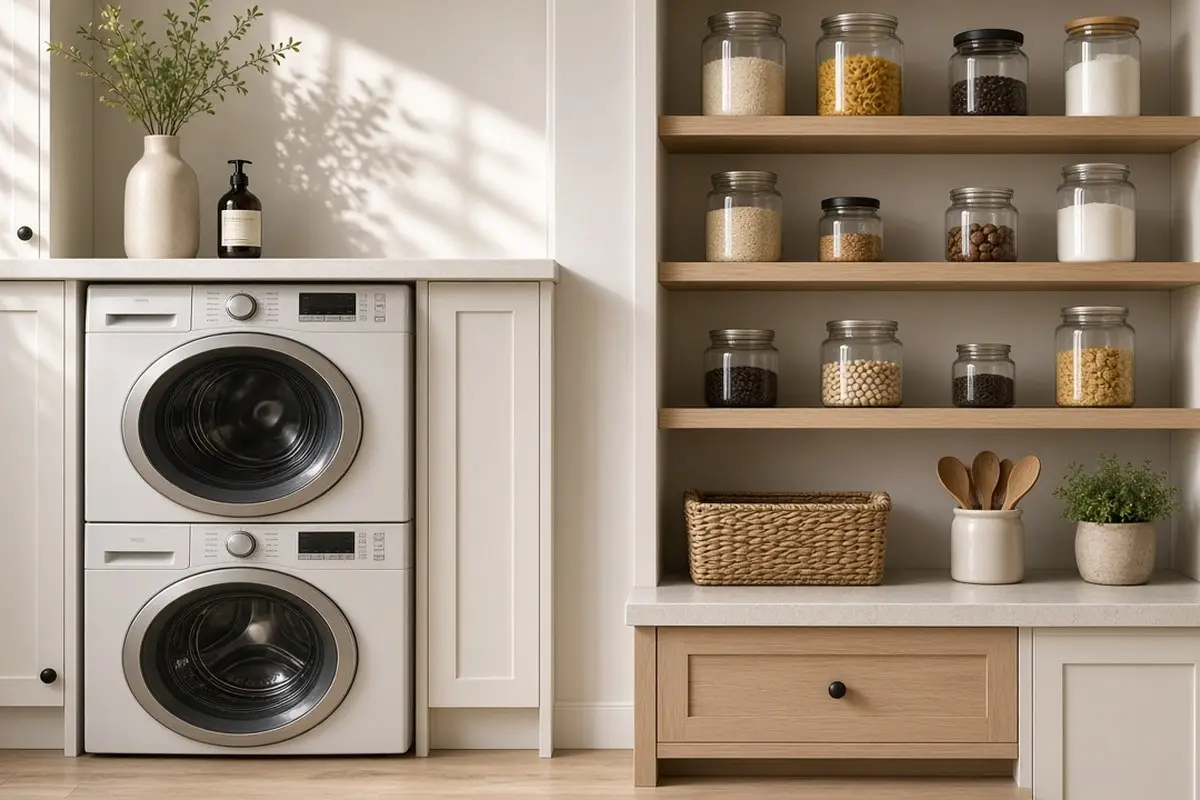
A counter over front loaders gives you a folding surface that can double as a place to unpack groceries. Above it, run shelves with food on the higher shelves and laundry supplies stored separately in a closed cabinet at one end. Wipe the counter before setting groceries down, since lint and detergent residue settle on it quickly. A cutting board or tray reserved for unpacking food gives you a clean surface in seconds. If you fold laundry and unpack groceries here, a small rule helps: groceries go away immediately, and clean clothes are folded and removed before the next load. The laundry closet setups post covers counter installation over front loaders in more detail.

3. Closed cabinets for chemicals
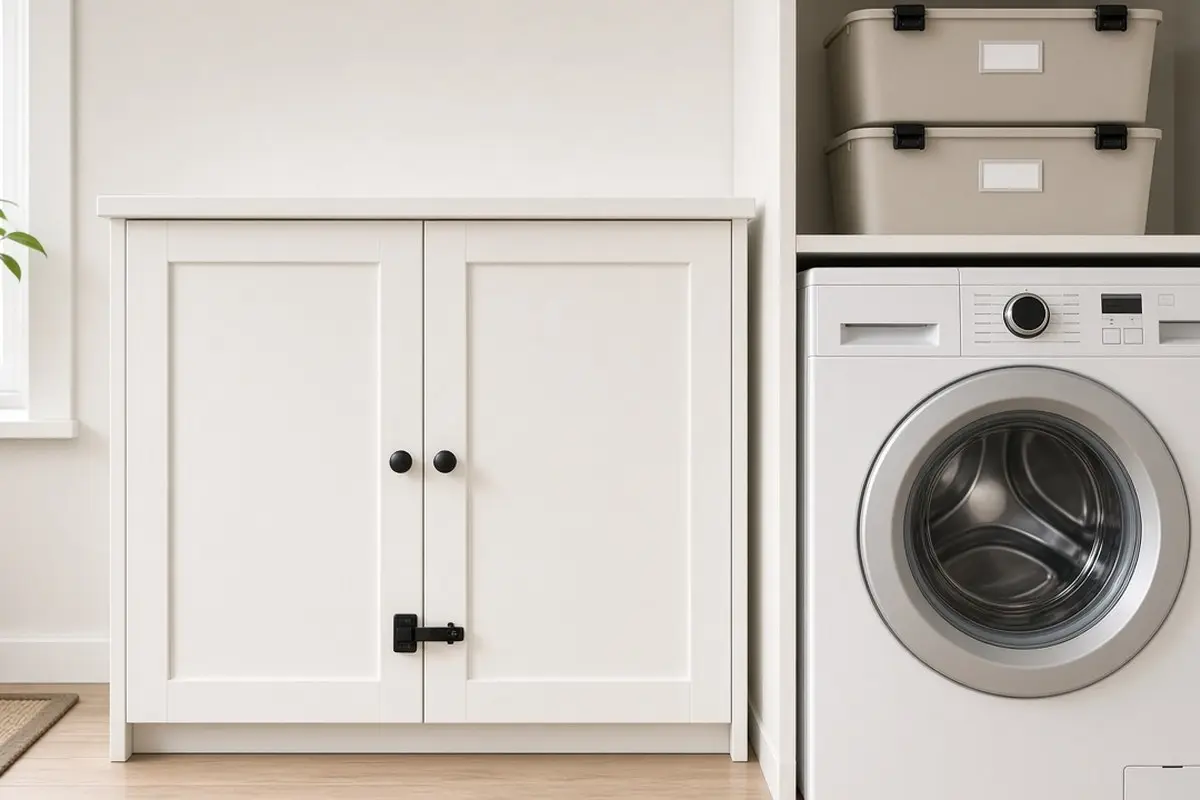
Even if food lives on open shelving, laundry chemicals should go behind a door. A single wall cabinet or base cabinet labeled for laundry keeps detergents, stain removers, and bleach contained and out of reach of children. Store liquids in a lipped tray or a plastic bin inside the cabinet so any leak stays contained. Place this cabinet at the end of the run nearest the washer and below any open food shelving, never above it. Laundry pods in particular look like candy to small children, so a locking latch is worth fitting even if you think the cabinet is high enough.
4. Glass-front pantry doors
Glass doors on the pantry side keep dust and lint off food while showing what you have. Reeded or frosted glass hides the clutter while still feeling light. Glass doors also remind you to keep the pantry tidy, which is a quiet benefit on a wall that does double duty. Line shelves with a washable liner so spills wipe away, and group food by type in clear bins so the view through the glass looks orderly. Solid doors on the laundry side and glass on the pantry side are an easy visual cue for everyone in the house about what lives where.
Get the look
5. A pull-out pantry beside the washer
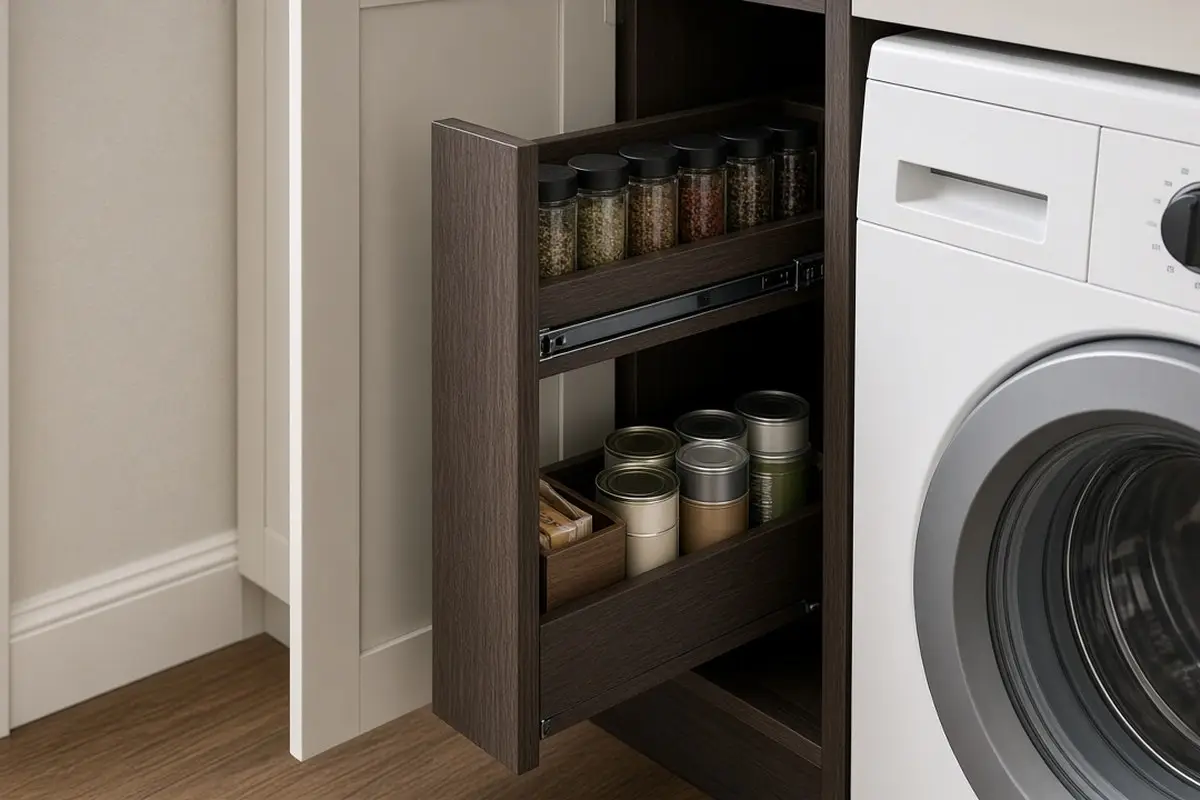
A narrow pull-out pantry fits in the gap next to the washer that would otherwise collect socks. Store canned goods and spices there, well clear of the detergent cabinet. Measure carefully, since washers move slightly during the spin cycle; leave a finger’s width of space between the cart and the machine so they do not knock together. Rolling carts with three or four tiers suit cans, jars, and small boxes. Heavier items go on the bottom tier so the cart stays stable when you pull it out. Avoid storing anything in glass on this cart, because vibration from the washer can walk jars toward the edge over time.
Get the look
6. Bulk storage up high
Paper towels, toilet paper, and other bulky household items work well on the top shelf of a shared wall, because they are not food and not chemicals. They use awkward height without crossing either line. Keep a sturdy folding step stool nearby, hung on the pegboard or slipped beside the machines. Baskets with handles make it easy to pull down a whole category at once. Spare light bulbs, batteries, and party supplies are other good candidates for the top shelf, since they are used rarely and are neither food nor laundry chemicals.
Get the look
7. Curtain or doors to hide both
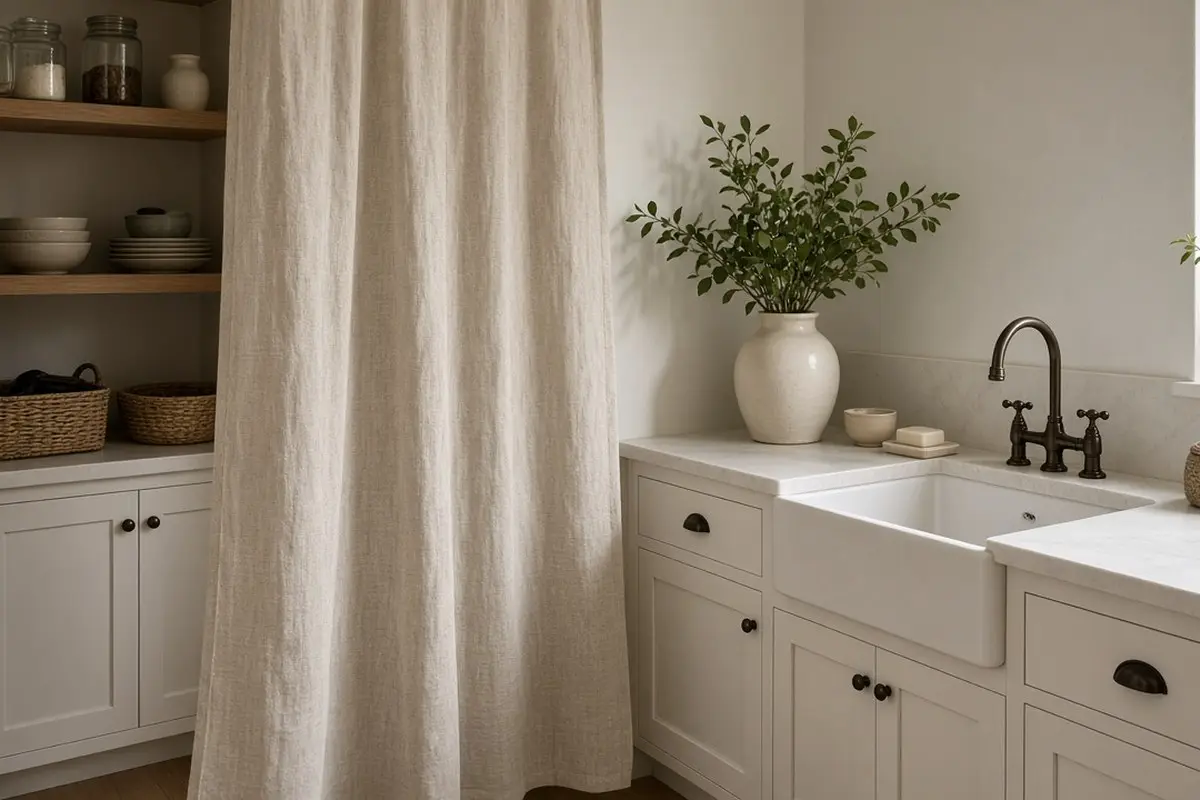
If the wall is in a hallway or kitchen, hide everything behind full-height doors or a curtain. A single curtain over a combined pantry and laundry wall turns it into a calm backdrop.
8. Pegboard for tools and mops
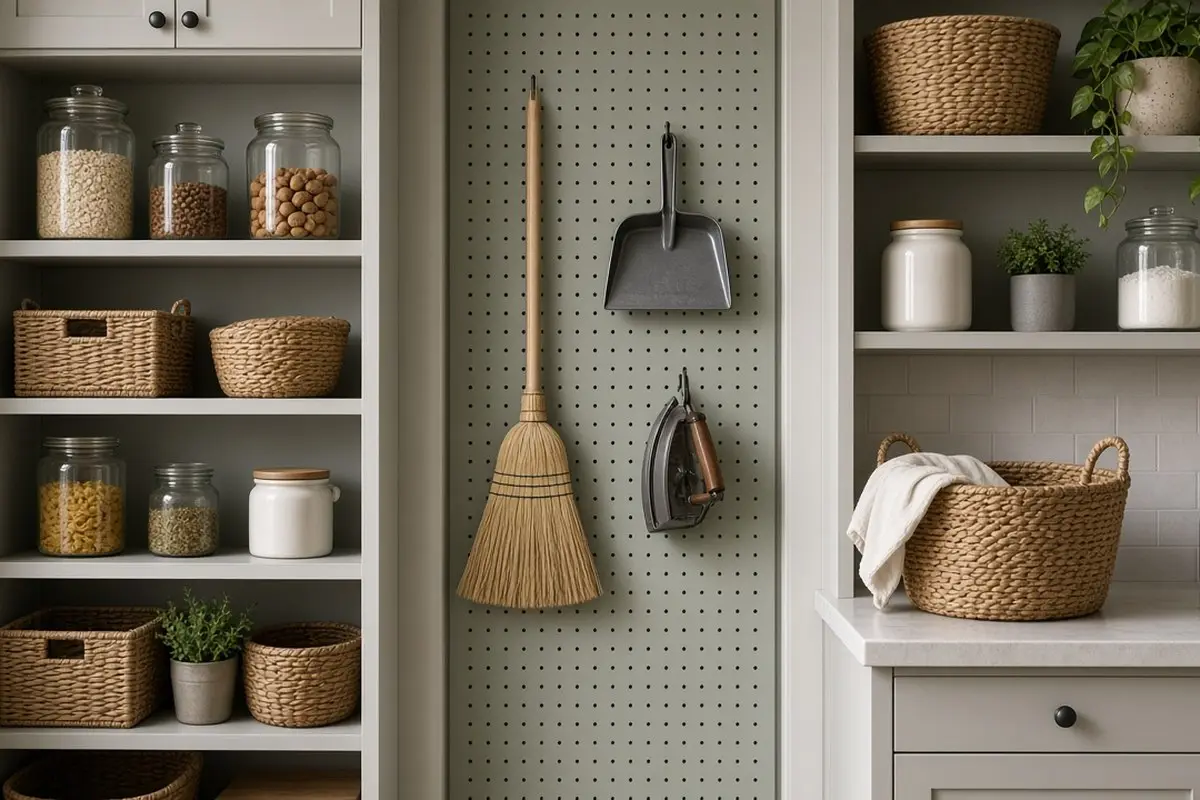
A section of pegboard holds brooms, a dustpan, a step stool, and an iron. These are household tools that belong to neither zone, so they hang on the wall between them. Paint the pegboard the same color as the wall so it fades into the background, then add hooks, small shelves, and baskets as needed. Pegboard is easy to rearrange as your needs change, which suits a utility space that will evolve over the years.
Get the look
9. Hamper in a base drawer
A deep drawer under the counter on the laundry side holds dirty clothes, keeping them away from food and out of sight.
Get the look
10. Labels on everything
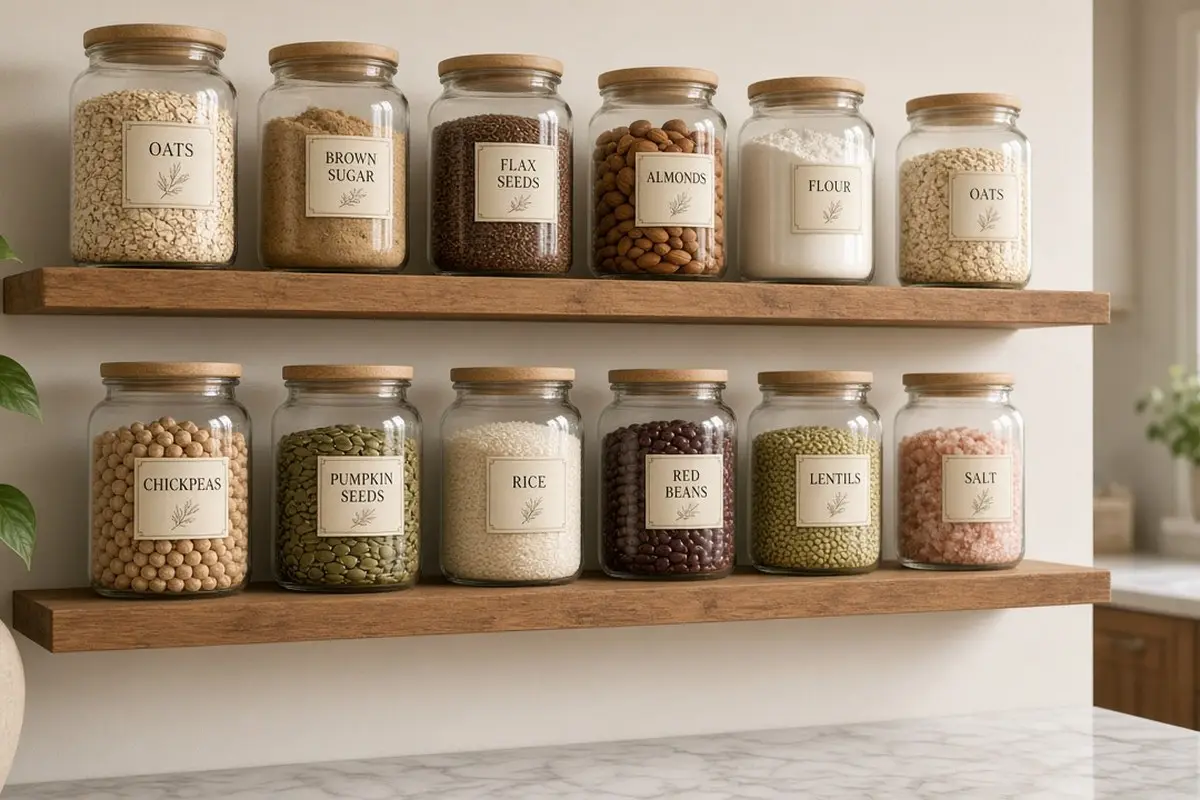
On a shared wall, labels prevent mistakes. Label food containers with contents and dates, and label laundry bins clearly so no one grabs the wrong thing. Use different label styles for each zone, such as white labels for food and black for household, so the division is visible at a glance. Dating flour, grains, and nuts helps you rotate stock before it goes stale in a warm utility space.
11. Light and ventilation
A shared wall gets lots of use, so light it well with an under-cabinet LED strip. A small vent or a cracked door keeps humidity down after laundry days. Humidity is the enemy of dry goods, so a small hygrometer is worth having in a closed utility closet. If readings stay high after laundry days, leave the doors open for an hour, run a fan, or add a moisture absorber on the floor of the laundry side. Never vent a dryer indoors or into the closet itself.
Get the look
Making it feel like one design
Pick one cabinet color and one hardware finish for both zones. When the doors match, the wall reads as built-in storage rather than two awkward functions jammed together. A soft green, warm white, or pale gray suits both a pantry and a laundry and hides the scuffs a busy wall collects. Simple knobs or pulls in brushed brass or matte black give the run a finished look, and a single continuous counter or top shelf ties the two halves together visually even though they serve different purposes.
When the space is a closet, not a wall
Some homes have the washer in a closet that also has deep shelves on the sides. The same rules apply in a smaller footprint: food on one side or high up, chemicals low and closed, and the hamper inside the closet rather than in front of it. Ideas for very tight nooks are in the narrow laundry nook post. In an open-plan apartment where the shared wall faces the living area, full-height doors or a curtain matter even more; the studio apartment layout post shows how to keep utility zones from dominating a single room.
Quick questions
Is it safe to store food next to a washer? Yes, if the food is in sealed containers and kept apart from chemicals. Avoid storing food directly on top of the machines, where vibration and heat are strongest.
What about pests? Airtight containers, regular wiping of crumbs and lint, and no open bags of pet food or flour keep pests away from a shared utility wall.
Can a dryer make the pantry too warm? It can raise the temperature nearby during use. Keep chocolate, oils, and items that melt or spoil easily on the side farthest from the dryer.
What paint works best? A scrubbable satin or semi-gloss enamel handles both kitchen grease and laundry humidity.
A shared pantry and laundry wall works when each side has its own zone, chemicals stay low and closed, and food lives in airtight containers. Plan it well, and one small wall can do the work of two rooms.