
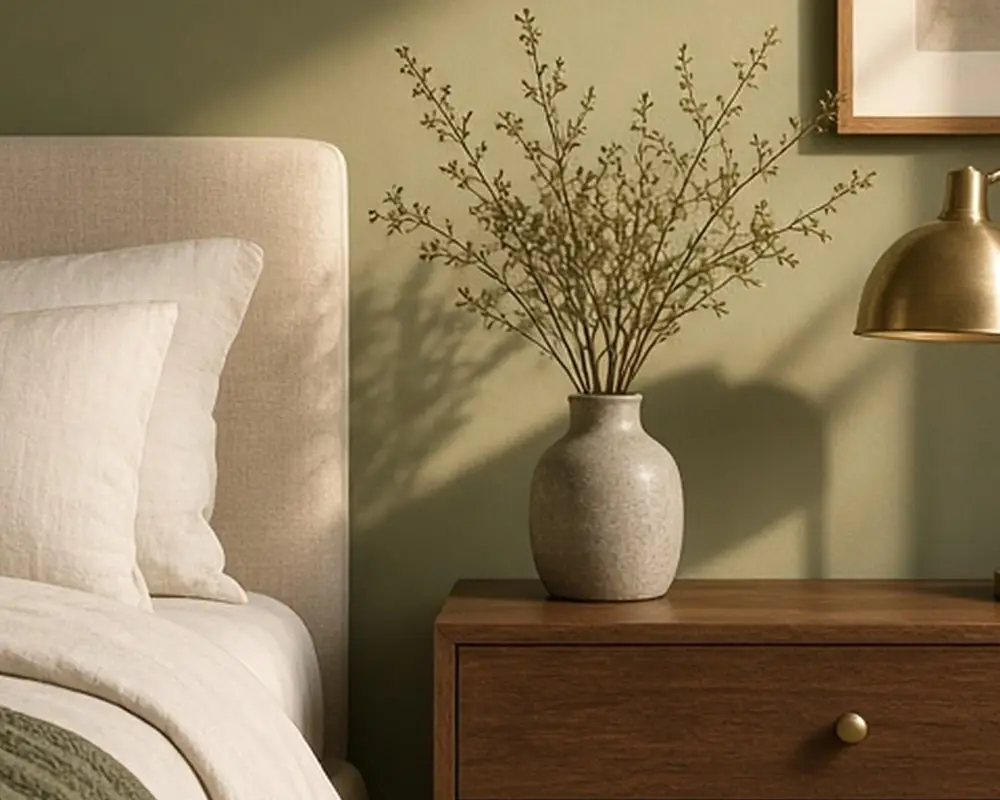
10 Olive Green Bedrooms With Brass and Cream

On this page12 sections
Olive green is the grown-up cousin of sage. It is deeper, warmer, and a little earthier, with enough yellow and brown in it to feel cozy rather than cool. On a bedroom wall it reads almost like a neutral: calm, quiet, and easy to sleep in. Paired with cream and brass, it looks warm and quietly elegant, a little like an old library or a country house.
Olive is also forgiving. It has been used in homes for centuries, and it never quite goes out of style. It hides scuffs, suits most wood tones, flatters skin in lamplight, and works in both bright and dim rooms. The ten ideas below show how to build an olive green bedroom around cream textiles and brass details. If you prefer a lighter green, the sage bedroom palettes post covers the softer end of the family.
As an Amazon Associate I earn from qualifying purchases.
1. Pick the right olive
Olive paint ranges from pale khaki to deep army green. For a bedroom, the middle of that range is easiest to live with: a muted olive with a gray or brown undertone. It is deep enough to feel cozy but light enough not to swallow the room.
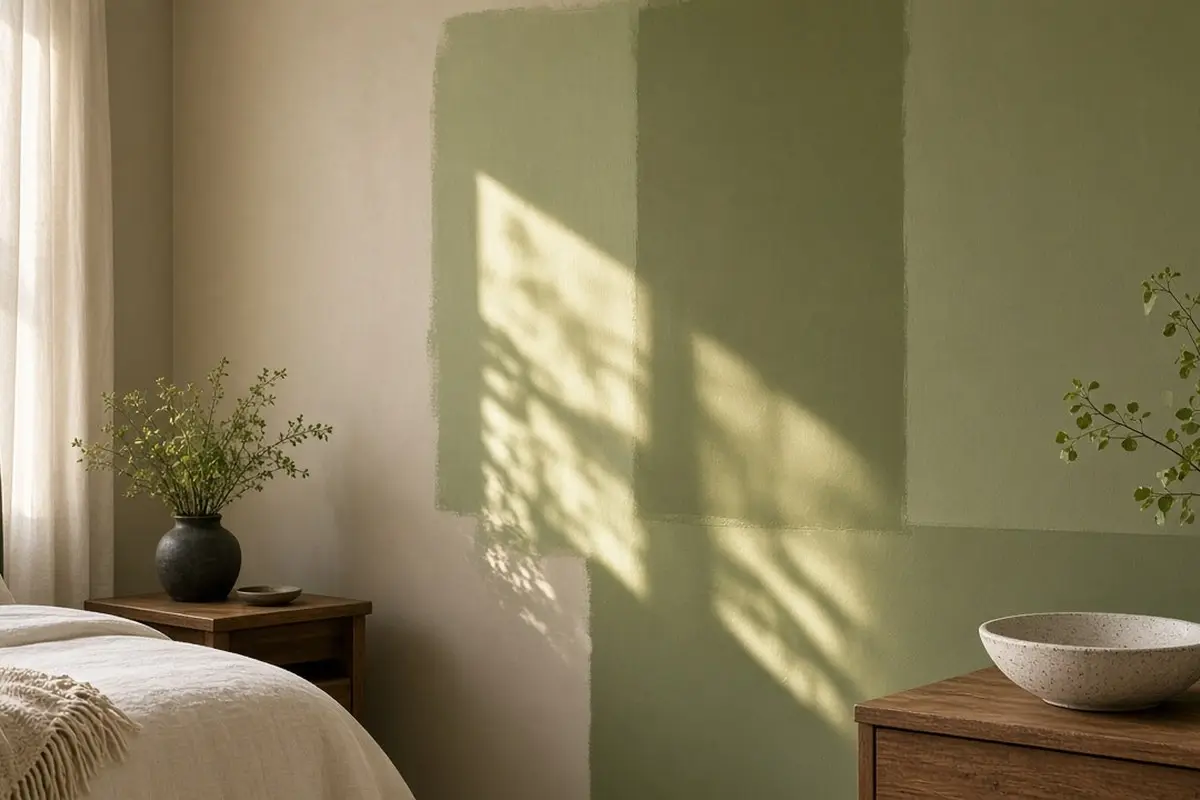
Paint large samples on two walls, one near the window and one opposite, and watch them for a day. Olive can turn yellowish in warm afternoon light and grayish on overcast mornings. Choose the shade that looks good at the times you actually use the bedroom, usually early morning and evening.
A matte or eggshell finish suits olive best. Flat finishes deepen the color and give it a soft, velvety look, while shiny finishes can make it look plasticky.
Get the look

2. Olive walls with cream bedding
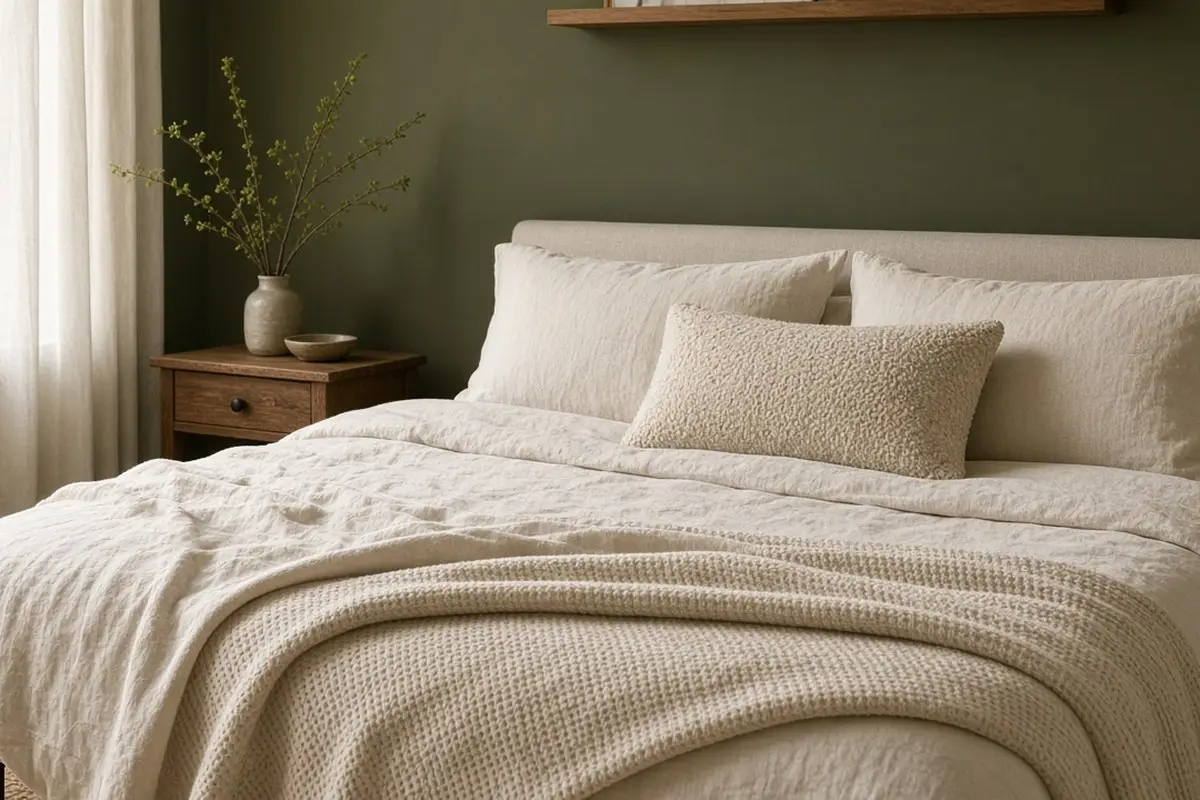
The core of the look is simple: olive walls, cream bed. Cream linen or cotton sheets, a cream waffle blanket, and an oatmeal throw stand out softly against the green without the harsh contrast of bright white.
Layer different textures in the same pale family. Linen, wool, cotton, and bouclé give the bed depth without adding new colors. The result looks calm and expensive.
If you have white bedding already, it will work, but cream is warmer and blends more naturally with olive’s earthy undertone.
A cream headboard, upholstered in linen or bouclé, frames the bed beautifully against olive and makes the whole bed area feel soft.
Get the look
3. Brass bedroom hardware
Brass is olive’s natural partner. The warm metal glows against the green and adds a little polish. Swap dresser knobs for brass, choose brass lamps, add brass picture lights or a brass mirror frame.
Brushed or unlacquered brass looks best. It darkens slightly over time and develops a soft patina that suits the old-world feeling of olive.
Do not overdo it. Three or four brass accents across the room are enough. Too much and the room starts to look like a hotel lobby.
Brass also pairs well with a little black. A black iron bed with brass finials, or black frames with brass hardware, sharpens the warm look. Chrome and polished nickel are the metals to avoid here; they feel cold next to olive.
Get the look

4. Walnut and dark wood
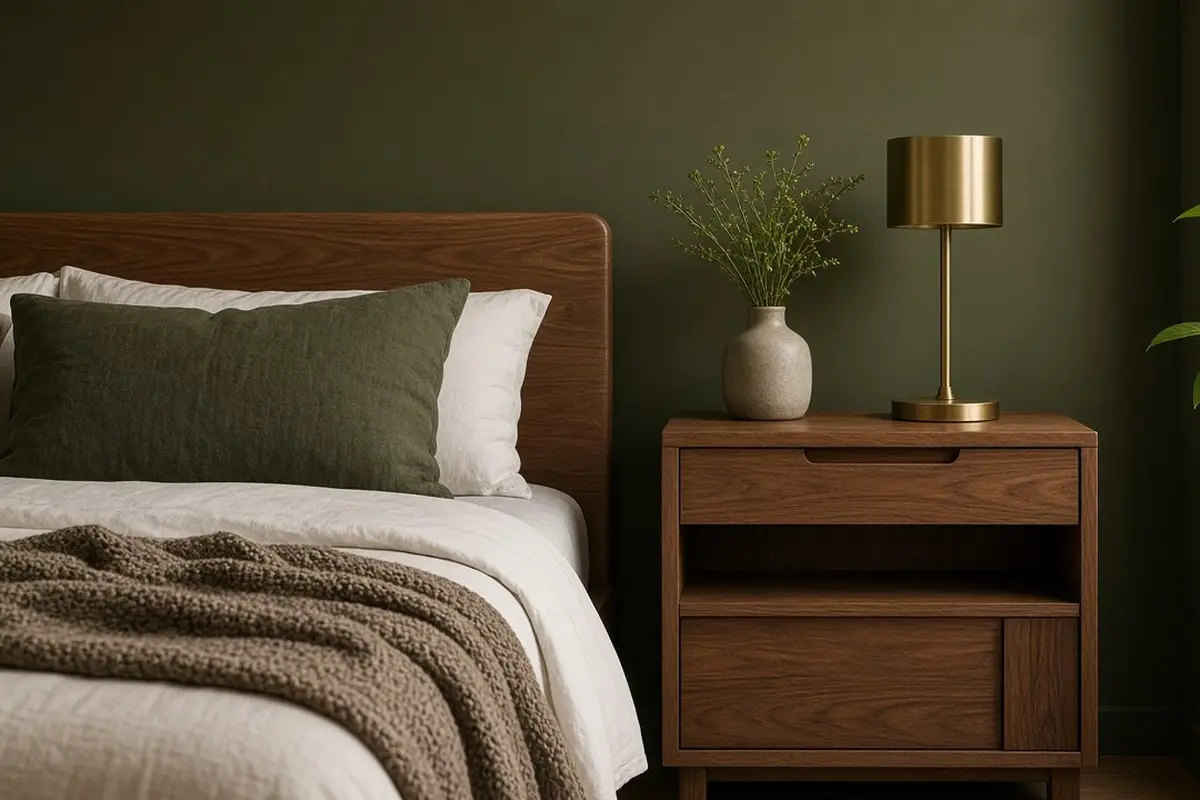
Olive and walnut is a rich, grounded pairing. A walnut bed, dark wood nightstands, or an antique chest look at home against the green. The deep brown wood adds weight, and the olive makes the wood look warmer.
If your furniture is light oak or pine, that works too, giving a lighter, more Scandinavian version of the look. Avoid gray-washed wood, which can look dull against olive.
Mixing woods is fine as long as they share a warm undertone. A walnut bed with oak nightstands looks collected. A rattan chair or a cane headboard adds lighter texture without breaking the warm palette.
5. A green and cream bedroom with stripes or check
Pattern keeps an olive room from feeling too serious. A cream and olive stripe on a pillow, a check throw, or a ticking stripe duvet adds a little life. Keep patterns in the same two colors for a calm, classic feel.
Mixing scales helps. Pair a wide stripe on the duvet with a small check on a pillow and a plain throw. Different sizes of pattern sit together comfortably, while two patterns of the same size tend to compete.
If you want a touch of tradition, a cream and olive toile or a small floral looks lovely on a single armchair or a pair of curtains. Keep it to one place so it reads as a feature rather than a theme.
Get the look
6. Color-drenched olive
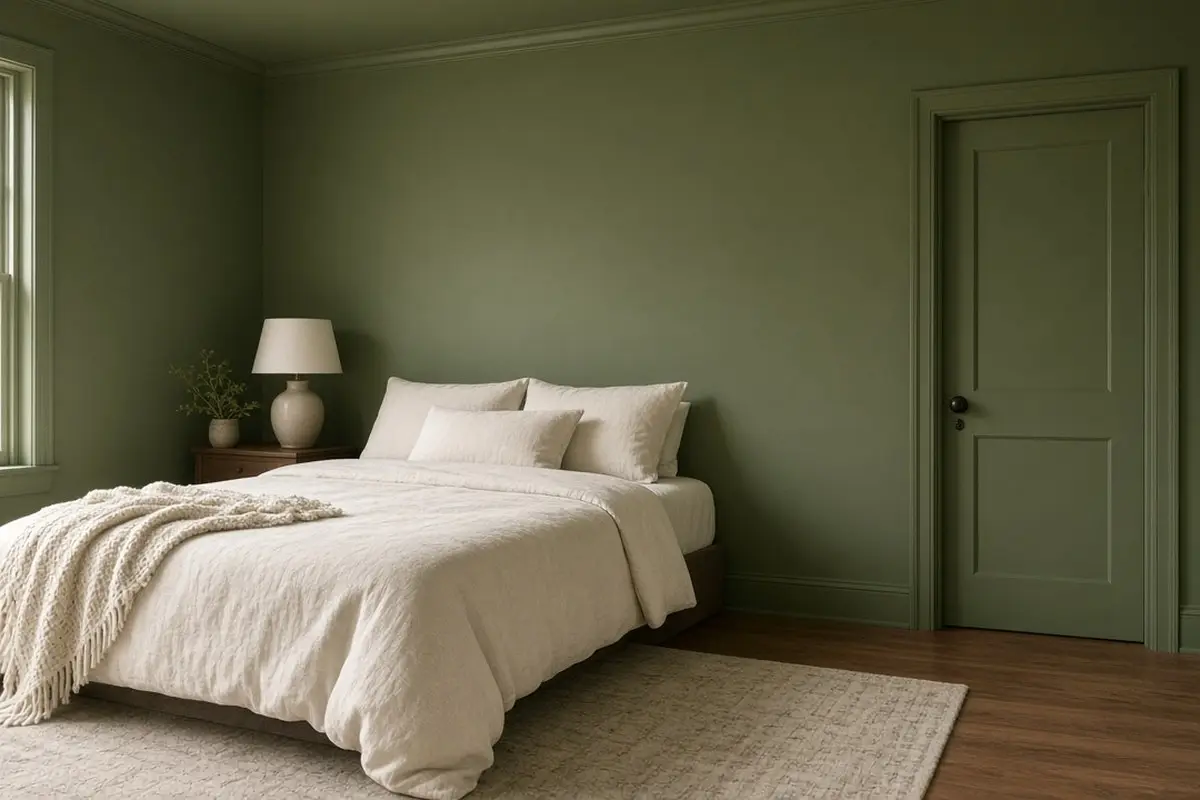
Paint walls, trim, doors, and ceiling all in olive for a deep, cocooning room. It works especially well in small bedrooms, where breaking up the color makes the space look choppy. In one color, the edges blur and the room feels larger and calmer.
Use a slightly higher sheen on trim and doors for durability, but keep the color the same.
Drenching also hides awkward architecture. Radiators, built-in cupboards, and odd angles disappear into the color, so the room looks simpler and calmer. Keep bedding and curtains in cream so the bed stands out clearly against the deep green.
Get the look
7. Leather and rust accents
Cognac leather and rust textiles add warmth that olive loves. A leather bench at the foot of the bed, a rust velvet pillow, or a terracotta pot pulls out the warm undertone in the green.
This palette is especially good in fall and winter. In spring, swap rust for soft pink or cream.
Leather ages well and gets better with use, which suits a room meant to feel lived in. If real leather is outside the budget, a cognac velvet or a tan canvas gives a similar warmth. Even a leather-wrapped tray or a pair of leather drawer pulls is enough to bring the color in.
Get the look
8. Warm lamplight
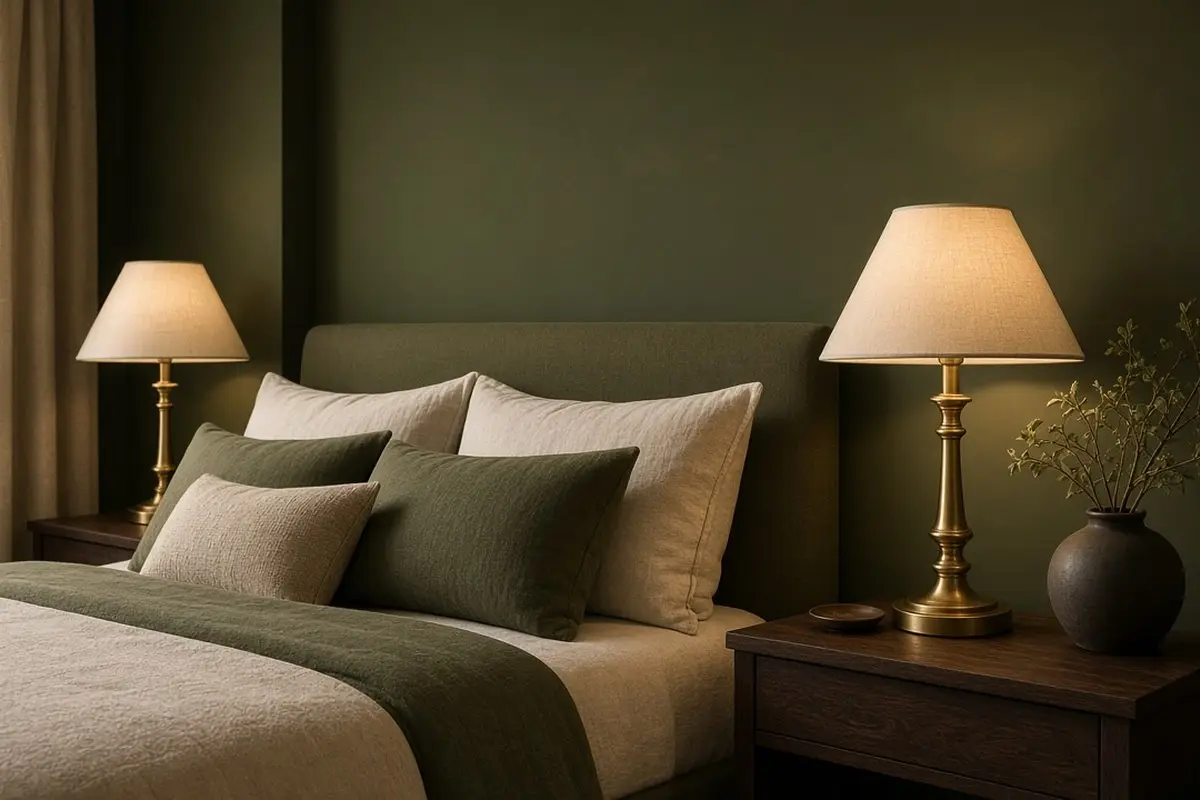
Olive green comes alive in warm light. Several lamps at different heights, all with warm bulbs, make the walls glow at night. Avoid cool overhead light, which flattens olive into gray.
Place one lamp on each nightstand, one on a dresser, and perhaps a floor lamp in a reading corner. Light from several low points makes the walls glow evenly instead of leaving dark corners. A dimmer on the overhead light lets you keep it for cleaning and leave it off the rest of the time.
Cream linen shades soften the light further. Brass lamp bases add a gleam.
Get the look

9. Botanical and landscape art
Olive walls are a natural backdrop for botanical prints, landscapes, and vintage oil paintings. Framed in brass, gold, or dark wood, they look like a collection. One large painting above the bed or a small grouping on one wall is enough.
Secondhand shops and flea markets are full of small, inexpensive landscape paintings that look wonderful against olive. The older the frame, the better. Their faded colors usually sit perfectly in an olive and cream room.
Hang art at eye level when standing, or about 8 to 10 inches above the headboard. A picture light mounted above the frame adds a soft, gallery glow in the evening.
Get the look
10. Plants for depth
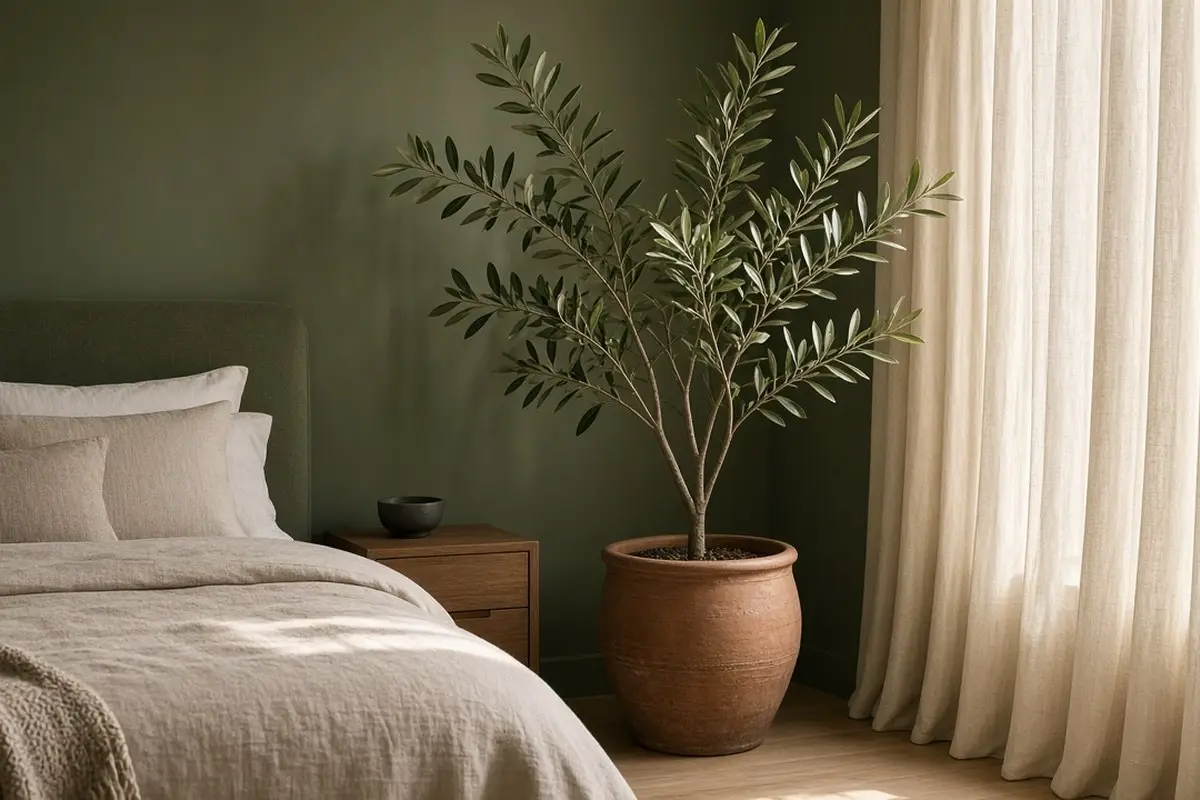
Plants look especially good against olive, because their brighter greens stand out against the muted wall. A tall plant in a corner, a trailing plant on a shelf, and a small pot on the nightstand add life.
If the room is dim, choose low-light plants such as pothos, snake plants, or ZZ plants, or use good faux plants. Dried branches in a tall vase are another option: olive leaves, eucalyptus, or pampas look natural against the wall and need no care at all.
Quick Olive Rules
- Choose a muted olive with brown or gray undertones.
- Use cream instead of bright white.
- Add brass, but sparingly.
- Pair with walnut or warm wood.
- Light the room warmly.
- Add plants and botanical art.
FAQ
Is olive green a good bedroom color?
Yes. It is calm, warm, and earthy, and it works in both bright and darker rooms.
What colors go with olive green in a bedroom?
Cream, oatmeal, walnut, brass, rust, cognac, soft pink, and black.
Should the ceiling be white in an olive bedroom?
A soft cream ceiling is warmer than bright white. For a cozy room, paint it olive too. The quiet wall colors post covers ceiling choices in more depth.
Does olive green make a room look smaller?
Not necessarily. In a small room, drenching olive on every surface can make it feel larger. The small bedroom that feels bigger post has more space tricks.
What curtains suit an olive green bedroom?
Cream or oatmeal linen curtains are the easiest choice. For a richer look, try olive velvet curtains that match the walls, or a cream and olive stripe. Hang them high and wide to keep the room feeling tall.
An olive green bedroom with brass and cream feels like it has been there for years. Pick a muted shade, layer cream textures, add warm metal and wood, and light it softly. It becomes the kind of room you want to stay in on a slow morning.