
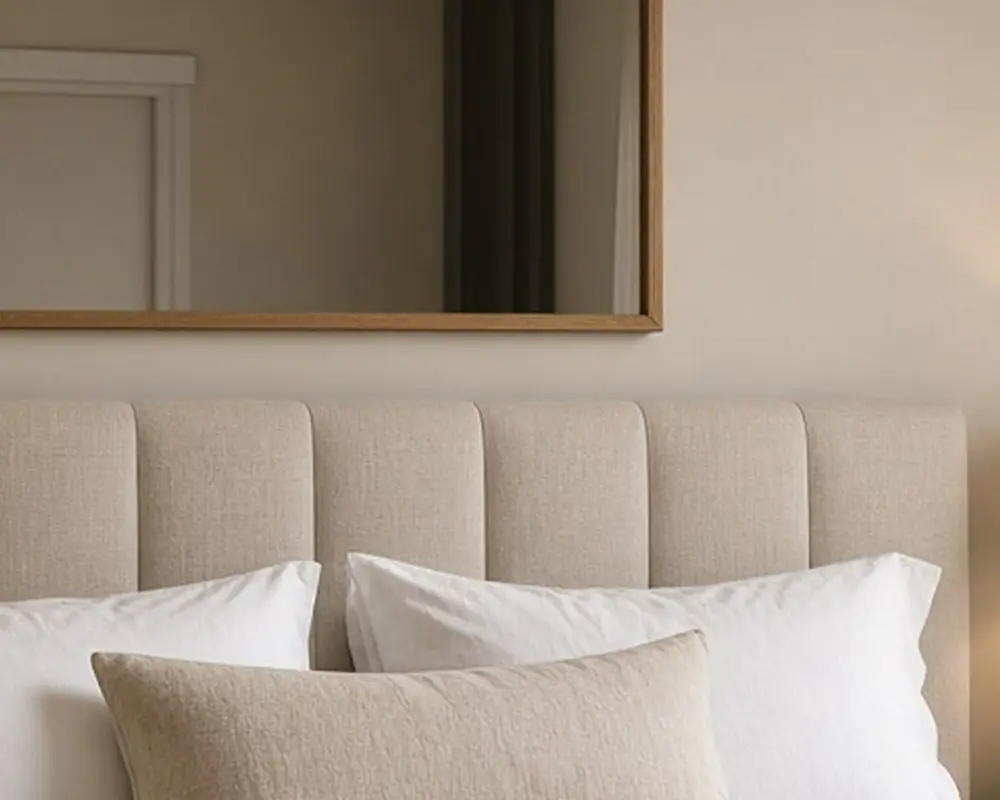
9 Mirrors Over the Headboard, and When to Skip Them

On this page11 sections
- Safety first: hardware that holds
- Headboard mirror size: two thirds of the bed
- Hang it at the right height
- A wide arched mirror
- A round mirror for a softer look
- Place it to catch the window
- A pair of mirrors over twin or king beds
- When to skip the mirror
- A large mirror bedroom alternative: the side wall
- Tips Before You Start
- FAQ
The wall above the bed is one of the hardest walls in a bedroom to decorate. It is large, it is the first thing you see when you walk in, and anything hung there sits right above your head while you sleep. A mirror is a popular choice because it adds light and makes a small bedroom feel bigger. It can also be a heavy piece of glass hung over the place you are most vulnerable.
So this post covers both sides. Nine ways to hang a mirror over the headboard well, with the right size, the right hardware, and the right reflection. And a clear look at when you should skip it and choose something else. For other ways to treat that wall, the above-sofa wall ideas post translates well to bedrooms.
As an Amazon Associate I earn from qualifying purchases.
1. Safety first: hardware that holds
Before anything about style, the mirror must not fall. A mirror over a bed needs to be hung into wall studs or with heavy-duty anchors rated well above the mirror’s weight. A French cleat, a two-part bracket that locks the mirror to the wall along its whole width, is the most secure option. Two D-rings on picture wire hung from a single nail is not enough.
Check the weight of the mirror first. Many large mirrors weigh 30 to 60 pounds. Use hardware rated for at least double that. If your walls are plaster or old lath, consult a handyman or use specialist plaster anchors.
Once it is up, test it. Pull gently down and out on the bottom edge. A mirror on a French cleat should not move at all. Add two small rubber bumpers on the lower back corners, so it sits flat against the wall and does not tap when the bed is bumped. Check the hardware once a year, especially in older houses where walls can settle.
Also check your location. In earthquake-prone areas, many safety guides advise against hanging anything heavy directly above a bed. If you live in such an area, skip to idea eight.
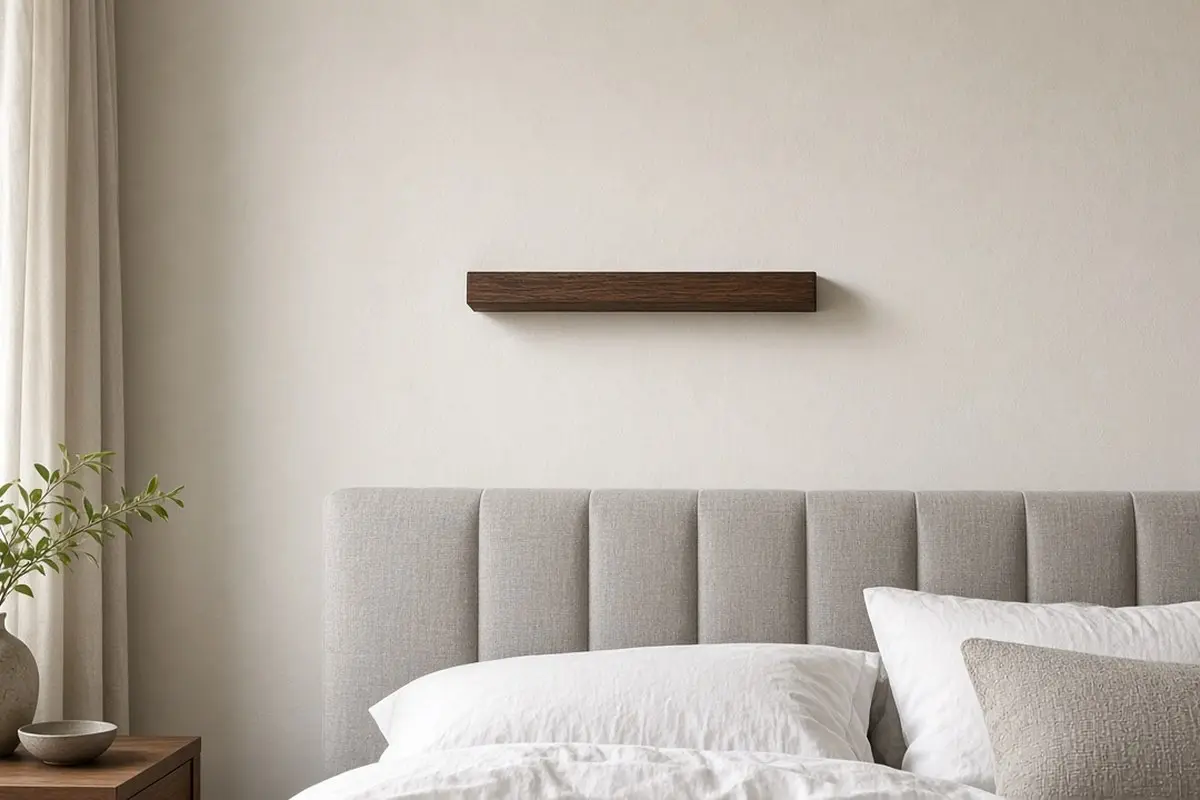
Get the look

2. Headboard mirror size: two thirds of the bed
The same rule that works over a sofa works over a bed. A mirror about two thirds the width of the bed, or slightly narrower than the headboard, looks balanced. On a queen bed (60 inches wide), that is roughly 40 inches across. On a king (76 inches), around 50 inches.
A mirror that is much wider than the headboard looks like it is floating. One that is much smaller looks lost. If you love a small mirror, hang a pair side by side, or choose a different wall.
Before buying, cut a piece of kraft paper to the size you are considering and tape it above the bed. Leave it there for a couple of days. Look at it from the doorway, from the bed, and in the evening with the lamps on. Paper is free, and it is far easier to change your mind about than a heavy mirror already drilled into the wall.
3. Hang it at the right height
Hang the bottom of the mirror about 6 to 10 inches above the top of the headboard. Too close and it crowds the headboard. Too high and it floats near the ceiling and looks disconnected from the bed.
If your bed has no headboard, imagine one about 20 inches above the mattress and hang the mirror above that line. Sitting up in bed, your head should not touch the mirror’s frame.
In a room with a low ceiling, err toward the lower end of that range so the mirror still has breathing room above it. In a room with a tall ceiling, a taller mirror, or a mirror hung toward the upper end of the range, helps fill the extra wall height without looking like it is floating away.

4. A wide arched mirror
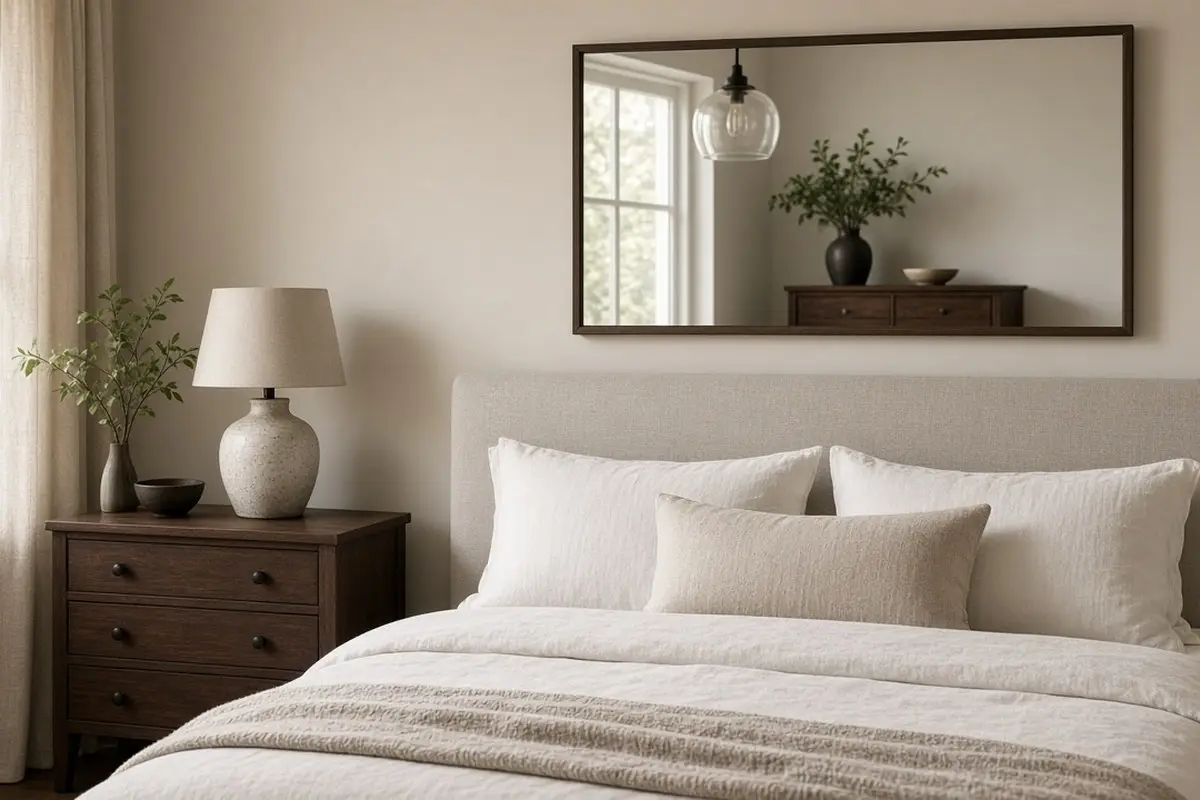
An arched mirror softens the strong horizontal line of a bed and headboard. Its curve adds height and a calm, gentle shape to the wall. Choose a wide arch, wider than it is tall, so it fits the proportions of a bed.
A thin wood or brass frame keeps it light. Heavy, ornate frames can make the wall feel crowded.
Arched mirrors pair beautifully with upholstered headboards that have a curved or scalloped top, echoing the shape. With a straight headboard, the arch adds a gentle contrast. Either works. Keep the bedding simple so the mirror and headboard read as one calm composition.
Get the look
5. A round mirror for a softer look
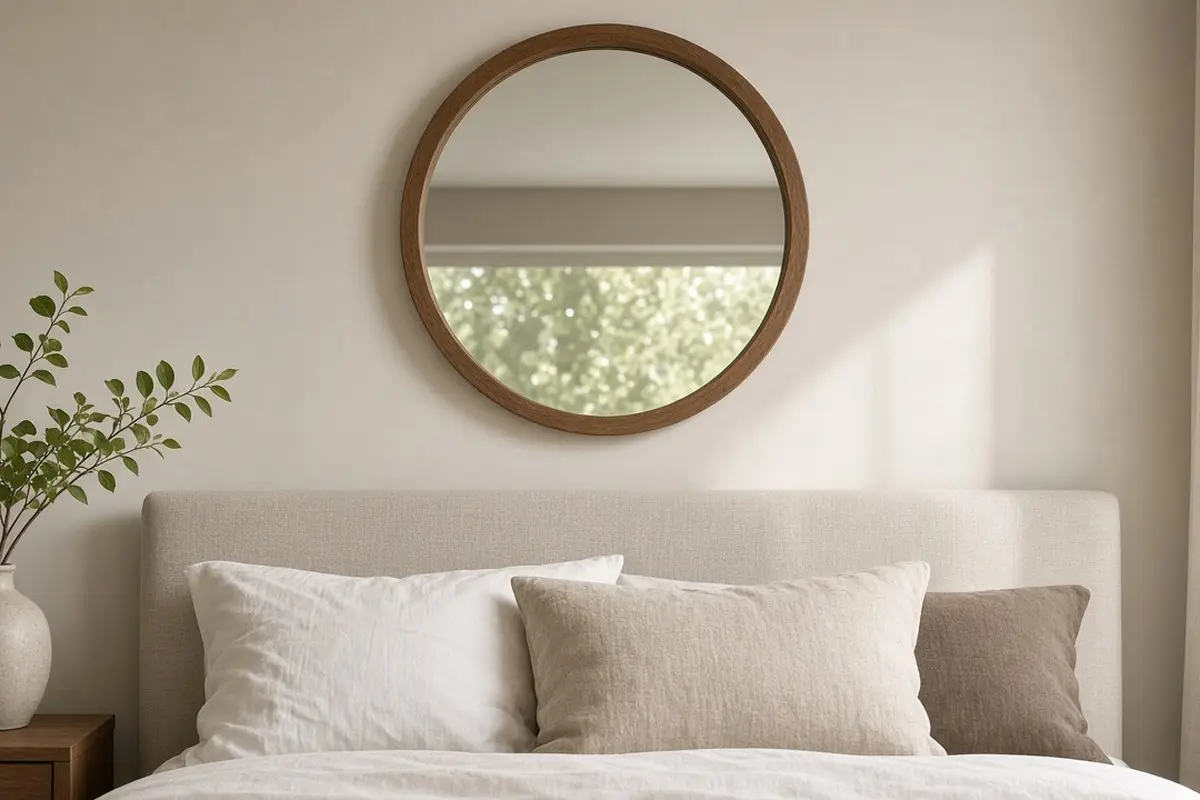
A round mirror above a bed looks soft and relaxed. It works best above a headboard with a straight top, where the curve contrasts with the line. A round mirror of about 30 to 40 inches suits most queen beds.
Round mirrors are also lighter than wide rectangular ones of the same visual size, which makes hanging easier and safer.
A rattan or woven round mirror suits relaxed or coastal bedrooms. A slim brass frame looks more polished. A plain wood frame fits nearly anywhere. Match the frame to one other material in the room, such as the bedside tables or lamp bases, so it looks part of the plan.
Get the look
6. Place it to catch the window
A mirror above the bed adds the most light when the window is on a side wall. From there, it catches light coming in at an angle and spreads it across the room. If the window is opposite the bed, a mirror above the headboard will reflect the window directly, which doubles the light but can create glare in the morning.
Before hanging, hold the mirror up and check what it reflects from the doorway and from the bed. You want a window, a plant, or a calm wall, not a cluttered dresser.
A mirror that reflects a lamp is a bonus at night. Bedside lamps glow in the glass, doubling the warm light and making the room feel softer. That is one of the nicest effects of a mirror above the bed, and it costs nothing extra.

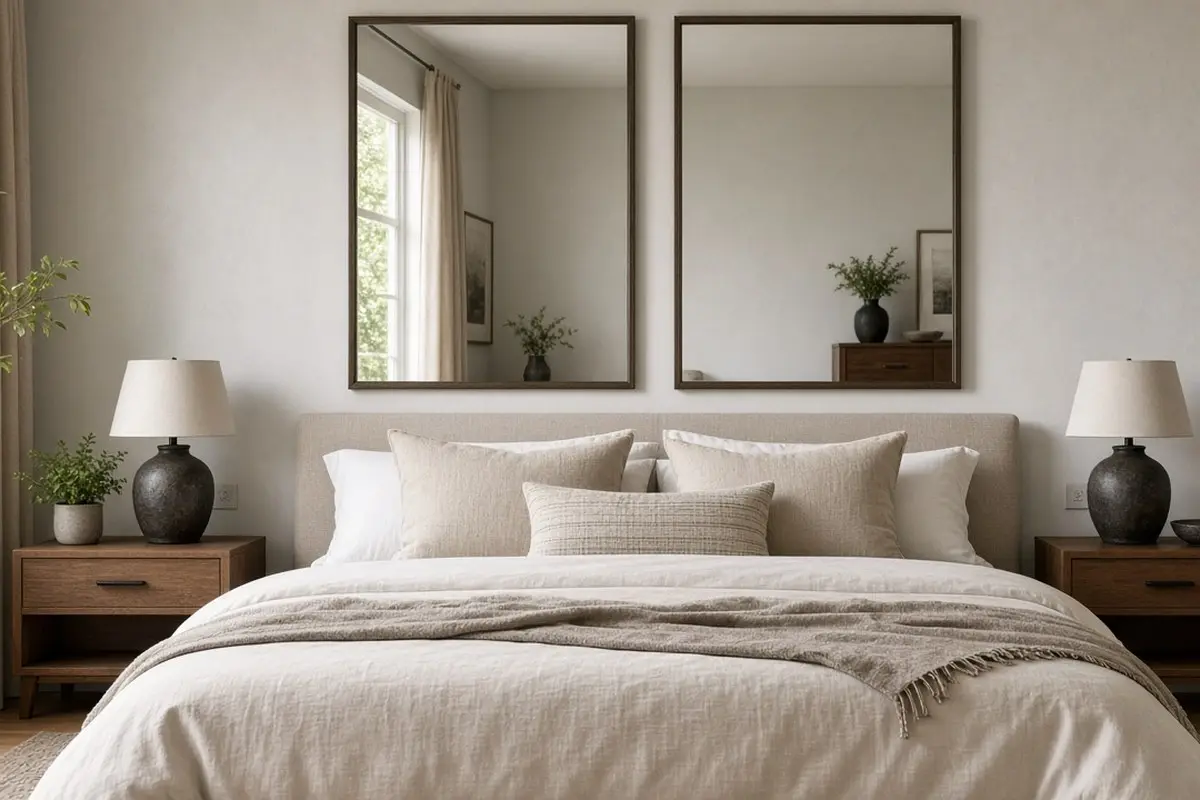
7. A pair of mirrors over twin or king beds
Above a king bed or two twin beds, a pair of matching mirrors can look more balanced than one very large one. Hang them with a small gap between, about 3 to 6 inches, and align them with the bedside lamps or the edges of each pillow area.
Pairs are lighter individually, which makes them easier and safer to hang. They also give each sleeper their own side of the wall, which suits a shared bedroom where the two halves of the bed have their own lamps and tables.
8. When to skip the mirror
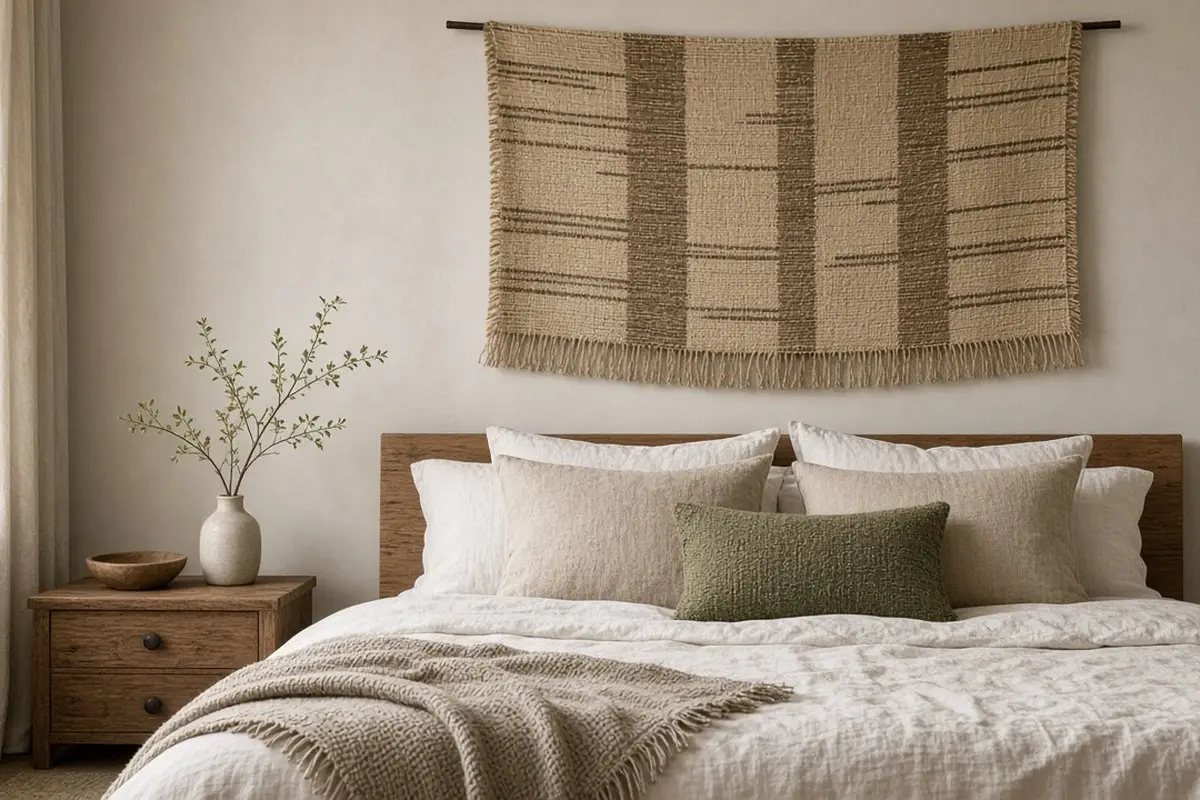
There are good reasons to skip a mirror above the bed. If you live in an earthquake zone, hanging heavy glass above your head is not wise. If the bed faces a window and you are a light sleeper, the reflected morning light may wake you earlier. Some people simply find it uncomfortable to see themselves reflected in the bedroom, especially when waking up at night.
If any of these apply, choose something lighter. Fabric art, a textile hanging, a painted headboard shape, or lightweight canvas art gives the wall a focal point without the weight or reflection.
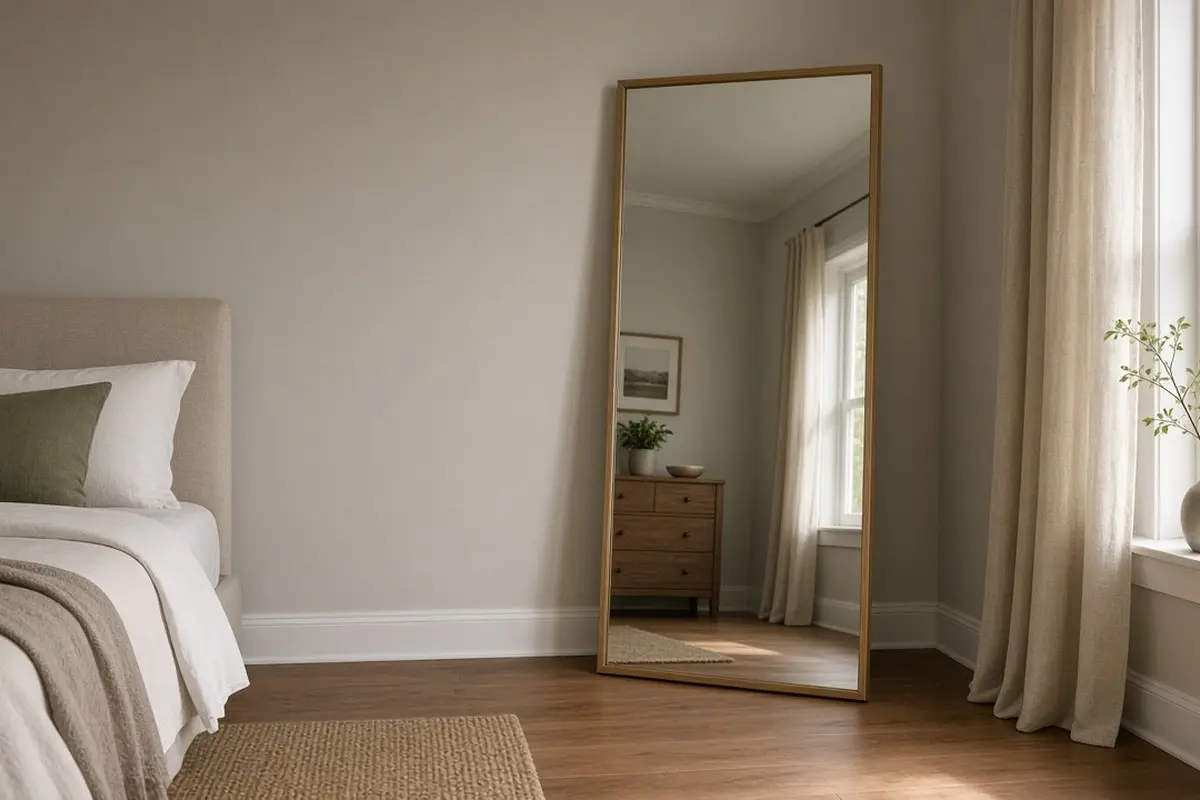
9. A large mirror bedroom alternative: the side wall
If you want the light a large mirror brings but not above the bed, hang it on a side wall or lean it on the floor. A tall floor mirror beside the dresser or on the wall facing the window can brighten the room just as well, with no risk overhead.
A full-length mirror is also more useful for dressing than one above the bed.
Lean it securely with an anti-tip strap, or hang it on the back of the bedroom door if floor space is tight. A mirror on the wardrobe door or inside a closet gives you the same practical use while keeping the wall above the bed free for something softer.

Tips Before You Start
- Use a French cleat or studs, never a single nail.
- Size the mirror to about two thirds of the bed width.
- Hang it 6 to 10 inches above the headboard.
- Check what it reflects from the bed and the door.
- Skip it in earthquake zones.
- Consider a side wall or floor mirror instead.
FAQ
Is it safe to hang a mirror over a bed?
It can be, with proper hardware into studs and a French cleat. Skip it if you live in an earthquake area.
What size mirror goes over a queen bed?
Around 36 to 44 inches wide, or about two thirds of the bed width.
How high should a mirror be above a headboard?
About 6 to 10 inches above the top of the headboard.
What can I hang over a bed instead of a mirror?
Fabric art, lightweight canvas, or a textile hanging. The calm bedroom paint colors post suggests painting a soft color behind the bed, and mirror placements that add light covers safer spots for a mirror.
Can I lean a mirror on the headboard instead of hanging it?
It is not recommended. A leaning mirror on a headboard can slip or fall when the bed is bumped. If you want a mirror there, hang it properly or choose a side wall.
Does a mirror above the bed make a small bedroom look bigger?
Yes, especially when it reflects a window or lamp light. A mirror on a side wall can have a similar effect without hanging anything overhead.
A mirror above the headboard can make a bedroom brighter and bigger, if it is hung safely and placed with care. And if it does not suit your room or your sleep, there are plenty of other ways to dress that wall.