
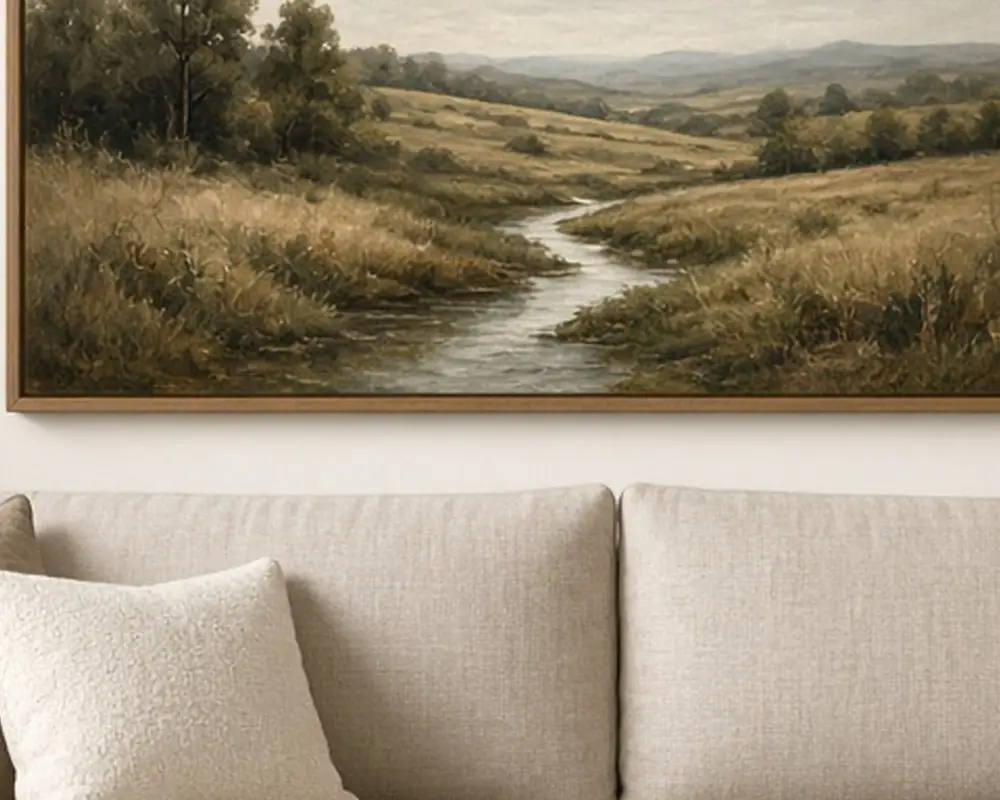
12 What to Hang Over a Sofa When You Skip the Gallery Wall

On this page14 sections
The wall above the sofa is the biggest blank space in most living rooms, and the gallery wall has become the default answer. Twenty frames, a paper template, a weekend of nail holes. Some people love the result. Many others find it busy, hard to dust, and impossible to change without patching half the wall.
There are plenty of calmer options. One large piece, a pair, a long shelf, a mirror, a textile. Each of them fills the space with less effort and less visual noise. The twelve ideas below are all about the wall over the sofa, and each comes with the measurements that make it look right. If the wall itself needs attention first, the wall updates without furniture post covers paint and trim.
As an Amazon Associate I earn from qualifying purchases.
1. Get the size right first
Most above-sofa art is too small. A single 16 by 20 inch print over an 84 inch sofa floats like a postage stamp on an envelope. The rule that works in almost every room: the art, or the group of art, should be about two thirds the width of the sofa. On an 84 inch sofa that means roughly 56 inches across.
That sounds big, and it is. Large art is what makes a living room look finished. If one piece that size is out of budget, a pair or a trio can add up to the same width, which the ideas below cover. Before buying, cut a piece of kraft paper to the size you are considering and tape it to the wall. Live with it for a day. Paper is free, and it settles the size question better than any calculation.

2. Hang it at the right height
The second common mistake is hanging art too high. Picture hanging height over a sofa follows a simple rule: the bottom of the frame sits eight to ten inches above the sofa back. That keeps the art connected to the furniture, so the two read as one group. Hung higher, the art drifts toward the ceiling and the wall looks emptier than before.
If the sofa back is very low, check the center of the art too. It should land roughly 57 to 62 inches from the floor, which is close to eye level when standing. When the two rules conflict, follow the sofa rule. Art over furniture belongs to the furniture.
Get the look
3. One large canvas
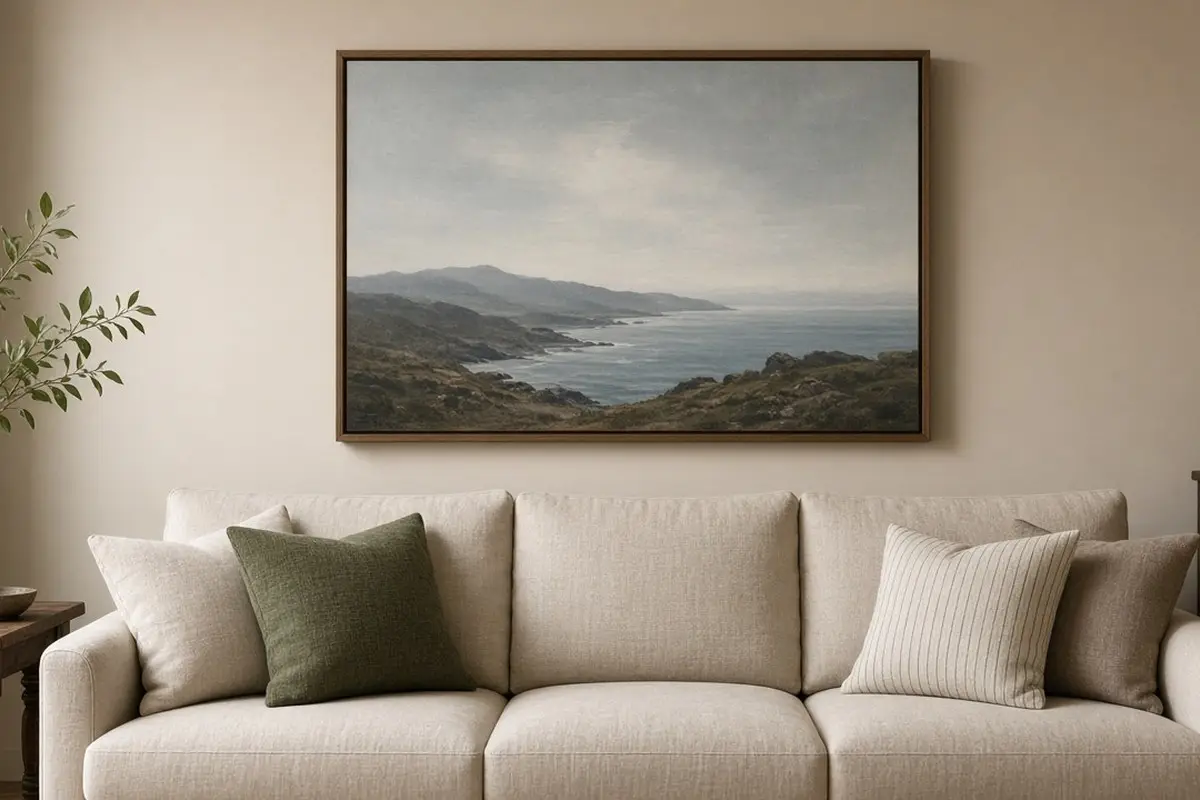
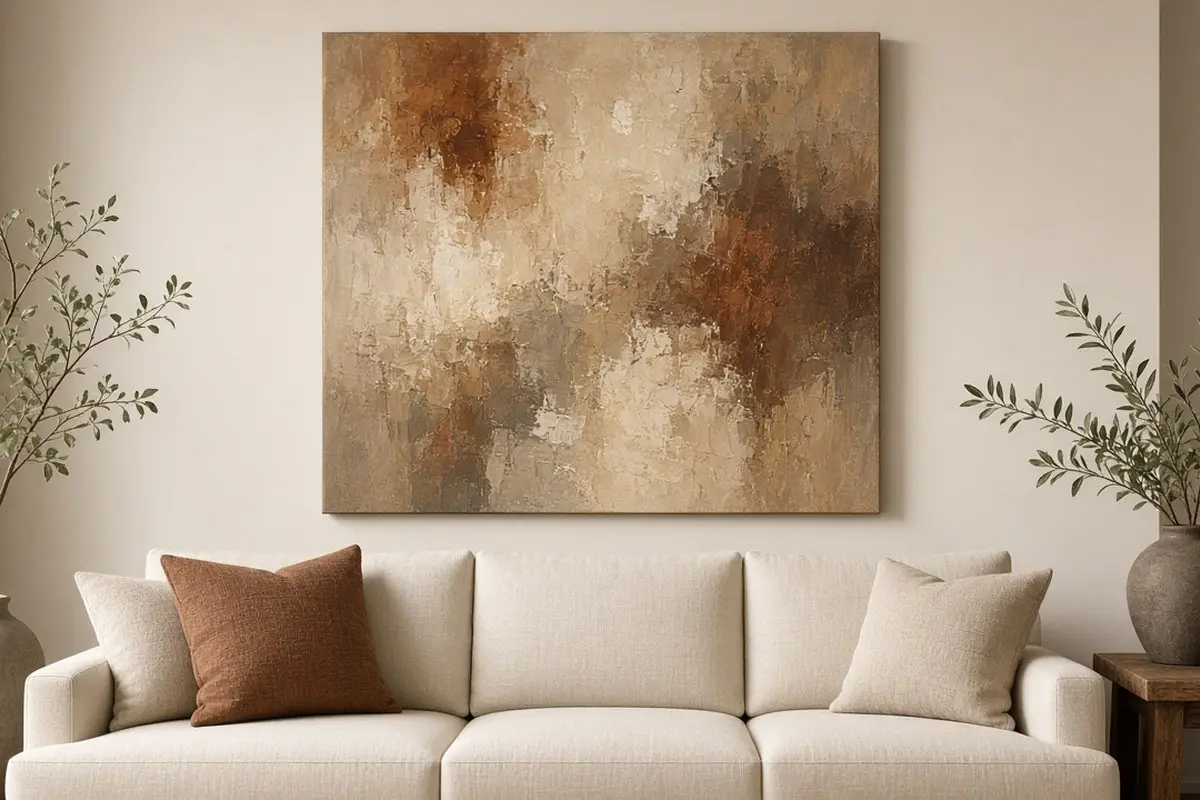
The simplest way to fill the wall is one big piece. A large abstract canvas, a landscape painting, or an oversized photograph gives the room a single focal point. It is calm, easy to hang, and easy to dust. It also suits rooms with lots of pattern elsewhere, because one large shape balances busy pillows and rugs.
Choose something with colors already in the room, and at least one color that is a little deeper than anything else. That deeper tone pulls the eye to the wall. A stretched canvas without a frame is lighter and cheaper to hang. A framed piece looks more formal.
Get the look
4. A matching pair
Two identical frames side by side bring order to the wall. Use two prints from the same series, or two halves of one image. Leave about two to four inches between them, no more. A wide gap breaks the pair into two separate pictures.
Together, the pair should still reach about two thirds of the sofa width. On a standard sofa, two frames around 24 by 32 inches each usually do it. Pairs suit symmetrical rooms with matching lamps or end tables, because they echo that balance.
Get the look
5. A row of three
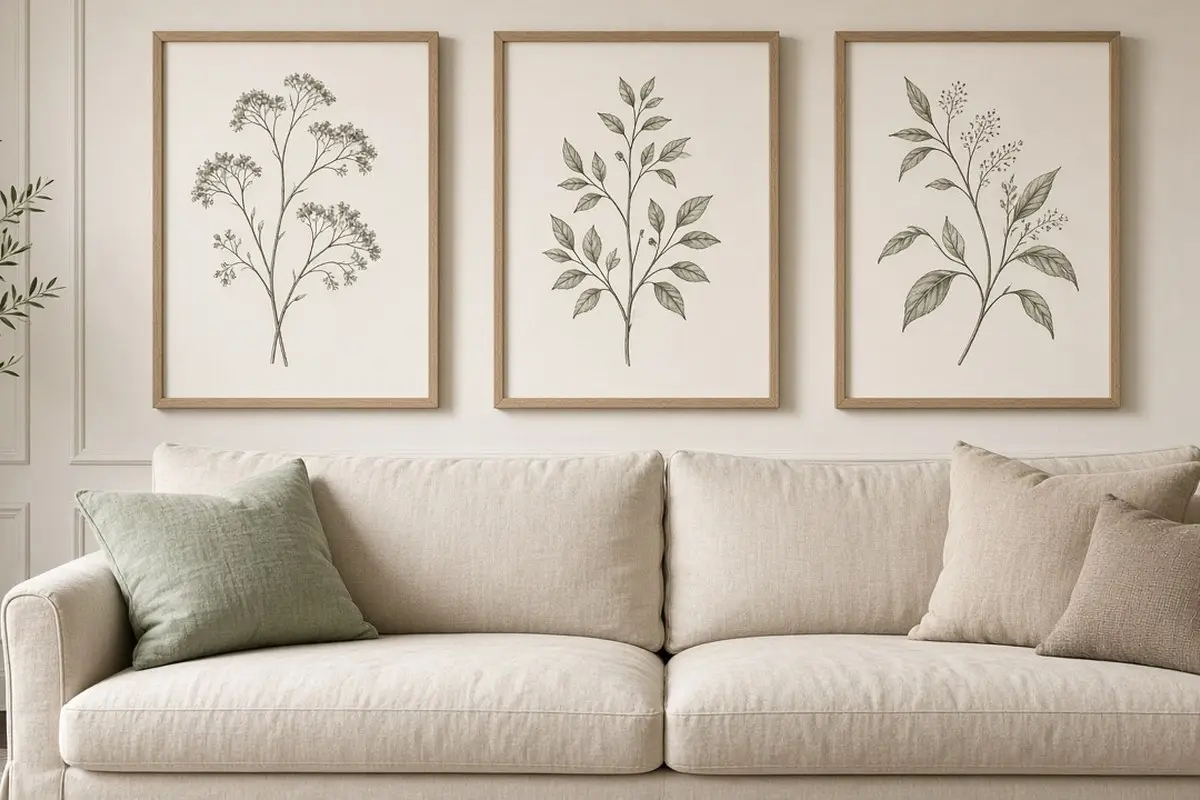
Three frames in a straight line feel calm and deliberate. They give you room to show a small series, such as three botanical studies or three black and white photographs, without the scatter of a gallery wall. Keep the frames identical and the gaps equal, about two to three inches.
The row should span about two thirds of the sofa, just like a single piece. Measure the total, including the gaps, before you buy. Hang the middle frame first, centered on the sofa, then add the outer two.
Get the look
6. A long picture ledge
A picture ledge lets you change art without new holes. Mount one long ledge across the sofa wall and lean frames on it, overlapping a little. Add a small object or two, such as a candle or a ceramic piece. You can rearrange it whenever you like.
Install the ledge about ten inches above the sofa back, so frames do not crowd heads. Choose a ledge with a lip on the front so nothing slides off when someone leans back.
7. A large mirror
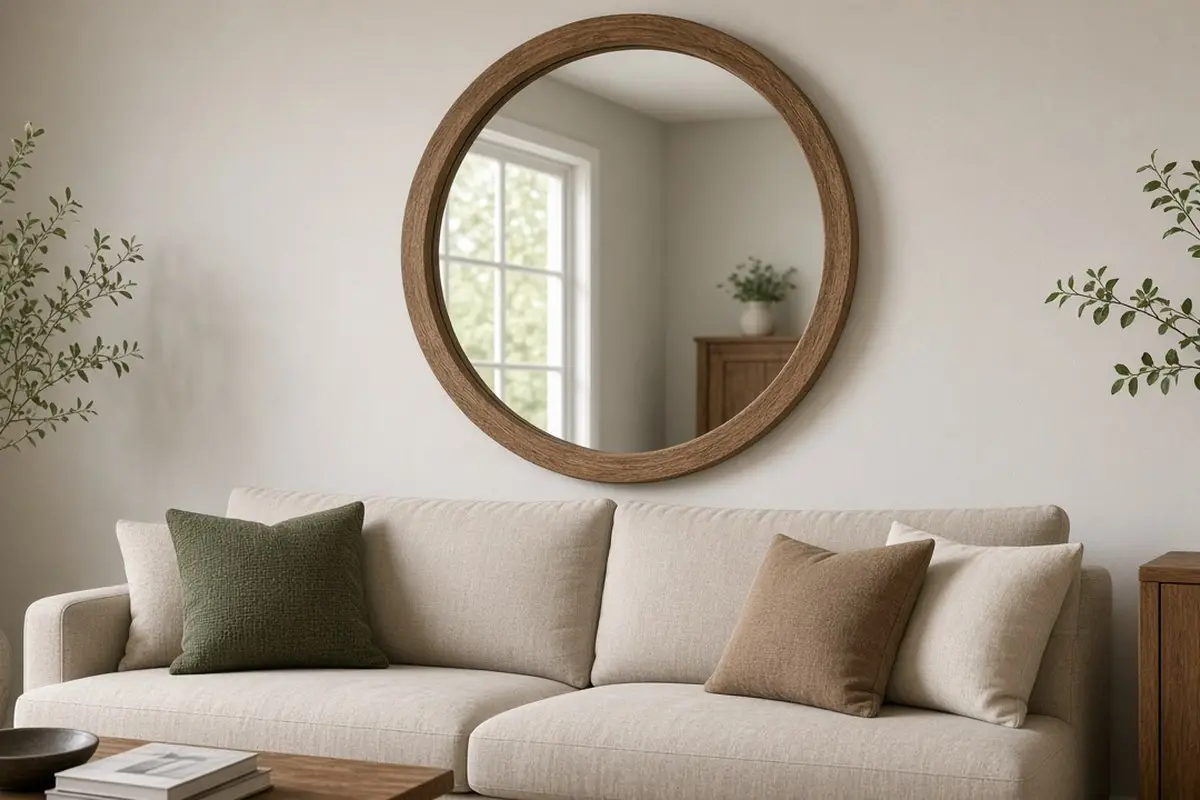
A mirror over the sofa brings light into the room and makes it feel bigger. It works especially well in rooms where the sofa sits opposite a window, because the mirror catches the view and the daylight. Round mirrors soften a room full of straight lines. Arched ones add height.
Hang a mirror over a sofa securely. Use a French cleat or heavy-duty hardware into a stud, because heads will be right below it.
8. A textile or rug hanging
A woven textile, a quilt, or a small flat-weave rug hung over the sofa adds softness and warmth. It also absorbs sound, which helps in echoey rooms with hard floors. Hang it from a wood dowel or a simple rod slipped through a sleeve sewn on the back.
Choose textiles with a clear pattern and a size close to the two-thirds rule. Vintage pieces from markets often have the most character, and a slight fade only makes them look better. Keep textiles out of direct sun so the colors last, and vacuum them gently with a brush attachment every few months.
9. Floating shelves with a few objects
Two floating shelves over the sofa can hold books, plants, and a few frames. They work when you want both storage and decor. Keep them sparse. A crowded shelf over a sofa feels top-heavy.
Space them at least 12 inches apart vertically and keep the lower shelf high enough that no one bumps their head when sitting back. Mount into studs.
10. A wall sconce pair with art between
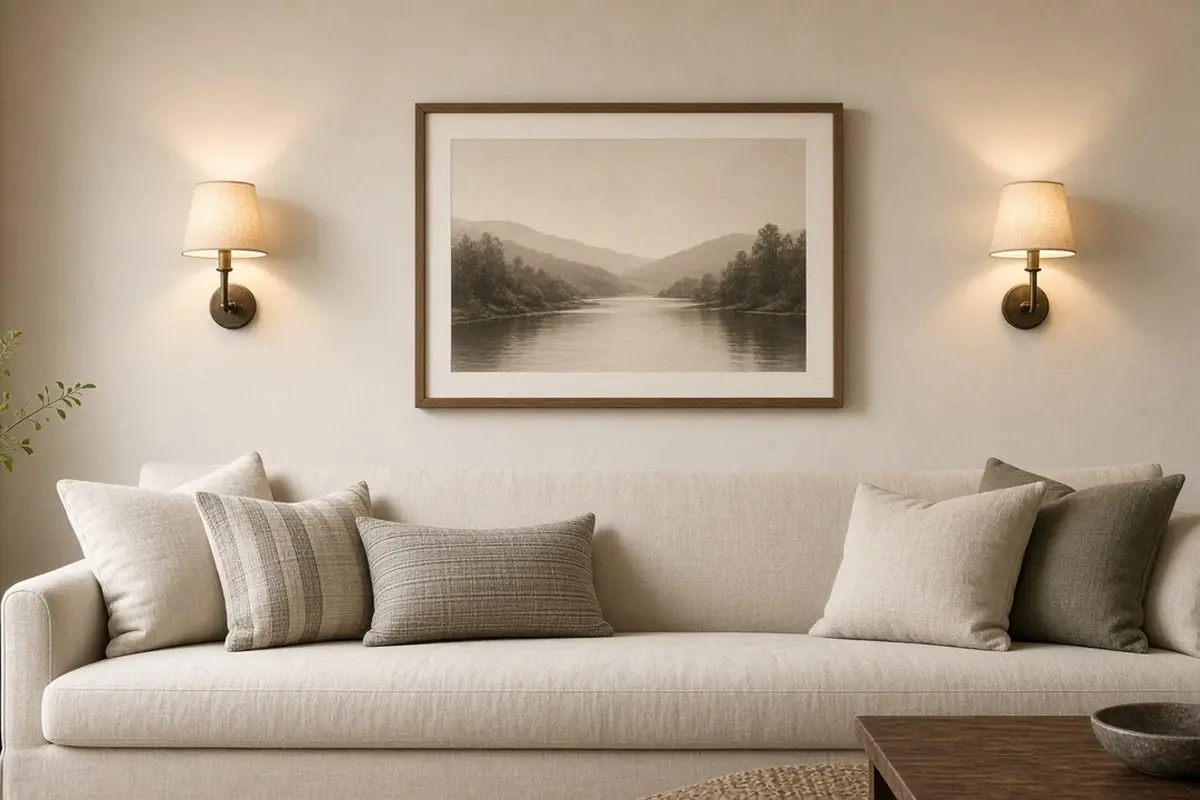
Two plug-in sconces on either side of a single piece of art turn the wall into a lit focal point. The light washes over the art and gives the room warm light at head height without side tables.
Place the sconces about 60 inches from the floor, or so the shade is just above head height when seated. Use cord covers painted to match the wall.
Get the look


11. A painted shape
If you want color but no frames, paint the wall. A painted arch, a block of color, or a wide horizontal band behind the sofa gives the wall a focal point with no hanging at all. Use painter’s tape for crisp edges and a color slightly deeper than the walls.
Keep the shape centered on the sofa and about two thirds its width, like art.


12. Leave it blank, on purpose
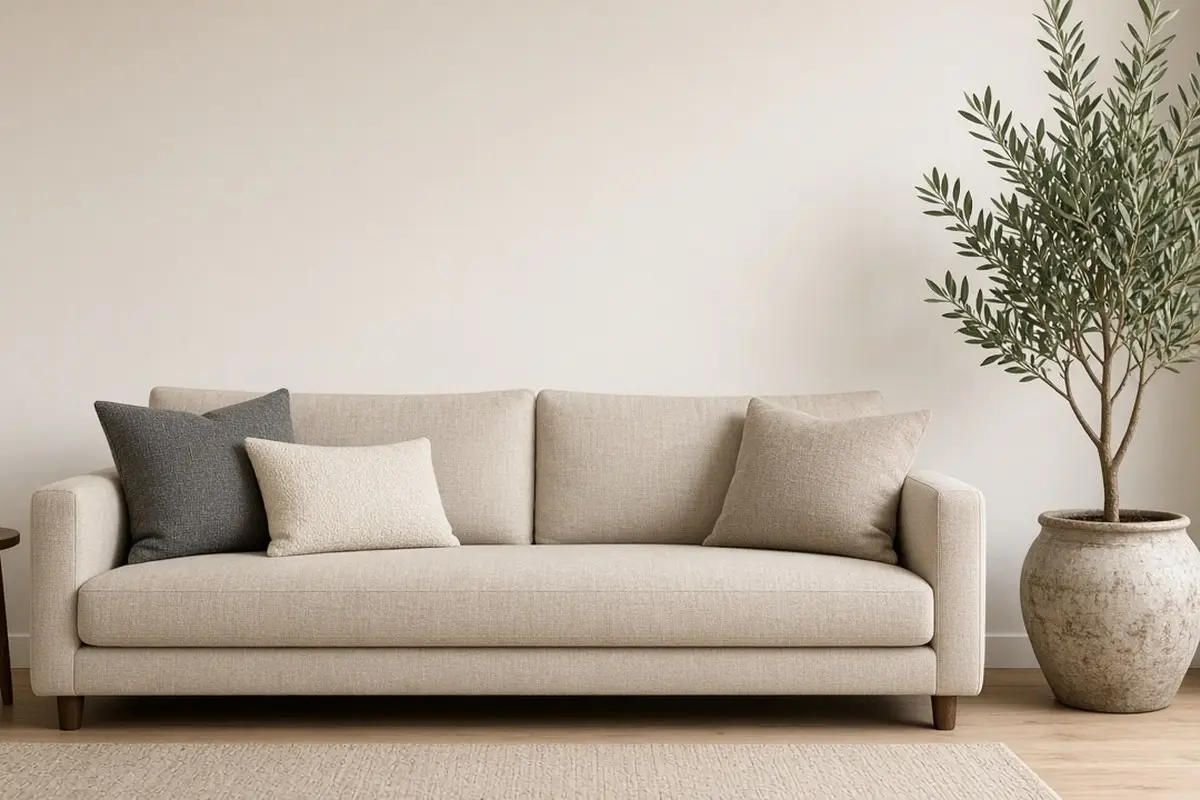
Sometimes the best wall decor is nothing. A blank wall above a beautiful sofa, with good paint and good light, can feel restful. This works best when the rest of the room has plenty of interest: a patterned rug, a strong lamp, a full bookcase. The empty wall gives the eye a place to rest.
If you choose blank, make sure it looks intentional. Paint the wall well, add a plant nearby, and keep the sofa styled simply.
Get the look
Tips Before You Start
- Make art about two thirds of the sofa width.
- Hang the bottom edge eight to ten inches above the sofa back.
- Mock up the size with kraft paper and painter’s tape.
- Use studs or heavy-duty anchors for mirrors and shelves.
- Keep gaps between frames to two or three inches.
- Choose one idea for this wall, not three.
FAQ
What size art goes over a sofa?
About two thirds the width of the sofa. On an 84 inch sofa, aim for art around 56 inches across, as one piece or a group.
How high should a picture be hung above a couch?
The bottom edge should sit about eight to ten inches above the sofa back.
Is a mirror over a sofa a good idea?
Yes, if it is secured into a stud. It adds light and works well opposite a window.
What if I rent and cannot make holes?
Use a picture ledge with one set of screws, or lean a large piece on a console behind the sofa. The quiet apartment details post has more renter-friendly ideas.
Do I need art at all?
No. A blank wall can be restful if the rest of the room has interest. The calm living room weekend refresh explains how to balance a room.
The wall above the sofa does not need twenty frames. Choose one clear idea, size it to the sofa, hang it at the right height, and the whole living room will look more finished.