
8 Home Massage Rooms With a Clear Floor

On this page12 sections
- How much floor a massage table needs
- A spare room with the table in the center
- Light that comes from low and to the side
- Warmth you can control
- A linen cabinet within two steps
- Quiet, even in a busy house
- A massage corner in a shared room
- Soft window coverings
- A calm wall to look at
- A note on scent and hygiene
- Keep the room ready
- Common questions
A massage room is mostly empty space. The table sits in the middle, and the person giving the massage needs to walk all the way around it without bumping a shelf or a chair. Everything else in the room exists to keep the body on the table warm, comfortable, and relaxed.
These eight home massage rooms start with that clear floor. Whether you are a therapist seeing a few clients at home, a couple who trade massages, or someone recovering from an injury who has regular home visits, the same principles apply: room to move, soft light, steady warmth, and quiet.
As an Amazon Associate I earn from qualifying purchases.
How much floor a massage table needs
A standard massage table is about 72 inches long and 28 to 30 inches wide. The person working needs about 3 feet of clear space on every side to move, lean, and change position. That makes a clear zone of roughly 12 by 10 feet. A smaller room of about 10 by 9 feet works if one long side of the table can be closer to a wall for shorter sessions.
Mark the table outline and the walking space with painter’s tape before you move any furniture in. Walk around it. If you have to turn sideways anywhere, the room is too tight in that spot.
Check the height as well. Most tables adjust from about 24 to 34 inches, and the right height depends on the person working, not the person lying down. A common guide is to stand beside the table with your arms relaxed: the table top should sit around your knuckles. Make sure nothing hangs low over the table, such as a pendant light or a ceiling fan, which can feel unsettling to someone lying face up.
1. A spare room with the table in the center
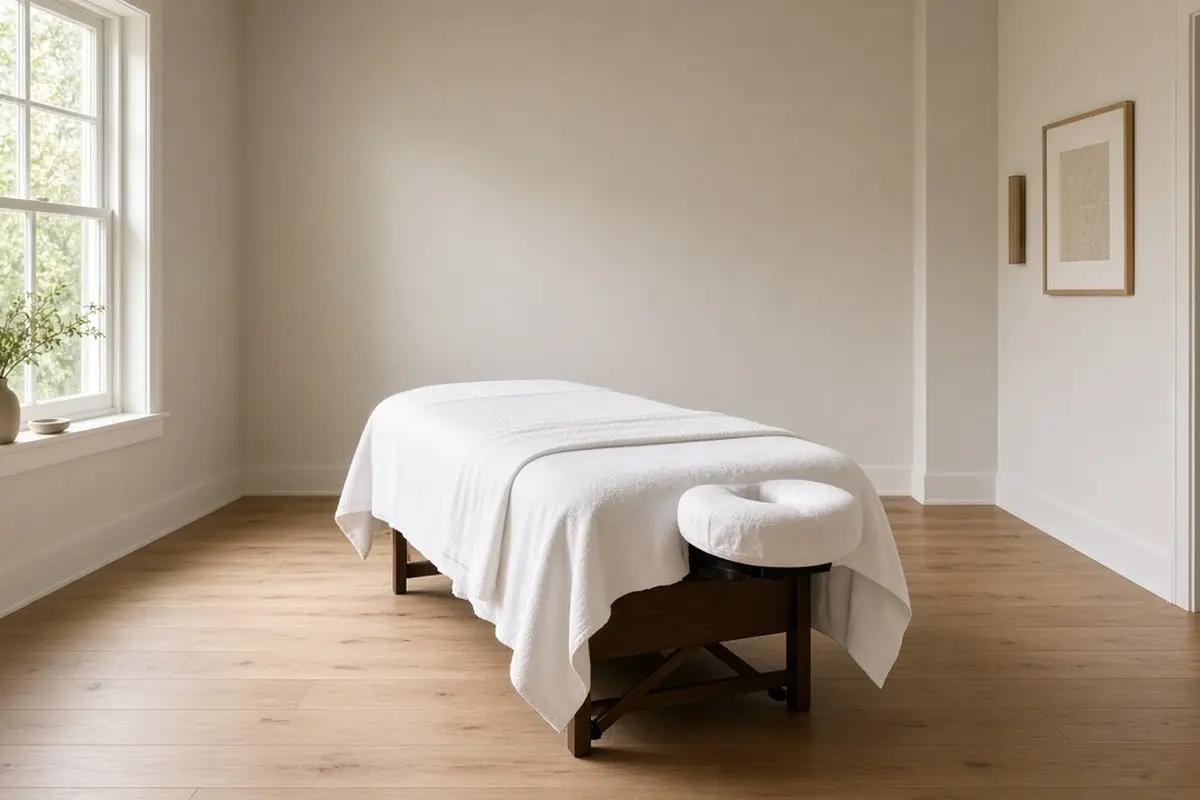
The easiest massage room is a spare bedroom with almost nothing in it. Put the table in the center, lengthwise along the room, and keep everything else against the walls: a small cabinet for linens and oils, a chair for clothes, and a lamp. Leave the floor bare or use one low rug under the table that does not catch on feet.
Think about the route into the room too. The person arriving will undress, so place a chair, a hook, and a small tray for jewelry and glasses near the door, away from the table. A small mirror by the door is a kind touch for anyone fixing their hair before leaving.
Get the look
2. Light that comes from low and to the side
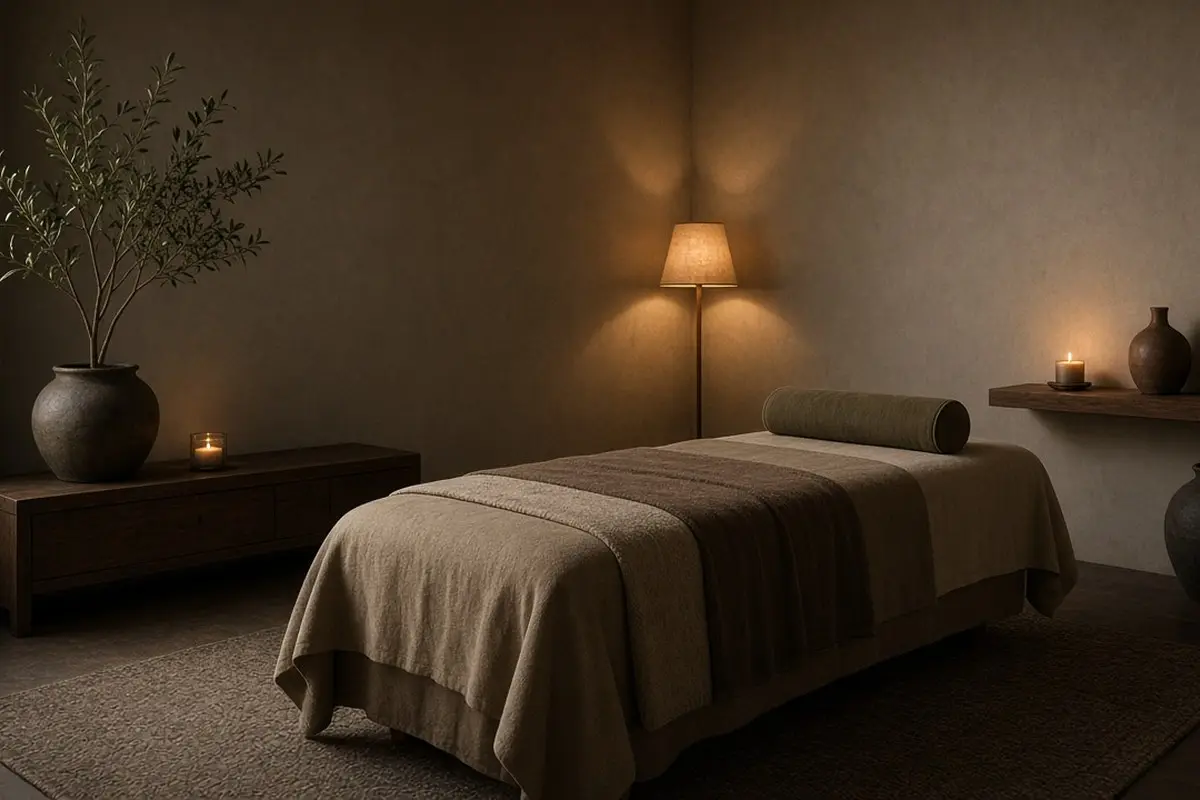
The person on the table spends half the session looking up and the other half looking down through a face cradle. Overhead light shines straight into their eyes. Instead, use floor lamps or table lamps placed low and toward the corners. Warm bulbs on dimmers make the room glow without glare.
If you need brighter light to see muscle tension or for clinical work, a gooseneck lamp aimed at the table, not at the face, gives you focused light without lighting up the whole room.
Avoid bulbs that flicker or buzz on dimmers. Choose dimmable LED bulbs matched to your dimmer switch, or plug lamps into a smart plug you can lower from your phone. Battery candles give a soft glow with no flame near oils and linens.
Get the look
3. Warmth you can control
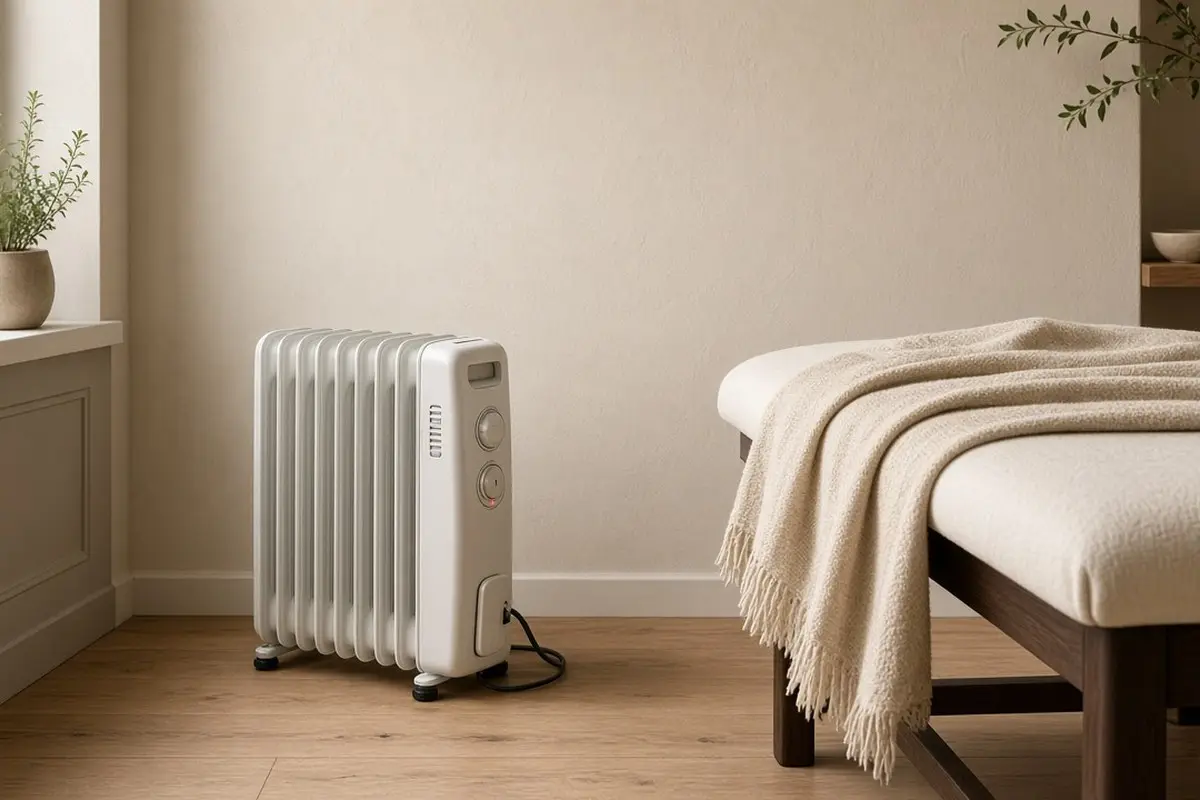
Bodies cool quickly when they lie still. A massage room should be a few degrees warmer than the rest of the house. A small oil-filled radiator heats evenly and silently. A table warmer pad under the sheet keeps the person warm from below, which feels wonderful in winter. Turn it on about fifteen minutes before a session so the sheets are already warm when the person lies down.
Keep a soft blanket folded at the foot of the table for anyone who still feels cold.
In summer, the opposite problem arrives. A quiet fan pointed away from the table, or a portable air conditioner set to a mild temperature, keeps the person giving the massage from overheating while the person on the table stays comfortable under a light sheet.
Get the look
4. A linen cabinet within two steps
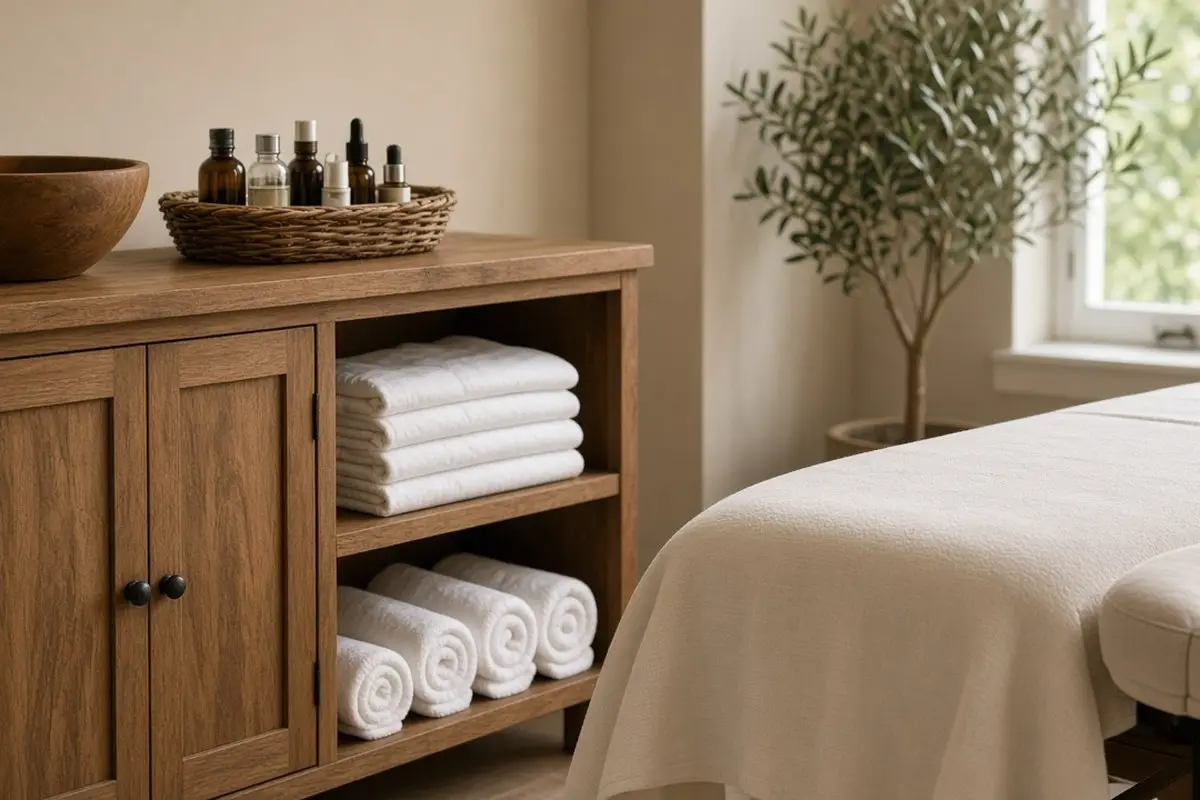
Sheets, towels, face cradle covers, bolsters, and oils should be within a step or two of the table. A closed cabinet keeps linens clean and the room calm. Store clean linens on upper shelves, oils and lotions in a drawer, and keep a lidded hamper for used linens near the door.
Oils stain wood, fabric, and carpet, so keep bottles on a tray with a lip. Choose a cabinet with a wipeable surface on top, and set a small warmer for lotions or stones on that tray rather than directly on the cabinet. Keep a roll of paper towels and a bottle of gentle cleaner in the bottom drawer for spills.
Get the look
5. Quiet, even in a busy house
Sound breaks relaxation quickly. A door that closes fully, a draft stopper at the bottom, and a white noise machine outside the door keep household noise out. Inside, play soft music from a small speaker tucked on a shelf. Heavy curtains and a rug also absorb sound. Soft-close hinges on the cabinet and felt pads under chairs stop small clicks and scrapes from breaking the quiet during a session.
If clients will visit, place the room as far from the kitchen and the television as you can. Ideally, give them a separate route from the front door that does not pass through the main living space. Even a short hallway with a closed door feels more private than walking past the family sofa.
6. A massage corner in a shared room
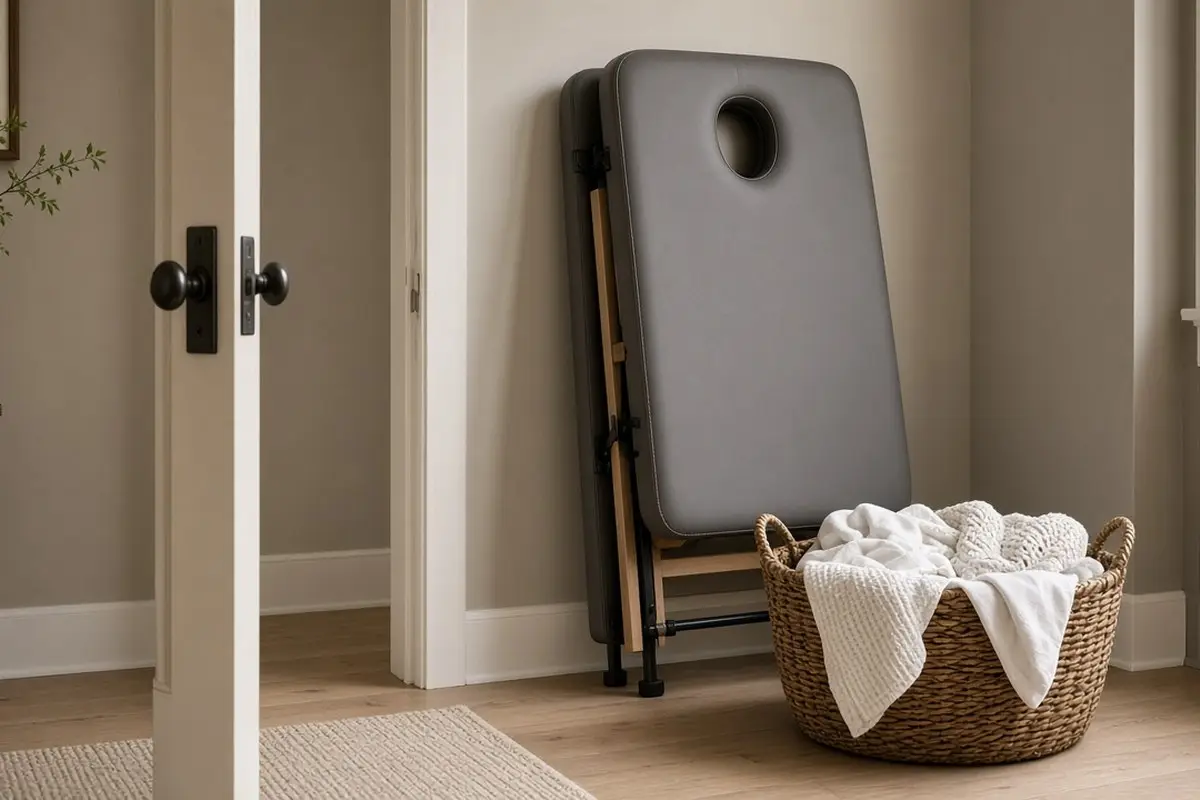
If you do not have a spare room, a folding table can work in a living room or a large bedroom. Pick the spot with the most clear floor, set up the table for each session, and fold it flat behind a door or under a bed afterward. Keep a basket with sheets, oil, and a speaker ready, so setup takes five minutes.
Before setting up, check the floor is level and the table legs are fully locked. On rugs, place the legs on firm furniture coasters so they do not sink unevenly. Clear the floor for at least the same 3 feet on each side, even if that means moving a coffee table into the hallway for an hour.
Get the look
7. Soft window coverings
Daylight is lovely in most rooms, but it can feel exposed on a massage table. Layer sheer curtains for privacy with blackout or lined curtains for dim sessions. Roman shades work in tight rooms where curtains would crowd the table.
Choose fabrics in soft, plain colors. Busy patterns feel lively in a living room, but in a massage room they compete with the calm you are trying to create. Ceiling-mounted tracks let curtains run right to the corners, so no line of light leaks in around the edges.
8. A calm wall to look at
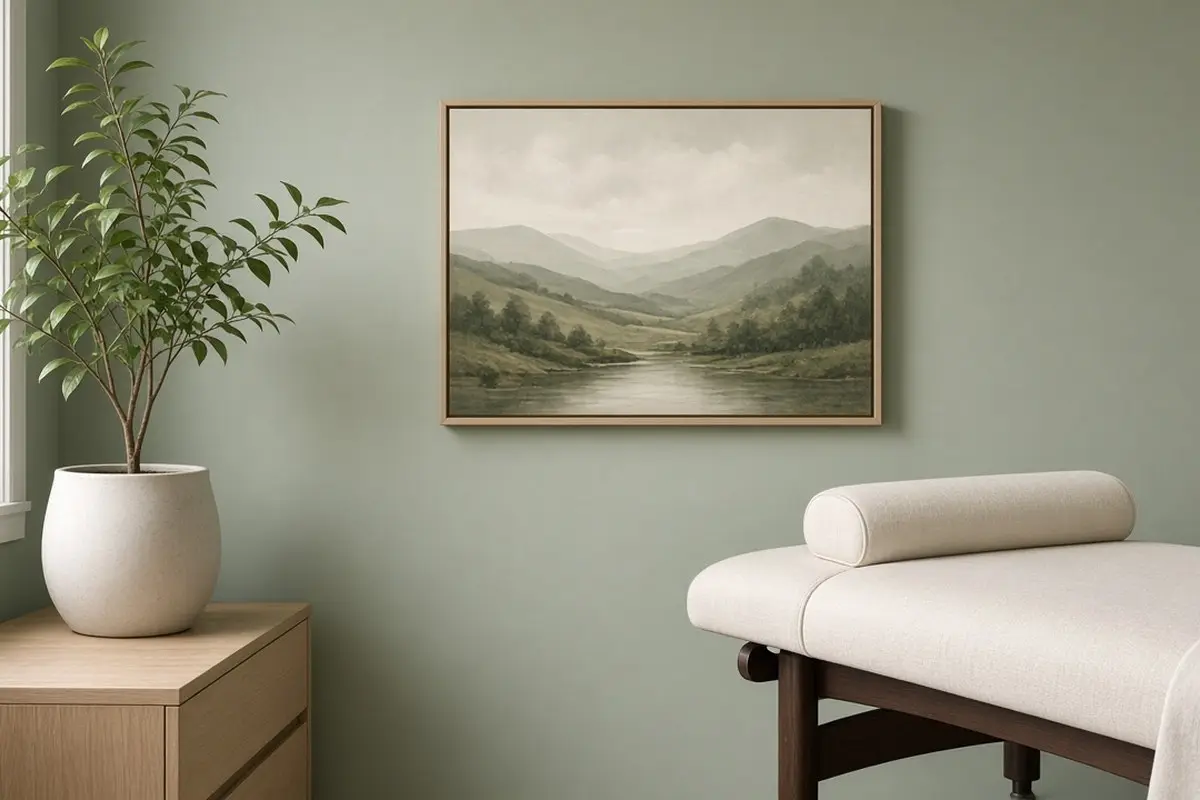
The person getting up from the table, or waiting before a session, looks at one wall. Keep it simple: a soft wall color, one piece of art, a plant. Avoid clocks on that wall; time-checking undoes relaxation. Keep a small silent clock behind the client’s line of sight, on the shelf where the person working can see it. For calm color ideas, see quiet wall colors.
Get the look
A note on scent and hygiene
Scent is personal, and a fragrance one person loves can give another a headache. Keep the room itself unscented and offer a choice of oils instead, or use a diffuser only when you know the person enjoys it. Fresh air between sessions does more than any spray: open the window for ten minutes after each massage while you change the linens.
Hygiene is part of what makes a room feel calm. Wipe the table vinyl, the face cradle, and the bolsters with a gentle cleaner after every use, and wash sheets in hot water with an unscented detergent. Oils build up in fabric over time, so replace face cradle covers and well-used sheets more often than you would bed linens. Keep a small bin with a lid for tissues and used wipes, and empty it daily.
Finally, think about the floor around the table. Oily feet and hands can make a hard floor slippery. A washable cotton rug beside the table where the person steps down, and a pair of clean slippers by the door, make getting off the table safe and comfortable. Small touches like these are what turn an empty spare room into somewhere people look forward to visiting.
Keep the room ready
A massage room works best when it is always set up. Make the table after every session, restock linens weekly, and keep the floor clear. Dust the shelves and lamps once a week, since dust shows clearly in low side light. The less there is to move, the sooner you can begin. Keep a short checklist inside the cabinet door: warmer on, linens fresh, oils topped up, music ready, phone silenced. Running through it before each session takes a minute and means nothing is forgotten.
Common questions
How big should a home massage room be? About 12 by 10 feet, so the table has 3 feet of clear floor on every side.
What lighting is best for a massage room? Warm, dimmable lamps placed low and to the side, never overhead light shining into the face.
Can a massage room double as a guest room? Yes. Use a folding table and a sofa bed or daybed against the wall, and keep linens for both uses in one closed cabinet.
For more, see home yoga corner, moody bedroom lamp light, and guest ready bedroom ideas.