
10 Hallway Walls That Do Not Become a Photo Museum

On this page13 sections
- Start with the wall, not the frames
- Wainscoting on the lower third
- One large print instead of twelve small frames
- A pair of plug-in sconces
- A picture ledge for rotating pieces
- A mural or scenic wallpaper on one wall
- Color-drenched walls and trim
- A row of hooks as a pattern
- A mirror to bounce light
- Painted stripes or a color block
- Leave one wall truly empty
- Where the family photos go instead
- Common questions
Hallway walls have a way of filling up by accident. A school photo goes up, then a wedding portrait, then a frame from a trip, and five years later the corridor looks like the back room of a museum that never got a curator. Every frame means something, but together they make a narrow space feel narrower and nobody actually stops to look.
This post is about the walls themselves. Instead of asking what else to hang, it asks what the wall could be: paneled, painted, lit, or given one strong piece. Here are ten approaches that make a hallway wall feel finished without turning it into a photo archive.
As an Amazon Associate I earn from qualifying purchases.
Start with the wall, not the frames
Before you hang anything, take everything down and look at the bare wall in daylight and at night. Notice where light falls, where switches and thermostats sit, and which stretch you see first when you walk in. In a narrow hallway you see the walls at a sharp angle, so texture and color read better than small detail. A frame that looks lovely face-on can disappear when you only ever glimpse it sideways.
Make a quick inventory while the wall is bare. Which pieces do you genuinely love, and which went up because there was an empty nail? Sort them into three piles: keep for the hallway, move to another room, and store in a box or photo book. Most people find that two or three pieces earn a place in the hallway, and the rest are happier somewhere you sit and linger. Then decide on the treatment for each wall. One wall might get paneling, the other a single print, the end wall a sconce. Giving each wall a job prevents the slow creep of random frames that started the problem in the first place.
Think about the practical side too. Hallways carry laundry baskets, vacuum cleaners, groceries, and backpacks. Anything that sticks out more than a few inches at hip height will get bumped. Keep deep objects above shoulder height or out of the corridor entirely, and favor treatments that sit flat against the wall.
1. Wainscoting on the lower third
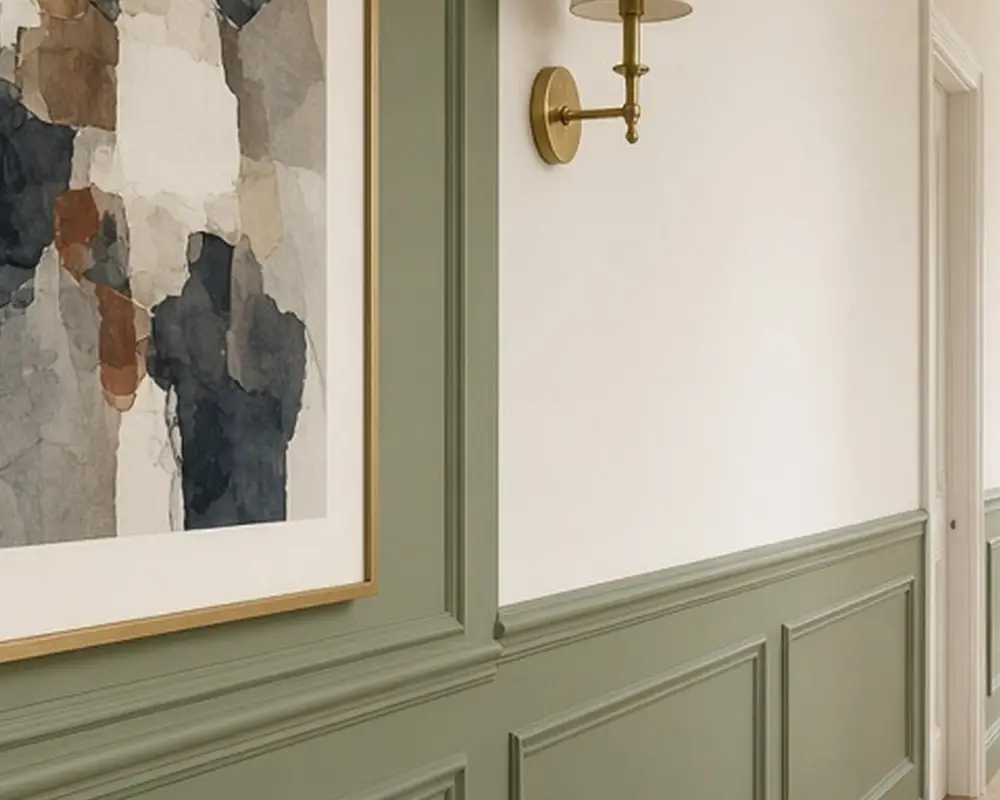
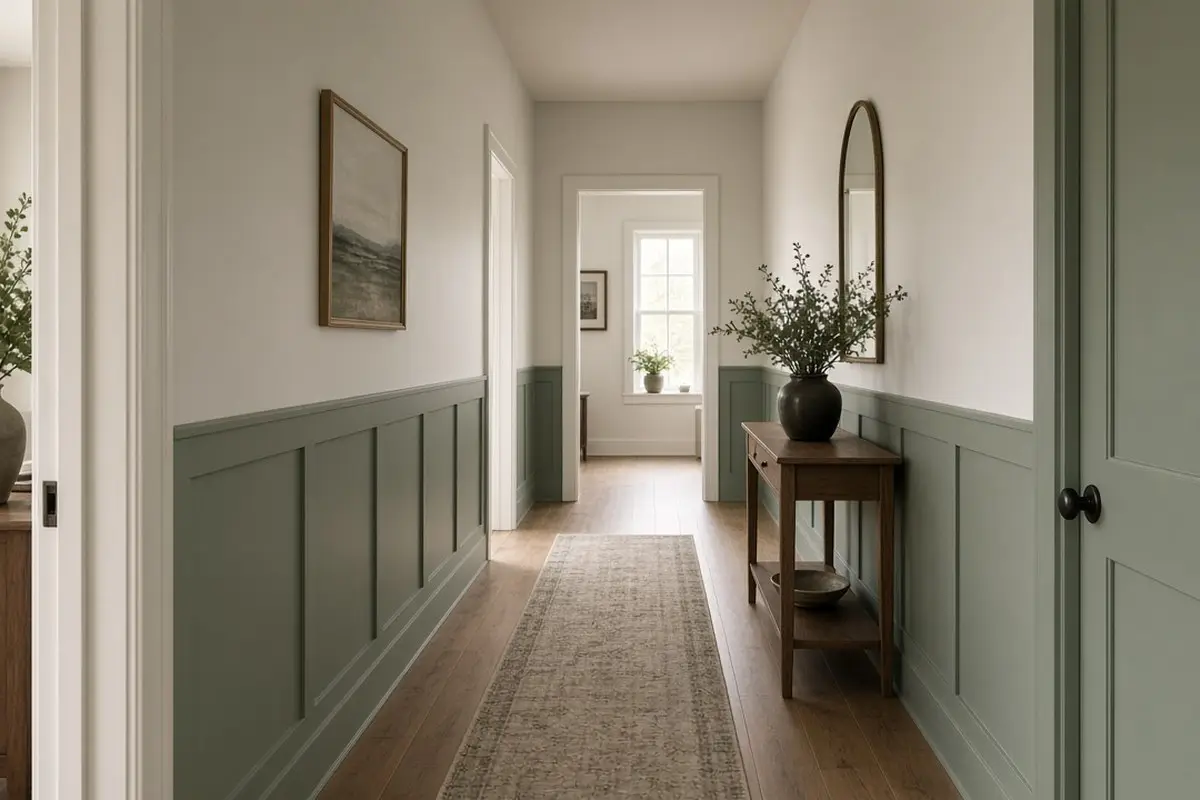
Paneling the bottom third of a hallway wall gives it structure and protects it from scuffs at the same time. Board and batten, simple picture-frame molding, or beadboard all work. Paint the paneling a slightly deeper shade than the wall above, or the same color in a higher sheen so it wipes clean. With paneling in place, the wall feels designed even with nothing hung on it.
If you are not ready to cut and nail trim, peel-and-stick panels or a painted faux wainscot are good stand-ins. Mark a level line about thirty-two to thirty-six inches from the floor, paint below it in the deeper shade, and finish the line with a thin strip of molding or a crisp painted edge. A chair rail at the top of the paneling also gives you a natural line to align sconces, hooks, or a ledge above, which keeps everything that follows looking tidy and related. In homes with kids and dogs, the paneled zone takes the knocks and wipes clean, so the wall above stays fresh for years.
Get the look
2. One large print instead of twelve small frames
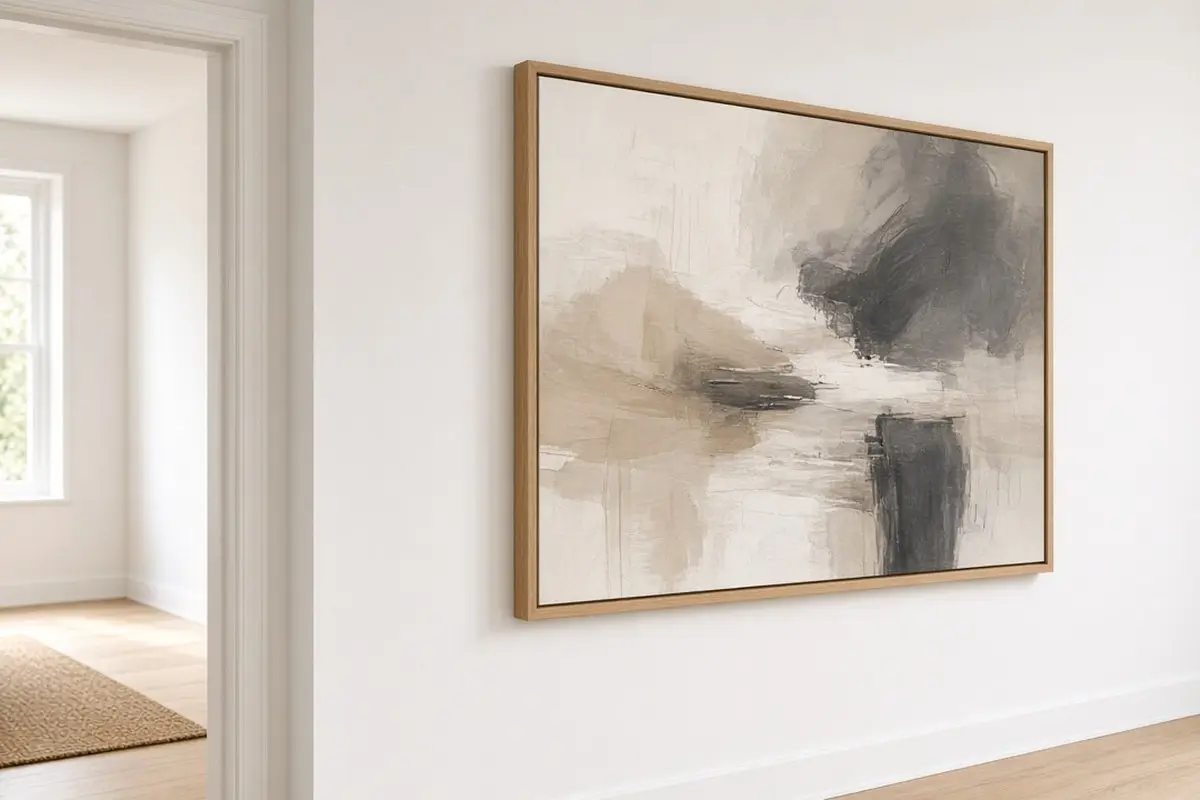
A single big piece reads clearly from an angle, which small frames rarely do. Choose a print or painting at least thirty inches wide for a typical hallway wall and hang its center around fifty-seven to sixty inches from the floor. Leave generous bare wall either side. The emptiness is what makes the piece feel chosen.
The piece does not need to be expensive. An oversized poster from a museum shop, a large botanical print, a textile hung from a wooden hanger, or even a painted canvas you made yourself can all work. What matters is scale and calm. Pick something with a limited palette that relates to the wall color, so it looks like it belongs to the house rather than to a gallery. A thin frame in wood or black keeps the piece light. If the wall is long, center the art on the stretch between two doors, not on the wall as a whole, because that is how the eye measures it when you walk past.
Get the look
3. A pair of plug-in sconces
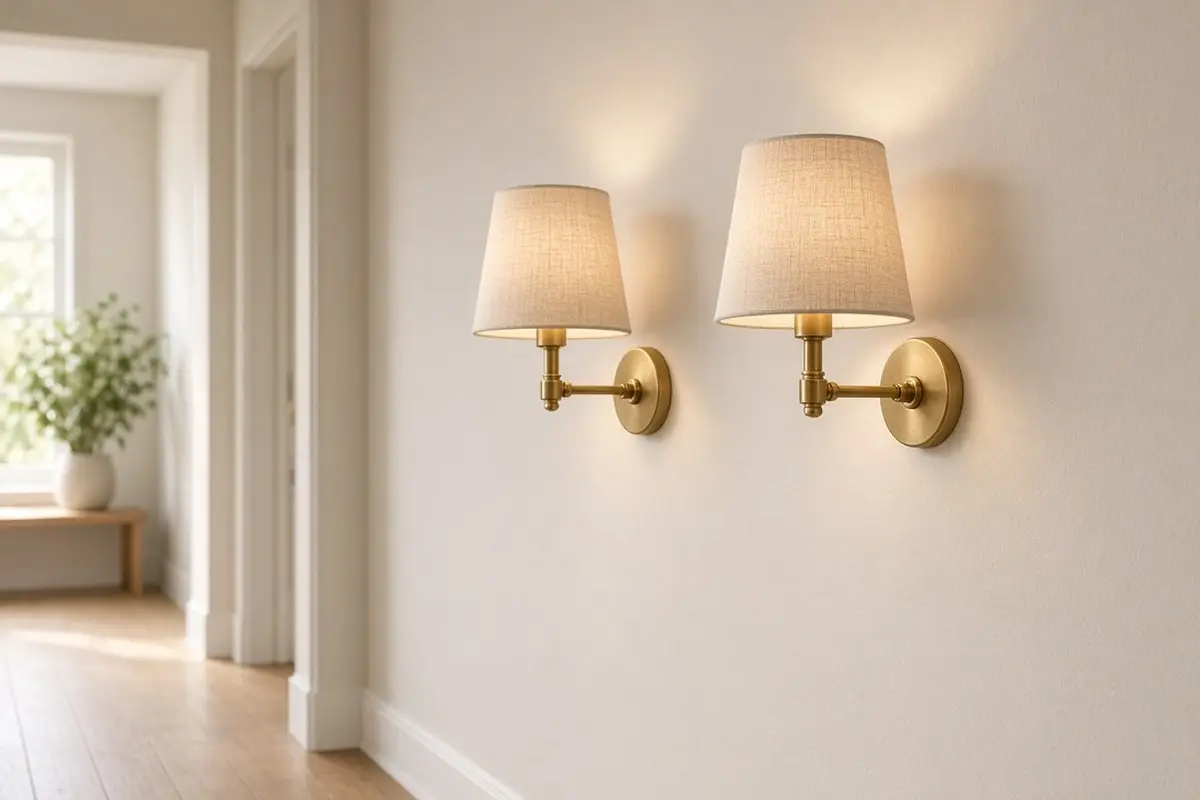
Light is decor on a hallway wall. A pair of sconces spaced evenly along a blank stretch adds rhythm and warmth, and the glow itself becomes the feature. Plug-in models with a cord cover avoid any rewiring. Hang them a little above eye level, around sixty to sixty-six inches, so the shades do not glare.
Spacing matters more than the fixture. On a ten-foot stretch of wall, two sconces about four to five feet apart look balanced; on a longer wall, three spaced evenly create a steady rhythm without needing art in between. Choose warm bulbs, around 2700K, and consider a smart plug so they turn on at sunset. The light pools on the wall and turns an ordinary corridor into something that feels like a hotel hallway in the evening. If you prefer something even simpler, rechargeable battery sconces skip the cord entirely and can be moved if you rearrange later.
Get the look
4. A picture ledge for rotating pieces
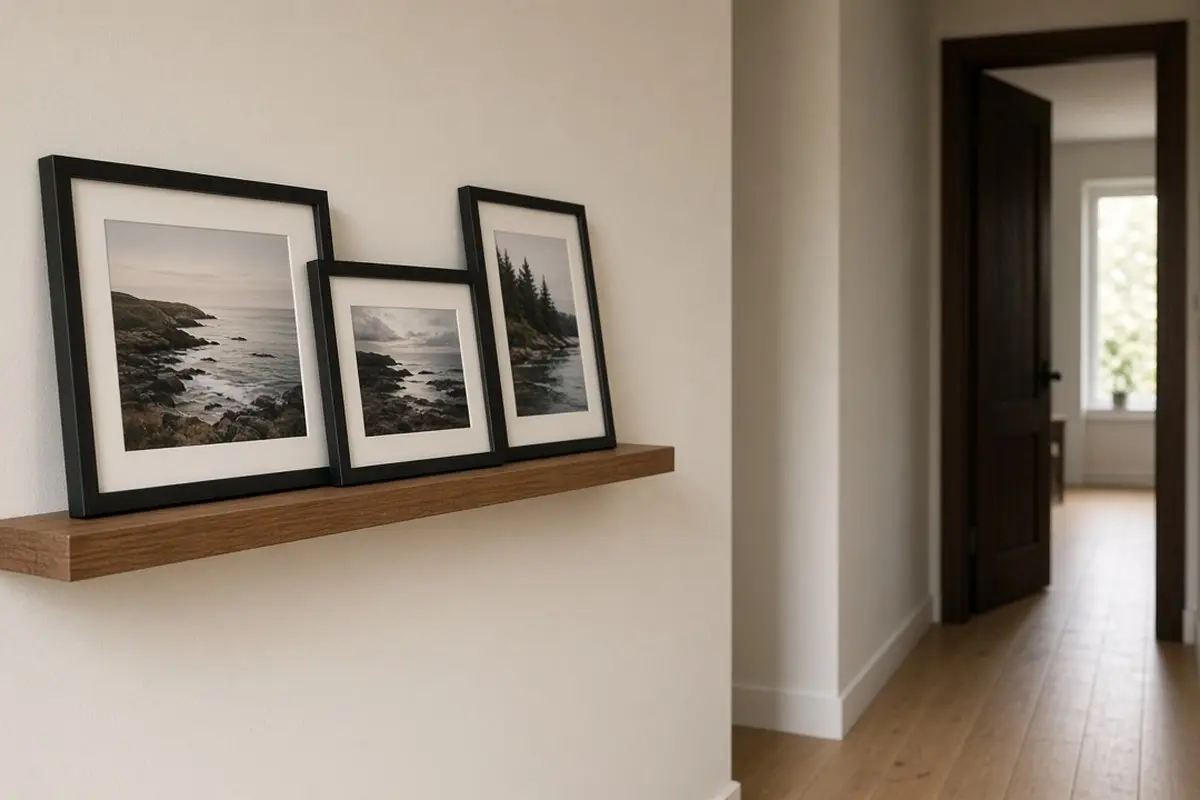
If you do want family photos, a narrow ledge lets you display a few at a time and swap them out with the seasons. Overlap frames of different heights, lean one small piece of art in among them, and stop at four or five items. A ledge keeps the collection edited because there is only so much room.
Mount the ledge at a comfortable viewing height, so the frames standing on it sit roughly at eye level, and use wall anchors or studs because a row of glass frames is heavier than it looks. Stick to one or two frame colors so the mix stays coherent. Every few months, swap a couple of photos for new ones and move the retired ones into an album. This keeps the hallway feeling current instead of frozen in time, and it turns choosing photos into a small family ritual rather than a decision you make once and never revisit.
Get the look
5. A mural or scenic wallpaper on one wall
A scenic wallpaper, like a soft landscape or a botanical print, turns a hallway wall into a view. Use it on one wall only, ideally the long wall you face when you enter. Peel-and-stick versions suit renters and come off cleanly. Keep the opposite wall plain so the corridor does not close in.
6. Color-drenched walls and trim
Painting the walls, trim, and doors in one color, sometimes called color drenching, makes a hallway feel deliberate and calm. Mid-tones like clay, olive, or dusty blue work well in a corridor with little natural light. Because there are no contrasting edges, the space reads as one soft envelope, and you need far less on the walls.
7. A row of hooks as a pattern
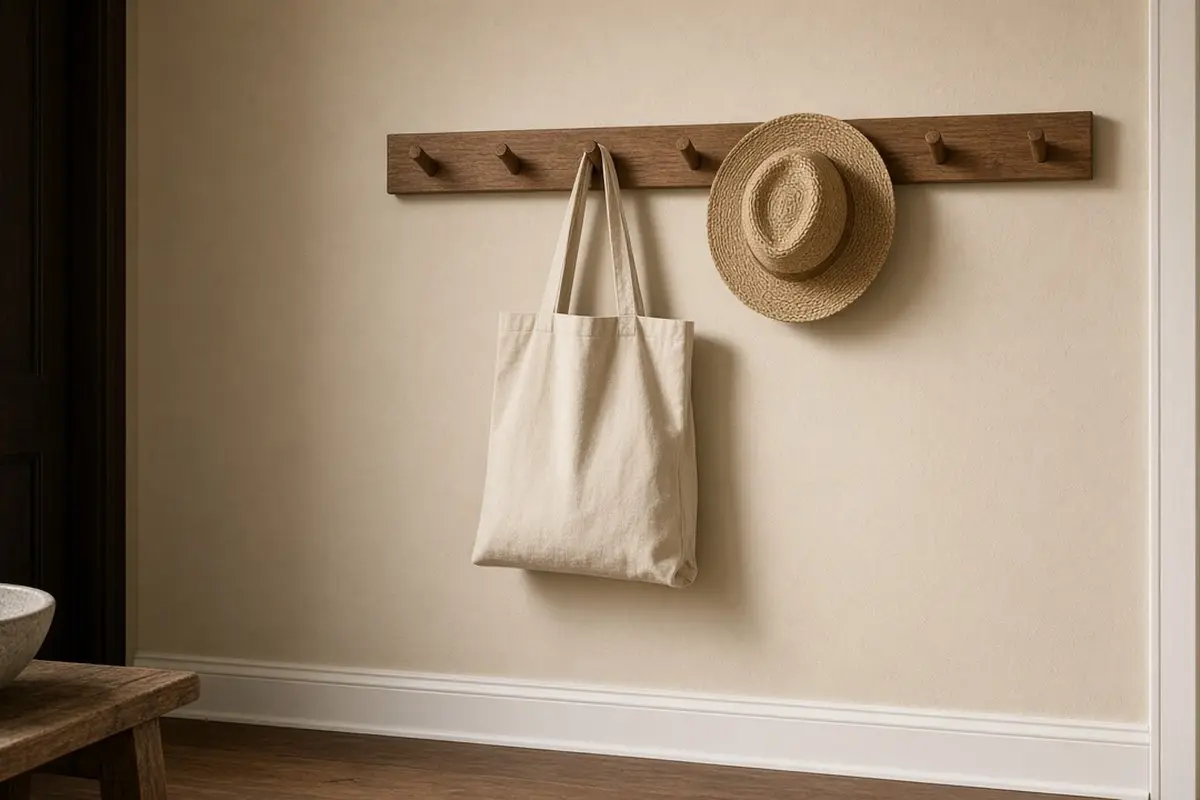
Wooden peg rails or a row of matching hooks can be both storage and decoration. Run a Shaker-style peg rail along one wall at about five feet and hang a hat, a tote, a small mirror, and a plant hanger. Spaced evenly, the pegs themselves make a graphic line that looks good even when empty.
Get the look
8. A mirror to bounce light
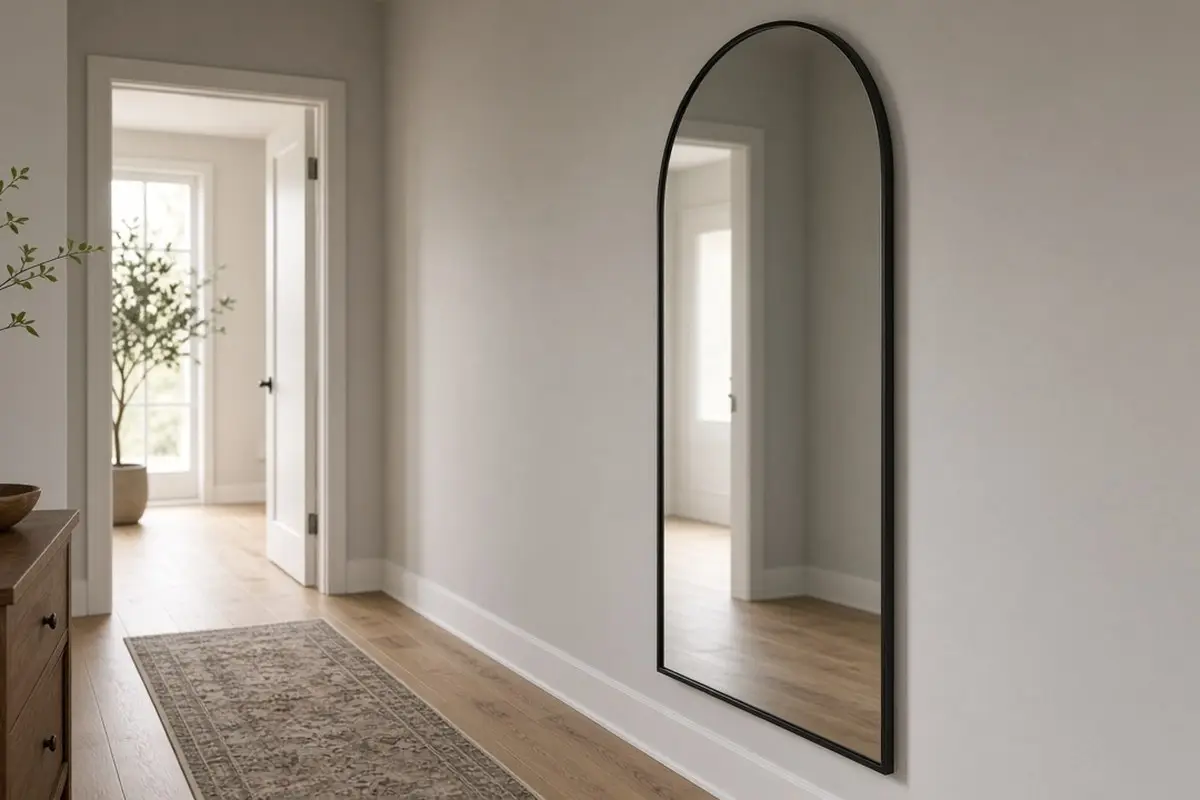
A tall mirror on the wall opposite a doorway or window brings light into a dark hallway and makes it look wider. Choose a slim frame and hang it vertically so it does not crowd the corridor. A round mirror works at the end of a hall where it can reflect a lamp or window.
Get the look
9. Painted stripes or a color block
A painted horizontal band at chair-rail height, or a block of color framing a doorway, gives the wall a focal point for the price of a sample pot. Use painter’s tape and a level. Horizontal stripes make a short hallway feel longer; a color-blocked arch around a door at the far end draws you toward it.
10. Leave one wall truly empty
The quietest idea is the hardest: choose one hallway wall and hang nothing. A clean, well-painted wall next to a carefully chosen feature on the other side gives the eye somewhere to rest. It also leaves room for traffic, swinging doors, and the occasional piece of furniture being carried through.
An empty wall also makes the rest of the hallway look more expensive. When every surface carries something, nothing stands out; when one wall is bare, the paneling, print, or sconces on the other side get your full attention. If a bare wall feels unfinished at first, give it a week. Most people stop noticing the absence and start noticing how much calmer the walk to the bedroom feels. If it still bothers you, a fresh coat of paint in a slightly warmer white is often all it needs.
Where the family photos go instead
Photos still deserve a home. Move most of them to a bedroom, a stairway, or a photo book on the coffee table, and keep only a few favorites on the hallway ledge. If you do build a grouping elsewhere, the spacing rules in our above-sofa wall ideas apply, and our guide to wall updates without furniture has more paint and trim ideas.
Common questions
How do I decorate a narrow hallway wall? Use flat treatments like paneling, paint, or wallpaper, then add one large piece or a pair of sconces rather than many small frames.
How high should art hang in a hallway? Center art around fifty-seven to sixty inches from the floor, the same as in other rooms.
What paint finish is best for hallway walls? Eggshell or satin on the walls and semi-gloss on trim and paneling, because hallways get touched and scuffed more than most rooms.
For the hallway as a whole, see our long hallway ideas.