
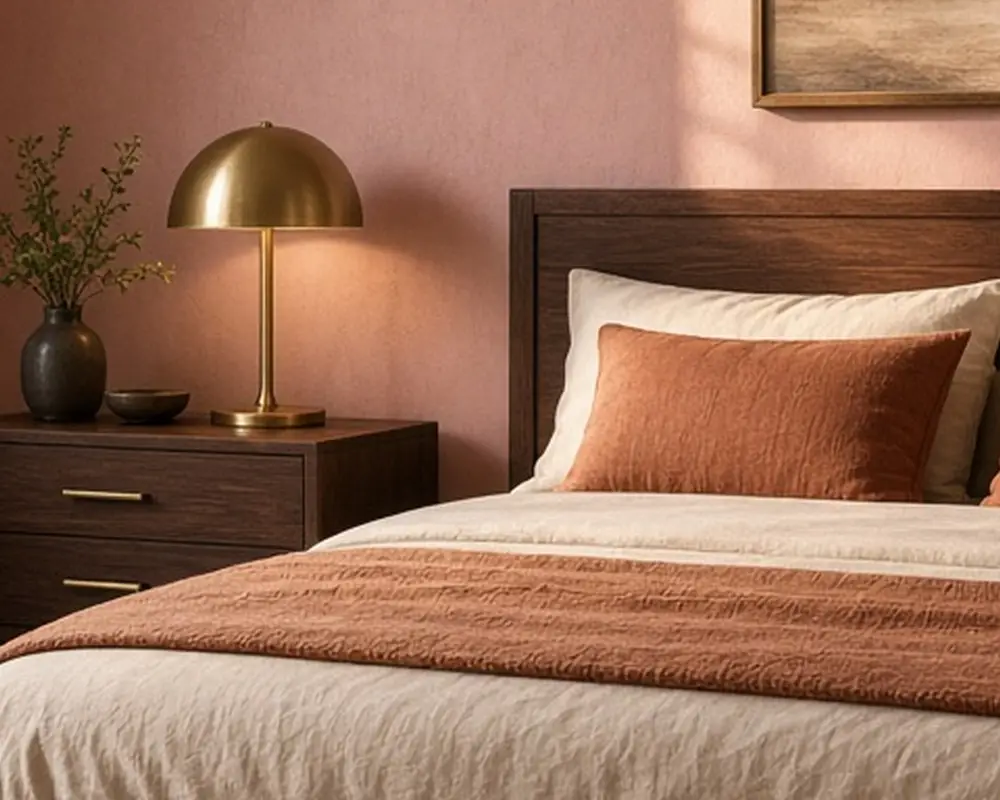
12 Pink Bedrooms for People Who Do Not Want a Nursery

On this page14 sections
- Choose a pink with gray or brown in it
- Pair pink with deep wood
- Add rust, terracotta, and burgundy
- Pink with olive and forest green
- Blush bedroom paint with a darker ceiling
- Color-drench the whole room
- Linen bedding in faded pink
- Black accents for contrast
- Brass and warm metals
- Keep the shapes simple
- Plaster and limewash texture
- Let the art bring in other colors
- Quick Rules for a Grown-Up Pink
- FAQ
Pink has a reputation problem. Say “pink bedroom” and many people picture a little girl’s room with ruffles and princess decals. But the right pink is one of the most flattering colors you can put on a bedroom wall. Dusty rose, plaster pink, terracotta blush, and muted mauve make skin look warm, soften hard morning light, and give a room a gentle glow at night.
The difference between a nursery and a grown-up pink room comes down to three things: the shade, what you pair it with, and how much contrast you allow. The twelve ideas below show how to use pink in a way that feels calm, warm, and adult. For other soft palettes, the calm bedroom paint colors post is a good companion.
As an Amazon Associate I earn from qualifying purchases.
1. Choose a pink with gray or brown in it
The single most important decision is the shade. Clear, bright pinks like bubblegum or candy pink look young. Pinks muddied with a little gray, brown, or beige look sophisticated. Think dusty rose, old plaster, faded terracotta, or the inside of a seashell.
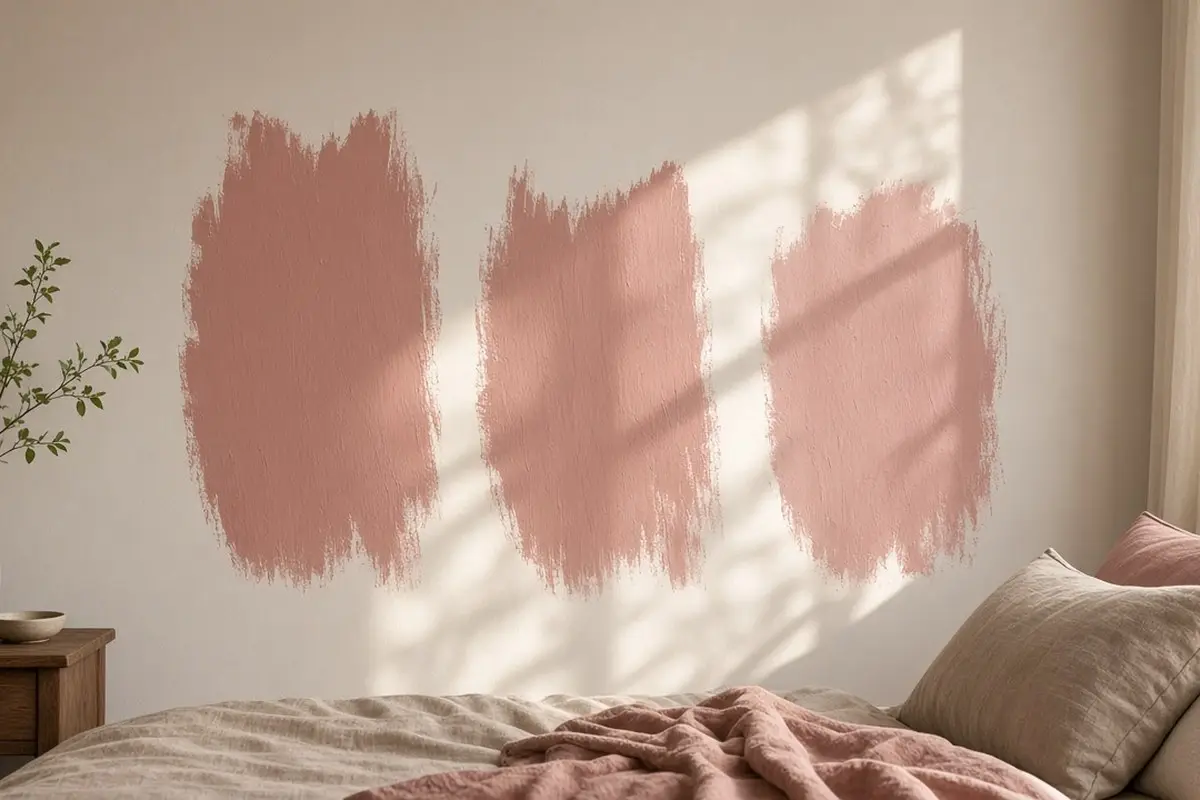
When you look at swatches, put your pink next to a pure pink. The one you want should look slightly dull by comparison. On a whole wall, that dullness turns into softness.
Test at least three shades with large painted samples, and look at them morning and night. Pink shifts a lot with light; a shade that looks beige at noon can look rosy at dusk.
Room orientation matters. North-facing bedrooms get cool, bluish light that can make pink look gray or lilac, so choose a warmer, slightly peachy pink there. South-facing rooms get warm light that intensifies pink, so a cooler, grayer shade stays calmer.
Get the look
2. Pair pink with deep wood
Dark or mid-tone wood immediately grows pink up. A walnut bed, an antique oak dresser, or a dark wood nightstand gives the room weight and stops pink from floating away into sweetness. The contrast between soft wall and solid wood feels considered.
If your furniture is white or pale, add at least one dark wood piece, even if it is just a bench or a stool.
Vintage wood furniture is especially good here. The worn finish and slightly irregular grain of an old chest or a secondhand bedside table adds a sense of history that makes a pink room feel collected rather than decorated in one go.
3. Add rust, terracotta, and burgundy
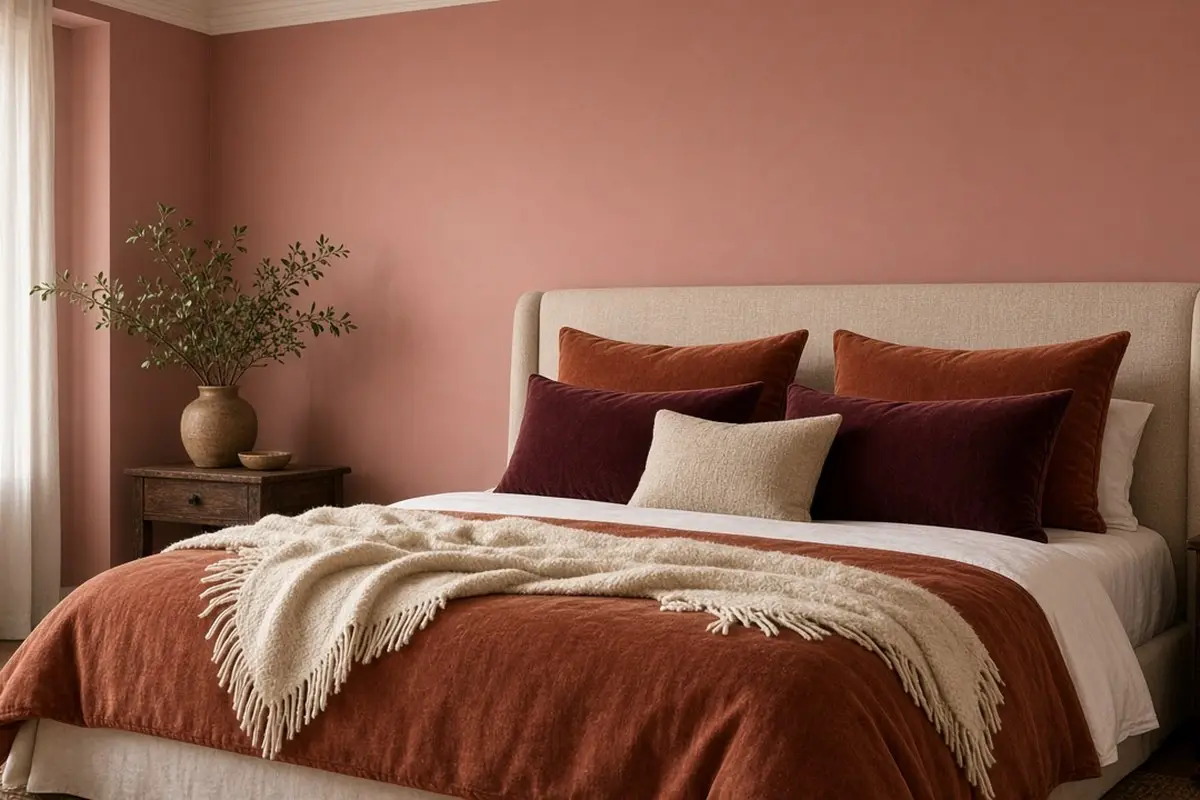
Pink paired only with white or gray can feel thin. Pink paired with deeper, earthy reds feels rich. Rust throws, burgundy pillows, terracotta pots, and oxblood leather add depth and make the pink look intentional rather than accidental.
Think of it as a tonal room: pink is the lightest shade in a family that runs down to deep red-brown. That gradient is warm and calming.
These deeper colors also work beautifully in fall and winter. Swap them for lighter cream and sage pieces in spring and summer, and the same pink walls feel completely different with the seasons.
Get the look
4. Pink with olive and forest green
Pink and green are complementary colors, and together they look lush and garden-like. In an adult bedroom, choose muted versions: dusty pink with olive, sage, or forest green. Green velvet pillows, a green lamp, or simply plenty of plants are enough.
This combination is especially good in rooms with lots of daylight, where plants can thrive.
In a darker room, try a green velvet headboard or a deep green rug instead. You still get the contrast without relying on plants that need light.
Get the look
5. Blush bedroom paint with a darker ceiling
For something more dramatic, paint the walls a pale blush and the ceiling a deeper rose or even a dark plum. It makes the room feel enclosed and cozy at night, like a jewel box, while the light walls keep it from feeling dark by day.
This works best in rooms with ceilings at least 8 feet high.
If the idea of a dark ceiling feels like too much, start with a ceiling only a shade or two deeper than the walls. Even that small shift makes the room feel more finished and cocooning.
Get the look

6. Color-drench the whole room
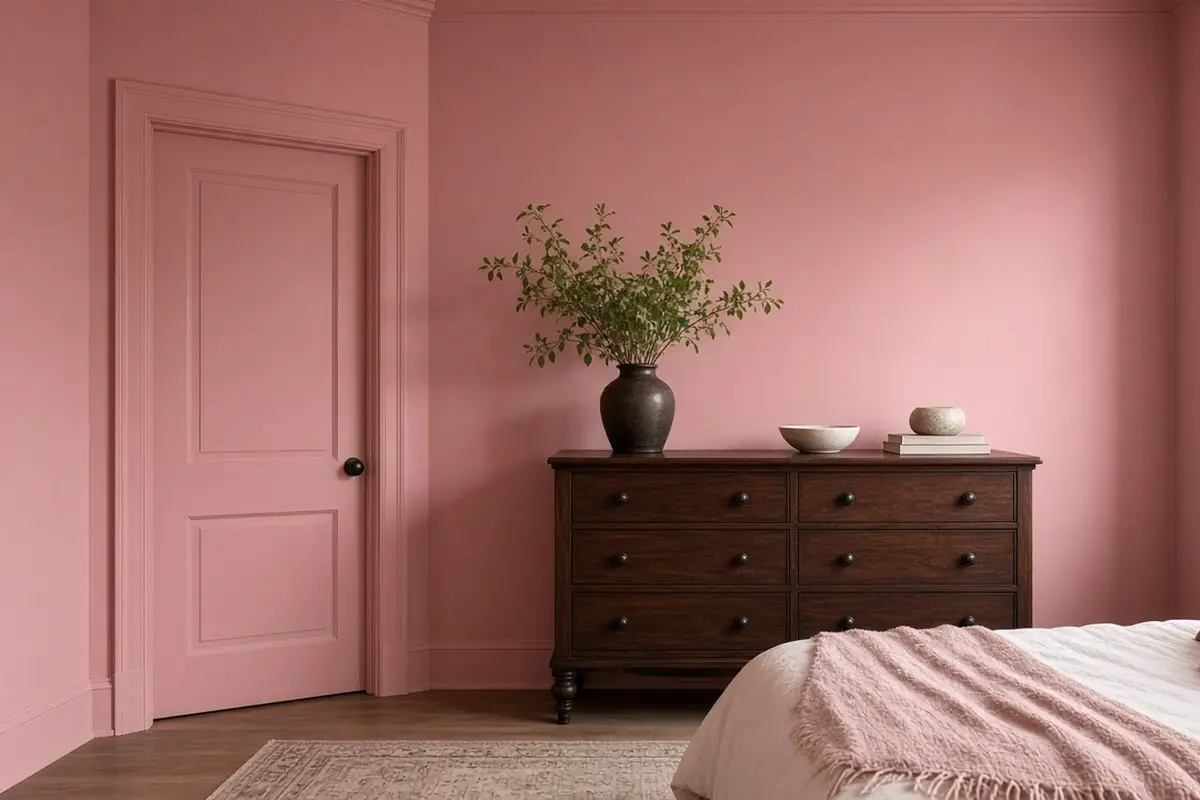
Color drenching means painting walls, trim, doors, and sometimes ceiling all in one color. In pink, it removes the contrast of white trim, which is often what makes a pink room look sweet. The effect is calm, enveloping, and very grown-up.
Use one shade at slightly different sheens: matte on walls, eggshell or satin on trim and doors for durability.
Drenching makes small rooms feel larger, because your eye no longer stops at the line between wall and trim. It also hides awkward features like radiators and odd door frames.
7. Linen bedding in faded pink
If paint feels too permanent, put the pink on the bed. Washed linen in faded rose or clay pink looks relaxed and adult in a way that shiny pink satin never does. Mix it with cream and oatmeal for a soft, tonal bed.
Linen gets softer with every wash, and its natural wrinkles stop it from looking too precious.
If you want to try pink without buying new bedding, a single pink linen pillowcase set or a throw at the foot of the bed is a cheap test. Live with it for a few weeks and see how it feels.
Get the look
8. Black accents for contrast
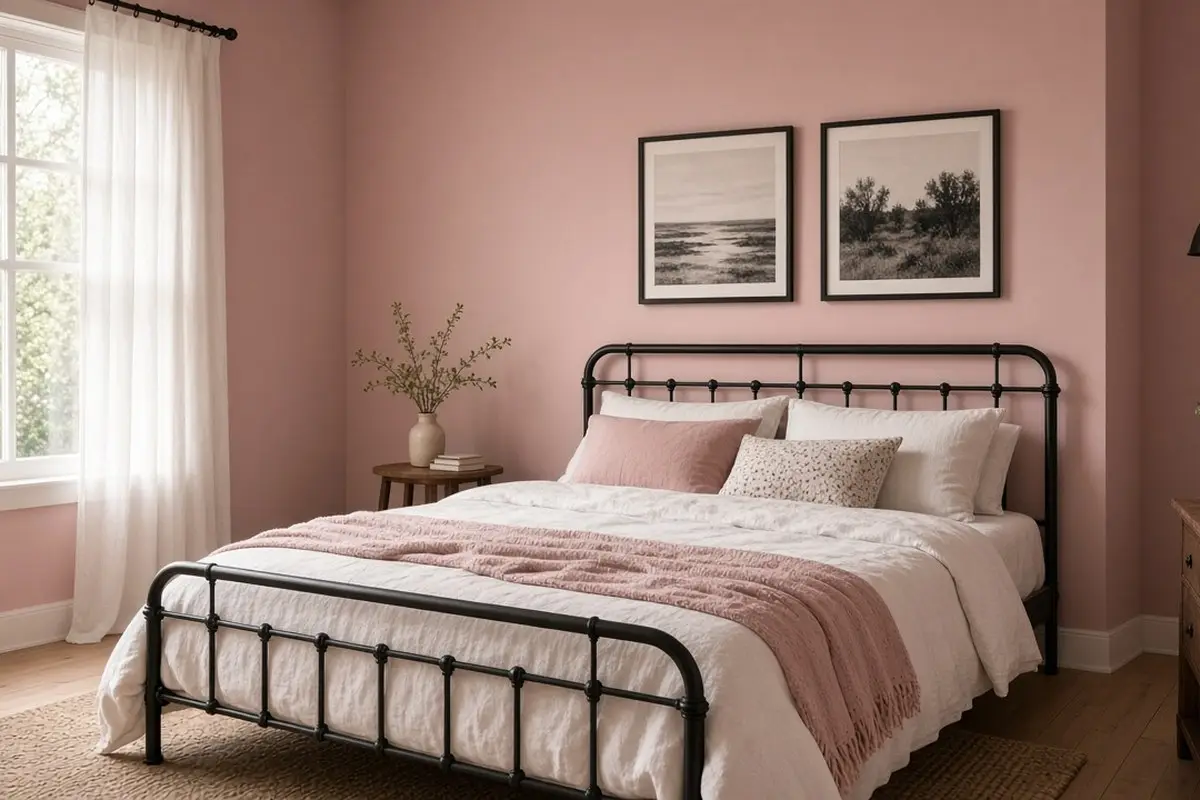
A few sharp black details make pink look modern. Black picture frames, a black metal lamp, black drawer pulls, or a black iron bed frame add graphic contrast. Keep it to a few pieces so the room stays soft.
A good rule is three black accents spread around the room: one near the bed, one on the opposite wall, and one at the window. That spread keeps the eye moving.
Get the look
9. Brass and warm metals
Brass and pink is a classic combination. A brass lamp, brass picture lights, or brass hardware reflects warm light onto pink walls and makes them glow. It feels a little vintage and a little glamorous.
Choose brushed or antiqued brass rather than shiny gold, which can look cheap.
Mixing brass with a little black works well too. A black lamp base with a brass detail, or black frames with brass picture lights, gives the room both warmth and edge.
Get the look
10. Keep the shapes simple
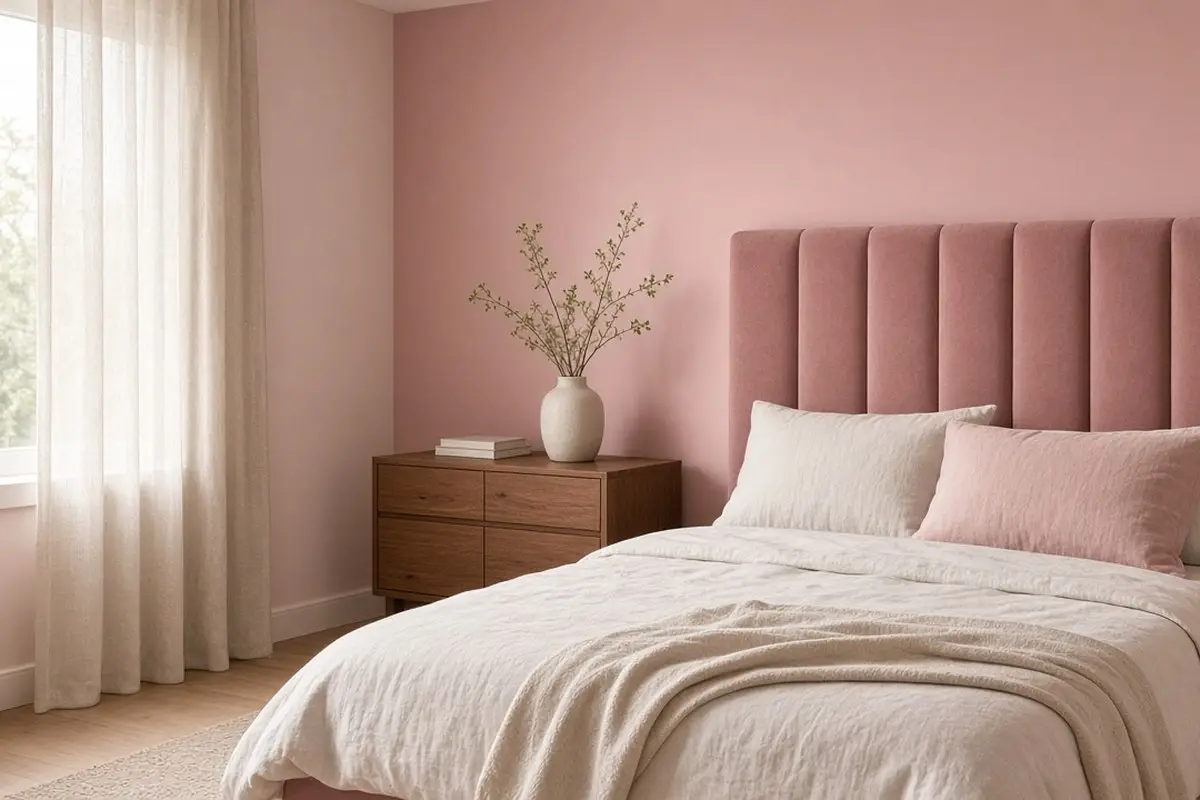
Pink plus frills equals nursery. Pink plus clean lines equals grown-up. Choose simple furniture shapes, tailored bedding, and plain curtains. Skip ruffles, scalloped edges, and decorative script.
If you love one decorative detail, like a scalloped headboard, let it be the only one.
The same goes for accessories. A few larger objects look calmer than many small ones. One big vase, one stack of books, and one lamp on a dresser is plenty.
Get the look
11. Plaster and limewash texture
Limewash or a plaster-effect paint in pink gives walls a soft, cloudy texture that looks hand-made and Mediterranean. The movement in the finish makes even a fairly strong pink feel gentle.
Limewash needs a mineral-friendly primer on most walls. Apply it with a large brush in crossing strokes.
The finish varies with each coat and each painter, so do a test board first. Two coats usually give a good soft cloud; a third deepens the color.
12. Let the art bring in other colors
Pink walls are a generous background for art. Choose pieces with deeper colors, like ochre, navy, olive, or charcoal, so the walls feel like a gallery rather than a theme. Abstracts, landscapes, and old oil paintings all look good against pink.

Get the look
Quick Rules for a Grown-Up Pink
- Choose pinks with gray or brown in them.
- Add dark wood and deep reds.
- Use black or brass for contrast.
- Keep shapes simple.
- Use texture over sparkle.
- Let art add other colors.
FAQ
What is the most sophisticated pink for a bedroom?
Dusty, muted pinks with brown or gray undertones, such as plaster pink, dusty rose, or soft terracotta.
What colors go with dusty pink in a bedroom?
Rust, burgundy, olive, forest green, cream, walnut, brass, and black.
Can a man’s or a couple’s bedroom be pink?
Yes. A muted pink with dark wood, simple shapes, and earthy tones reads neutral and warm. The couples bedroom storage post covers sharing the space practically.
Is pink paint calming?
Many people find soft pinks calming and warm. Muted shades are gentler than bright ones. The sage bedroom palettes post covers another soothing option that pairs well with pink.
What flooring works with a pink bedroom?
Warm wood floors suit pink best. On pale or gray floors, add a large wool or jute rug in cream, rust, or a faded vintage pattern to warm the room and connect the floor to the walls.
A pink bedroom does not need to look young. Choose a dusty shade, ground it with wood and deeper colors, and keep the shapes simple. You will get a room that glows warmly morning and night.