
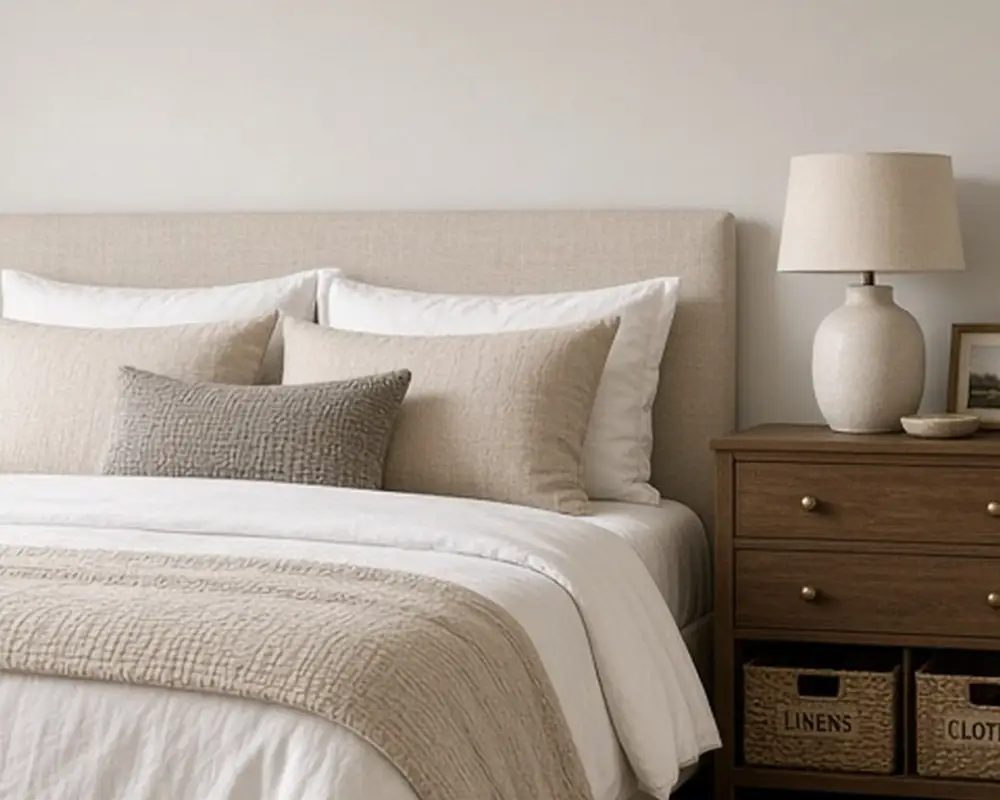
11 Shared Bedroom Storage When You Both Have Too Much

On this page13 sections
- Start with an honest edit, together
- A his and hers closet split
- Double the hanging space
- Two dressers, not one big one
- Dressers as nightstands
- Under-bed storage, split down the middle
- One chair for clothes, not two
- Shared baskets with clear labels
- Wall storage above the dressers
- A laundry system for two
- A weekly ten-minute reset
- Tips Before You Start
- FAQ
Sharing a bedroom means sharing the storage, and that is where many arguments begin. One person’s clothes creep into the other person’s drawers. The chair in the corner disappears under a week of jackets. The closet is three quarters full of one wardrobe, and the other person lives out of a laundry basket. Nobody planned it that way. It just happened.
Good two person bedroom organization starts with a fair split and continues with systems simple enough that both of you will use them. The eleven ideas below cover dividing space, adding storage without crowding the room, and the small habits that keep a shared bedroom calm. If you only have one closet between you, the one-closet bedroom storage post goes deeper on that challenge.
As an Amazon Associate I earn from qualifying purchases.
1. Start with an honest edit, together
Before buying a single bin, each of you should go through your own clothes and things. Not each other’s. Pull out what you have not worn in a year, what does not fit, and what you keep only out of guilt. Do it on the same weekend, so neither person feels they are doing all the work.
Most couples find they can let go of a quarter or more of what is in the bedroom. That alone can solve half the storage problem. It also gives you a true picture of how much space each person actually needs, which makes the next step fairer.
Keep the edit kind. Comment on your own pile, not your partner’s. The point is a calmer room, not winning.
2. A his and hers closet split
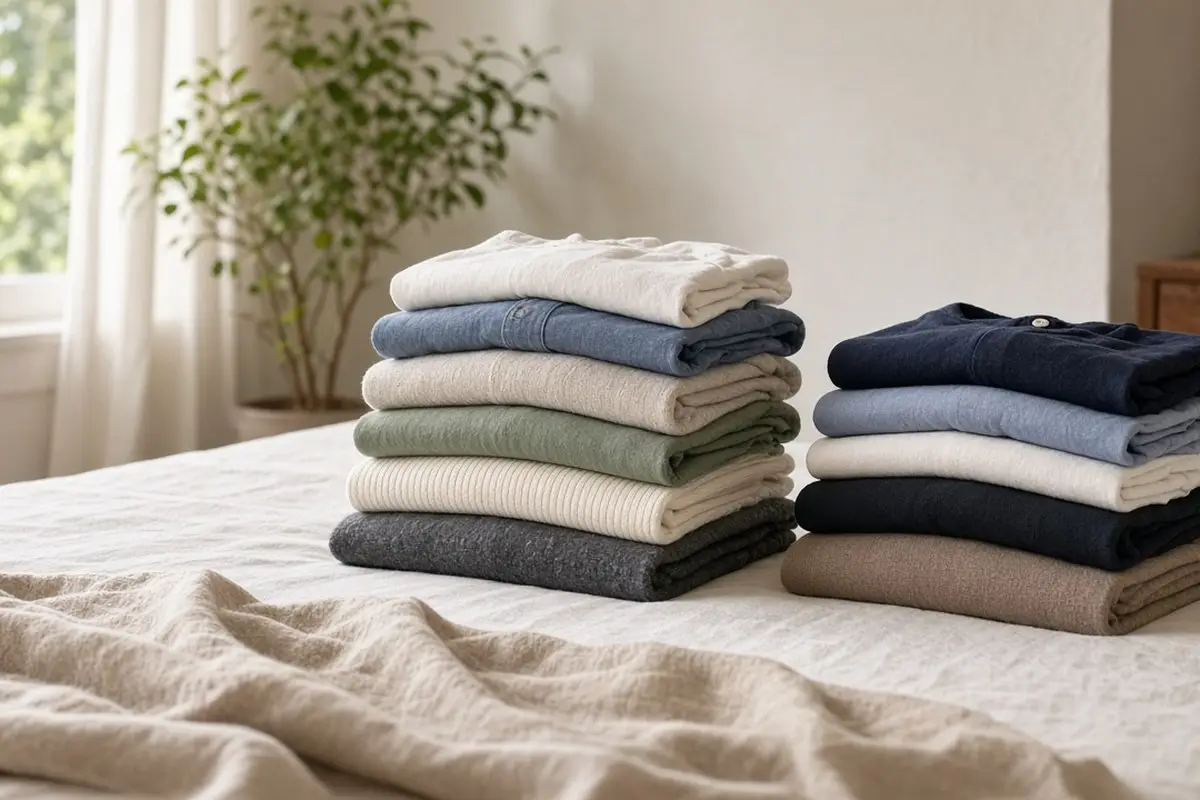
In a shared closet, divide the rail and shelves clearly. One person takes the left side, one the right. If one person has more hanging clothes and the other more folded ones, divide by type rather than by half. What matters is that both of you know exactly where your space starts and ends.
Use slim matching hangers to make the most of the rail. They take far less space than bulky plastic or wood hangers and make the closet look calmer. A small divider tag on the rail marks the boundary.
Shoes need a plan, too. A two-tier shoe rack on the closet floor, with one tier each, keeps them off the floor and out of the bedroom. Over-the-door shoe organizers work in tight closets. Keep only current-season shoes in the bedroom and store the rest elsewhere.
If the closet has a top shelf, split that as well. Use matching lidded boxes on each side for bags, hats, and seasonal items, and label the front of each box.
Get the look


3. Double the hanging space
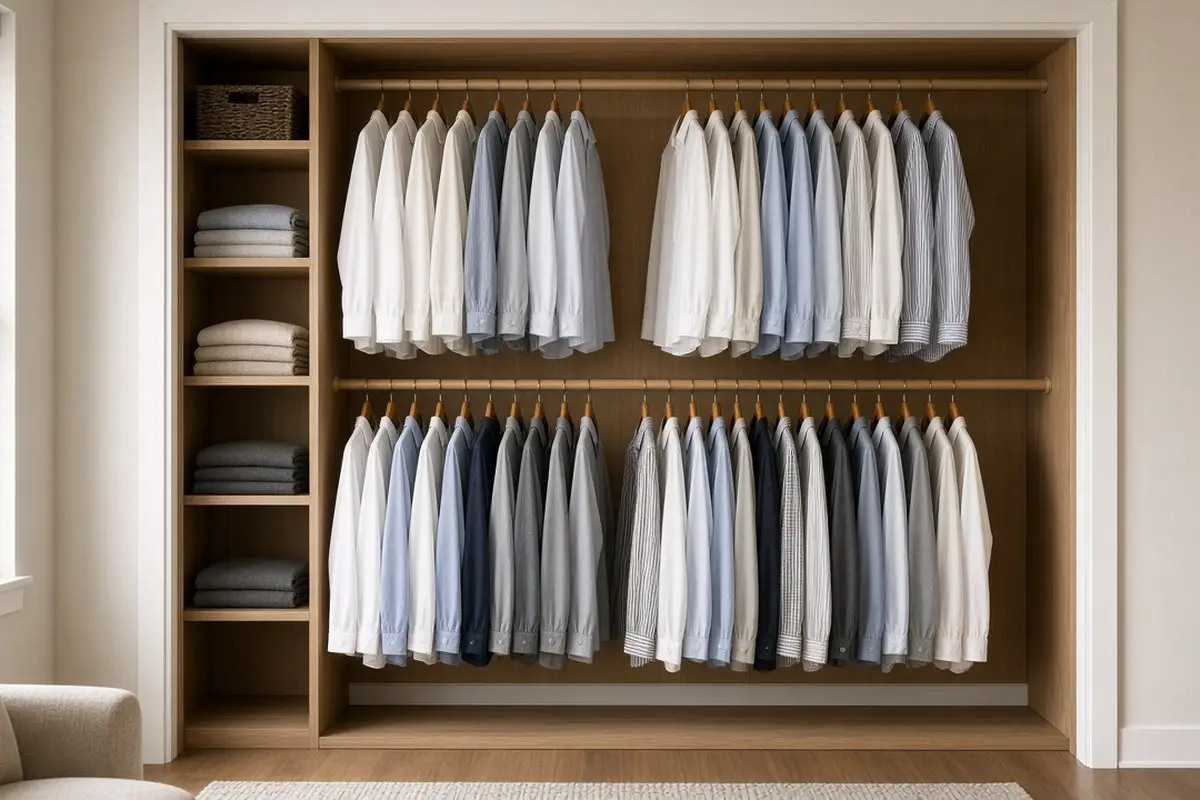
Most closets have one rail with wasted space below it. A second rail hung lower doubles the space for shirts, jackets, and folded trousers. Hanging closet rod extenders hook onto the existing rail and need no tools.
Give the lower rail to whoever has more short items. Long dresses and coats stay on the full-height section.
Think about what goes where. Shirts and blouses fit easily on a lower rail. Trousers folded over a hanger bar fit too. Anything longer than about 40 inches needs the full-height section. Sort each person’s clothes by length before deciding where the second rail goes, and you will use the space far better.
Get the look

4. Two dressers, not one big one
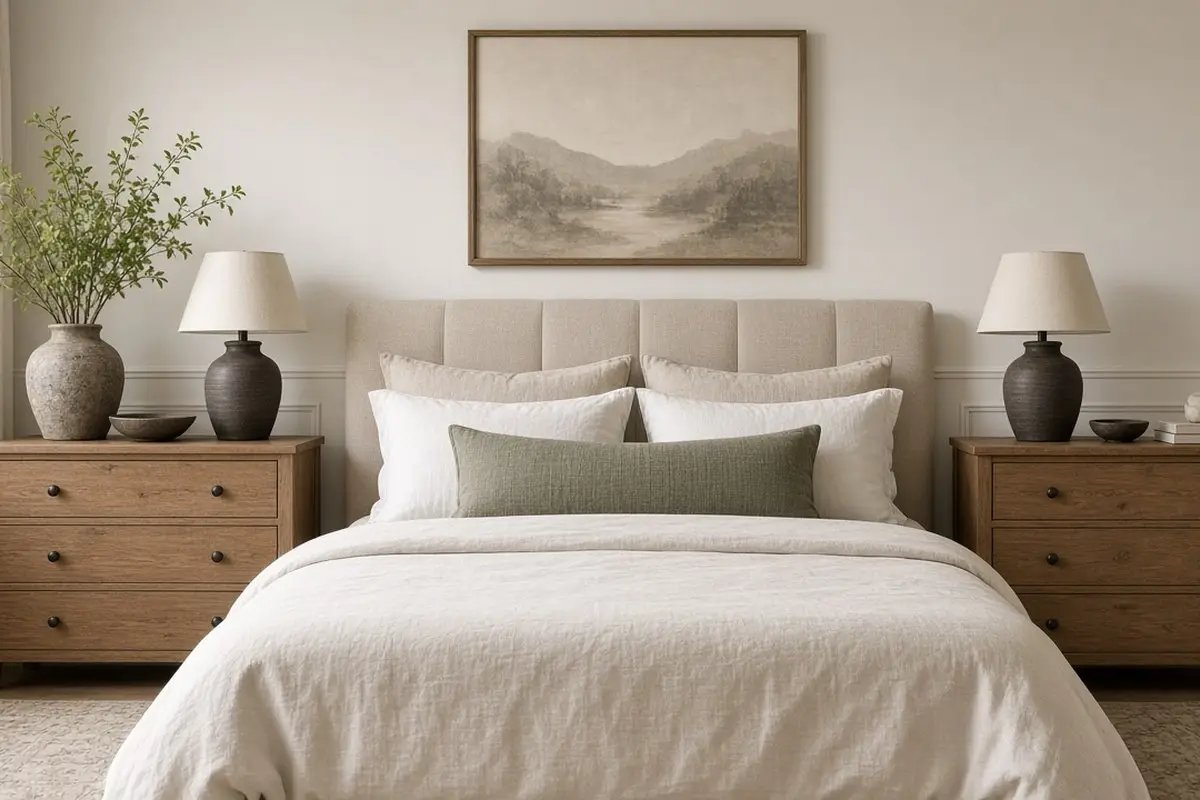
A single large dresser shared by two people often becomes a battle over drawers. Two smaller dressers, one on each side of the room or on either side of the bed in place of nightstands, give each person clear ownership. They can match, which keeps the room balanced.
Tall, narrow dressers save floor space and give more drawers per square foot.
If you prefer one dresser, split it by drawer and agree on it out loud. The top drawers are the most convenient, so give one person the top left and the other the top right, and divide down from there. A dresser shared with clear rules is fine. A dresser shared with unspoken rules causes trouble.
Get the look

5. Dressers as nightstands
In a small shared bedroom, replacing nightstands with low three-drawer dressers adds a lot of storage without taking more floor. Each person gets a bedside surface plus three drawers for socks, sleepwear, and small items.
Check the height. The top should be within a couple of inches of the mattress top, so it is easy to reach a glass of water or a book.
This swap works especially well in rooms where the closet is small. Three drawers per person beside the bed can hold all the underwear, socks, sleepwear, and gym clothes, freeing the closet and main dresser for everything else. Add a small lamp and a tray on top, and the dresser still looks like a nightstand.


6. Under-bed storage, split down the middle
The space under the bed is one of the largest storage areas in any bedroom. Use it with drawers, rolling bins, or a storage bed. Split it like the closet: each person gets their own side.
Use it for out-of-season clothes, spare bedding, and things you do not need weekly. Choose lidded bins to keep dust out.
If the bed sits too low for bins, bed risers lift it a few inches and create room. A storage bed with built-in drawers or a lift-up base gives the most space of all, and is worth considering if you are buying a new bed. Vacuum bags shrink bulky winter clothes and duvets so they fit in shallow bins.
Get the look
7. One chair for clothes, not two
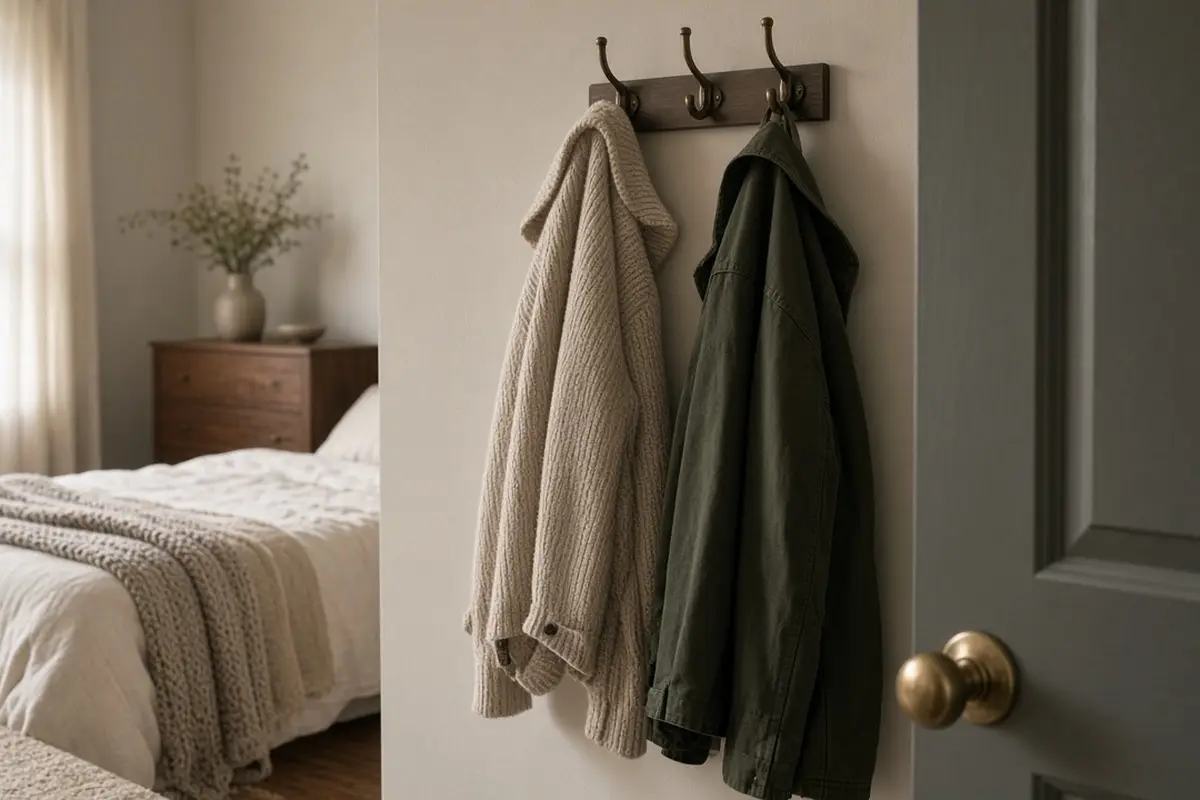
Most bedrooms have a “clothes chair” that collects things worn once but not ready to wash. Instead of fighting it, plan for it. Give each person a hook or a valet stand for tomorrow’s or half-worn clothes. A hook behind the door or a small wall rail works well.
Then keep the actual chair clear for sitting.
A valet stand is particularly useful for anyone who wears suits or work clothes that need airing between wears. It holds a jacket, trousers, and shoes neatly and folds away. Hooks are better for casual clothes like sweaters and jeans.

8. Shared baskets with clear labels
For shared items, such as spare blankets, chargers, and extra pillowcases, use baskets with simple labels. Both of you will know where things live and where to put them back. Shared storage without labels quickly becomes one person’s job.
Choose baskets in one color and style. Matching baskets make open shelves look tidy even when the contents are mixed. Put the most used items at waist height and the least used up high.
Open shelves with matching baskets look calm and make finding things easy.
Get the look

9. Wall storage above the dressers
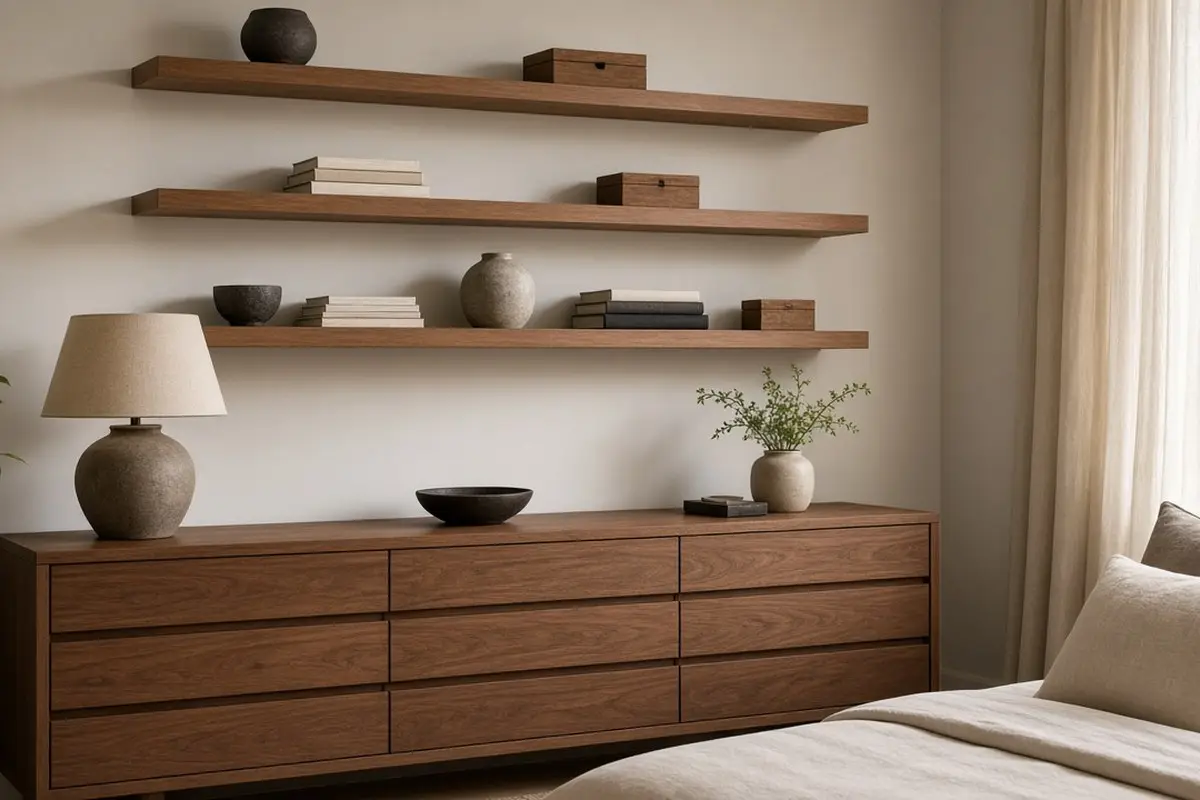
Floating shelves or a narrow wall cabinet above a dresser adds storage without using floor. Use it for books, jewelry boxes, or a few decorative items. Each person can have a shelf above their own dresser.
Keep shelves high enough not to bump your head when using the dresser.
Get the look
10. A laundry system for two
Laundry piles are a major source of bedroom clutter. Give each person their own hamper, or use one divided hamper with separate sections for darks and lights. Agree on who does what, and when.
A hamper with a lid hides the pile and keeps the room looking calm. Put it inside the closet or in a corner away from the bed, so the sight of laundry is not the last thing you see at night.
Get the look
11. A weekly ten-minute reset
The last piece is a habit. Once a week, together, spend ten minutes putting things back: clothes in drawers, shoes in the closet, the hooks cleared, the chair emptied. Doing it together means neither person feels like the household tidier.
It keeps the systems working and stops small messes from turning into big ones.
Put on music, set a timer, and stop when it rings. The point is consistency, not perfection. A shared bedroom reset every Sunday evening means you start each week in a calm room.


Tips Before You Start
- Edit your own things, not your partner’s.
- Split closets and under-bed space clearly.
- Use slim matching hangers.
- Give each person their own dresser if possible.
- Label shared baskets.
- Reset the room together once a week.
FAQ
How do couples share a small closet?
Divide it clearly, use slim hangers, add a second rail, and move out-of-season clothes under the bed.
What is the best storage for a small shared bedroom?
Dressers as nightstands, under-bed bins, and wall shelves above dressers. Each adds space without taking more floor.
How do we stop clothes piling up on a chair?
Give each person a hook or valet stand for half-worn clothes. The guest-ready bedroom post has more hook ideas.
How do we divide storage fairly?
Base it on what each person actually needs after editing, not on half and half. The small bedroom that feels bigger post has more space-saving ideas.
What if one of us has much more stuff?
That is common and fine. Divide space by real needs, not by fairness on paper. The person with more clothes gets more hanging space, and the other might get more drawer or shelf space. Talk it through once and agree on it.
A shared bedroom stays calm when both people know where their things go. Edit honestly, divide clearly, and reset together, and the room will feel like it belongs to both of you.