
8 Winter Living Rooms After the Tree Comes Down

On this page10 sections
The day the tree comes down, the living room can feel strangely bare. For a month there was a glowing corner, a pile of gifts, garlands on the shelves. Then it all goes back into boxes, and what is left looks flat and a little sad, right at the start of the coldest, darkest weeks of the year.
January does not need more decorating. It needs a different kind of warmth: softer light, heavier textiles, a few green things, and a room that feels calm after the noise of the holidays. The eight ideas below fill the gap the tree leaves without adding anything that needs packing away again in a few weeks. If you want a general reset first, the calm living room weekend refresh is a good place to begin.
As an Amazon Associate I earn from qualifying purchases.
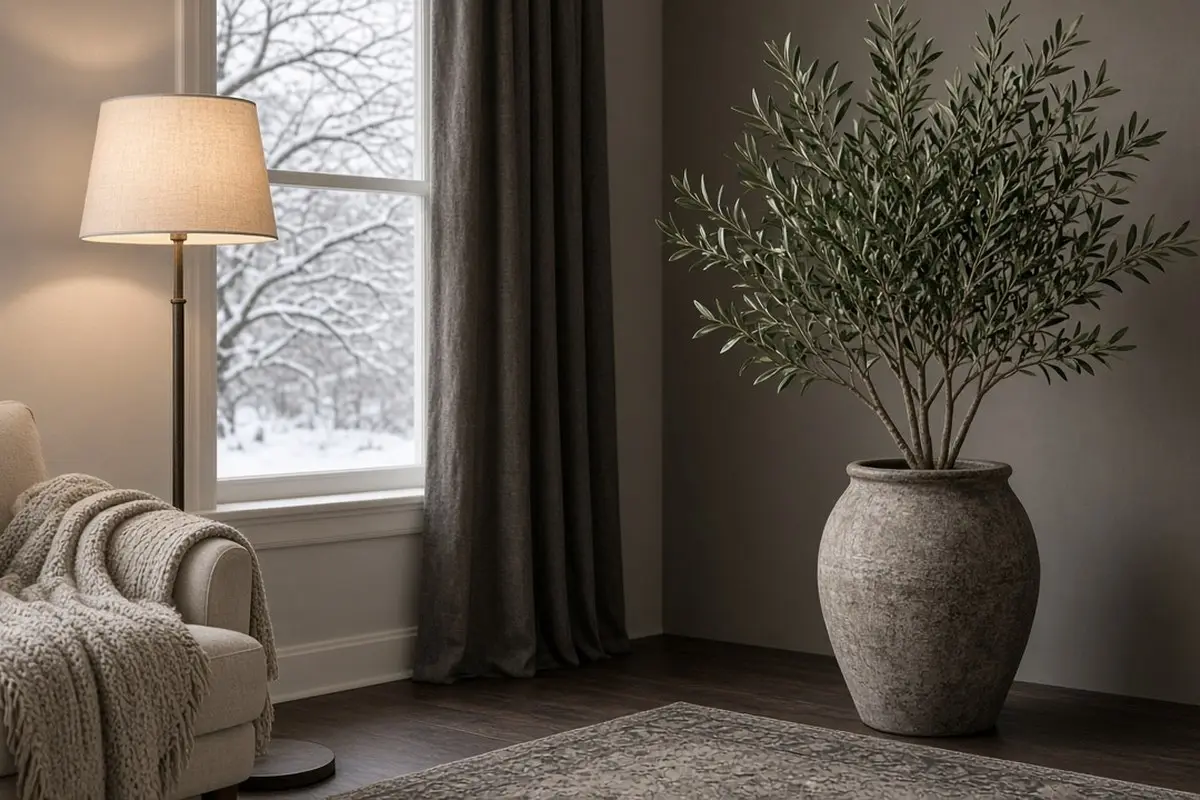
1. Fill the tree corner with a lamp and a plant
The empty spot where the tree stood is the first thing you notice. Fill it before you notice it. A floor lamp and a large plant, or a reading chair with a lamp beside it, turns that corner into a new place rather than a hole.
The tree was a light source as much as decoration. The lamp replaces that glow. Choose one with a warm fabric shade and set it on a timer for late afternoon, when the January dark arrives. A tall plant adds the height and green the tree took with it. A fiddle leaf fig, olive tree, or a large potted evergreen like a Norfolk pine all work, depending on your light.
If you have a reading chair that was moved for the tree, put it back with intention. Angle it toward the window, add the lamp behind it, and drape a throw over the arm. The corner where the tree stood becomes the coziest seat in the house for the rest of winter.
Get the look
2. Keep the evergreens, lose the ornaments
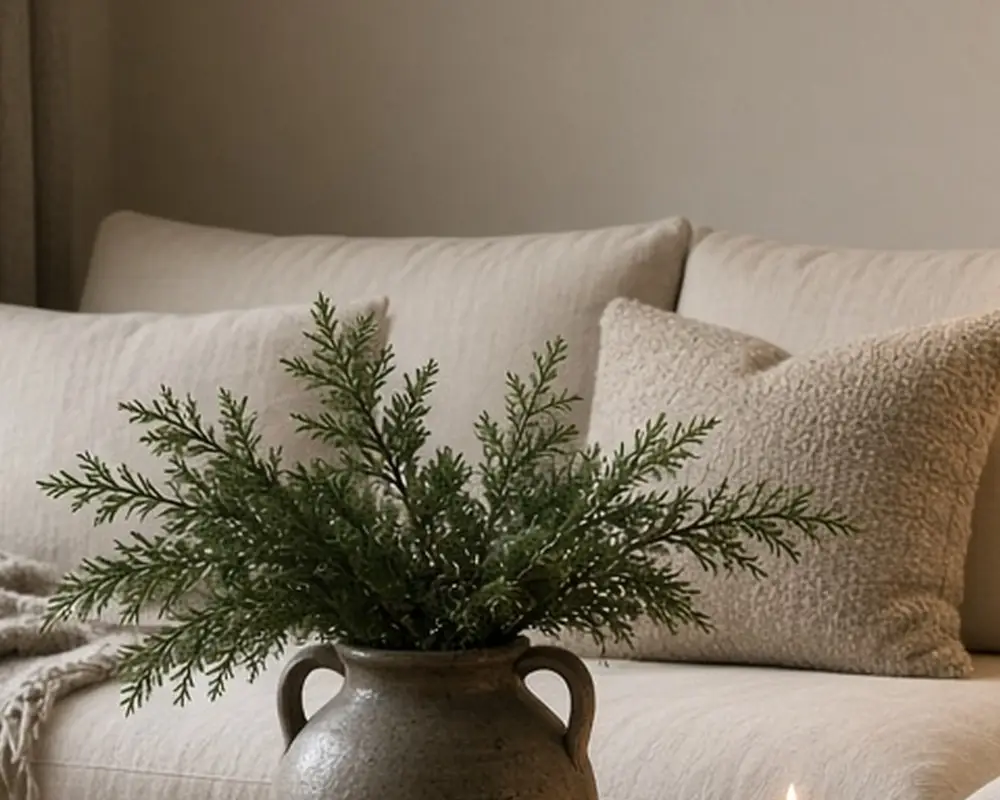
Evergreen branches are winter decor, not Christmas decor. When you take down the ornaments and tinsel, keep the greenery. A jug of fresh pine, cedar, or eucalyptus on the coffee table or mantel carries the season into January without any red or gold.
Fresh cut branches last two to three weeks in water. Change the water every few days and recut the stems. If you prefer something longer lasting, a plain garland of faux greenery along the mantel or a shelf, without bows or lights, looks winter rather than holiday.
The scent helps too. A cozy winter living room smells of wood and pine, not of last month’s cookies.

Get the look
3. Layer heavier textiles
January is when the heavy textiles earn their place. Swap lighter throws for wool, sherpa, or chunky knit. Add a second, heavier layer to the sofa: a sheepskin over a chair, a thick wool blanket folded at the end of the sofa. Change pillow covers to wool, bouclé, or velvet in winter whites, oatmeal, charcoal, or deep green.
These textiles are cozy to touch and also absorb sound, which makes a winter room feel quieter and calmer. They also hold warmth in a way thin cotton does not, so the sofa is a warmer place to sit on a cold evening.
Keep the color palette calm. After the bright reds and golds of December, a room in creams, grays, and soft greens feels restful.

Get the look
4. Candles and low light
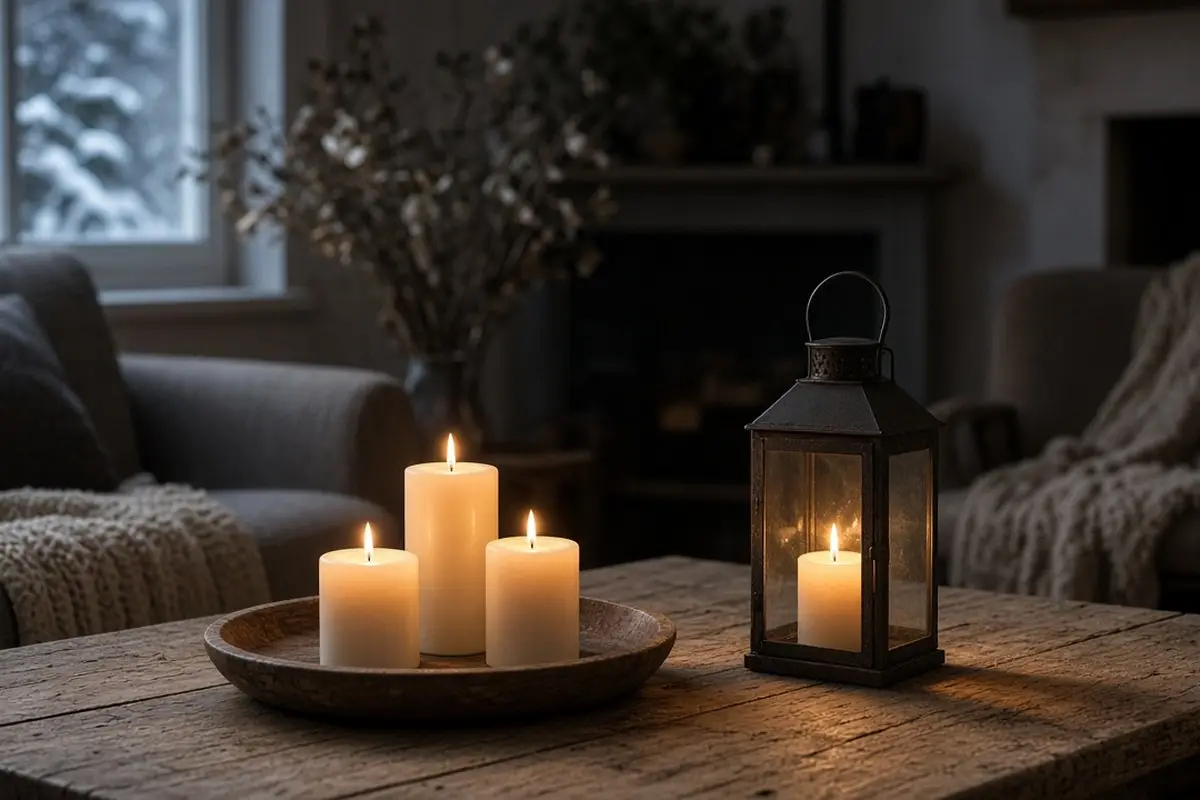
The best part of a winter evening is low, warm light. Candles, lanterns, and lamps on dimmers make the long dark feel cozy instead of gloomy. Group a few pillar candles on a tray on the coffee table, put a lantern on the hearth, and keep the overhead light off.
For safety, use flameless candles in places you cannot watch, such as shelves and windowsills. Many have timers, so they glow every evening without you thinking about it. Keep real flames on stable surfaces away from curtains, throws, and pets.
This is a January living room at its best: soft pools of light, a book, a blanket, and a hot drink.
Get the look
5. A warmer rug underfoot
Cold floors are the enemy of a winter living room. A thick wool rug, or a second rug layered over a flat-weave, makes the room feel warmer the moment you step in. If you have bare wood or tile floors, this is the single biggest comfort change you can make.
Choose a dense pile in a soft neutral. A shaggy rug is cozy, but harder to clean in muddy months. A medium pile wool rug is the best balance. Put a felt rug pad underneath for extra insulation from the cold floor.
Size matters as much as material. A small rug in the middle of a large cold floor leaves your feet on bare boards the moment you stand up from the sofa. Choose a rug large enough that your feet land on it from every seat. In most living rooms that means at least an 8x10.
If you already own a rug you love but it feels thin in winter, a thick felt pad underneath adds both warmth and softness. It is the cheapest way to make an existing rug feel new, and it protects the floor too.
6. Curtains that keep the warmth in
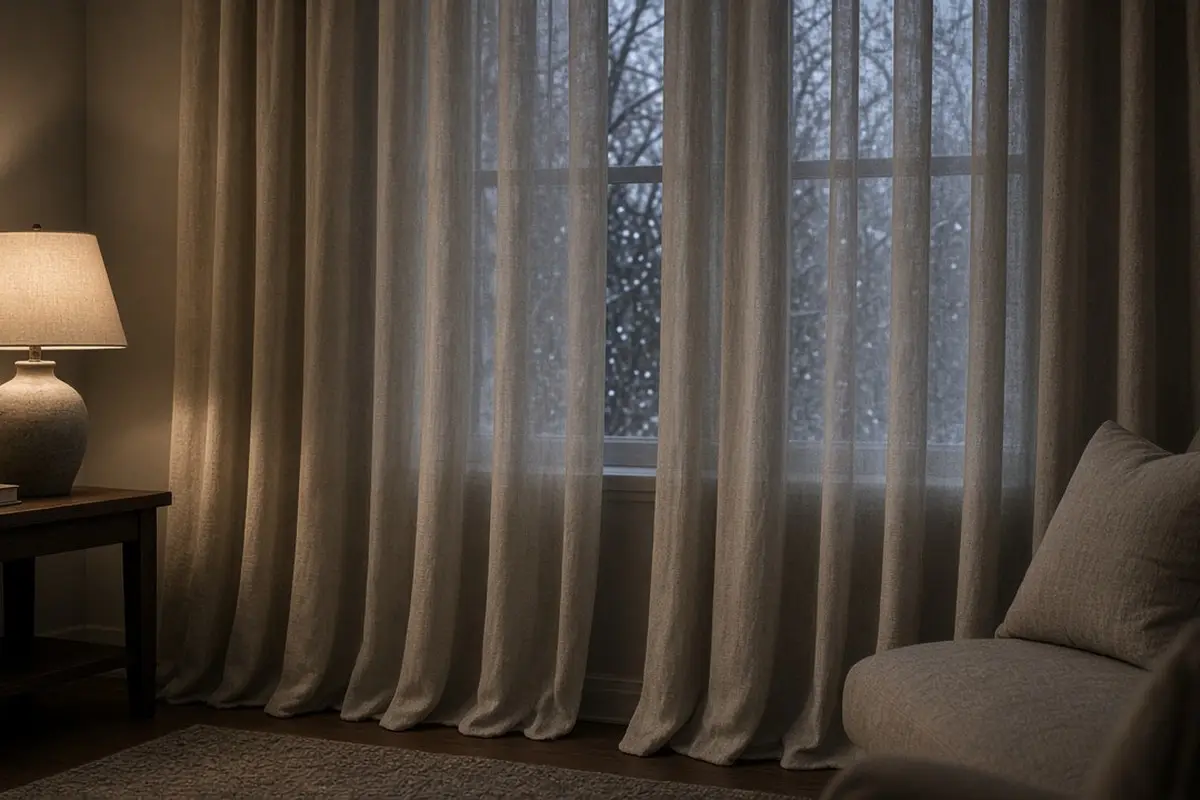
Thicker curtains make a real difference in winter. Lined or thermal curtains keep cold air from the windows, and they make the room look warmer when drawn at night. Choose wool-blend, velvet, or heavy linen with a thermal lining in a warm neutral.
Draw them at dusk and open them fully in the morning to let in every bit of winter sun. Hang them wide and high so they clear the glass completely when open. You do not want to lose any of the short winter daylight.
7. A clear, calm surface reset
After the holidays, the living room often holds a pile of things with no home: new gifts, cards, leftover wrapping, the box of chocolates nobody finished. Give everything a place in the first week of January. Put the gifts where they will live, recycle the cards after a last look, and clear every surface back to its usual few objects.
A clean, quiet room in January feels like a fresh start. It also makes the new winter pieces, the evergreens, the candles, the heavy throw, stand out.
Make a simple rule for the month: nothing new comes into the living room unless something leaves. It keeps the reset from slipping back into clutter by February. Put a small box by the door for things that belong elsewhere, and empty it every Sunday.
This is also a good time to check the less visible corners. Under the sofa, behind the TV, inside the coffee table drawer. Holiday clutter hides in all of them, and clearing it out makes the whole room feel lighter.
8. One winter piece of art
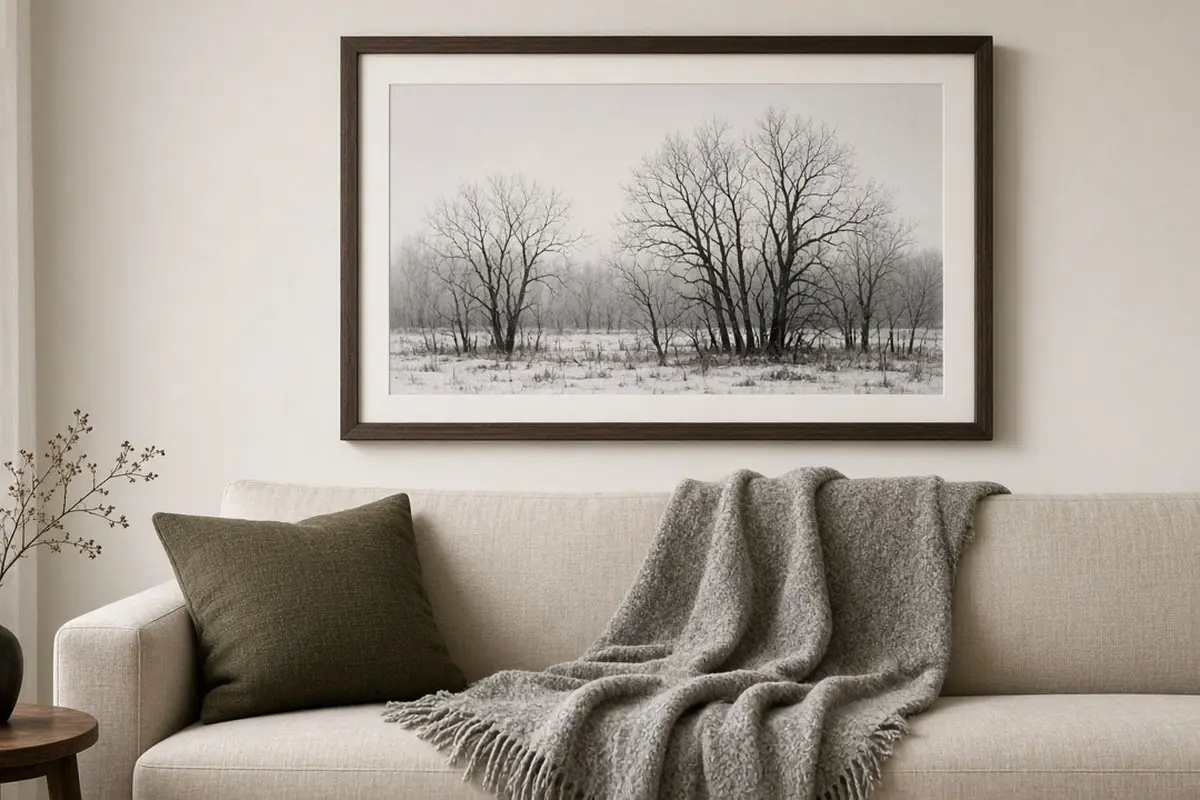
Swap one piece of art for a winter landscape, a snowy scene, or a soft abstract in cool colors. It signals the season without decorations. Keep it up until spring, then change it again. Rotating one piece of art with the seasons keeps a room feeling fresh all year.
A print of bare trees, a frosted field, or a quiet sea in gray-blue suits the mood of January. Frame it in natural wood to keep it warm.
If you do not have a winter print, look through what you own. A photograph from a snowy walk, a postcard from a trip, or a child’s painting of a winter scene can be framed simply and hung in place of a summer piece for a few months. Personal pieces often look better than bought prints, and they cost almost nothing.
Get the look
Tips Before You Start
- Fill the tree corner the same day the tree comes down.
- Keep greenery, remove ornaments and red.
- Layer wool and sherpa on the sofa.
- Use lamps and candles instead of overhead light.
- Add a thick rug or a felt pad for warmth.
- Clear surfaces in the first week of January.
FAQ
How do I make my living room feel less empty after Christmas?
Fill the tree corner with a lamp and a plant, keep evergreen branches, and add heavier textiles. The room will feel warm and settled rather than bare.
What winter decor can stay up after the holidays?
Greenery, candles, winter art, wool throws, and lanterns all suit January and February without looking like leftover Christmas decor.
What colors work for a winter living room?
Creams, oatmeal, charcoal, soft gray, and deep green feel calm and warm after the holidays. The sage bedroom palettes post has green shades that work in living rooms too.
When should winter decor come down?
When spring arrives. Swap heavy throws for lighter ones and change the art and branches. The living room edits you already own post can help you plan the next change.
Should I keep the Christmas lights up in January?
Plain white string lights can stay if they are not wrapped around holiday decor. Move them to a window, a mirror, or a large plant. Warm white looks like winter. Colored or blinking lights still read as Christmas.
When the tree comes down, the living room does not have to feel empty. A lamp in the corner, a jug of pine, heavy throws, and warm light will carry the room gently through the rest of winter.