

8 Winter Bedroom Layers That Come Off in Spring

On this page9 sections
A warm winter bedroom does not need new paint or new furniture. It needs layers. Flannel sheets, a wool blanket, a heavier duvet, a thick rug, lined curtains, and soft lamplight turn a cool room into a cozy one. And because they are layers, they come off again in spring, leaving the room light and airy for the warmer months.
The trick is to think of the bedroom like a wardrobe. You do not repaint your walls each season; you change what is on the bed, the floor, and the windows. The eight layers below add warmth where it counts and pack away neatly when the weather turns.
Layering also saves money. A warmer bed and better curtains let you keep the thermostat a degree or two lower at night, which adds up over a long winter. And many people sleep better in a slightly cooler room, as long as the bed itself is warm. For the same idea in shared rooms, the winter living room after the tree post covers the rest of the house.
As an Amazon Associate I earn from qualifying purchases.
1. Flannel sheets
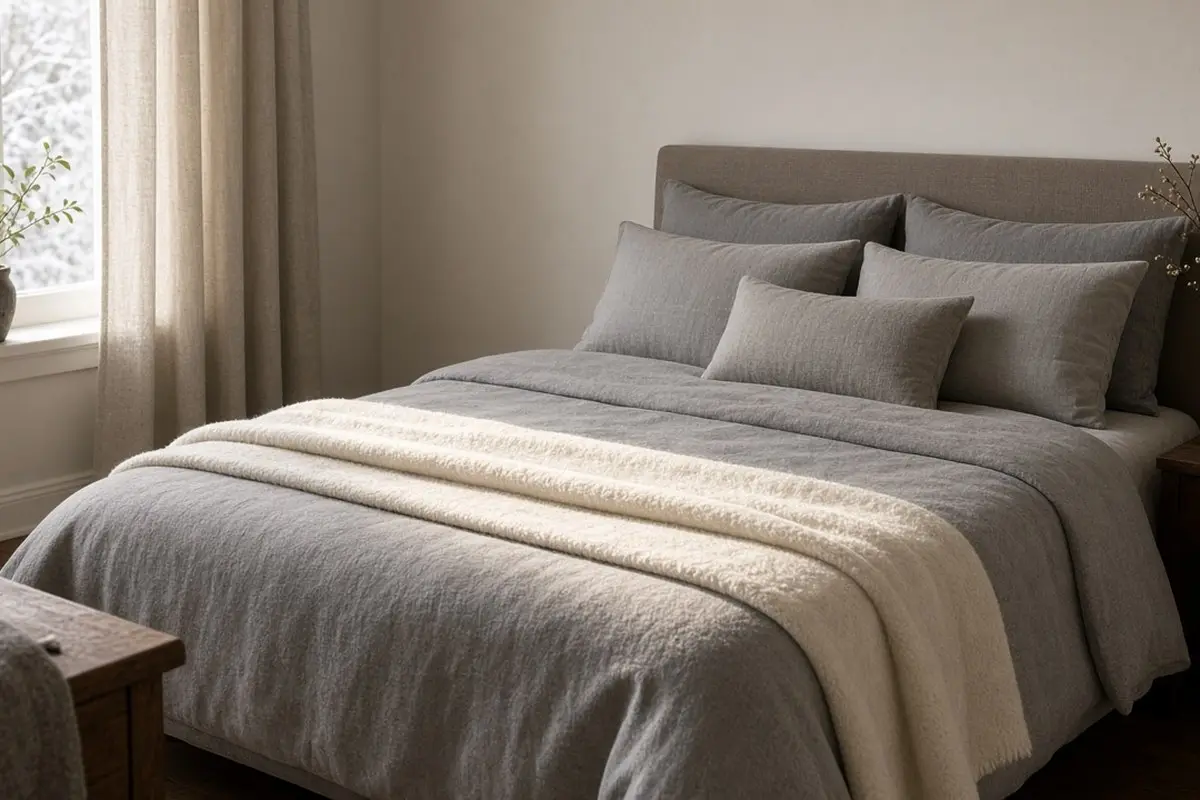
Flannel is the single best winter bedroom upgrade. Brushed cotton traps a thin layer of warm air, so the bed feels warm the moment you get in, instead of cold and crisp like percale. It is soft, it gets softer with washing, and it costs about the same as a good cotton set.
Look for flannel described by weight in ounces per square yard. Five ounces or more feels substantial and lasts. Lighter flannel pills quickly. Solid colors look calm; small checks and plaids feel cabin-like and cozy. Flannel pillowcases alone are a cheap test if you are unsure; they make a cold pillow feel instantly warmer.
Wash flannel in cool or warm water and dry on low heat to reduce pilling and shrinking. In spring, wash, dry thoroughly, and store them folded inside one of their own pillowcases.
If you share a bed with someone who runs hot, flannel on one side is not practical, but a flannel fitted sheet with a cotton flat sheet is a good compromise. The warmth under you matters more than you might expect, because a cold mattress pulls heat from your body all night.
Get the look
2. A wool blanket between sheet and duvet
A wool blanket is the quiet workhorse of warm bedding layers. Put it on top of the flat sheet and under the duvet. It adds warmth without much weight, breathes well so you do not overheat, and stays warm even if it gets a little damp.
Wool is naturally odor-resistant and needs washing only occasionally. Air it on a dry day and spot clean as needed. If wool feels scratchy, choose merino or a wool and cotton blend.
A wool blanket also looks good on its own. Folded back over the duvet in a neat band at the foot of the bed, a gray, cream, or striped wool blanket adds a hotel-like finish.
In spring, the blanket folds into a closet or a chest. On cool spring nights, keep it at the foot of the bed until summer.
Store wool with cedar blocks or lavender sachets to keep moths away, and make sure it is completely clean before packing it. Moths are drawn to body oils and food traces, not to clean wool.
3. Swap to a heavier duvet
If you use a light or all-season duvet, a winter-weight insert adds serious warmth. Down and down-alternative inserts are rated by fill power or warmth level; choose a heavier one for the coldest months.
An easier option is a two-part duvet: a light and a medium insert that clip together for winter and separate for spring and fall. It saves storing a second bulky duvet.
Warmer is not always better. If you wake up too hot, a lighter duvet plus a wool blanket gives more control than one very heavy insert, because you can fold the blanket back. Down breathes better than most synthetics, but good down-alternative inserts are easier to wash and suit people with allergies.
A duvet cover in a warmer fabric, like brushed cotton, flannel, or washed linen in a deeper color, also helps the bed look wintry. Swap back to crisp white cotton in spring.

Get the look
4. Throws and a chunky knit
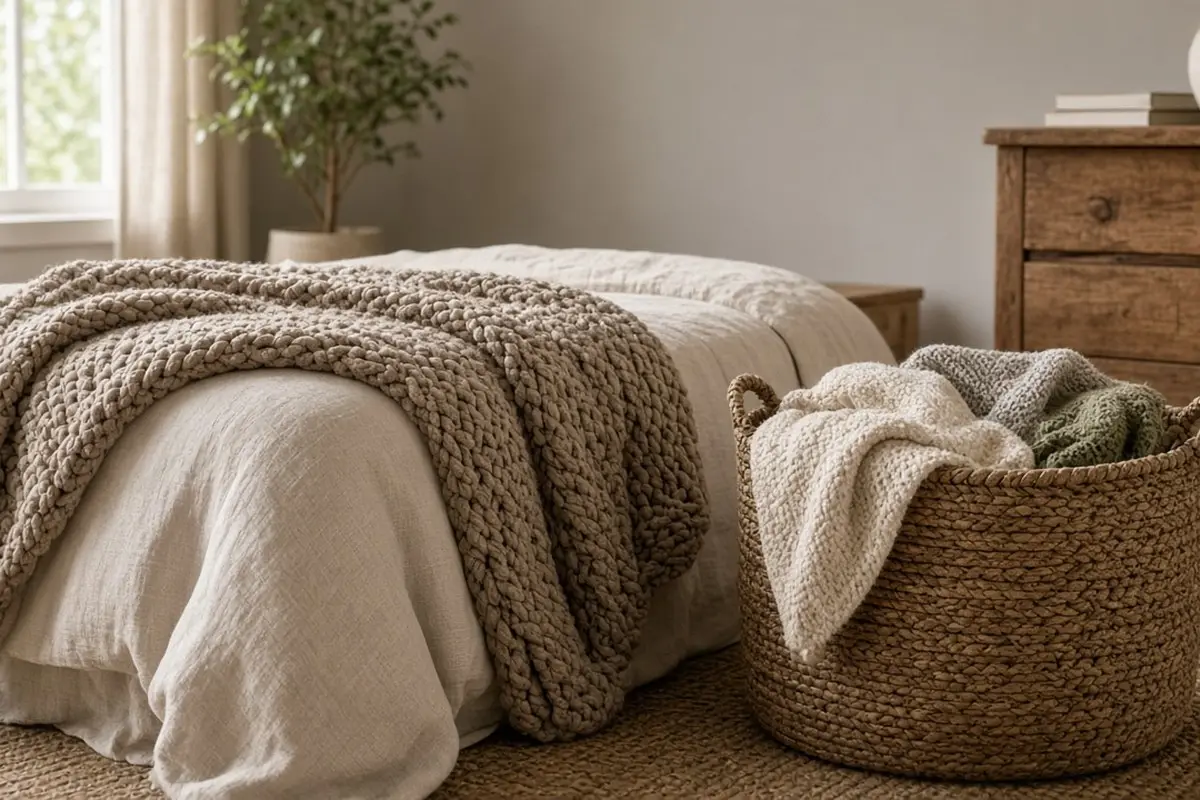
Throws add warmth exactly where you need it, and they are the easiest layer to change. A chunky knit at the foot of the bed, a faux fur on a chair, and a fleece in a basket give you a pile of warm options for reading or napping.
Keep throws in a basket by the bed so they are always within reach. In spring, wash them and store all but one light cotton throw.
Throws are also the easiest way to add winter color. Deep green, rust, oatmeal, charcoal, and burgundy all feel warm. A plaid or a check brings a cabin feel without committing the whole room to a theme.
5. Heavy lined curtains
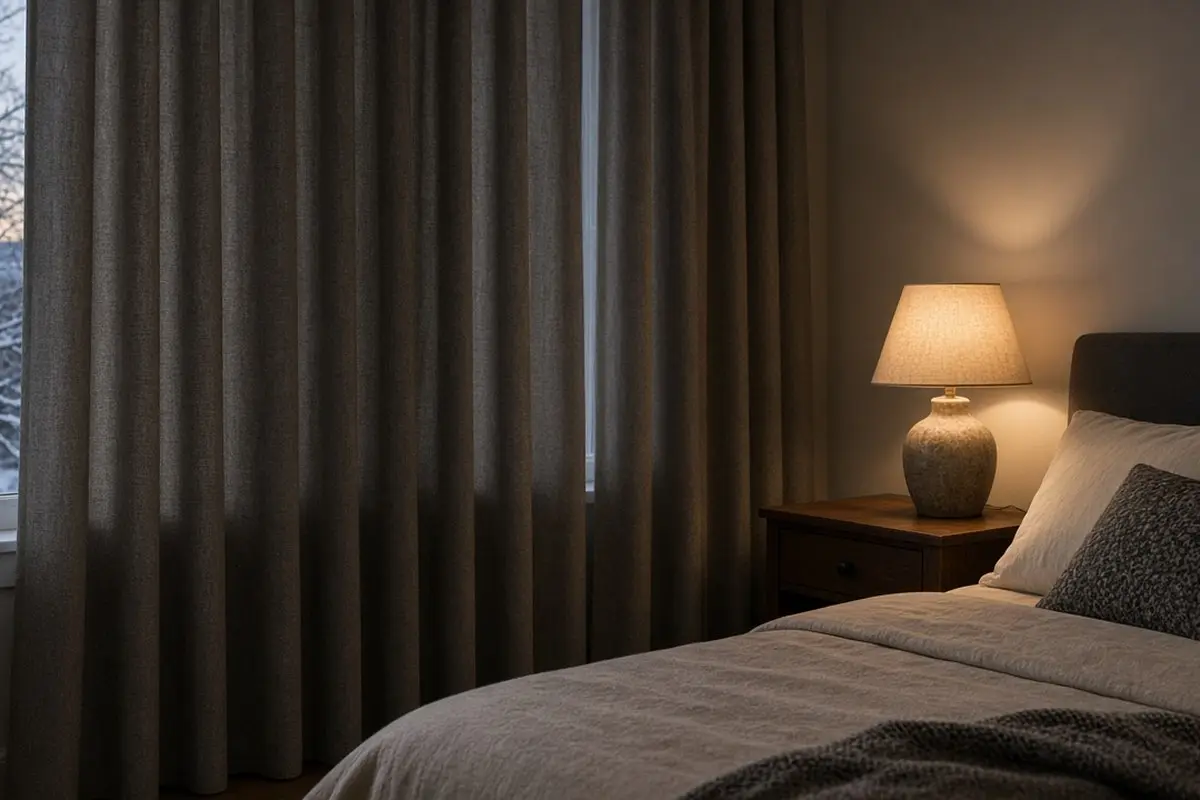
Windows are where most heat escapes. Thermal or lined curtains slow that loss noticeably, and they block cold drafts. Swap light linen panels for heavier lined curtains in winter, or add a thermal liner behind your existing curtains.
Hang them close to the ceiling and let them touch the floor to trap as much cold air as possible. Make sure they do not cover a radiator, which would send the heat behind the curtain and out through the glass. Close them as soon as it gets dark.
During sunny winter days, open the curtains fully to let the sun warm the room, then close them at dusk to hold the heat in. If the window is drafty, a self-adhesive weatherstrip around the frame and a draft stopper on the sill make a noticeable difference for very little money.
In spring, wash or air the heavy curtains and store them flat or rolled. Rehang the light linen panels to let the longer days in.
6. A thick rug
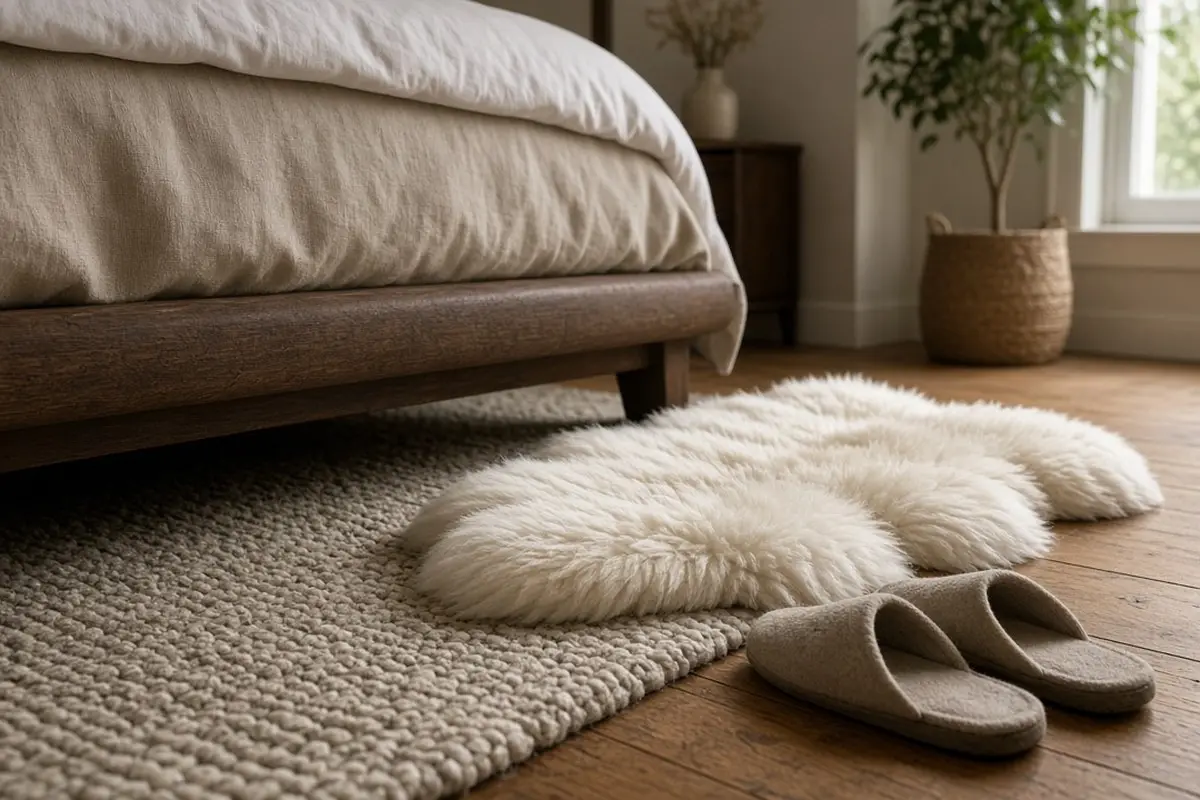
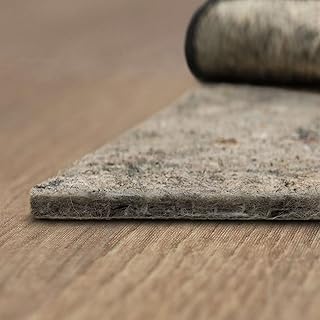
Cold floors make a whole room feel cold. A thick wool or shag rug beside or under the bed means your feet land on something warm every morning. Layer a smaller sheepskin or faux fur rug on top of a flat-weave for extra texture.
Choose a size that reaches beyond the sides of the bed by at least 18 inches, so both feet land on it when you get up. Slippers by the bed finish the job.
In spring, roll it up and store it, or swap it for a lighter cotton or jute rug.
A rug also absorbs sound, which makes a bedroom feel quieter and cozier. If you have hard floors throughout, a thick bedroom rug is one of the most noticeable winter changes you can make.
Roll rugs for storage rather than folding them, which can leave creases and crack the backing. Wrap them in a breathable cotton sheet rather than plastic.
7. Warm lamplight
Winter evenings are long and dark. Swap cool or bright bulbs for warm white ones and use several lamps instead of the overhead light. The moody bedroom lamp light post covers how to layer it.
Candles or a salt lamp add a soft glow too.
A timer or smart plug on one lamp can turn on a warm light before your alarm, which makes dark winter mornings gentler. A sunrise alarm clock does the same thing and can help with getting up when it is still dark outside.
8. A warm bedside setup
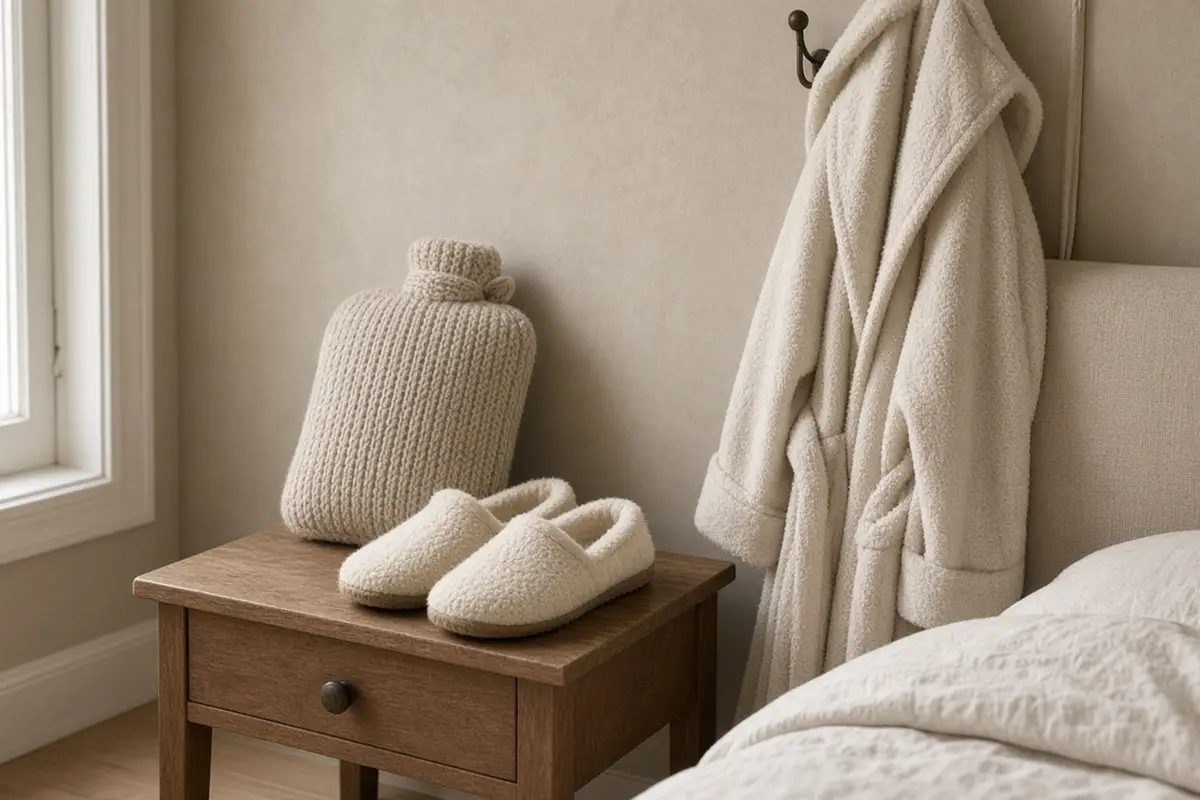
Finish with small comforts: a hot water bottle, a pair of slippers, a cozy robe on a hook, and a carafe of water. They make cold mornings and nights easier and pack away easily in spring.
A small electric heater with a thermostat can take the chill off a cold bedroom before bed, but never leave it on overnight. A heated mattress pad is a safer and more efficient way to warm the bed itself; turn it on before bed and off when you get in, or use one with an automatic shutoff.
Get the look
FAQ
What is the warmest bedding for winter?
Flannel sheets, a wool blanket, and a winter-weight duvet together give the most warmth with the least weight.
Are flannel sheets better than cotton?
For winter, yes. Flannel is brushed cotton that holds warm air.
How do I store winter bedding in spring?
Wash and dry everything thoroughly, then store in breathable bags in a cool, dry place.
How do I keep a bedroom warm without turning up the heat?
Close heavy curtains at dusk, block drafts, add a rug, and layer the bed with flannel and wool. The short fall home edit post covers seasonal swaps for other rooms.
When should I switch to winter bedding?
Most people switch when nighttime temperatures stay below about 50°F. Start with flannel sheets and a wool blanket, and add the heavier duvet when it gets colder.
What are the best bedroom colors for winter?
Warm, deep colors like rust, olive, burgundy, and charcoal feel cozy in winter. Use them in throws and pillows so you can swap back to lighter colors in spring.
A cozy winter bedroom is all about layers. None of these changes are permanent, none need tools, and most cost less than a single new piece of furniture. Add them in late fall, enjoy them through the cold months, and take them off again in spring.