
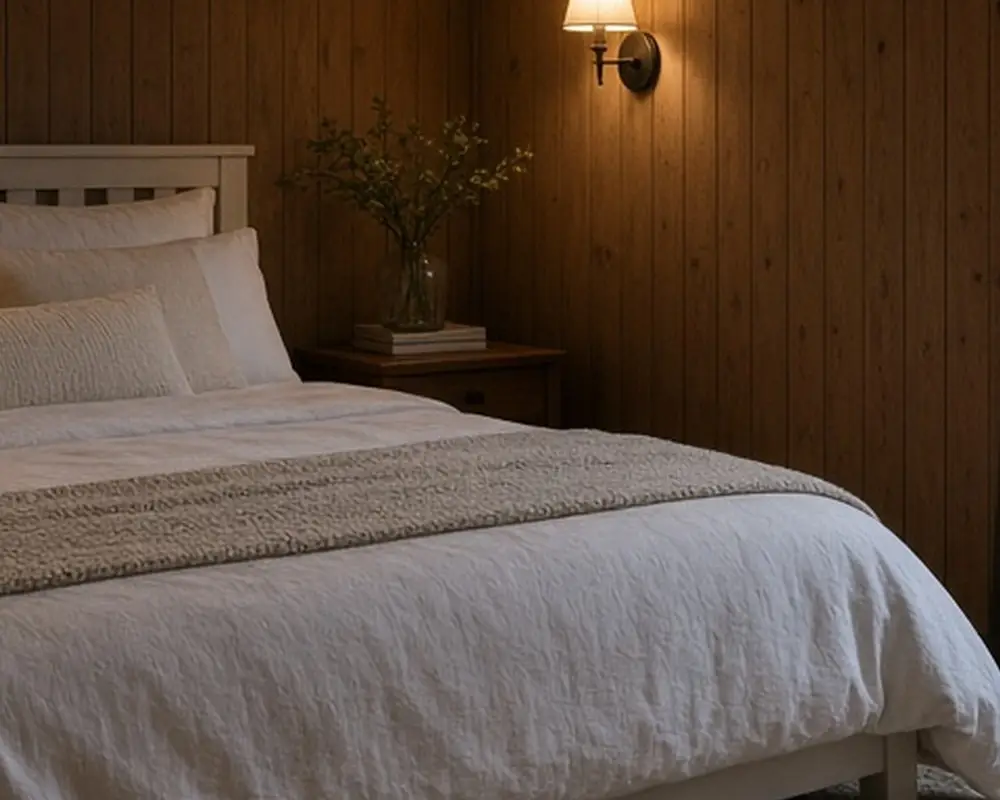
8 Sleeping Sheds With Heat, Light, and a Real Door

On this page12 sections
A backyard sleeping shed sounds romantic: a little cabin at the bottom of the garden for guests, teenagers, or a quiet nap. The reality is often a cold, damp box with a single bulb, a door that rattles, and a mattress that smells of lawnmower. Nobody sleeps well in that, and the shed ends up back in storage duty by next summer.
The sheds that work as bedrooms get the basics right before any decor goes in. They stay warm at night and cool by day, they have light you can read by and light you can sleep without, and the door closes properly against wind, bugs, and noise. This post covers those basics in order. For turning a shed into a workspace instead, see our guide to shed interiors that work as a shop.
As an Amazon Associate I earn from qualifying purchases.
Check the rules first
Before you start, check your local building and zoning rules. Many areas treat a shed used for sleeping differently from a storage shed, with requirements for size, egress windows, smoke alarms, and electrical work. A licensed electrician should handle any permanent wiring. Getting this right protects your guests and avoids trouble if you sell the house later. Also think about the path from the house. A sleeping shed needs a level, well-lit walkway so guests can get back to the bathroom at night without tripping over garden hoses. Solar path lights or a motion light on the shed are an easy fix. Plan for bathroom access too; most sleeping sheds rely on the house, so leave a back door unlocked or give guests a key.
1. Insulation in walls, floor, and roof
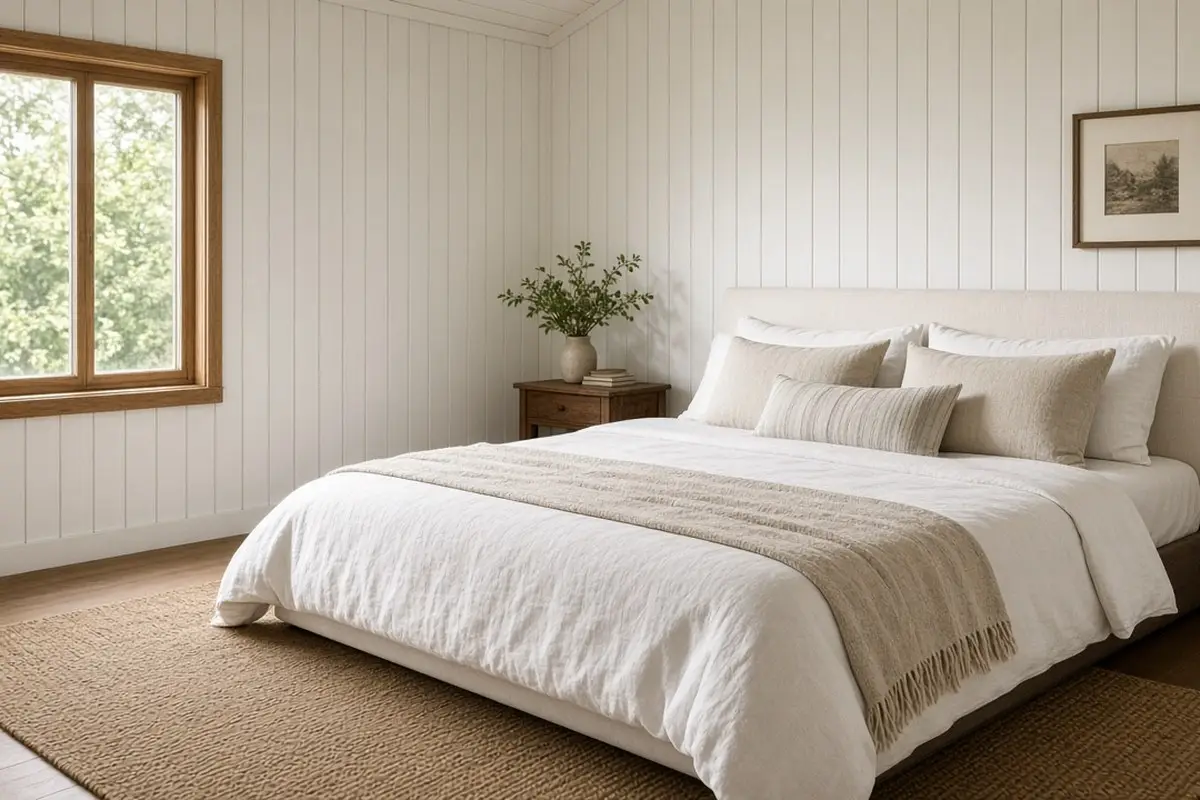
Insulation is what turns a shed into a room. Without it, the shed is as cold as the night air by morning and an oven by noon. Rigid foam boards cut to fit between studs and rafters are a common DIY approach, covered with plywood or tongue-and-groove paneling. Do not forget the floor: cold rises through an uninsulated floor faster than you expect. Leave a ventilation gap under the roof so moisture can escape, and use a vapor barrier where your climate calls for one. Seal gaps around windows and where walls meet the floor with expanding foam or caulk before you close up the walls; small gaps let in a surprising amount of cold air. If you are running wiring, do it before the paneling goes up. A light-colored paneling or paint keeps a small shed bright and feels clean, while knotty pine gives a classic cabin feel. Either way, a finished interior is much easier to keep free of spiders and dust than bare studs.
Get the look
2. Safe, quiet heat
A small oil-filled radiator or a ceramic heater with tip-over and overheat protection is the simplest heat source for an insulated shed. Choose one with a thermostat so it holds a steady temperature through the night instead of cycling hot and cold. Never use unvented gas or kerosene heaters in a sleeping space. Pair any heater with a smoke alarm and a carbon monoxide alarm. Keep the heater a safe distance from bedding and curtains, and plug it directly into a wall outlet rather than an extension cord. In a well-insulated shed of around a hundred square feet, a small heater on its low setting is usually enough. For summer, a quiet fan or a small window air conditioner keeps the room comfortable; a shed with sun on the roof all day can get very warm by evening, so a few hours of cooling before bedtime makes a big difference.
3. A real door that seals
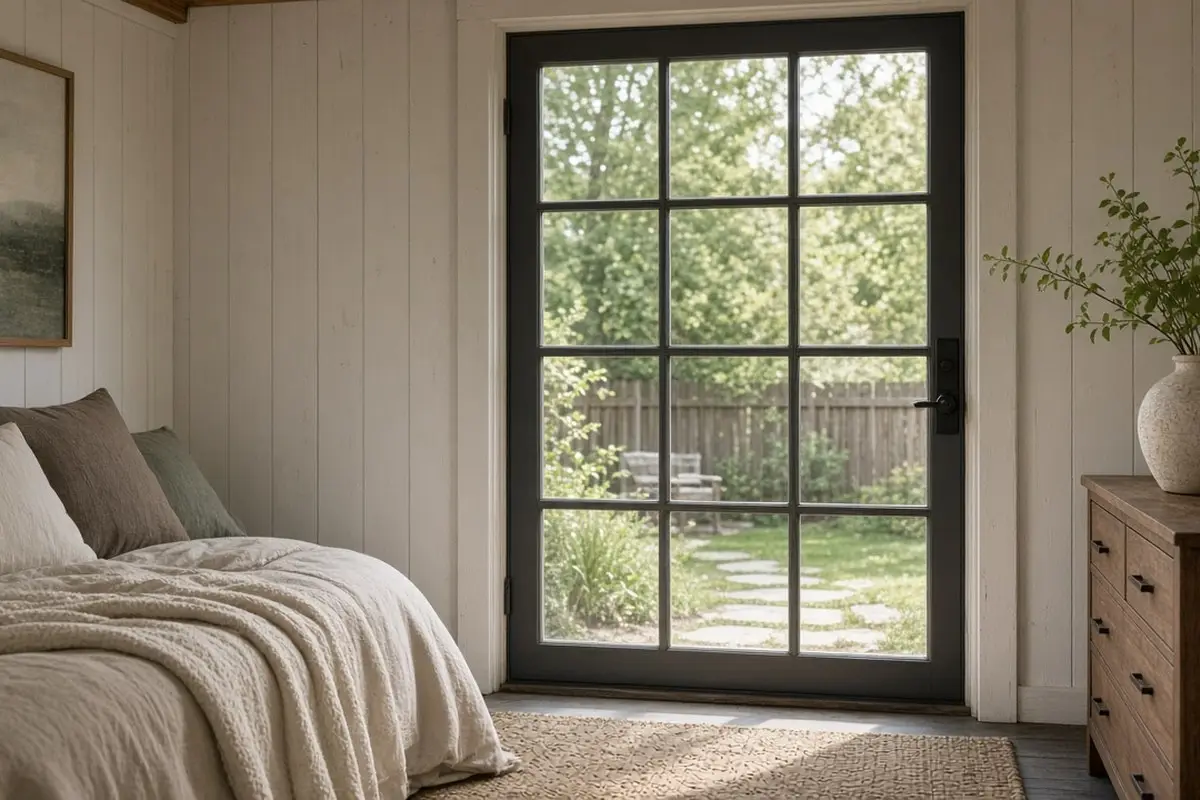
A flimsy shed door lets in drafts, bugs, and noise. Replace it with an exterior door, ideally with a glass panel for light, and add weatherstripping around the frame and a sweep along the bottom. A lockset that works from inside gives guests privacy and peace of mind. Make sure the door opens easily from inside without a key, for safety. A glass panel with a sheer curtain lets in morning light while keeping privacy. If the shed has double doors, adding a center seal and a slide bolt at the top and bottom stops the rattling that keeps light sleepers awake on windy nights.
4. Layered light
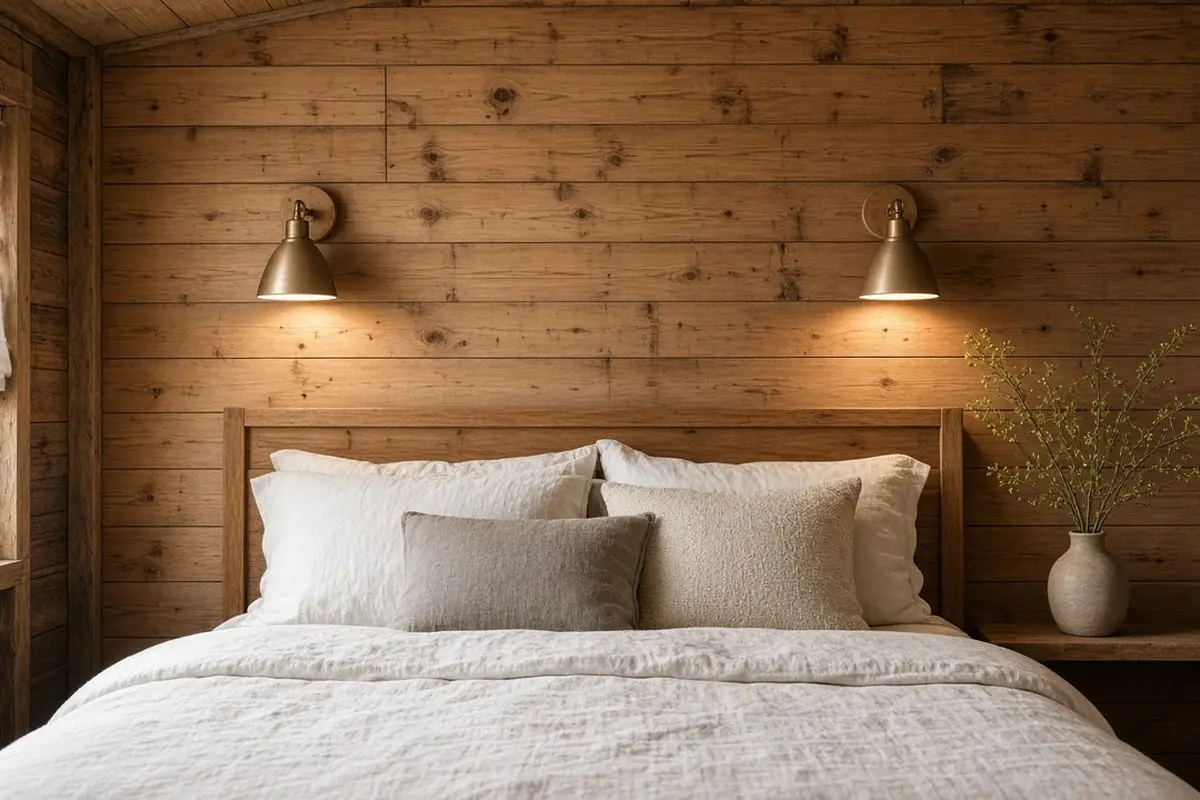
A bedroom needs three kinds of light. An overhead fixture for general light, wall sconces or a clip-on lamp for reading in bed, and a small low light for finding the door at night. Warm-white bulbs make the shed feel cozy. If there is no power, rechargeable lamps and a solar light system work well. Put a light switch or a remote-controlled lamp within reach of the door, so guests are not fumbling in the dark when they arrive. Dimmable bulbs let the room go from bright for unpacking to soft for winding down. A small motion night-light near the floor is helpful for anyone who wakes in the night and needs to find the door.
5. Blackout shades
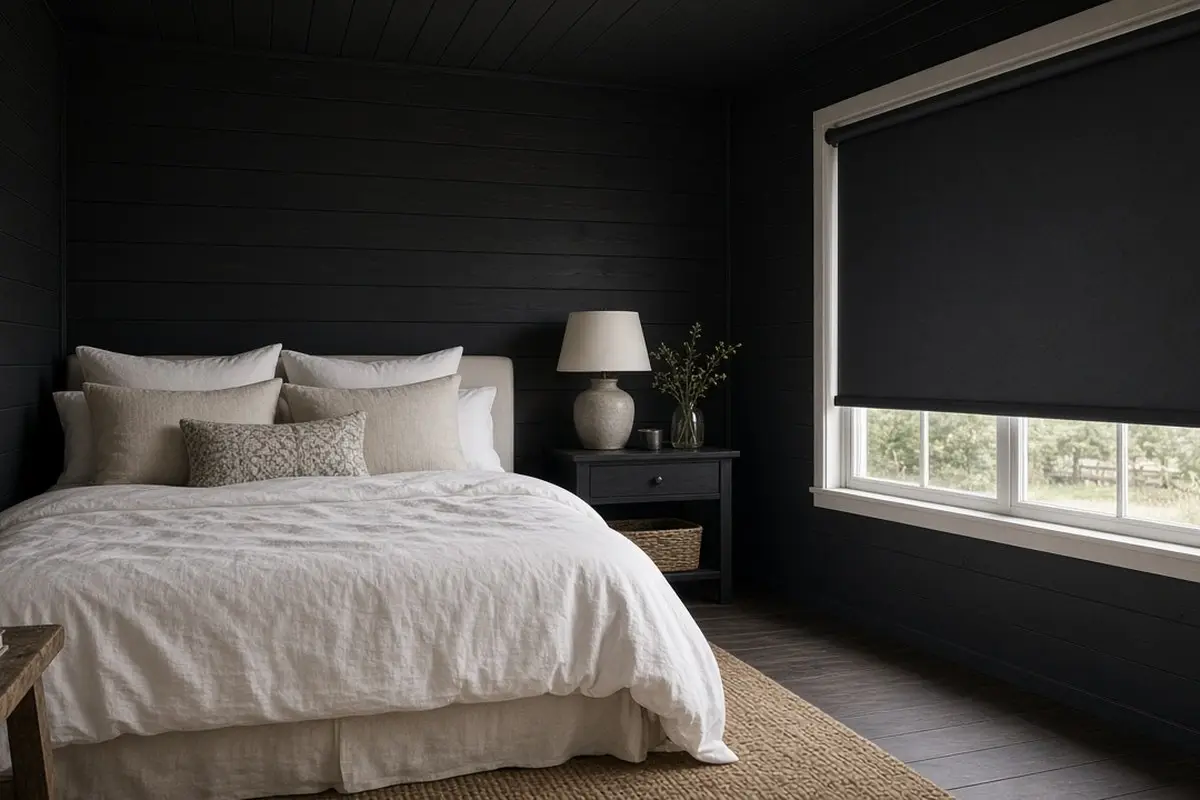
Sheds often have windows with no coverings, and dawn in a garden is bright. Blackout cellular or roller shades help guests sleep past sunrise and add insulation at night. Cordless shades are safest and simplest in a small room. Mount them inside the window frame for a neat look, or outside it with an overlap for the darkest result. A thermal curtain over the door glass helps in winter.
Get the look
6. A bed that fits the room
Measure carefully. A full or queen bed with space to walk around it is better than a king pushed against the walls. A platform bed with drawers saves space for luggage and spare blankets. A good mattress matters more than anything else in the shed. Choose a mattress that tolerates temperature swings; foam can feel very firm in a cold room until it warms up, so a mattress topper or a hybrid mattress may be more comfortable. Use a mattress protector to guard against damp. Layer bedding so guests can adjust: a sheet, a light blanket, and a duvet, with an extra throw folded at the foot.
Get the look
7. Bug screens and ventilation
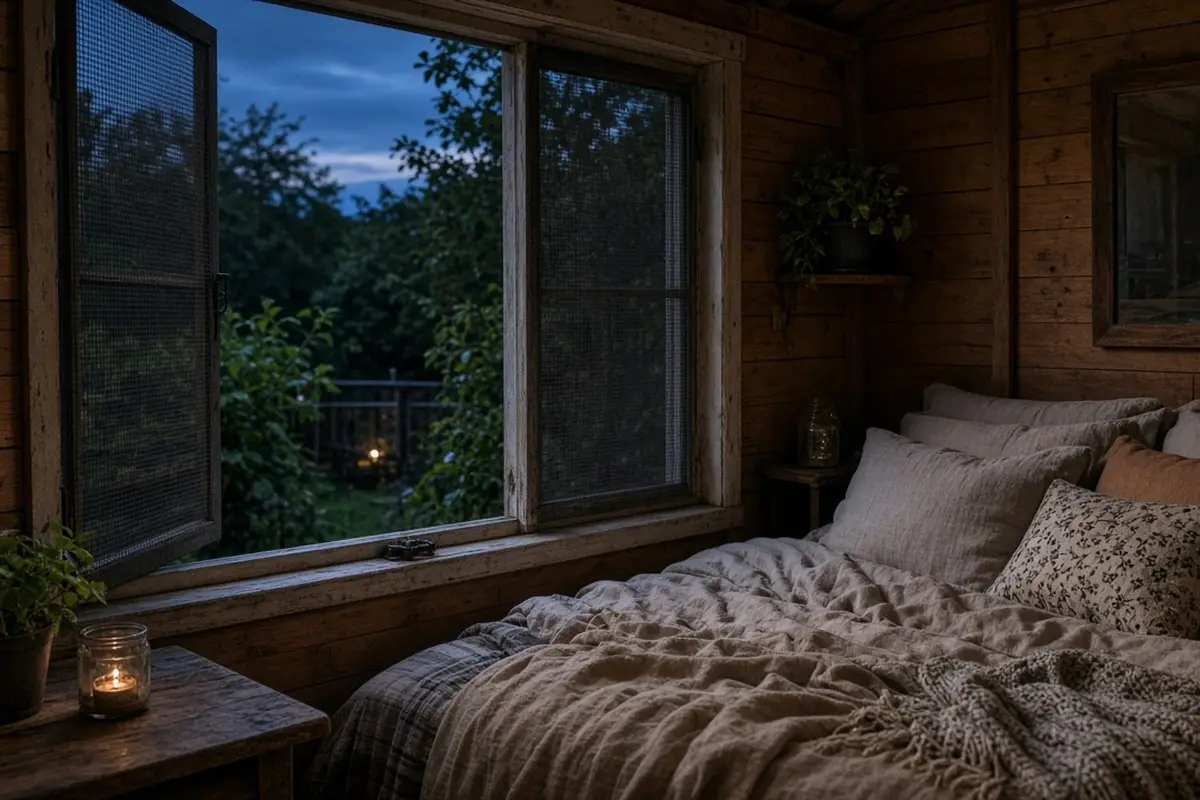
A screened window opposite the door lets air flow on summer nights without bugs. A small fan helps on warm nights and keeps the air fresh. Good ventilation also prevents condensation, which can make a closed shed smell musty. Leave the window cracked for an hour every few days when the shed is not in use, or run a small dehumidifier in damp months.
Get the look
8. Guest comforts
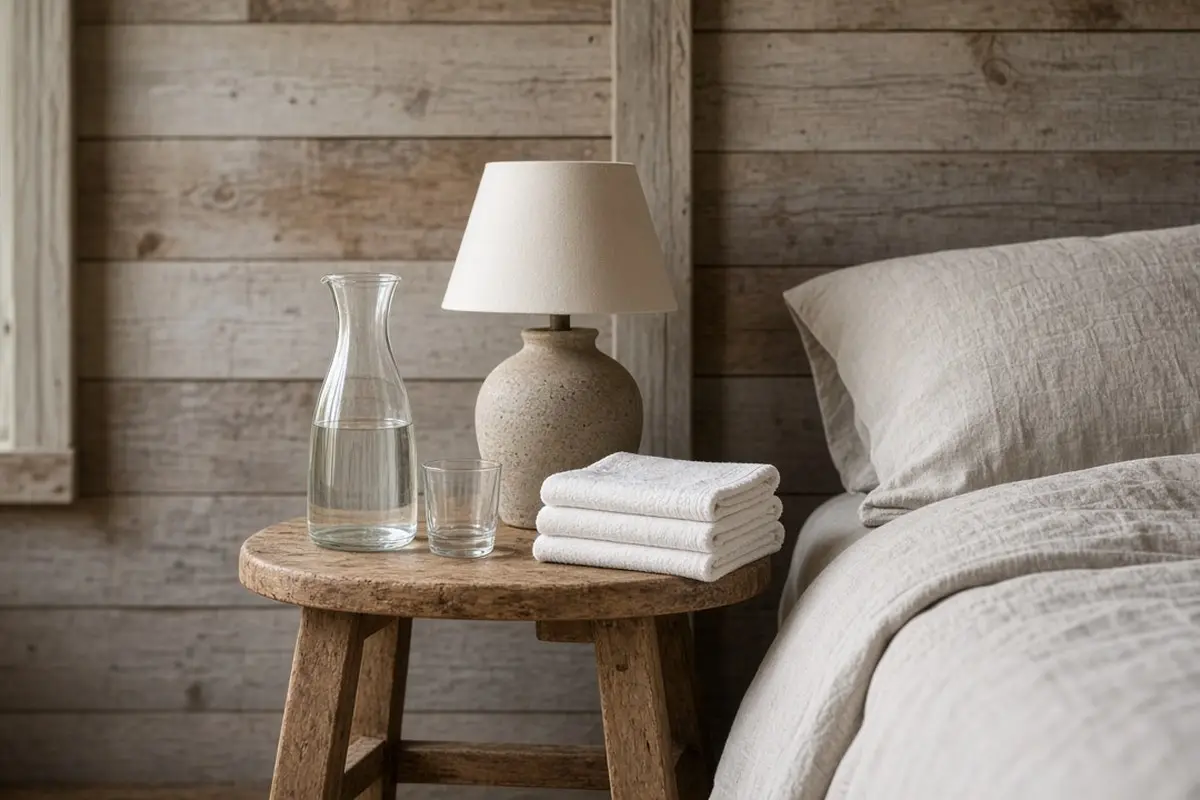
A hook for clothes, a small stool or table, a basket with towels, a water carafe, and a phone charger make the shed feel like a guest room instead of an outbuilding. A small rug by the bed is welcome on a cold floor, and a mirror on the back of the door helps guests get ready. Leave a card with the Wi-Fi password and a flashlight in a drawer.
Making it feel like a bedroom
Once heat, light, and the door are sorted, the decor can be simple. Small rooms look calmest with a short palette: white or pale walls, natural wood, and one accent color repeated in the bedding, a rug, and a cushion. A single piece of art above the bed and a plant on the windowsill are enough; too many objects make a small shed feel cluttered. Hang curtains high and wide to make the windows look larger, and choose a bed with legs so you can see floor underneath, which makes the room feel bigger.
Storage should be minimal but deliberate. Guests need a place to put a suitcase, a few hooks or a short rail for clothes, and a surface for a phone, glasses, and a book. Under-bed drawers or a luggage rack that folds flat cover most of that. Keep a basket with spare blankets, and a small bin for the shed’s own supplies, such as spare bulbs and a lighter, out of sight.
Keeping it ready year-round
A sleeping shed that sits empty for weeks can get dusty and stale. Visit it once a week: open the window, run the heater or fan briefly, and check for leaks or pests. Strip and wash the bedding after each guest, and store clean linens in a sealed bin so they stay fresh. Test the smoke and carbon monoxide alarms monthly and replace batteries every year. With a little upkeep, the shed is ready whenever someone needs a quiet night away from the house.
For teenagers or a long-staying relative, add a small desk or a wall-mounted shelf that works as one, and a power strip with surge protection for laptops and chargers. A simple doorbell or a shared messaging thread means nobody has to walk across the garden just to say dinner is ready. A small welcome touch, like fresh flowers or a folded note on the pillow, finishes the room and tells guests the shed was set up just for them. It costs almost nothing and is remembered.
Get the look
Common questions
Can you sleep in a shed? Yes, if it is insulated, ventilated, safely heated, and allowed by local rules. Add smoke and carbon monoxide alarms and a door that opens easily from inside.
How do I heat a sleeping shed? An electric oil-filled radiator or a ceramic heater with a thermostat and tip-over protection is the simplest safe option. Avoid unvented fuel heaters.
What size shed do I need for a bedroom? About ten by ten feet fits a full or queen bed with room to walk around and a little storage.
For more on hosting, see our guest-ready bedroom ideas and the easy guest bedroom reset.