

11 Lake Cottage Rooms That Pack Down for the Off-Season

On this page14 sections
- Think in two inventories
- Washable slipcovered sofas
- Lidded storage bins for every room
- A cedar or metal trunk as a coffee table
- Vacuum bags for bedding
- Metal beds and simple linens
- Indoor-outdoor rugs
- Wall hooks instead of closets
- Glass-front cabinets for dishes
- Wall art under glass
- A closing kit by the door
- Dust sheets that look intentional
- Opening day, made easy
- Common questions
Most lake cottages live two lives. From late spring to early fall they are full of wet towels, sandy feet, card games, and guests on the pullout. Then one weekend in October someone drains the pipes, pulls the dock, and closes the door until May. The decor that works best in a seasonal cottage is the decor that survives that second life: months of cold, damp, dark, and the occasional mouse.
This post is about planning cottage rooms around closing day. Every idea here looks relaxed and summery when the cottage is open and packs down quickly when it is not. The goal is a closing routine of an afternoon rather than a weekend, and an opening day that feels like a reward instead of a cleanup job.
As an Amazon Associate I earn from qualifying purchases.
Think in two inventories
Split everything in the cottage into two groups. The first group stays out all winter: solid wood furniture, metal beds, ceramic lamps, framed prints under glass. These need only a dust sheet. The second group goes into storage: cushions, bedding, rugs, towels, books, games, and anything soft or edible. Mice and moisture go after soft goods first, so the fewer of them you leave out, the easier the spring opening.
Buying with this split in mind changes your choices. A cottage with fewer, better-sealed soft goods, all of which fit into a handful of bins, is far easier to close than one with stacks of throws and pillows on every chair.
1. Washable slipcovered sofas
A slipcovered sofa is the single best piece for a seasonal cottage. In summer, the cover goes through the wash after a week of sunscreen and wet swimsuits. In fall, it comes off, gets washed one last time, and goes into a sealed bin, leaving the bare frame under a sheet. White or natural cotton canvas looks crisp all season and can be bleached. Buy a second cover if you can; one is on the sofa while the other is in the wash, which matters on a rainy week with a full house. Loose, relaxed covers are more forgiving than tailored ones, which can shrink slightly and be a struggle to refit after washing. Before storing the bare frame, vacuum the crevices thoroughly, since crumbs left in a sofa are an open invitation to mice.

Get the look
2. Lidded storage bins for every room
Assign each room a set of matching lidded bins that hold all of that room’s soft goods. Label them by room and contents. On closing day, every cushion, throw, and pillow goes into its bin, and the bins stack in one dry spot. Clear bins with gasket lids let you see what is inside and keep out moisture and pests. Keep a short contents list taped inside each lid as well as on the outside label, so you can check things off in spring. Store bins off the floor on a sturdy shelf or a pallet, because concrete and floorboards stay damp in a closed building. Avoid cardboard boxes entirely; mice chew through them, and they soften and sag in humid air.
Get the look
3. A cedar or metal trunk as a coffee table
A trunk does double duty. In summer it is a coffee table that hides board games and spare blankets. In winter it holds bedding or table linens. Cedar deters moths, and a metal-lined or metal trunk keeps out rodents. A woven-look trunk with a liner gives a softer cottage look. Line the inside with a cotton sheet before filling it, and leave a cedar block or a lavender sachet tucked in the corner. A trunk on low feet lets air circulate underneath, which helps prevent musty smells over a long winter.

Get the look
4. Vacuum bags for bedding
Duvets, pillows, and wool blankets take up most of a cottage’s storage space. Vacuum compression bags shrink them to a fraction of the size and keep them sealed from damp and dust. Wash and fully dry everything first; packing anything damp invites mildew. Do not leave down and feather pillows compressed for more than a season, as the fill can lose loft; a light shake and a day in the sun on opening weekend brings them back. Add a moisture-absorbing packet to each bag before sealing. If the cottage is very damp, consider bringing the bedding home for winter instead.
Get the look
5. Metal beds and simple linens
Metal bed frames do not crack or warp in an unheated winter cottage, and mice cannot nest in them. Dress them in simple white or striped cotton, with one quilt per bed, so the bedding for the whole cottage fits into a few bags. A matching set across every bed means any sheet fits any room. Standardizing mattress sizes helps as well. If every bed in the cottage is a full or a queen, you need only one size of sheets, mattress protectors, and quilts, and you can buy them in sets. Waterproof mattress protectors are worth it in a cottage with kids and wet swimsuits; they also stop winter damp from soaking into the mattress.

Get the look
6. Indoor-outdoor rugs
Cotton and wool rugs soak up lake water and attract moths. Indoor-outdoor rugs made from polypropylene can be hosed off, dry quickly, and roll up for winter. Stripes and simple patterns suit a cottage and hide sand. Roll rugs rather than folding them for storage, so they do not crease, and stand them upright in a corner or lay them across the top of the bins.
Get the look
7. Wall hooks instead of closets
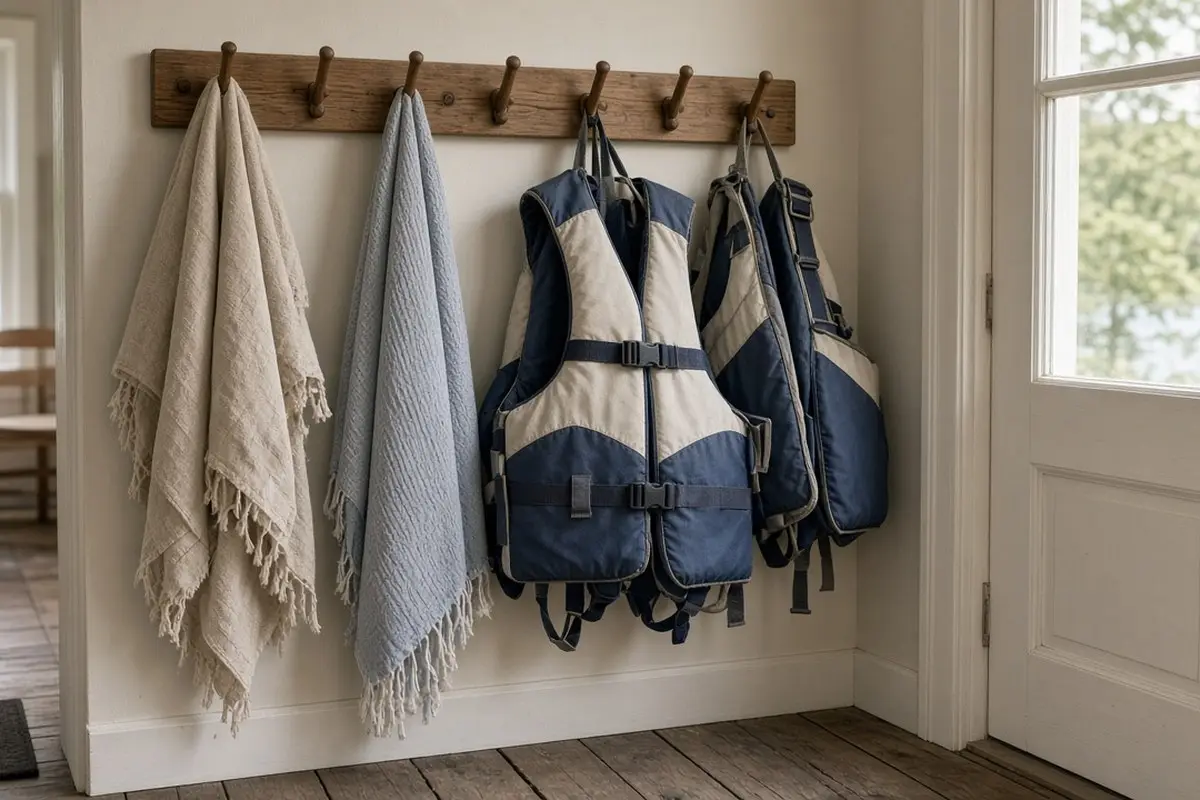
Hooks keep wet towels and life jackets in the open air where they dry. A row of pegs by the door, a hook rack in each bedroom, and towel hooks in the bathroom replace a lot of closet space. In winter, nothing hangs there, so there is nothing for damp to settle into. Hooks also make it easy for guests to find things and put them back, which saves a lot of searching on a busy weekend. Mount a few at child height so kids can hang their own towels.
Get the look
8. Glass-front cabinets for dishes
Dishes and glasses can stay in the cottage all winter if they are in closed cabinets. Glass-front doors let you see everything in summer and keep dust and droppings out in winter. Put a sheet of paper towel on each shelf before closing so the first rinse in spring is easy. Turn glasses and mugs upside down on the shelves, and store pots and pans with their lids off so air circulates. Take all food home on closing day, including sealed packages, spices, and pet food. Anything edible left behind will be found.
Get the look
9. Wall art under glass
Lake prints, old maps, and vintage photographs make a cottage feel personal. Framing them under glass protects them from winter damp. Avoid canvas and paper hung unframed, which can warp or spot in an unheated building. Hang art on interior walls rather than on exterior walls, where condensation is worst. Add small felt bumpers to the lower corners of frames so air flows behind them.

Get the look
10. A closing kit by the door
Keep everything you need for closing in one bin: dust sheets, mouse deterrents, moisture absorbers, a checklist, and spare bags. It saves hunting for supplies on the last day. A laminated checklist is the most useful item in the kit: shut off the water, drain the lines, prop open the fridge, unplug appliances, empty the trash, set mouse deterrents, lock the windows. Ticking off a list makes closing calmer, especially when several family members share the work.
11. Dust sheets that look intentional
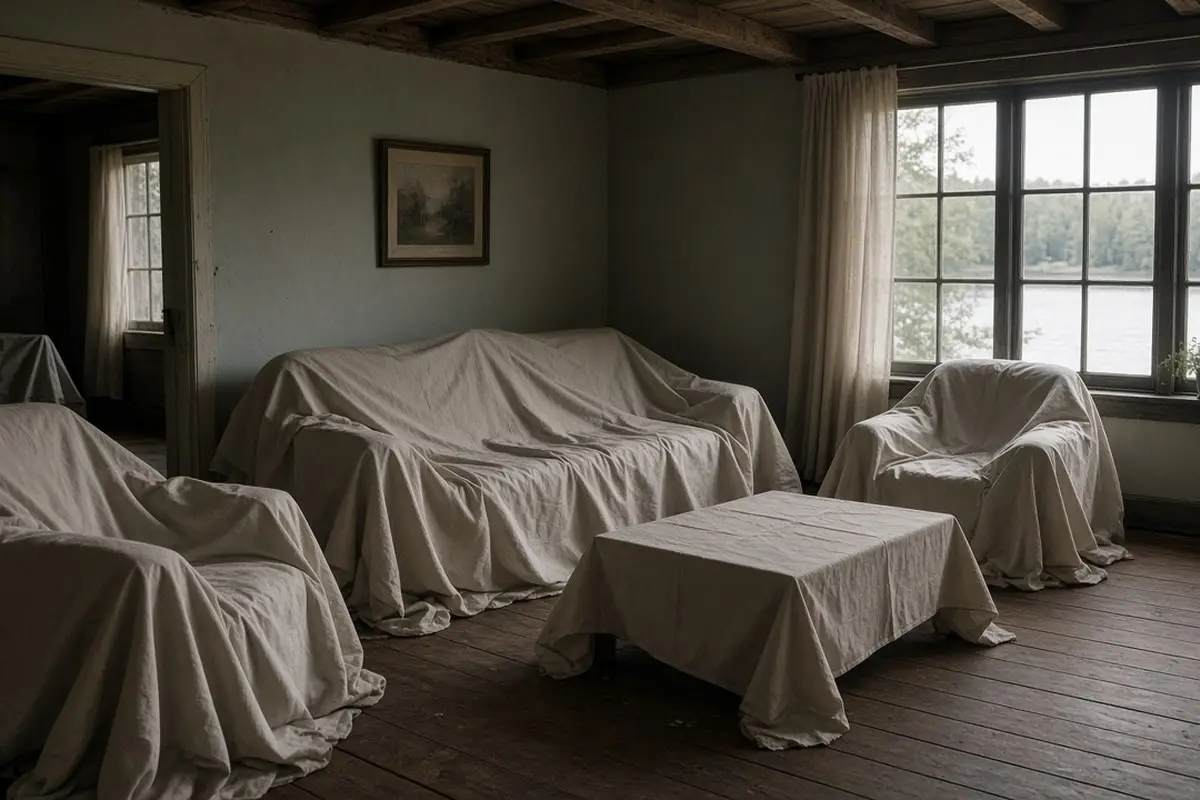
Old canvas drop cloths over sofas and chairs keep dust off and look quietly charming. On opening day, pull them off and the room is ready. Shake the sheets outside before folding them, wash them once a year, and store them in the closing kit so they are always where you expect.
Opening day, made easy
A good closing makes opening day short. Throw open every window first, even if the air is cool, and let the cottage breathe for an hour. Pull the dust sheets, check the traps and absorbers, and wipe down the kitchen counters and shelves. Then open the bins room by room. Because each bin holds everything for one room, you can carry it in, unpack it, and have that room finished before moving to the next. Wash anything that smells stale, and hang cushions and quilts outside in the sun for an afternoon.
Keep a notebook in the closing kit and jot down anything that went wrong over the winter: a damp corner, a chewed bag, a leaky window. Fixing those small problems each spring makes every closing easier than the last. Over a few seasons, the cottage ends up with exactly the right amount of stuff, all of it easy to wash, stack, and store. That is when the cottage really starts to feel like a place for summer rather than a list of chores.
Get the look
Common questions
What should I leave in a lake cottage over winter? Solid wood and metal furniture, closed-cabinet dishes, and framed art can stay. Bring home or seal away food, bedding, towels, electronics, and anything liquid that can freeze.
How do I keep mice out of a closed cottage? Seal gaps around pipes and doors, remove every scrap of food, store soft goods in latching bins, and set deterrents or traps. Check them on opening day.
How do I stop a cottage from smelling musty? Leave interior doors and cabinet doors open, use moisture absorbers in each room, and air the cottage fully on opening day before unpacking.
For a small year-round house, see our small front porch ideas and bunk room ideas.