
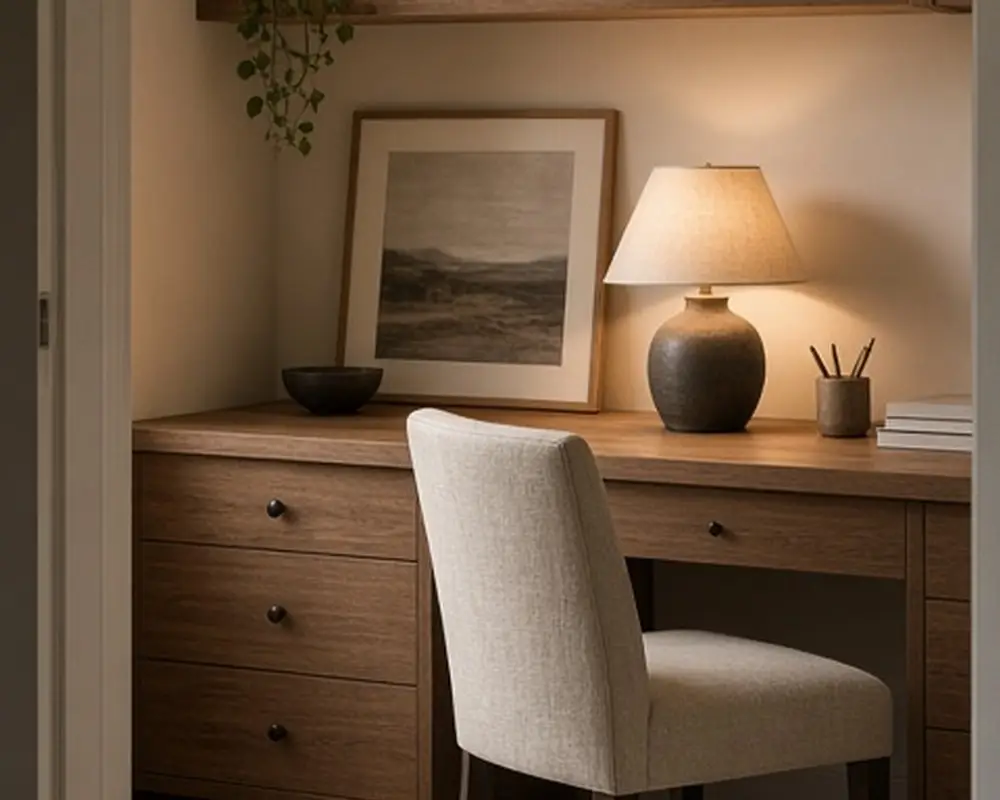
11 Home Offices You Can Close at the End of the Day

On this page15 sections
- Why closing matters
- A cloffice with doors
- A secretary desk
- A wall-mounted fold-down desk
- Closed storage for everything
- A laptop drawer or charging box
- Two lighting scenes
- A calm, simple palette
- A cover for the monitor
- A door with a sign
- Plants that need evening care
- An end-of-day tray
- Common questions
- Making a spare room feel like an office, then not
- Small upgrades that help you switch off
The hardest part of working from home is not starting. It is stopping. When the desk is always in view, the unanswered email is always in view too, and evenings slide into one more quick check. A calm home office is not just one with soft colors and a plant. It is one that can be shut, hidden, or switched off so the workday has a clear end.
This post collects eleven ideas for offices that close. Some literally have doors; others use lighting, storage, and a few small rituals. They suit spare rooms and corners alike. If your desk shares a room and you need a boundary first, start with our post on dividers that make a desk feel like its own room.
As an Amazon Associate I earn from qualifying purchases.
Why closing matters
Psychologists who study remote work talk about boundary cues: physical signals that tell your brain one role has ended and another has begun. Commuters get one for free on the train home. At home you have to build it. Closing a door, putting the laptop away, or changing the light all work as cues. The more visible and physical the cue, the better it works. That is why every idea below has something to close, cover, or switch. You do not need all of them. Pick one strong cue, like a door or a fold-away desk, and one or two small ones, like a lighting change and a tray, and use them every day until the routine is automatic.
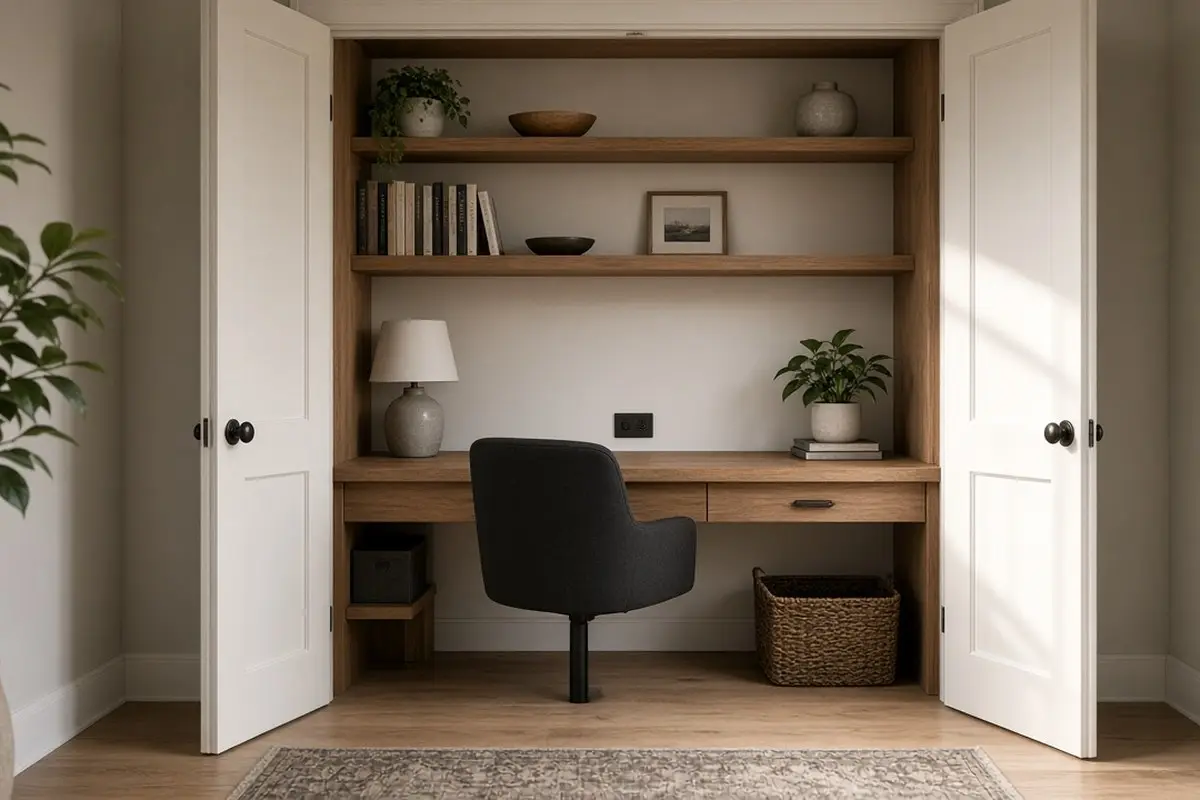
1. A cloffice with doors
A closet turned into an office is the ultimate office you can close. Remove the rod, fit a desk surface at the right height, add shelves above, and run a lamp and a power strip inside. At the end of the day, close the doors and the office is gone. Bifold or French doors open fully so you are not cramped while working. A standard reach-in closet about two feet deep fits a desk surface and a monitor comfortably. Paint the inside a soft color or add peel-and-stick wallpaper so it feels like a little room of its own. Fit an LED strip under the top shelf for even task light, and drill a grommet hole in the desk surface for cables. Leave space for the chair to roll back out of the closet so the doors close cleanly. If the closet has no outlet nearby, a flat extension cord run under the door trim keeps things safe and tidy.
Get the look
2. A secretary desk
A secretary desk has a drop-front surface that folds up to hide your work. It looks like a handsome piece of furniture when closed, which suits a living room or bedroom. Choose one deep enough for a laptop and with a cable hole in the back. Vintage secretaries are easy to find secondhand and often have small pigeonholes inside for letters and stationery. Check that the drop front sits at a comfortable typing height, usually around twenty-eight to thirty inches; some older pieces are a little high, which a taller chair or a cushion can fix. A lamp on top and a plant beside it make it look like a lovely piece of furniture at night.
Get the look
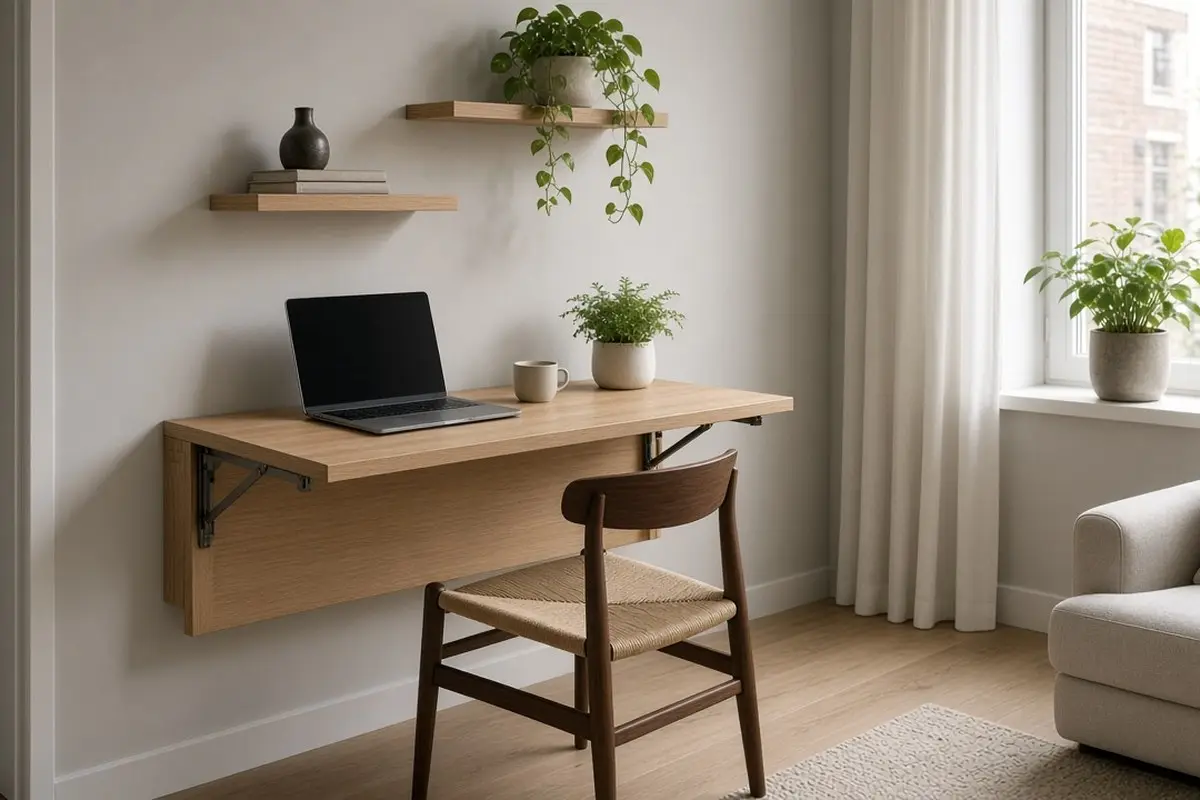
3. A wall-mounted fold-down desk
For the smallest spaces, a fold-down desk mounted on the wall gives you a work surface during the day and a flat panel at night. Many have small shelves inside for supplies. Screw it into studs, since it will carry the weight of your arms leaning on it all day. Choose a model with a fold-out leg or strong brackets if you use a monitor. When closed, the front can hold a calendar or a small print, so the wall still looks decorated.
Get the look
4. Closed storage for everything
Open shelves full of binders and cables keep work in view. Swap them for cabinets with doors or a credenza with drawers so you can put everything away. A bin labeled for each project makes tidying up fast. Closed storage also makes the office feel calmer during the day, because there is less visual noise competing for your attention. Keep one shallow drawer for everyday supplies and use the cabinets for things you reach for weekly.
Get the look
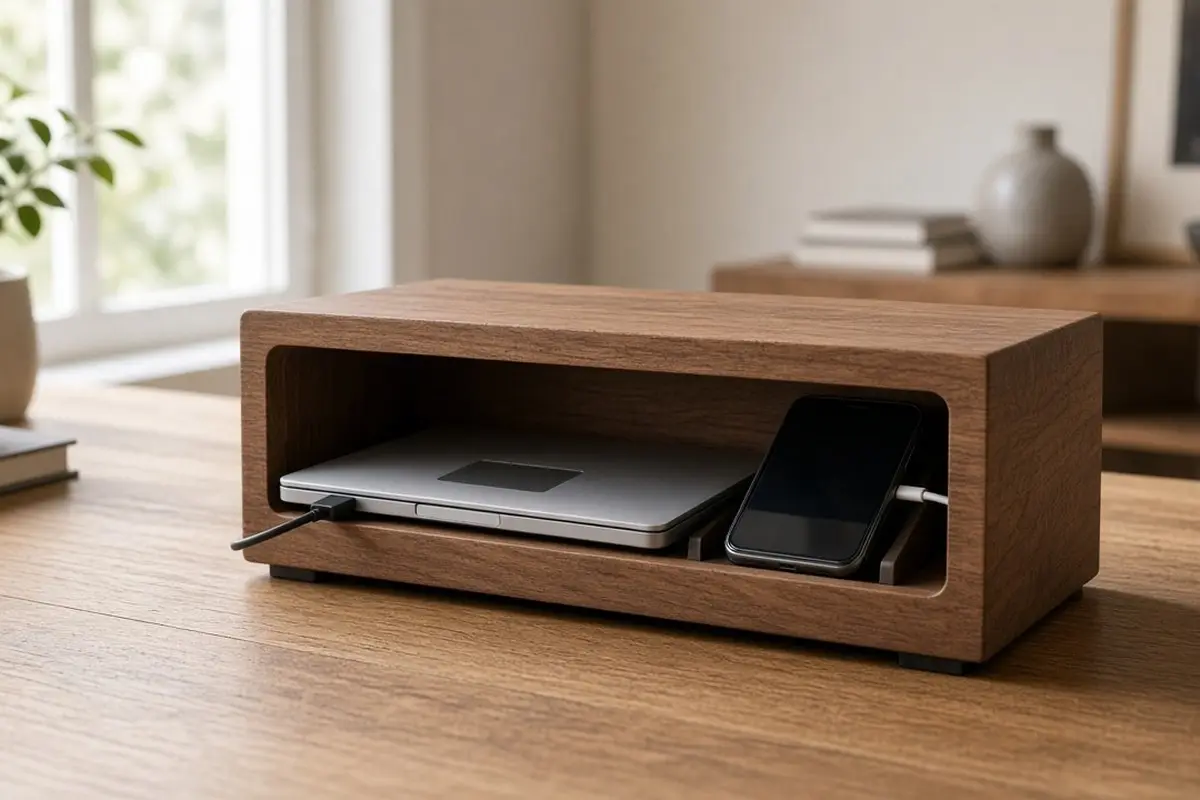
5. A laptop drawer or charging box
If the laptop stays on the desk, it is too easy to open again. A drawer or a lidded charging box gives it a home where it can charge out of sight. Put your work phone in there too if you have one. Out of sight really is out of mind.
Get the look
6. Two lighting scenes
Bright, cool light helps you focus; warm, low light helps you wind down. Use smart bulbs or a plug-in dimmer to switch the office from a work scene to an evening scene. Turning off the task lamp becomes your end-of-day cue. Set the work scene at around four thousand kelvin and the evening scene at around twenty-seven hundred. Many smart bulbs can switch automatically at a set time, which becomes a gentle reminder that the workday is over.
Get the look
7. A calm, simple palette
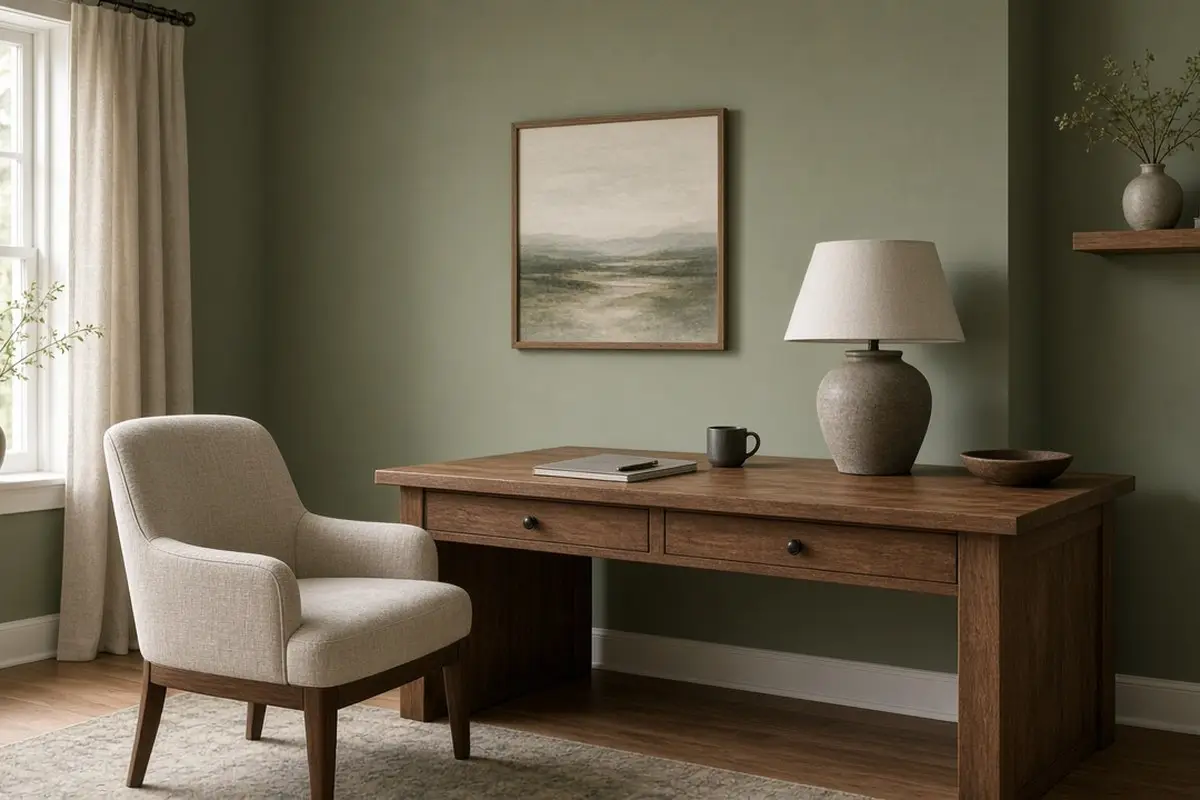
Soft greens, warm whites, and natural wood make an office that feels restful even during busy days. Limit the palette to three colors and keep surfaces mostly clear. Add texture rather than color for interest: a wool rug, a linen chair, a ceramic lamp, and a wood desk feel layered without being busy. A single framed print in soft tones is enough on the wall.
Get the look
8. A cover for the monitor
A linen cloth or a monitor cover over the screen at night hides the blinking light and makes the desk look like furniture. If the office is in a bedroom, this is especially helpful, since a dark screen in the corner can feel like it is watching you.
Get the look
9. A door with a sign
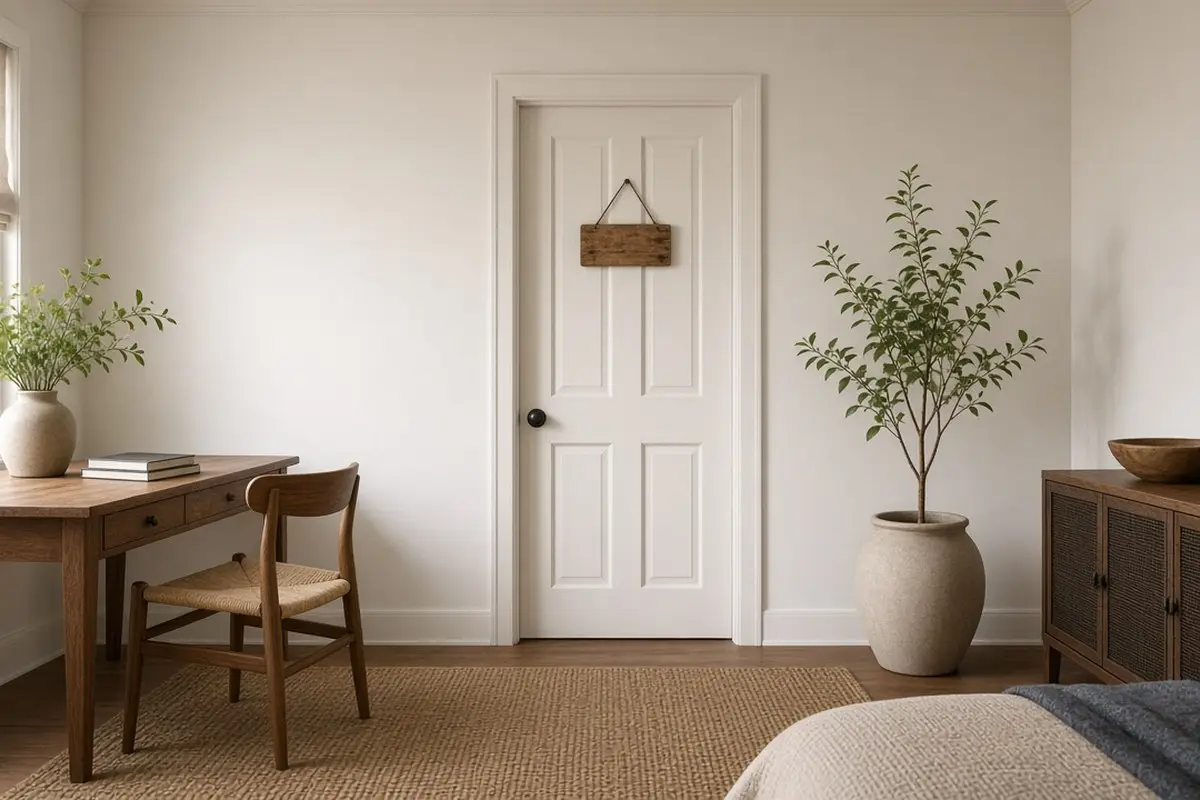
In a spare-room office, simply closing the door is powerful. A small sign or hook with a closed tag can signal to family when you are working and when you are done. Flipping the sign to closed at the end of the day is a small act, but it marks the moment you are back home.
Get the look
10. Plants that need evening care
A few plants on the desk give you a reason to step away at the end of the day: water, turn, and wipe their leaves. Two or three minutes of plant care is a gentle bridge between work and the evening.
Get the look
11. An end-of-day tray
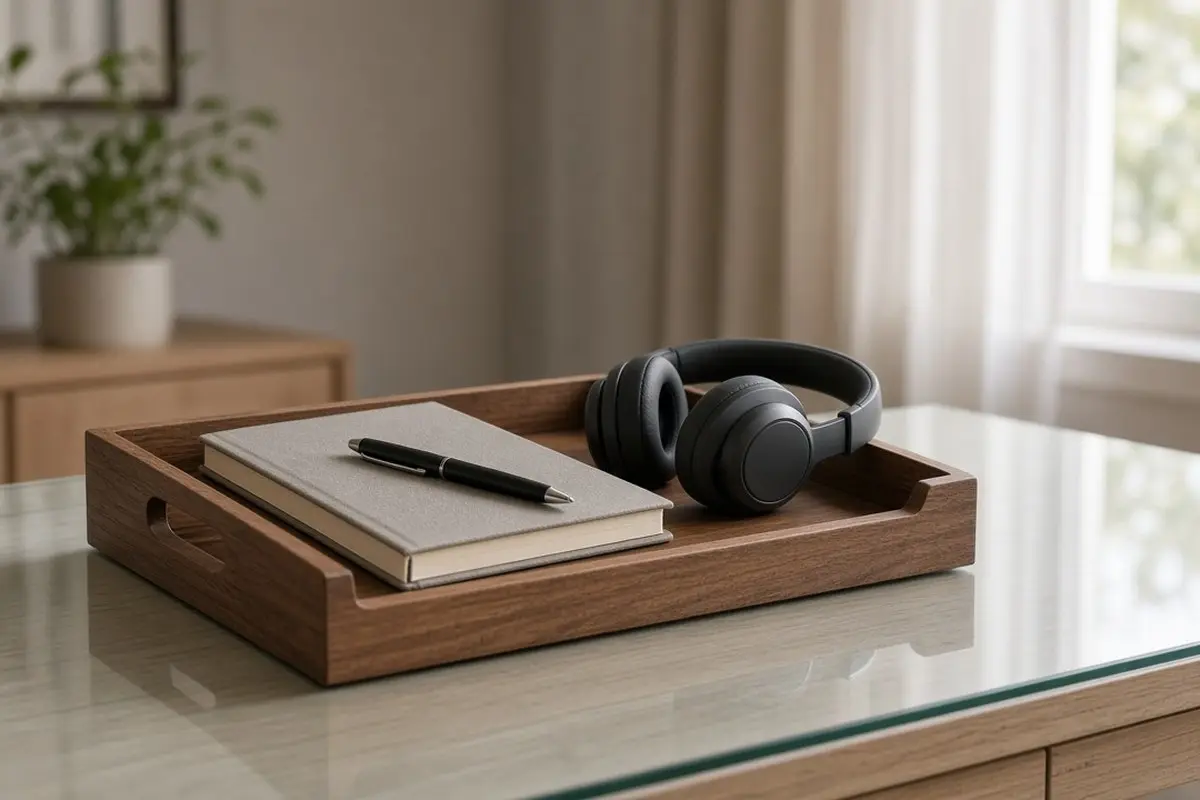
A tray where pens, notebooks, and headphones go at the end of the day keeps the desk clear for the morning. Write tomorrow’s first task on a sticky note and leave it on the tray, so you can stop thinking about it tonight.
Get the look
Common questions
How do I hide a home office in a living room? Use a secretary desk, a fold-down wall desk, or a closet office with doors, and keep supplies in closed storage.
What colors make a calming home office? Soft greens, warm whites, muted blues, and natural wood tones. Keep the palette small.
How do I stop working at the end of the day? Create a physical cue: close the office door, fold the desk, put the laptop in a drawer, and switch the lighting to a warm evening scene.
For a reading spot away from work, see## A five-minute closing routine
The pieces above work best as part of a short routine you do every day at the same time. Here is a simple one. First, write down where you stopped and the first task for tomorrow. Second, close every tab and app, then shut the laptop and put it in its drawer or box with the phone. Third, clear the desk: pens and notebook into the tray, mugs to the kitchen, papers into their project bins. Fourth, switch the lights to the evening scene or turn off the task lamp. Fifth, close the door, the cabinet, or the desk itself.
That is all. It takes five minutes, and it gives you a clean desk in the morning as well as a clear evening. On busy days you will be tempted to skip it; those are the days it helps most.
Making a spare room feel like an office, then not
If your office is a spare room that also hosts guests, plan for both roles. A daybed or a sleeper sofa along one wall, a desk on another, and closed storage for both bedding and work supplies let the room switch quickly. Before guests arrive, put the work bins in a closet and lay a throw over the desk chair; the room reads as a guest room. On Monday, it is an office again. Keep the decor neutral enough to suit both, with one or two personal pieces that make you happy to sit down in the morning.
Small upgrades that help you switch off
A comfortable chair that is not your work chair, somewhere else in the house, gives you a place to land after closing the office. A short walk outside after work does the job of a commute, separating the two halves of the day. Some people change clothes or play a particular playlist. None of these cost much, and together with an office you can close, they make working from home far more sustainable over months and years. The goal is not a perfect office but a reliable ending, every day, that leaves work where it belongs and gives your evenings back.
For a reading spot well away from work, see our bedroom reading corner ideas.