
12 Christmas Houses With a Short Ornament List

On this page17 sections
- Start with the list, not the store
- A tree with two ornament colors
- Lights that do most of the work
- One greenery, repeated
- Candles instead of figurines
- A wreath on one door
- Stockings that match
- A bowl of something natural
- Bedding that changes with the season
- Paper stars in the windows
- One collection, shown well
- A bare kitchen
- Leave a few rooms alone
- How to store a short list
- Making it feel personal
- More seasonal ideas
- Quick answers
Some of the best-looking Christmas houses have the fewest things in them. They have a tree, some greenery, good light, and a handful of pieces that repeat from room to room. Nothing is fighting for attention, so the few things that are there look deliberate.
A short ornament list is also easier to live with. It takes an afternoon to put up instead of a weekend, it fits into two bins instead of ten, and the house still works as a house in December. The twelve ideas below are built around that approach. Think of them as a menu: most homes need five or six of them, not all twelve.
As an Amazon Associate I earn from qualifying purchases.
Start with the list, not the store
Before buying anything, write down three things: your tree color story, your one greenery, and your one metal. For example, cream and gold ornaments, cedar, and brass. Or red and white, fir, and silver. Everything you buy or pull out of storage should fit one of those three lines. Anything that does not fit stays in the box this year.
It helps to do this with your existing boxes open on the floor. Pull out everything that matches your three lines and set it in one pile. Put everything else back, label the box as off the list for this year, and push it to the back of the closet. You are not getting rid of anything. You are just choosing a theme for one season, and next year you can choose differently.
This is the single biggest difference between a calm Christmas house and a cluttered one. It is not about owning less. It is about using fewer kinds of things at once.
A short list also makes shopping easier. When you see a display of glittery reindeer in November, the question is simple: does it fit the color story, the greenery, or the metal? If not, you can walk past it without a second thought. Over a few years, this turns a jumble of mismatched decorations into a collection that actually goes together.
1. A tree with two ornament colors
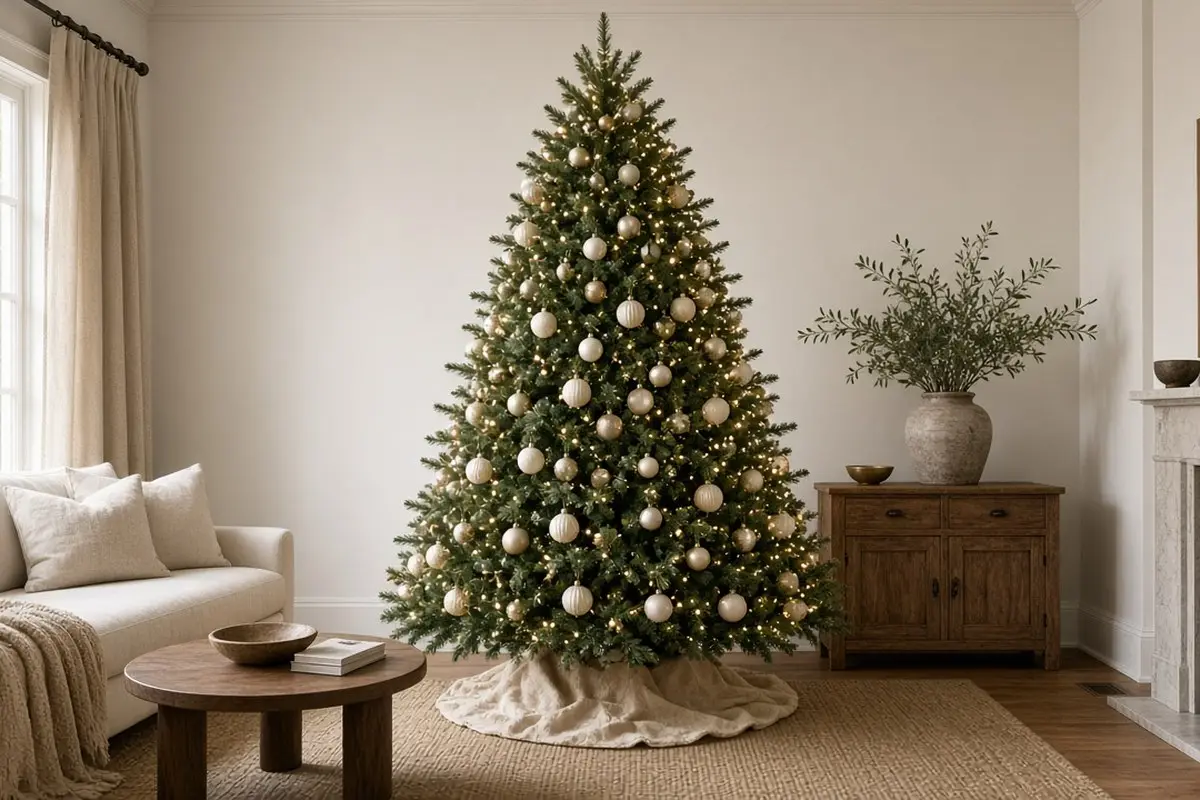
A tree with two colors of ornaments looks finished with far fewer ornaments than a tree with ten colors. Cream and brass, red and gold, or green and silver all work.
Buy ornaments in three sizes in each color: a few large ones for depth, a handful of medium, and plenty of small. Hang the large ones deep inside the branches, near the trunk, so the tree glows from within. Put the small ones near the tips.
For a 7-foot tree, around 60 to 80 ornaments in two colors is usually plenty. Add a single ribbon or no ribbon at all. If you want a topper, keep it in the same metal as the ornaments. A simple brass star or a small bow in your accent color finishes the tree without adding a third idea.
2. Lights that do most of the work
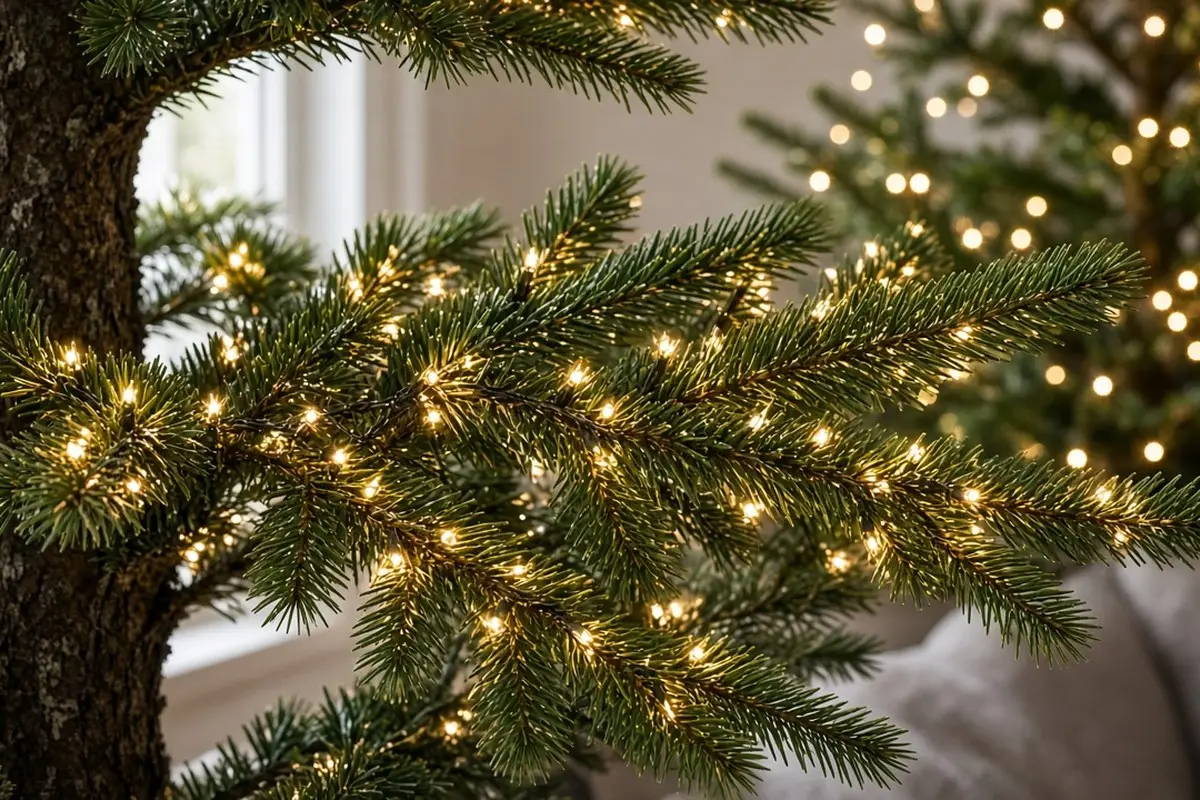
On a short-list tree, the lights carry more of the look than usual. Use more strands than you think you need: a common rule is about 100 lights per foot of tree height. Choose warm white over cool white for a softer, older look.
Weave lights in and out along each branch rather than wrapping the tree in a spiral. It takes longer, but the result looks full from every angle, which matters when there are fewer ornaments to fill gaps. Test each strand before it goes on the tree, not after. A dead strand halfway up a decorated tree is the fastest way to lose an evening.
Get the look
3. One greenery, repeated
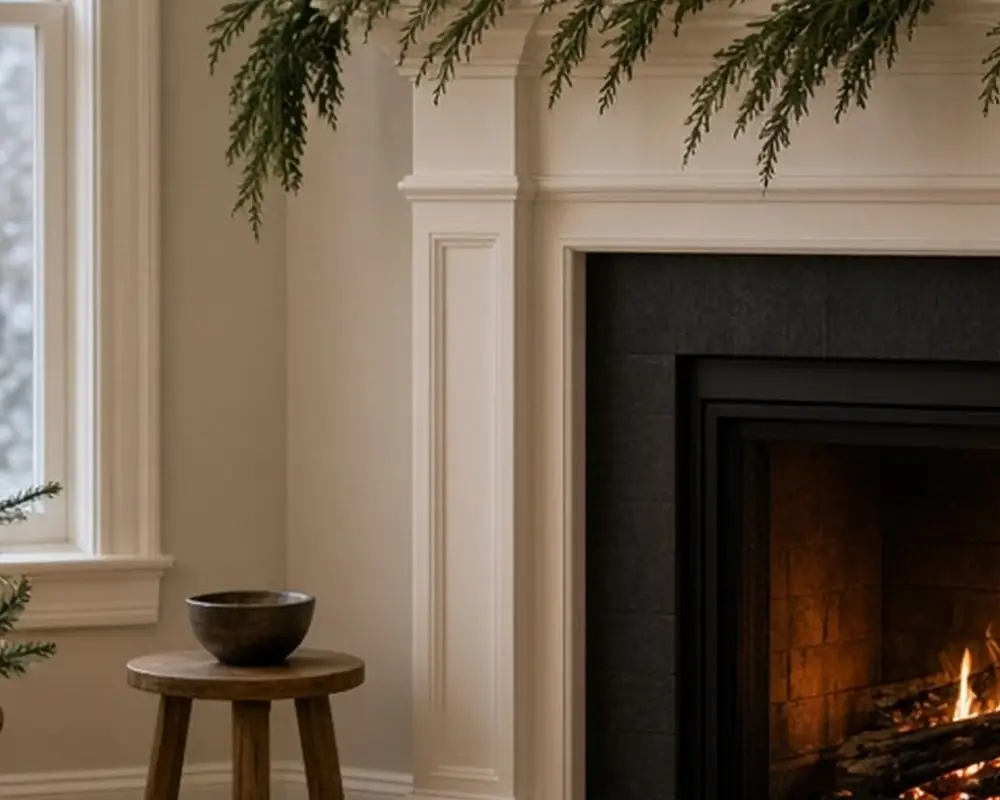
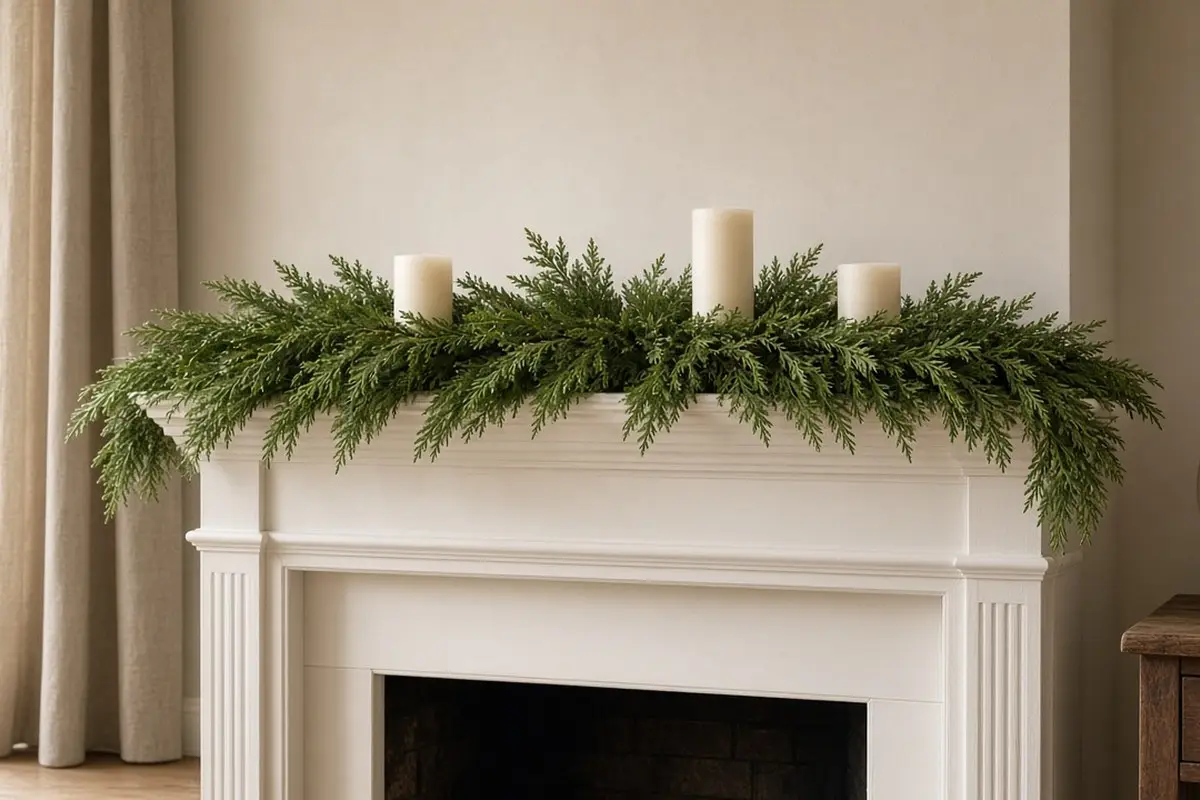
Choose a single greenery and use it everywhere: cedar, fir, pine, or eucalyptus. A cedar garland on the mantel, a cedar sprig on each napkin, and a few cedar stems in a vase in the entry tie the whole house together.
Mixing faux and real works if they are the same type. A faux cedar garland with a few fresh cedar cuttings tucked in looks real and smells real.
Get the look
4. Candles instead of figurines
If you want something on a shelf or console, choose candles over figurines. A cluster of three cream pillar candles at different heights on a tray looks festive, does not need storage space, and burns down instead of piling up year after year.
If open flame is a problem, flameless pillars with a real wax finish look close enough at evening distance. Set them on a timer so they come on at dusk and go off at bedtime, and you will never forget to switch them off.
5. A wreath on one door
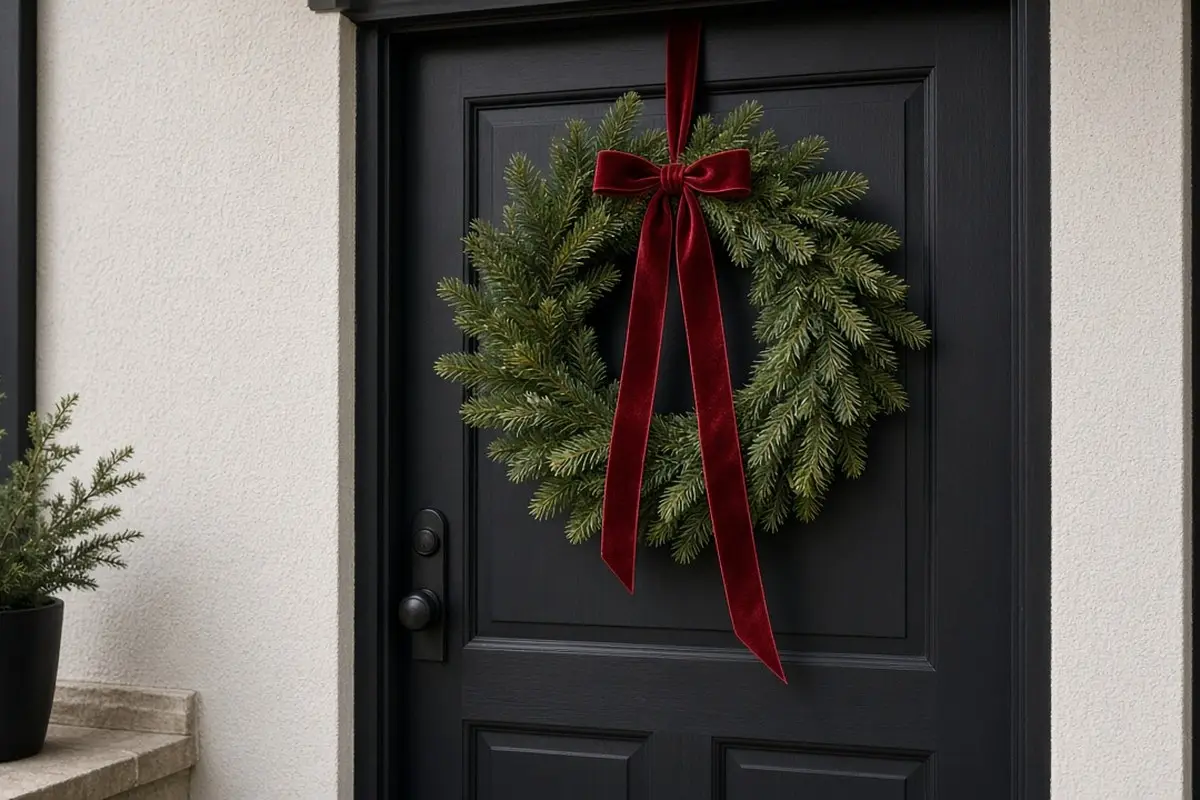
One wreath on the front door is enough. A plain evergreen wreath with a velvet ribbon in your accent color is timeless. Skip the inner-door wreaths unless you truly love them, because each extra one dilutes the first.
Get the look
6. Stockings that match
If stockings hang on the mantel, make them match. Knit stockings in one color, or plain linen with only a name tag, look calm. Mismatched stockings collected over years carry a lot of meaning, so if you love them, keep everything else on the mantel very simple. Hang them from simple brass hooks, evenly spaced, and let the garland above them be the only other element.
7. A bowl of something natural
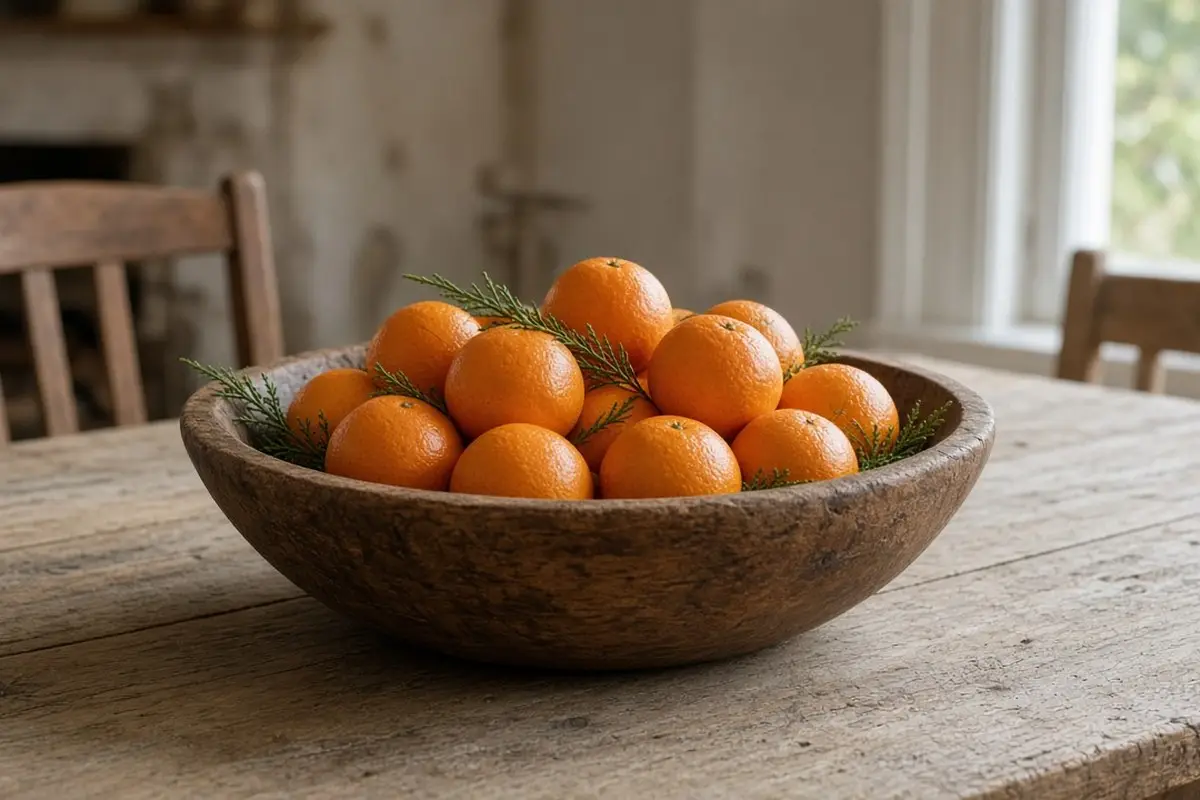
A large wooden or ceramic bowl filled with pinecones, clementines, or plain glass ornaments is one of the easiest centerpieces there is. It works on a dining table, a coffee table, or a kitchen island, and it takes two minutes to put together.
Clementines have the extra benefit of being edible, so the bowl empties itself and gets refilled through the season. Tuck in a few sprigs of whichever greenery you chose for the house, and the bowl ties into the mantel and the front door without any extra effort.
Get the look
8. Bedding that changes with the season
Rather than adding decorations to a bedroom, swap the bedding. A red plaid throw, flannel sheets, or a deep green duvet cover makes a bedroom feel like December without a single ornament. When the holidays end, you just switch the throw back. Add a small evergreen sprig in a bud vase on the nightstand if you want one more touch.
9. Paper stars in the windows
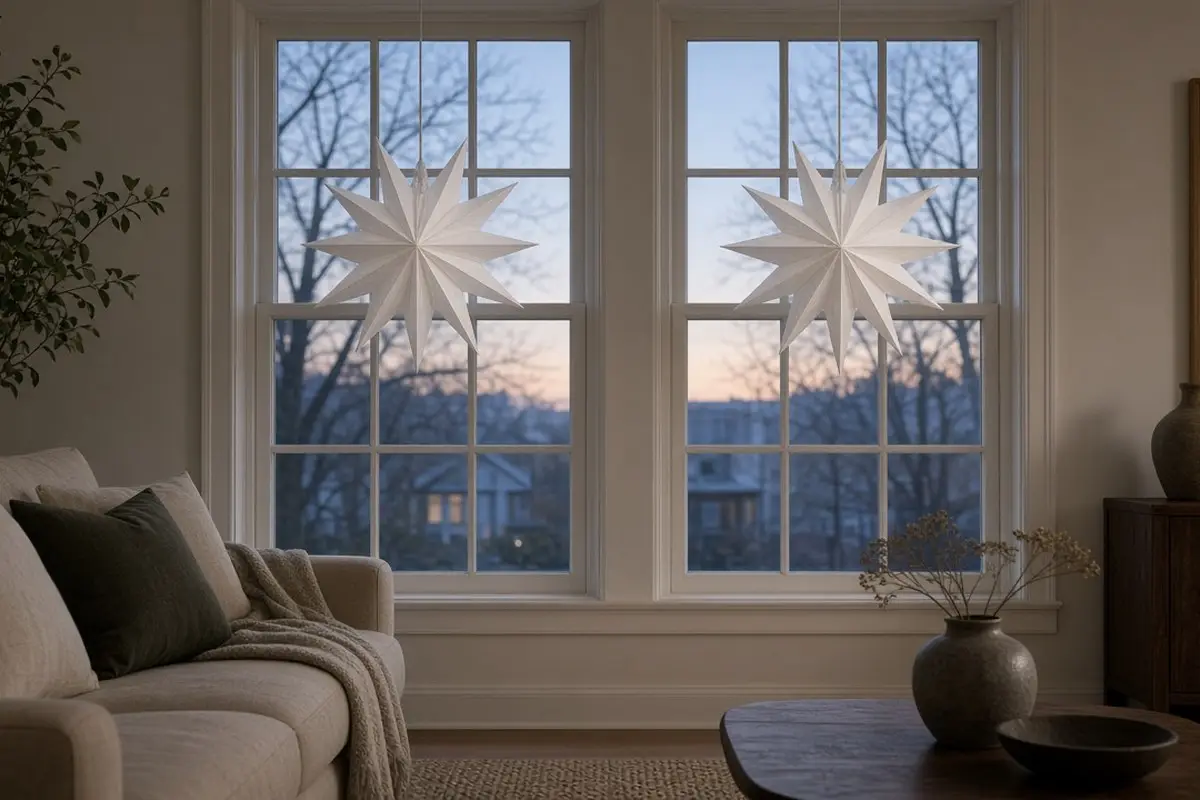
Folded paper stars hung in windows look beautiful during the day and at night. They are lightweight, take almost no storage space, and come in plain white or kraft. One or two per window is plenty. Hang them at slightly different heights in each window for a little movement, and use a warm bulb kit inside if the stars are made to be lit.
Get the look
10. One collection, shown well
If you collect something for Christmas, like nutcrackers, little houses, or vintage ornaments, show the whole collection in one place instead of scattering it. Twelve nutcrackers lined up on one shelf look like a collection. The same twelve spread across the house look like clutter. A bookcase cleared of books for the season, a long console, or the top of a piano all make good stages. Arrange by height, tallest at the back or center, and leave a little space around the group so it reads as one display.
11. A bare kitchen
Kitchens are working rooms in December, and the busiest weeks of cooking all year. Keep decorations off the counters. Every inch of counter is needed for cookie sheets, cooling racks, and serving platters, and decor that sits in the way gets knocked over, splashed, or pushed into a pile in the corner. A sprig of greenery in a small jar by the sink and a wreath on the pantry door are enough.
12. Leave a few rooms alone
Not every room needs Christmas. Bathrooms, laundry rooms, and offices often look better left as they are. The contrast actually makes the decorated rooms feel more special. It also means fewer rooms to undecorate in January, which every tired host will appreciate.
How to store a short list
Once the list is short, storage gets simple:
- One bin for the tree: lights wound around a piece of cardboard, ornaments in a divided box.
- One bin for everything else: garland, stockings, candles, paper stars, and ribbon.
- Label the bins with what is inside and which room it goes to.
If something does not fit in two bins, that is a sign the list has grown again. Before you add anything new next year, pick something to let go.
Making it feel personal
A short list can still feel like your house. The personal touches tend to come from a few specific things: a handmade ornament from a child, a family recipe on the counter, a vintage tree topper, or a stack of favorite holiday books on the coffee table. These pieces matter most when they are not competing with dozens of store-bought ones.
More seasonal ideas
Quick answers
How many ornaments does a small tree need? For a 4 to 5 foot tree, 30 to 50 ornaments in two colors is plenty, with most of them small.
Is a short list cheaper? Usually, yes. Buying fewer kinds of things in larger quantities costs less than collecting one-off pieces, and it means less storage.
Can kids’ ornaments fit a two-color tree? Yes. Give them a small tree of their own in their room or the playroom, or hang their ornaments on one side of the main tree at their height.
When the tree comes down, the ideas in the living room after the tree help the room feel finished again. For a bedroom that stays cozy through January, see winter bedroom layers. And if you want to keep the rest of the year just as simple, quiet apartment details covers the same restrained approach.