
9 Art Deco Details for a House That Is Not a Set

On this page11 sections
Art deco is one of the most glamorous styles in design history. Think of 1920s hotel lobbies, ocean liners, and cinema foyers: geometric patterns, polished brass, black lacquer, velvet, and curves everywhere. It is wonderful to look at and a little exhausting to live in. Copy it too faithfully and your living room starts to feel like a film set waiting for actors.
The good news is that a few deco details go a long way. A curved sofa, a fan-shaped mirror, a fluted table, a little brass against black. Used with restraint inside an otherwise calm room, these pieces bring the style’s elegance without the theater. The nine details below are the ones that live well in a real home, with notes on how much is enough. If you love the brass and navy combination often seen in deco rooms, the colors that sit well next to navy post covers it in depth.
As an Amazon Associate I earn from qualifying purchases.
1. One curved piece of furniture
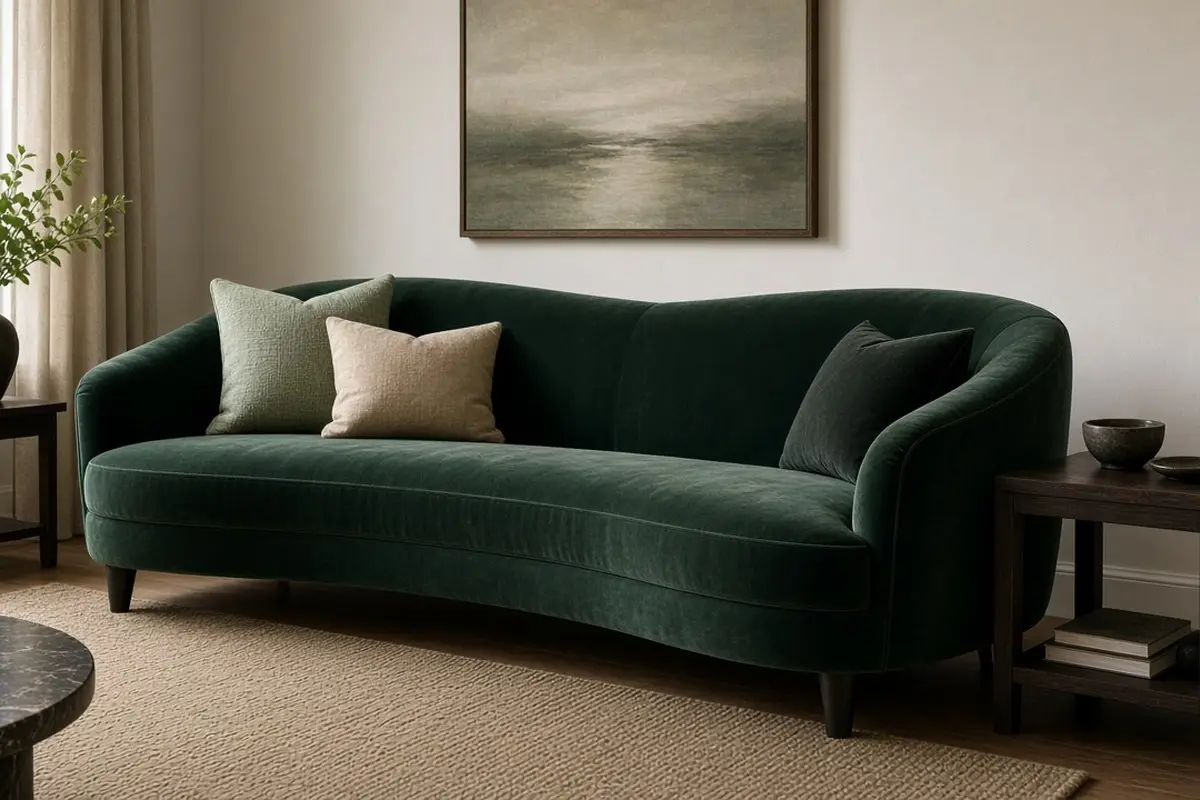
Curves are the softest part of art deco and the easiest to live with. A curved sofa, a rounded armchair, or a channel-tufted chair with a scalloped back brings the style into a room in one move. Curves also make a living room feel more welcoming, because they invite you to sit and turn toward each other.
Choose one main curved piece rather than a whole room of them. A curved sofa with straight-lined side tables and a rectangular rug looks intentional. A curved sofa, curved chairs, a round rug, and a round table all together starts to look like a theme.
Velvet is the classic deco fabric, and it shows off a curve beautifully because light moves across the pile. If you have pets or children, a performance velvet or a tight bouclé gives the same rounded look with more durability. Pick a deep, rich color, such as emerald, navy, rust, or a warm cream, rather than a bright one.
Get the look
2. A deco mirror as the statement
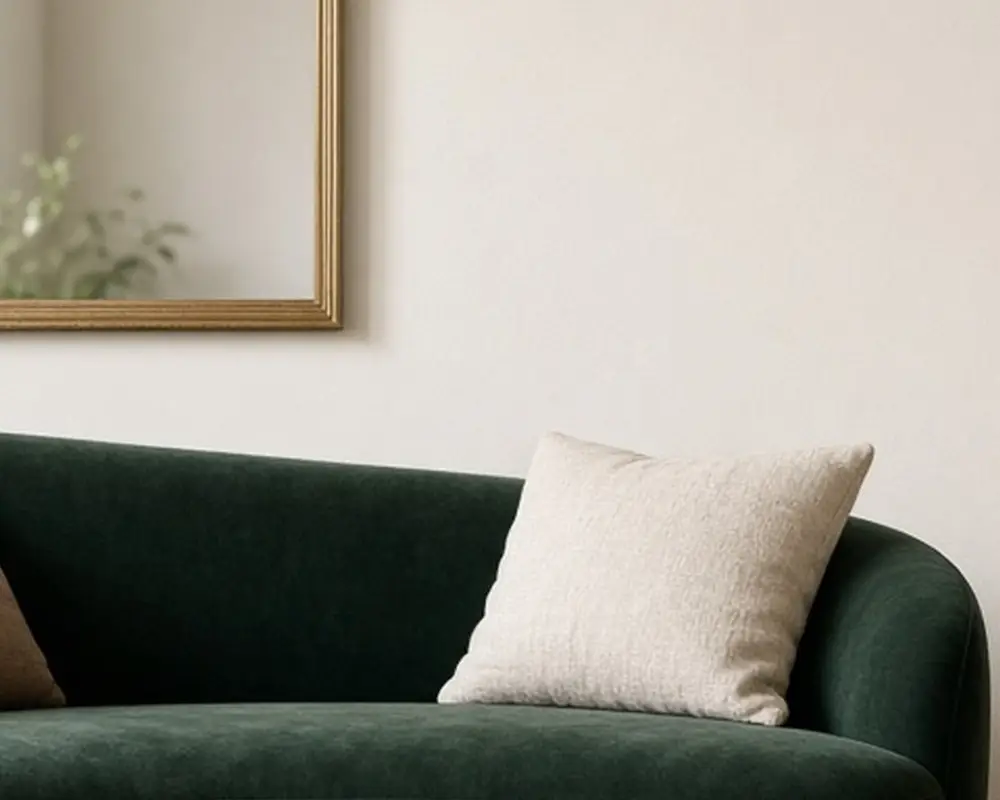
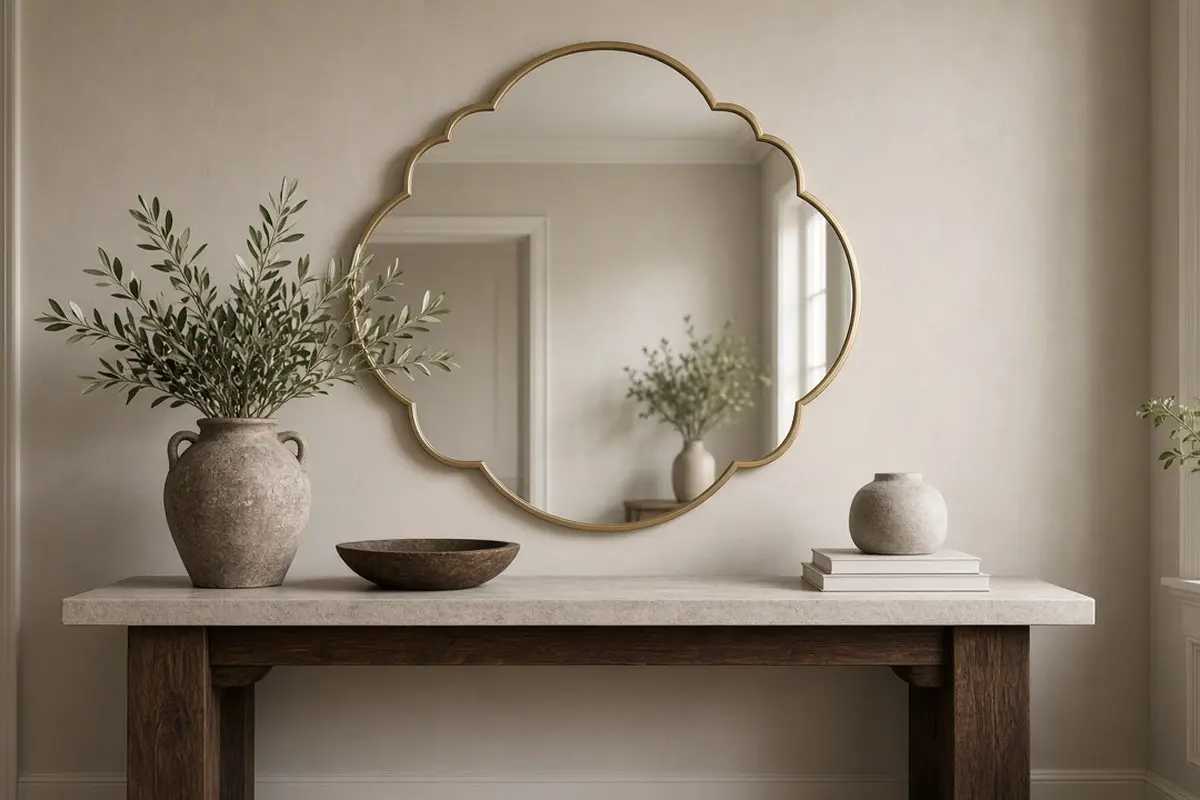
A mirror is the easiest way to bring art deco to a wall. Fan shapes, scalloped edges, sunburst frames, and stepped or arched outlines are all classic deco forms. A single deco mirror above a sofa, a console, or a fireplace gives the room a focal point and reflects light at the same time.
Keep the frame simple in material. A thin brass or gold frame, or a frameless mirror with a beveled edge, looks more modern than a heavily ornamented one. The shape does the work, so the finish can be quiet.
Size it generously. A deco mirror that is too small looks like an accessory. One that fills about two thirds of the furniture below it looks like architecture. Hang it securely into studs or with a French cleat, especially over seating.
3. Brass and black, in small doses
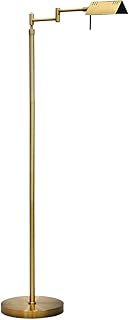
Brass and black decor is the signature color pairing of art deco. Polished brass catches light, black adds depth and graphic contrast, and together they look crisp and glamorous. In a livable room, use them in small, repeated details rather than large surfaces.
A brass floor lamp with a black shade, black and brass picture frames, a black side table with brass feet, brass cabinet pulls on a dark sideboard. Three or four of these spread around the room is plenty. Leave the walls, the sofa, and the rug in calmer tones so the brass and black have room to shine.
Choose brushed or aged brass rather than mirror-bright gold. It looks warmer and more grown up, and it shows fewer fingerprints.
Get the look
4. Fluted and reeded surfaces
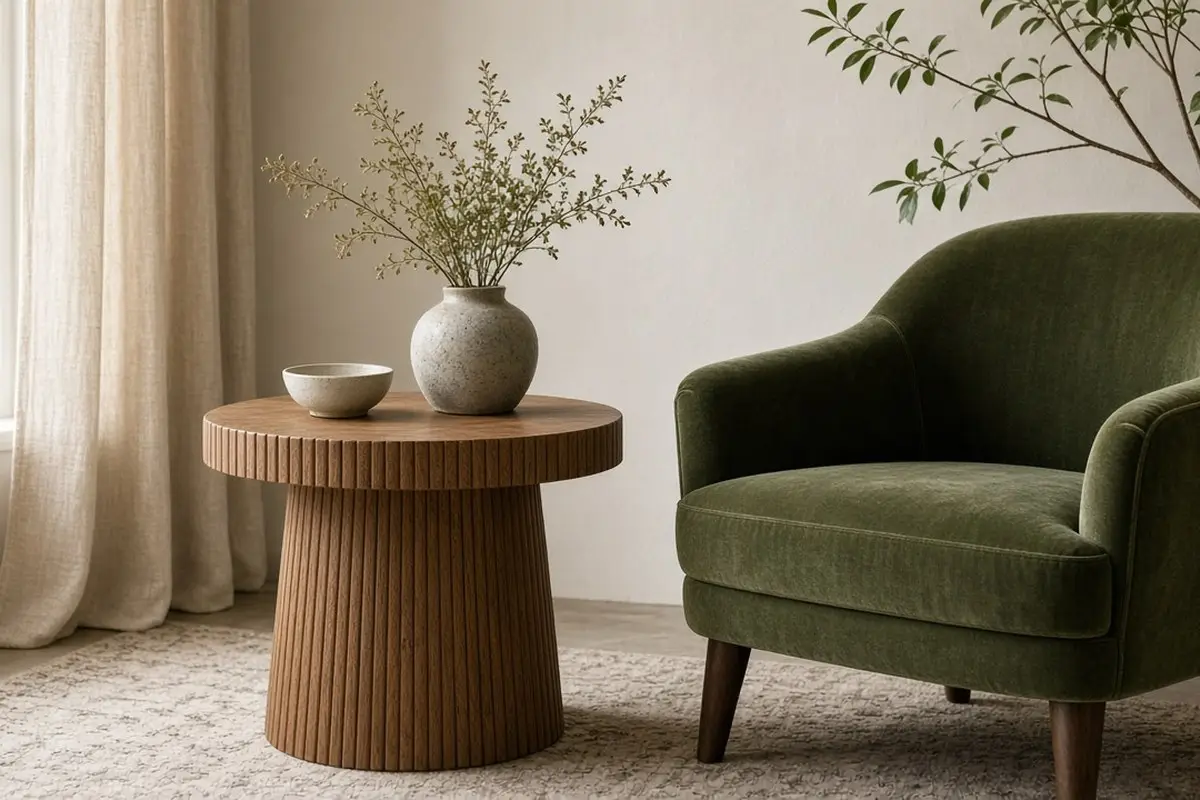
Fluting, the vertical grooves seen on deco columns and furniture, is one of the most popular ways to bring the style into a modern art deco interior. A fluted side table, a reeded sideboard, or a ribbed glass lamp adds texture and rhythm without any pattern or color.
Fluting works in almost any material: wood, plaster, glass, ceramic, or metal. Because it is subtle, you can use it in more than one place without the room feeling themed. A fluted coffee table and a reeded glass pendant, for example, sit together comfortably.
Dust is the one practical drawback. Fluted surfaces collect it in the grooves. A soft paintbrush or a microfiber duster makes cleaning quick.
5. Geometric pattern on one surface
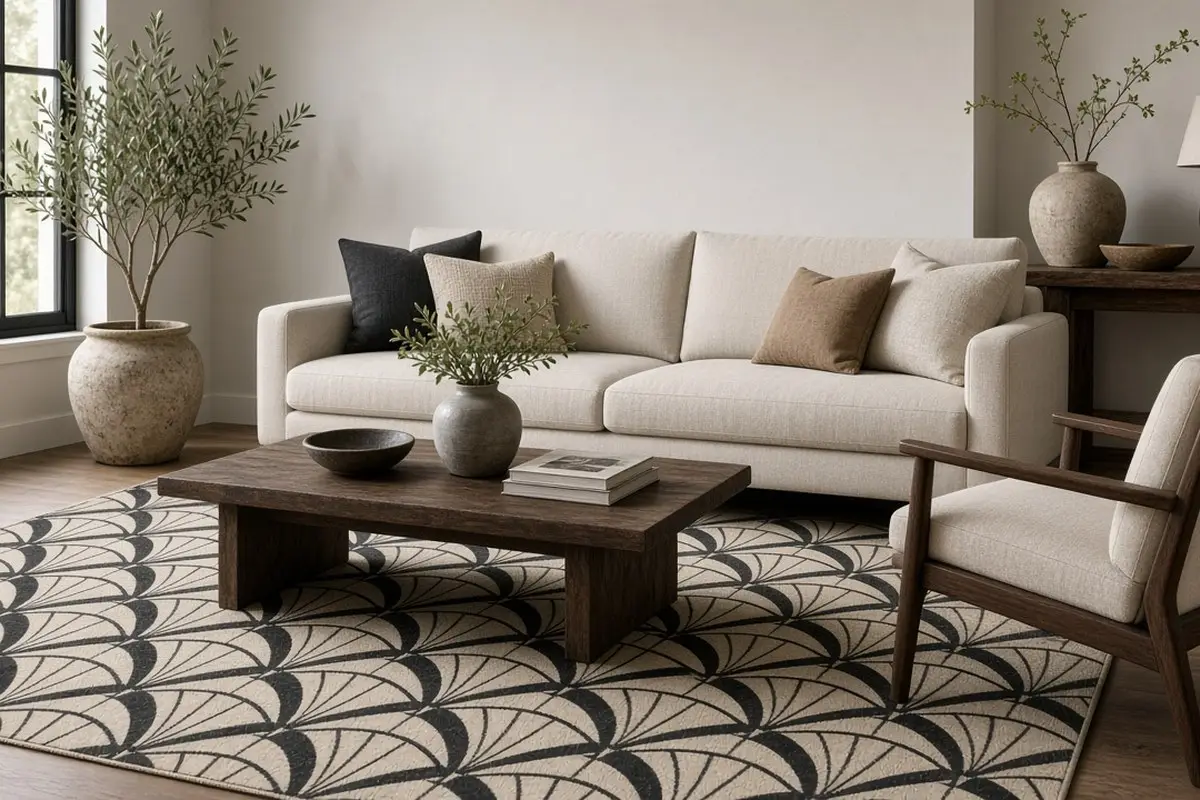
Art deco loves geometry: fans, chevrons, stepped shapes, and repeating arcs. In a livable room, choose one surface for pattern and keep the rest plain. That might be a geometric rug, a fan-patterned wallpaper on one wall, or a pair of pillows with a bold deco motif.
One patterned surface in deco geometry is elegant. Three is a lot. If the rug is geometric, keep the pillows solid. If the wallpaper is patterned, keep the rug plain or softly textured.
Choose patterns in two or three colors only, ideally drawing from the brass, black, and deep jewel tones already in the room.
Get the look
6. Glass and globe lighting
Deco lighting often features frosted or opal glass globes, tiered shades, and brass arms. A globe pendant over a dining table, a pair of opal glass wall sconces, or a mushroom-shaped table lamp gives a room soft, diffuse light with a period feel.
Opal glass is especially kind in living spaces because it glows evenly and does not create harsh shadows. Use warm bulbs to keep the light golden.
Deco lighting is a good place to spend a little more, because a fixture is seen every day and lit every evening. A single good globe pendant over the dining table or a pair of opal sconces beside a mirror can set the tone for the whole room. Pair them with dimmers, so the room can move from bright to glowing as the evening goes on.
Many reproduction fixtures are made today in the style of the 1920s and 1930s, and vintage originals turn up at lighting salvage shops. If you buy vintage, have it rewired by an electrician before use.
Get the look
7. A lacquered or high-gloss accent
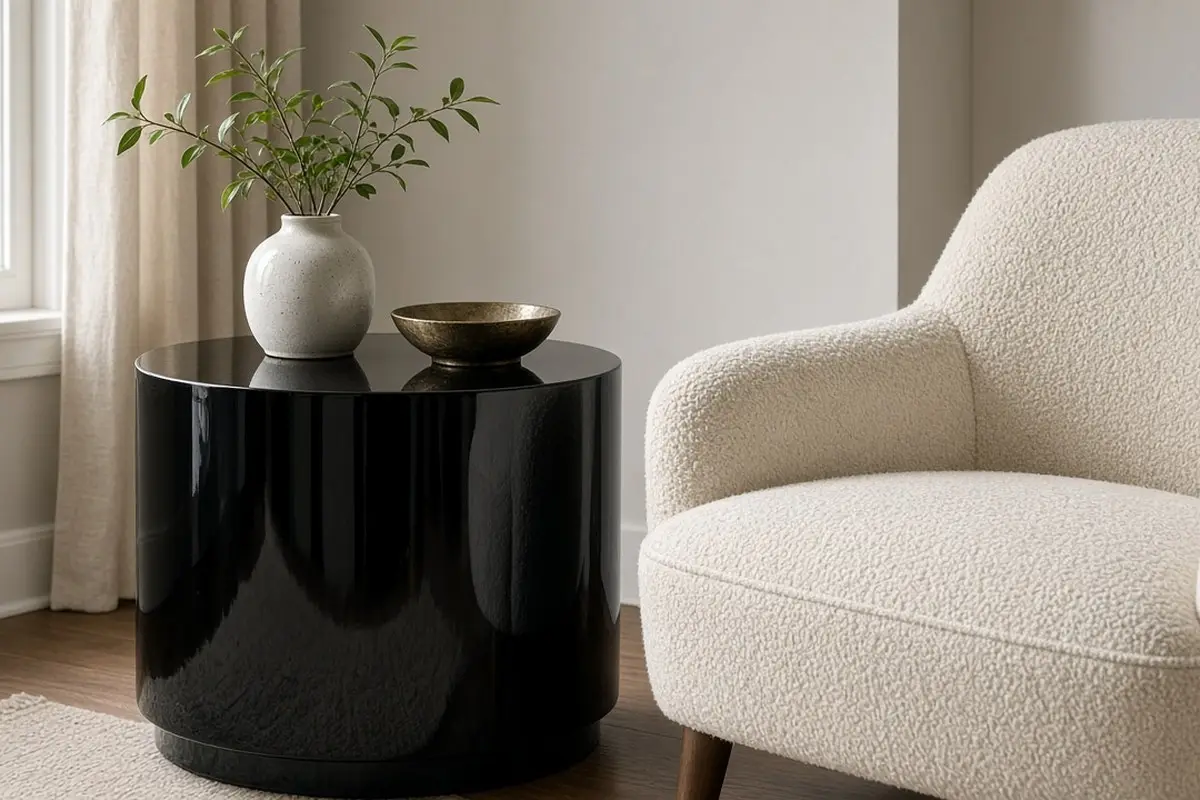
Deco furniture often had glossy lacquer finishes in black, deep red, or rich green. In a modern home, one lacquered piece adds a hint of that luxury. A glossy black side table, a lacquered tray, or a high-gloss cabinet catches light and reflects the room around it.
Keep it to one piece. A whole room of gloss feels cold and shows every smudge. A single lacquered table next to a velvet chair is deco at its most livable.
If you have an old piece of furniture you are tired of, a high-gloss paint can turn it into a deco accent. Sand it lightly, use a good primer, and apply two or three thin coats of high-gloss enamel in black or a deep jewel color. Change the hardware to brass and it becomes a new piece.
Get the look
8. Deco shapes in small objects
Small objects are a low-risk way to bring deco shapes into a room: a fan-shaped vase, a stepped bookend, a geometric candle holder, a ribbed glass decanter. They add character without commitment, and they are easy to move or swap.
Group a few on a console or shelf, mixing heights. Two or three deco objects among plain books and plants look collected. A shelf of only deco pieces looks like a museum shop.
Flea markets and antique shops are full of affordable deco-era glass, ceramics, and small metalwork. A single genuine piece from the period, such as a pressed glass bowl or a chrome cocktail shaker, brings real history into the room and makes the newer pieces around it look more authentic.
9. A calm backdrop for it all
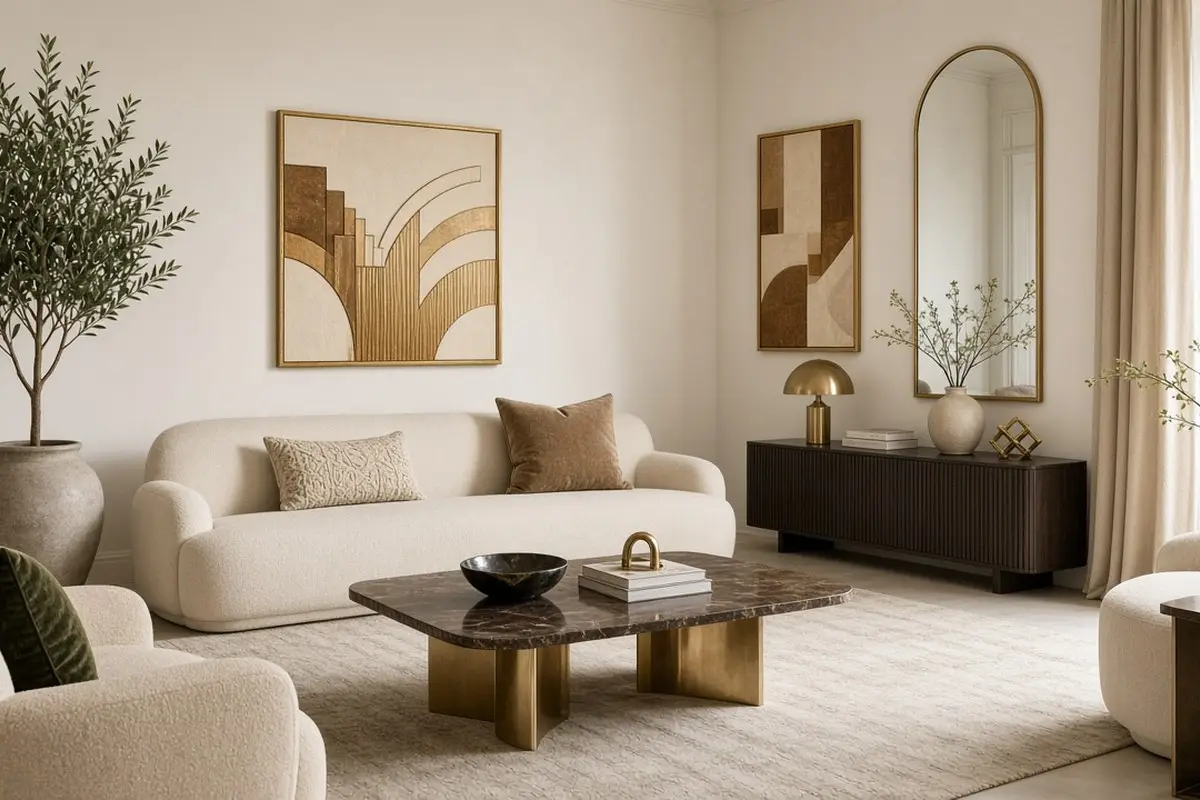
The secret to livable art deco is the backdrop. Paint the walls a soft, warm neutral, such as cream, warm white, or a pale taupe, or a single deep color like navy or forest green. Keep the floor simple. Let the curved sofa, the brass, the mirror, and the one patterned surface be the stars.
Without a calm backdrop, deco details compete with each other. With one, they look elegant and deliberate.
Textiles help, too. Linen curtains, a wool throw, and simple cotton bedding or pillows soften the glamour and make the room feel like a home. Deco’s polished surfaces need something relaxed nearby to balance them. A stack of well-read books on the coffee table does the same job.

Tips Before You Start
- Choose one curved statement piece.
- Use brass and black in three or four small details.
- Limit geometric pattern to one surface.
- Keep lacquer to one piece.
- Paint walls a calm neutral or one deep color.
- Pick brushed or aged brass over shiny gold.
FAQ
How do I make art deco look modern?
Use a few deco shapes and materials in a calm, simple room. A curved sofa, a deco mirror, and some brass are enough.
What colors are art deco?
Black, cream, brass and gold, plus jewel tones such as emerald, navy, and deep red.
Can art deco work in a small living room?
Yes. Curves, mirrors, and glass all suit small rooms because they soften lines and bounce light. The mirror placements that add light post shows where to hang a deco mirror.
How do I avoid an art deco room that looks like a set?
Limit the number of deco pieces, use calm walls, and mix in everyday comfort like linen, plants, and books. The calm living room weekend refresh can help you edit.
Is art deco expensive to do?
Not if you choose a few pieces carefully. A deco mirror, a pair of brass frames, a fluted side table, and one patterned pillow can transform a room. Vintage shops often have authentic small pieces at modest cost. The living room swaps that read as custom post has more ways to make modest pieces look considered.
Art deco brings glamour and craft to a room. Choose a few pieces, set them against a calm backdrop, and your house will feel elegant and lived in, not staged.