
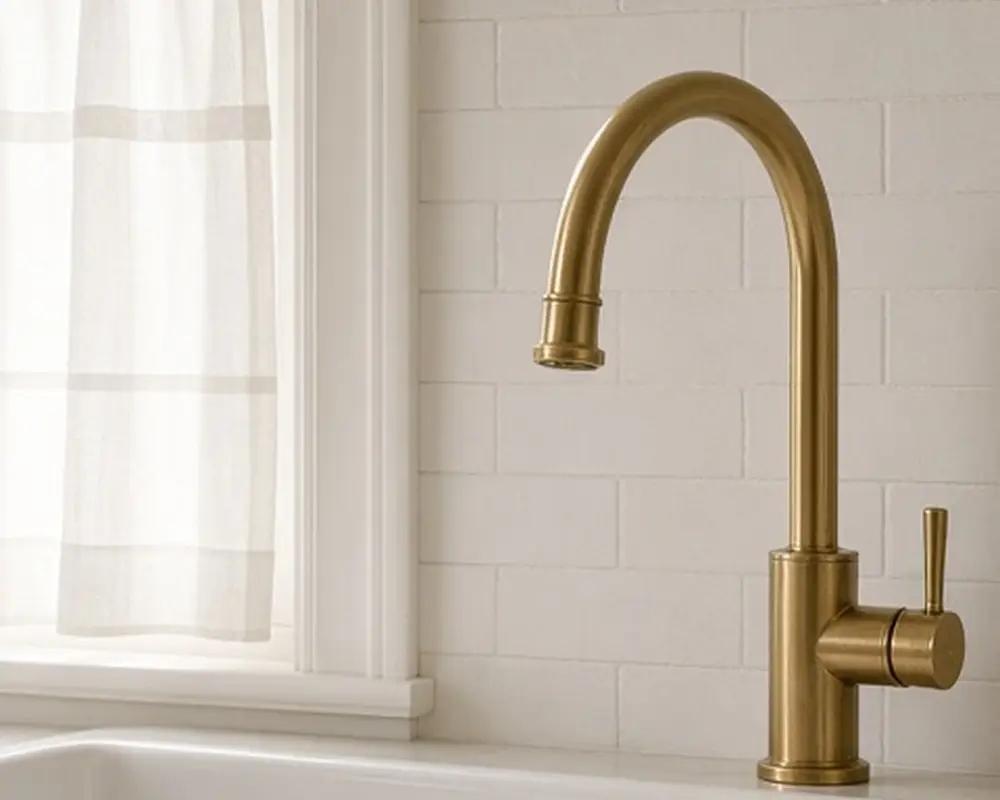
7 Curtains for the Window Directly Above the Sink

On this page9 sections
The window directly above the kitchen sink is different from every other window in the house. It gets splashed several times a day. It sits in a cloud of steam whenever you drain pasta or run hot water. A tall faucet often rises right in front of it, and the sill is usually only a few inches above the back of the sink. Any fabric hung there has to survive conditions that would ruin a living room curtain within a month.
That changes how you choose. Style still matters, but the first questions are practical: how close will the fabric be to the water, how will it dry after a steamy hour of cooking, and can the faucet swing without catching it? This post looks only at that one window. For a broader look at curtains over kitchen counters in general, see the kitchen curtains for a window over the counter post; here we stay right above the sink.
As an Amazon Associate I earn from qualifying purchases.
Measure for the faucet first
Before choosing any style, measure three things. First, the height from the top of the faucet, or the highest point of its spout when pulled up, to the bottom of the window glass. Second, the distance from the back edge of the sink to the window sill. Third, how far the spout swings to each side.
These numbers tell you how much room the fabric has. Write them down and take them shopping; product listings give exact lengths, and an inch matters here. If the faucet rises above the sill, a curtain that reaches the sill will touch it every time you move the spout. In that case, the curtain must stop above the faucet height, or the treatment must be one that raises well clear of it, like a Roman or roller shade.
Most people find they need at least 2 to 3 inches of clear air between the bottom of any fabric and the highest point of the faucet. Less than that and the curtain will be splashed and pushed around daily.
Also look at how the window opens. Casement windows swing outward and often have a crank on the sill; sliding windows move sideways; double-hung windows lift. A treatment must let you reach the crank or the lock without leaning over a wet sink and pushing fabric aside. Rods mounted on the wall above the frame, rather than inside it, leave the frame free for the window to operate.
1. A high cafe curtain that stops above the faucet
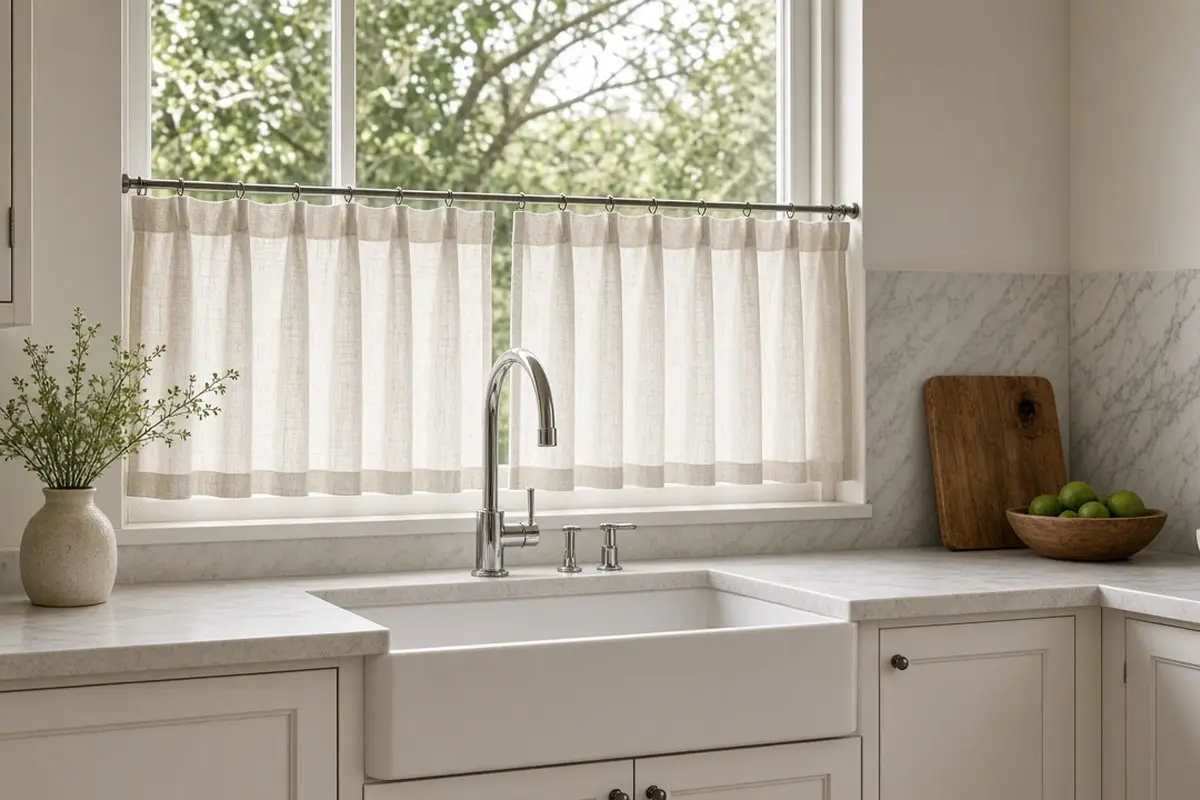
A classic cafe curtain covers the lower half of the window. Above a sink, the trick is to raise it. Instead of hanging the rod at the window’s midpoint and letting the curtain fall to the sill, set the rod a little higher and make the curtain shorter, so its hem finishes a couple of inches above the top of the faucet.
You lose a little privacy at the very bottom of the glass, but at sink height people outside rarely see in at that angle anyway. In return, the curtain never touches the water, the spout, or the soap bottle on the sill.
Use clip rings so you can take it down in seconds for washing. A spare curtain lets you swap one straight in while the other is in the wash. Choose cotton or a cotton-polyester blend that can go in the machine every few weeks.
If the window is short, a raised cafe curtain may cover only a narrow strip of glass. That is fine. Its job is to soften the view and blur the line of sight from outside, not to block light. A light sheer or a cotton voile lets daylight through and dries quickly after steam.
Get the look

2. A tier pair with the middle open
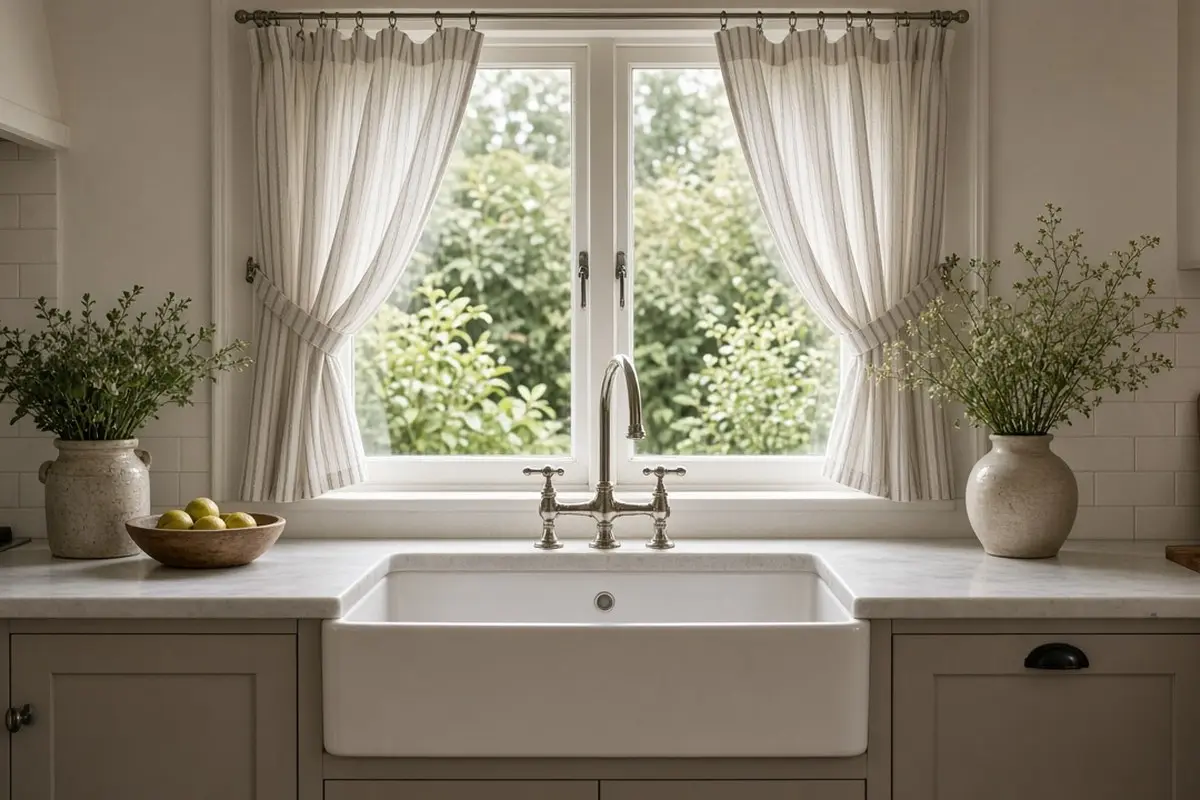
Tier curtains are two short panels side by side on a single rod. Above a sink, tie them back to each side during the day so the center of the window, right above the faucet, stays completely clear. At night, let them fall together for privacy.
This arrangement keeps fabric away from the busiest splash zone, directly behind the faucet. The panels hang beside the frame where water rarely reaches.
A double tier, with a second pair on a rod higher up, frames the whole window and looks charming in a cottage kitchen. Only the lower pair needs to be tied back.
Use tiebacks that hold firmly. Fabric ties look pretty but can slip loose; a small hook on the wall or the frame keeps the panels in place. Check that tied-back panels do not hang over a soap dispenser or dish rack at the side of the sink.
Get the look
3. A Roman shade that lifts clear
A flat Roman shade folds up from the bottom, which is ideal above a sink. Raised during the day, its folded stack sits at the top of the window, far from water and steam. Lowered at night, it gives full privacy.
Choose a cordless design so there are no cords trailing near the sink. Mount it inside the frame if the window is deep enough, so the shade drops cleanly behind the faucet. Keep it raised while washing up.
A Roman shade in a moisture-tolerant fabric, such as a polyester linen-look or an outdoor fabric, will cope with steam far better than pure linen or silk.
Because the stack of folds sits at the top, a Roman shade also shows off a pretty fabric when raised. A small stripe, check, or floral looks like a soft valance. Choose a shade with a dust-resistant finish, since kitchen grease can make dust cling to fabric folds over time.

Get the look
4. Moisture resistant curtains
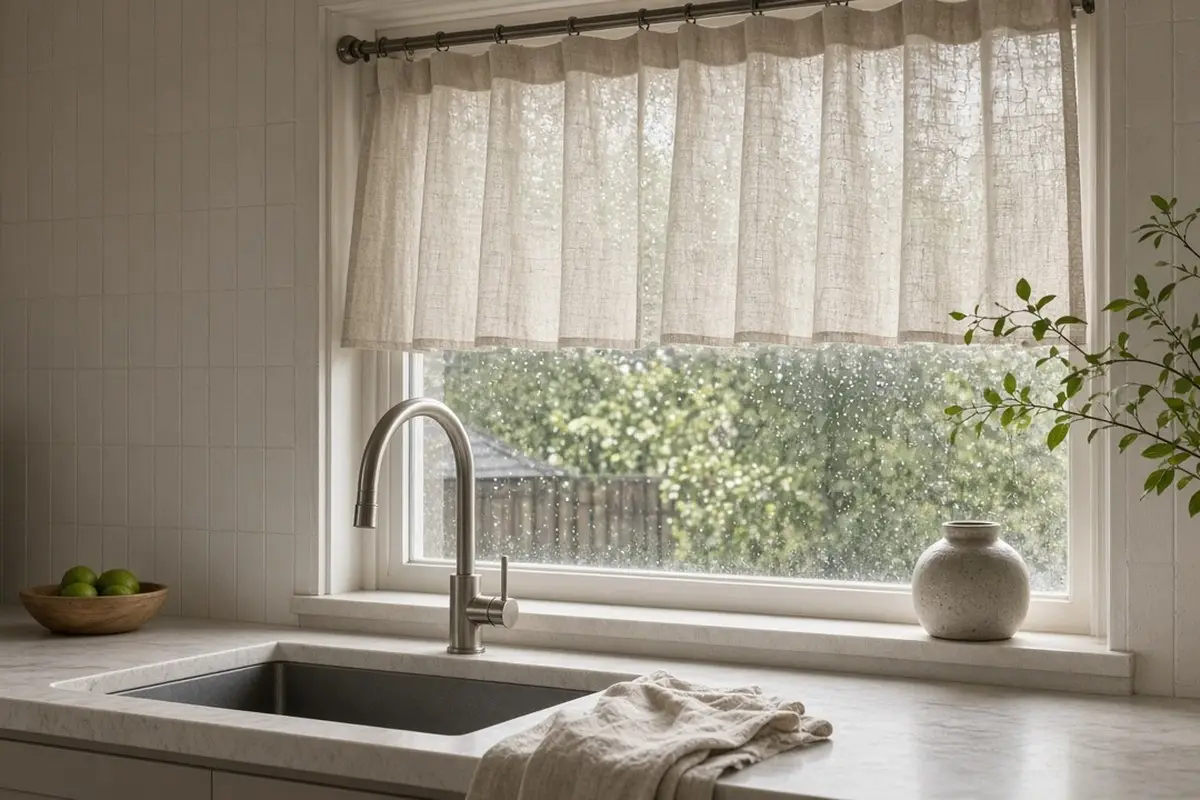
Fabric choice matters more above the sink than anywhere else. Steam and splashes encourage mildew in natural fibers that stay damp. Polyester, polyester blends, and outdoor fabrics dry quickly and resist mildew. Cotton works if it is washed often and the room is ventilated.
Pre-wash any curtain before hemming, since many fabrics shrink a little. Then hem it to its final length, measured with the faucet up, so it ends exactly where you planned. Choose colors and patterns that hide water spots: small prints, stripes, and mid tones look better between washes than plain white.
Avoid lined curtains here. The lining traps moisture between layers and dries slowly.
Weight matters too. Very light sheers flutter in drafts from an open window and can drift into the sink. A medium-weight fabric hangs straighter and stays where you put it, while still drying quickly.
Get the look
5. A valance with a shade below
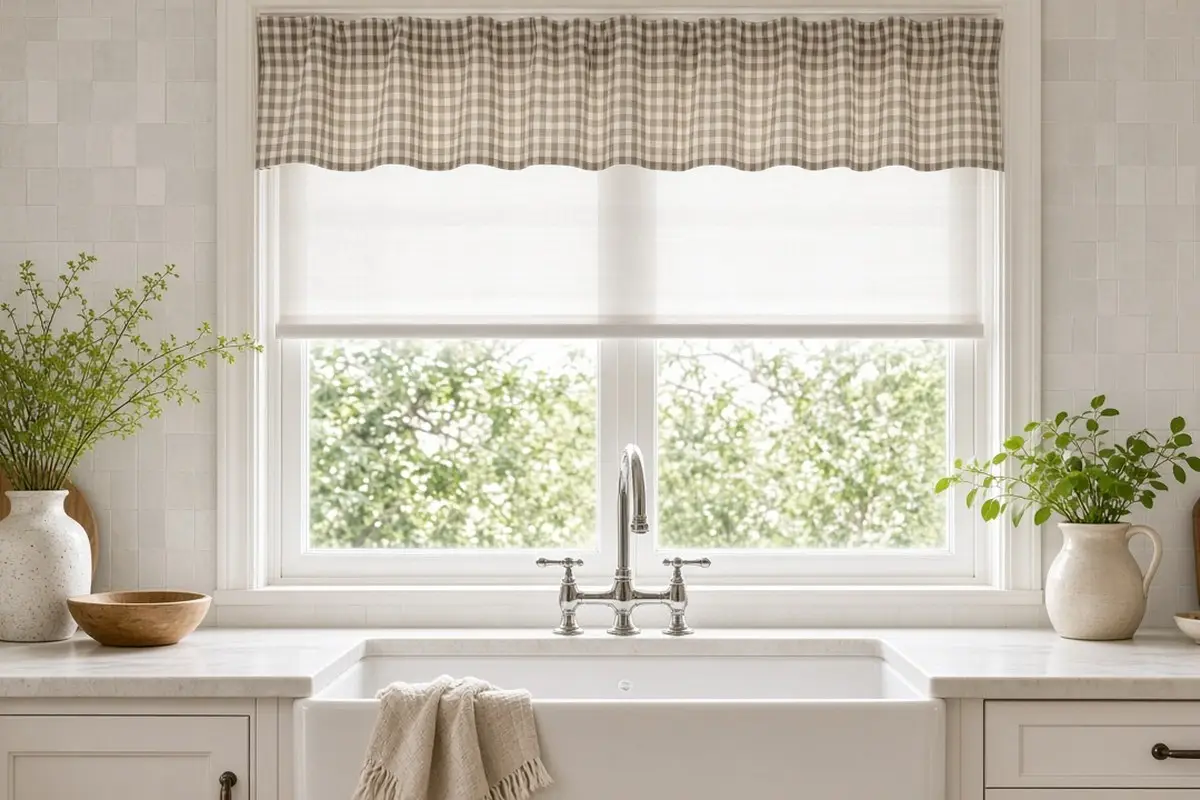
If you love fabric but the faucet is tall, put the fabric up high. A short valance across the top of the window adds softness and color, and a simple roller shade underneath handles privacy. Neither comes near the water.
This is also the best solution for an unusually tall faucet, such as a commercial-style pull-down spout. The valance gives the softness of a curtain, and the shade disappears completely when raised.
Get the look
6. Vinyl and wipeable fabrics
For a busy family kitchen, consider a wipeable shade or a curtain in coated cotton or vinyl-backed fabric. Splashes wipe off with a cloth instead of a trip to the washing machine.
Faux wood blinds are another wipeable option. They handle humidity better than real wood, which can warp above a sink. Tilt the slats up while washing dishes to let light in and keep the lower edges dry.
Get the look
7. Ventilation and drying
Whatever you hang, help it dry. Run the range hood while cooking, open the window after washing up, and leave the curtain open so air moves around it. Even ten minutes of airflow after the dishes clears most of the steam from the glass and the fabric. Wash fabric curtains every month or two.
If mildew spots appear, wash the curtain in hot water if the fabric allows, or soak it briefly in a mild vinegar solution before washing. Persistent mildew usually means the window area stays damp too long; better airflow fixes the cause.
FAQ
How short should a curtain above a kitchen sink be?
Its hem should sit 2 to 3 inches above the highest point of the faucet.
What is the best fabric for a curtain above a sink?
Polyester, polyester blends, or outdoor fabric, which dry fast and resist mildew.
Is a Roman shade good above a sink?
Yes. It lifts clear of the faucet and splash zone when raised. The small kitchen organization post covers the sink area below.
Can I hang a curtain if the faucet is taller than the sill?
Yes, but it must stop above the faucet. Otherwise choose a shade that lifts clear, or a valance with a roller shade.
Do I need privacy above the kitchen sink?
Only if the window faces a street or a close neighbor. If not, a valance or nothing at all keeps the most light. The kitchen wall treatments post shows ways to dress the wall around a bare window.
How often should I wash a curtain above the sink?
Every four to eight weeks, or sooner if it looks dull or smells damp. Grease and steam build up faster here than on any other window in the house.
The window above the sink is a working window. Measure for the faucet, choose fabric that dries fast, and keep the treatment clear of the splash zone.