
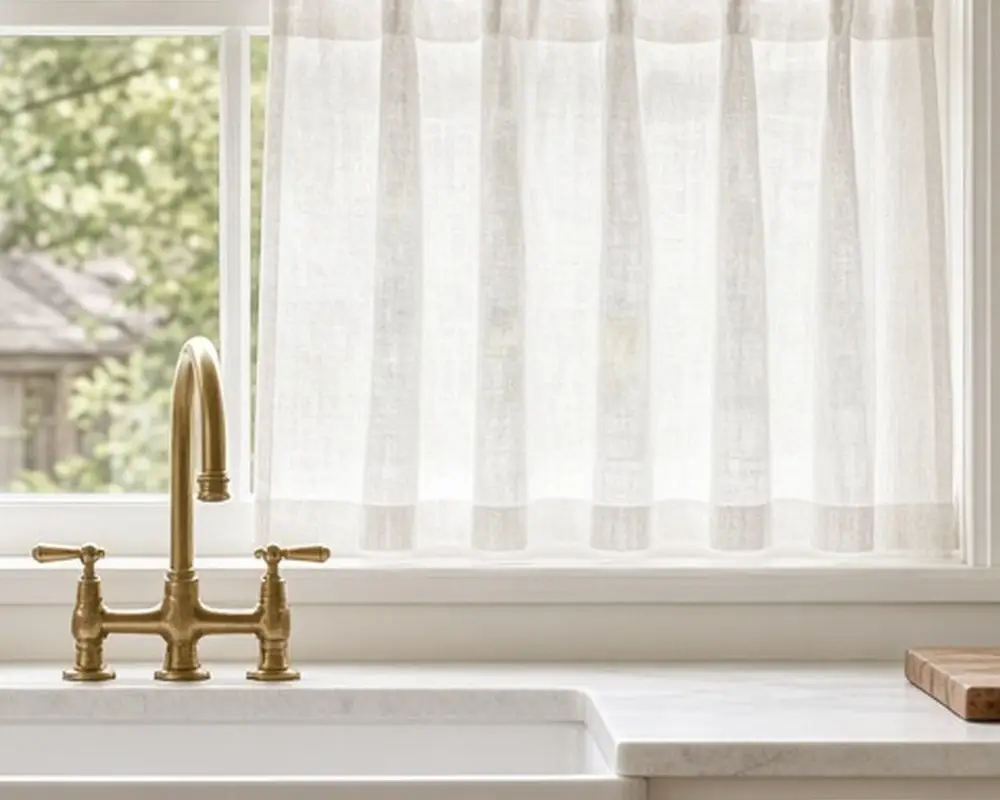
10 Kitchen Curtains for a Window Over the Counter

On this page11 sections
A window over the kitchen counter or sink is a gift. It brings daylight to the place where you work, and it gives you something to look at while washing dishes. But it is also a tricky spot for curtains. Long panels would sit on the counter, get splashed, and catch crumbs. Heavy fabric would block the light you value. And the window is often only a few inches above the faucet or backsplash.
The answer is usually a short, light treatment that sits inside or just above the frame, stays clear of the counter, and is easy to wash. The ten ideas below cover cafe curtains, valances, shades, and a few alternatives to fabric altogether. All of them are inexpensive, and most can be installed in under an hour. For other ways to dress up the wall around the window, the kitchen wall treatments post has more ideas.
As an Amazon Associate I earn from qualifying purchases.
1. Classic cafe curtains
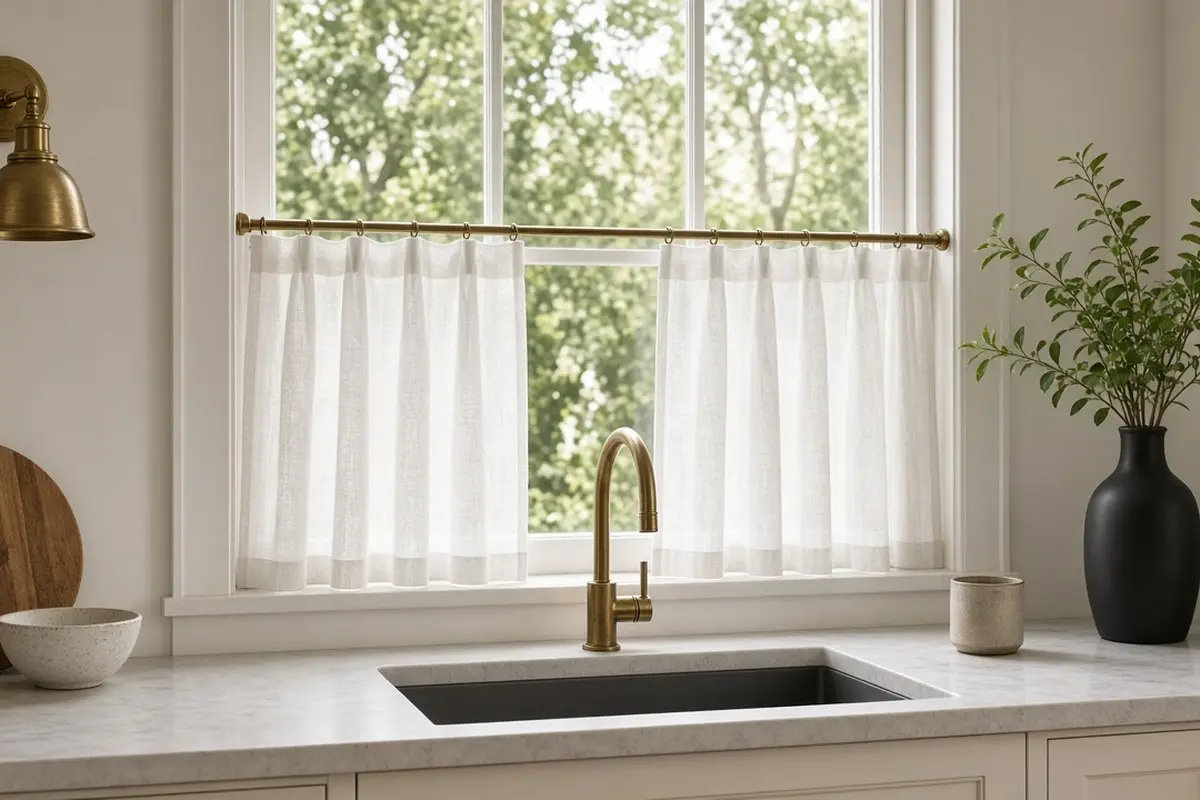
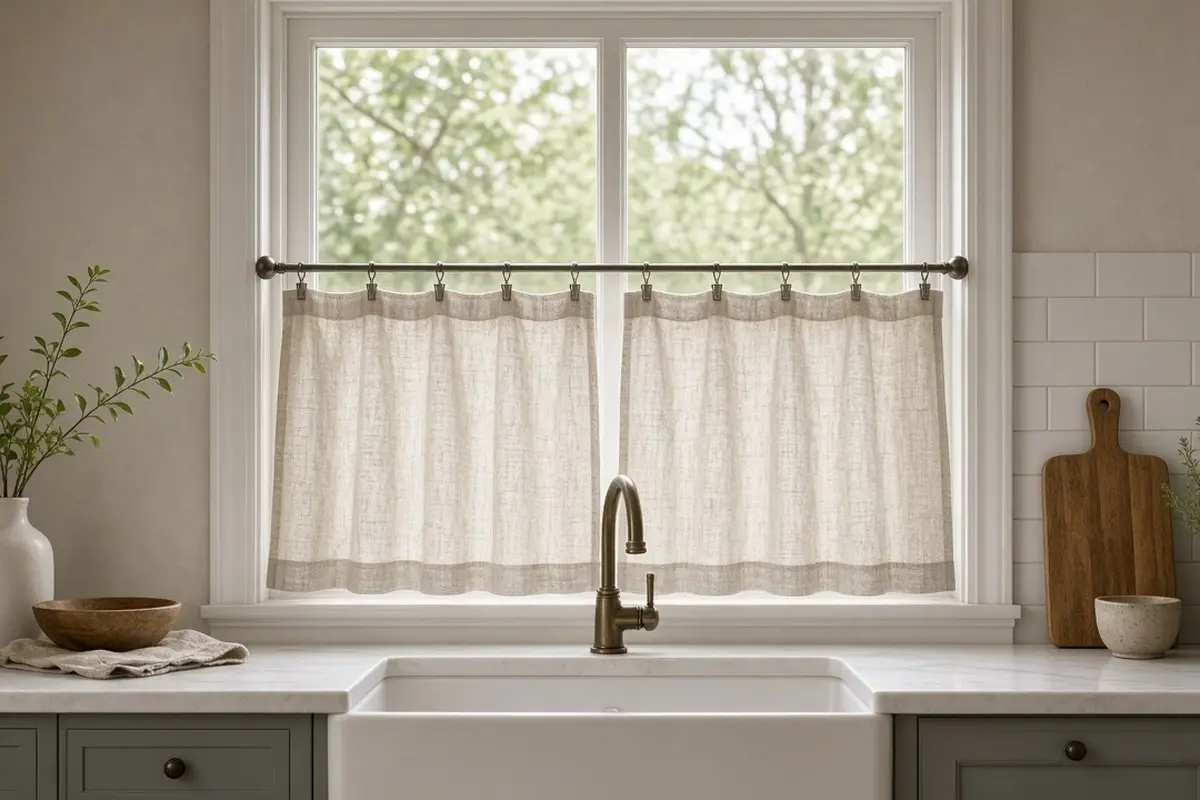
Cafe curtains cover only the lower half of the window, hung from a rod set at the middle of the frame. They give privacy at counter height while letting light pour in through the top. They are the most traditional choice for a kitchen window, and they suit cottage, farmhouse, and vintage kitchens especially well.
Hang the rod inside the frame at the height of the window’s middle rail, or wherever the lower glass ends. Choose a curtain that just reaches the sill. Twice the width of the window gives soft, gathered folds; one and a half times looks flatter and more modern.
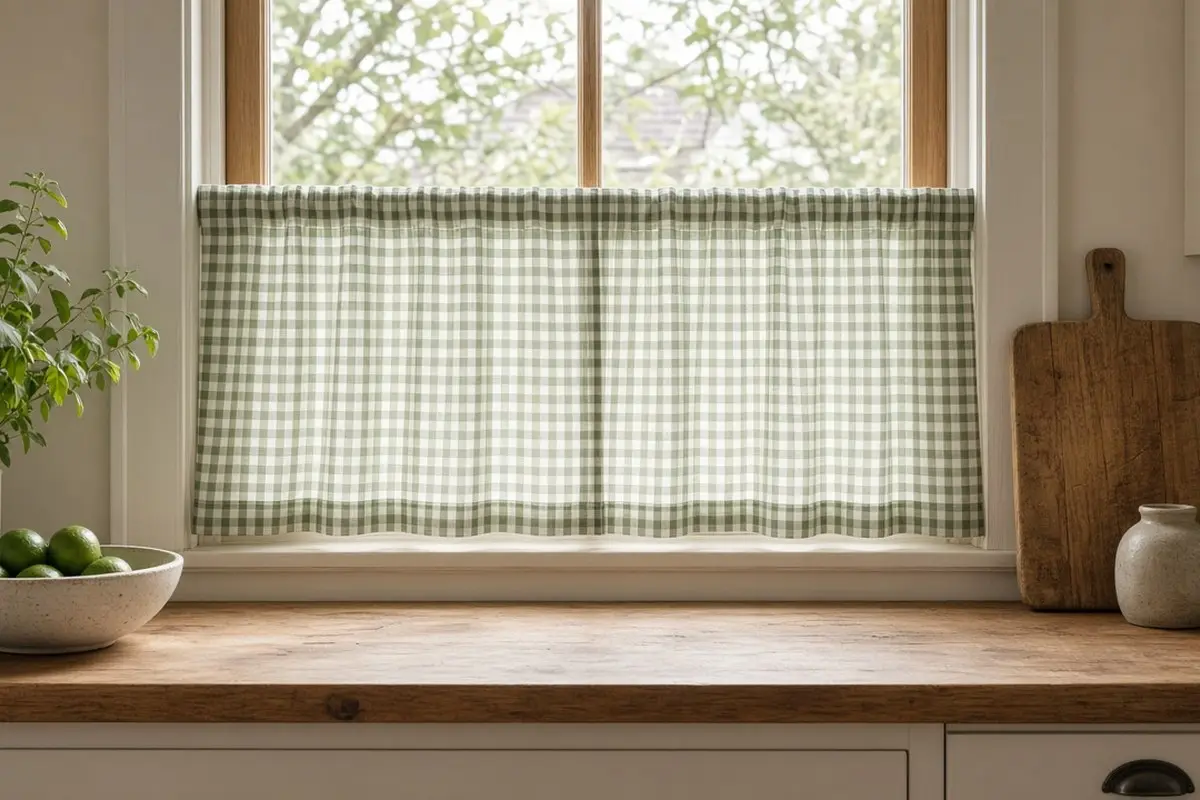
Linen, cotton, and cotton voile all work. White or natural linen is the most versatile; a small check, stripe, or embroidered border adds charm.
A double cafe, sometimes called a tier curtain, adds a second short curtain on a rod at the top of the window. It frames the glass from above and below, leaving a strip of light in the middle. It is a cozy, old-fashioned look that works well in a cottage kitchen with a single window.
Clip rings make cafe curtains easy to take down for washing, and they slide smoothly. Rod pockets give a softer gathered look but take longer to remove.
Get the look


2. Short kitchen curtains to the sill
If you prefer the look of full curtains, short kitchen curtains that hang from the top of the frame and stop at the sill give a softer frame to the window without touching the counter. Tie them back during the day to let in all the light.
Keep the fabric light and the length exact. Even an inch too long and they will sit in whatever is on the windowsill. Mount the rod just above the frame and extend it a few inches each side so the open panels do not cover glass.
Sheer or semi-sheer fabric keeps the room bright. Washable cotton is the practical choice near a sink.
If the window is beside the stove rather than over the sink, think about safety first. Keep fabric well away from burners and any open flame. A shade or film is safer than curtains in that spot.
Get the look
3. A simple valance
A valance is a short strip of fabric across the top of the window. It softens the frame, hides a blind’s mechanism, and adds color without blocking any light. It is ideal when you do not need privacy at all. It also hides an uneven or unattractive window frame, which is common in older kitchens, and it costs very little to replace when you want a new look.
Choose a straight, tailored valance for a modern look, or a gathered or scalloped one for a vintage feel. Keep it short, about 12 to 16 inches, so it does not cut into the view.
A valance pairs well with a shade or a cafe curtain underneath. The valance adds softness and color, and the shade or cafe curtain does the practical work. Coordinate the fabrics or choose one patterned and one plain.
Valances are also easy to make yourself. A strip of fabric with a hem at the bottom and a rod pocket at the top takes less than an hour on a sewing machine, or no-sew hem tape works too.
4. Roman shades
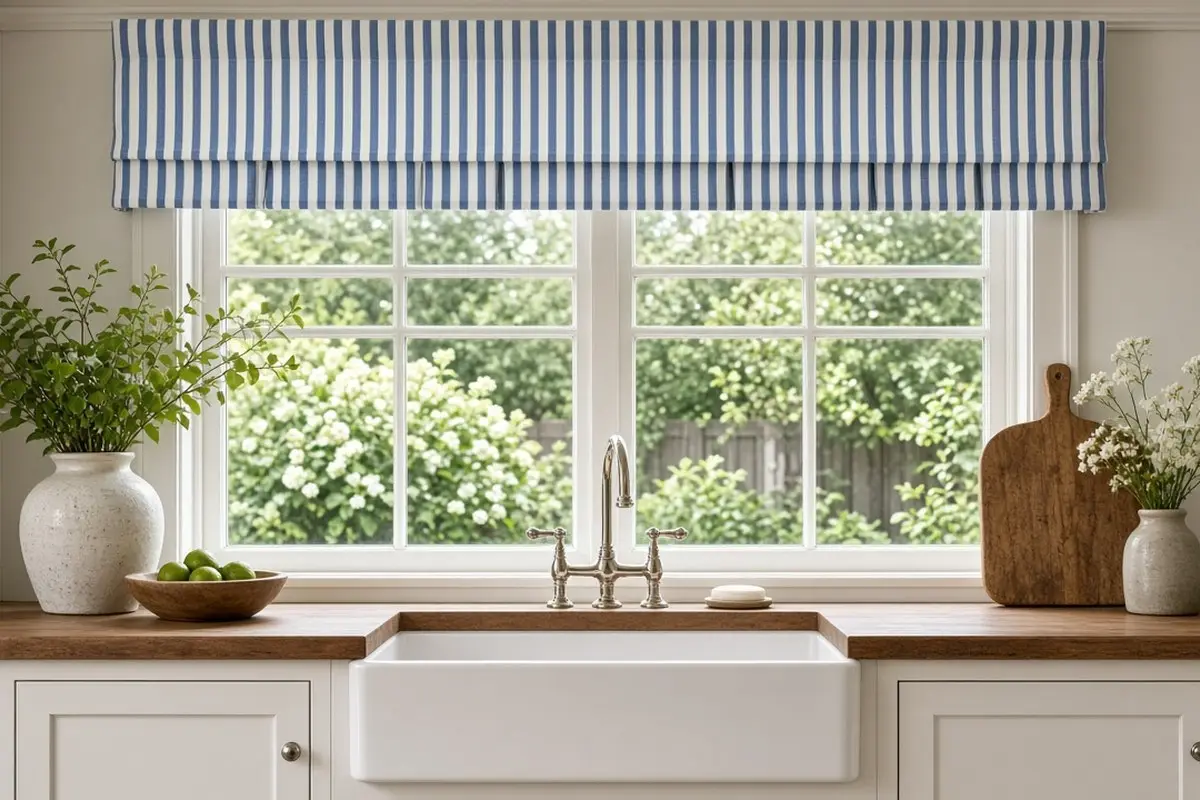
A flat Roman shade folds neatly up when raised and lies flat when lowered. It looks tailored and suits most kitchen styles. Because it moves up and down rather than sideways, it never touches the counter.
Mount it inside the frame for a clean look. Choose a light-filtering or sheer fabric for a kitchen, and look for cordless designs for safety.
Wipeable or washable fabrics are best. Cotton blends and polyester linens hold up better than pure silk or delicate weaves.
Measure carefully for an inside mount. Take three width measurements, top, middle, and bottom, and use the smallest. Check the depth of the frame, too, so the shade’s headrail fits inside. If the window frame is shallow, an outside mount just above the frame works and makes the window look slightly larger.
Get the look
5. Woven wood or bamboo shades
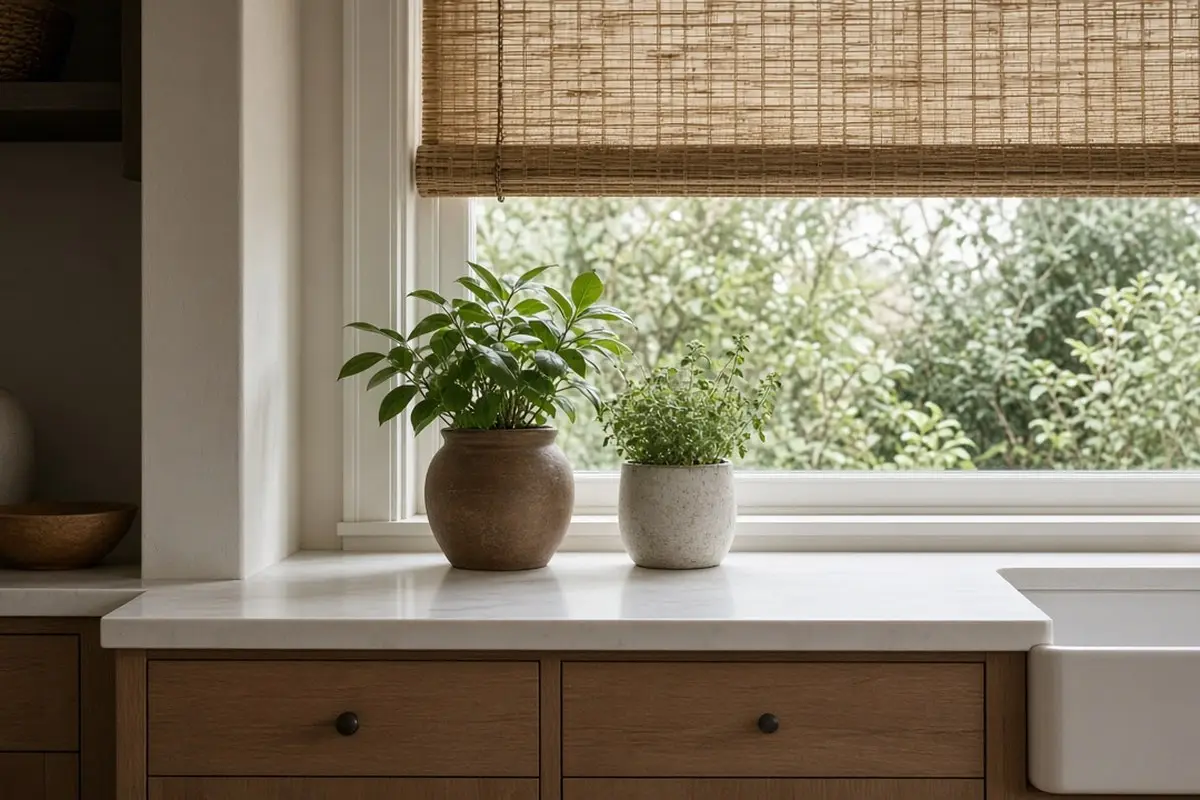
Woven shades add natural texture and filter light softly. They are durable, easy to wipe, and suit coastal, boho, and modern farmhouse kitchens. Add a privacy liner if the window faces neighbors.
Woven shades come in many tones, from pale bamboo to dark walnut. Choose one that relates to other wood in the kitchen, such as the cutting boards, open shelves, or stools, so the window feels part of the room rather than an add-on.
Get the look
6. Frosted window film
If you need privacy but want no fabric at all, frosted or patterned window film on the lower half of the glass blurs the view and lets light through. It is cheap, removable, and never needs washing. It is also the most splash-proof option of all.
Apply film with soapy water and a squeegee, working out bubbles from the center. It peels off cleanly when you move. Patterned films in reeded, frosted stripes, or soft geometric designs look intentional and add a little detail to plain glass. Pair film with a valance at the top if you still want some fabric softness.
Get the look
7. A tension rod with a tea towel
For renters or a quick change, a tension rod inside the frame and a pretty linen tea towel clipped on makes a charming, instant cafe curtain. Swap it out with the seasons.
This trick is also a good way to test colors and patterns before committing to made-to-measure curtains. A striped towel in summer, a plaid in fall, and a plain linen in spring keep the window feeling fresh. Choose towels with a hanging loop or use small clips so they hang straight.
8. Roller shades
A simple light-filtering roller shade is the most practical treatment over a sink. It rolls up out of the way, wipes clean, and can be fitted inside a narrow frame.
A roller shade can also sit behind a cafe curtain or a valance, adding light control without spoiling the look. Choose a color that matches the window frame so it nearly disappears when rolled up.
Get the look
9. Nothing at all, plus plants
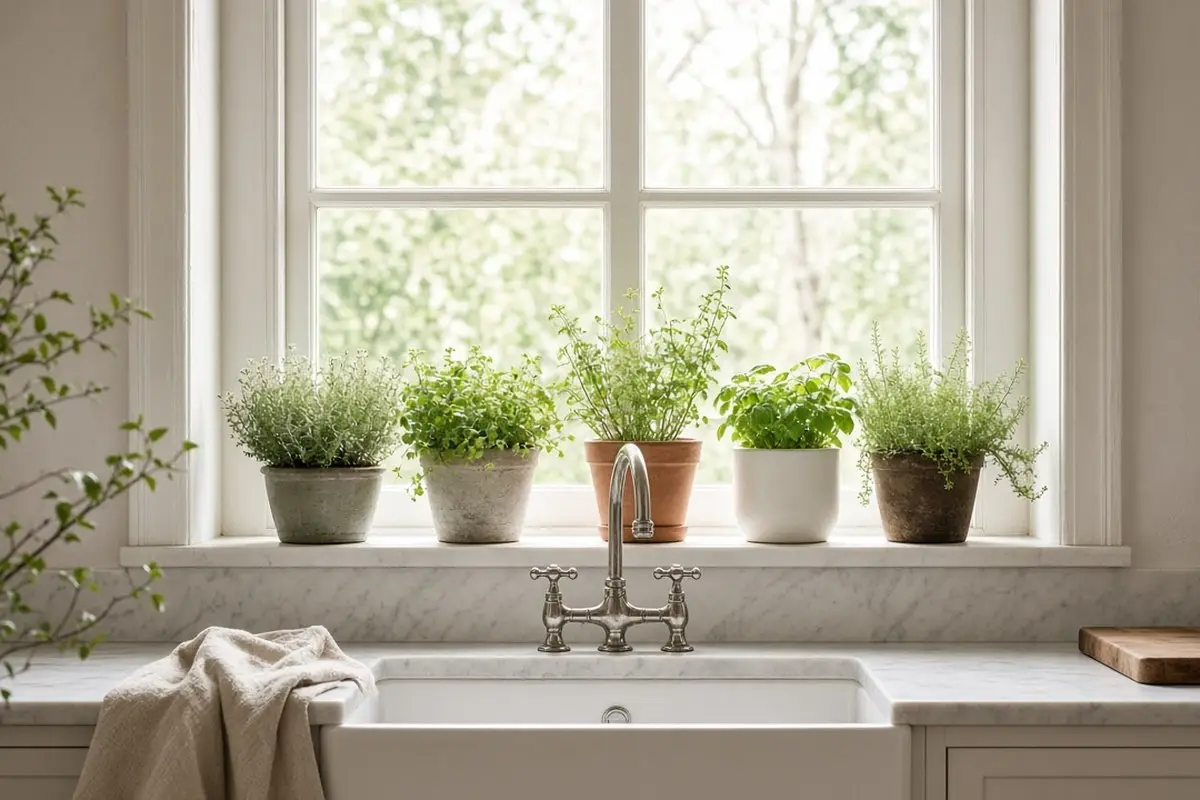
If the window faces a garden or no one can see in, consider leaving it bare. Line the sill with herbs or small plants for a natural frame.
A bare window over the sink is the easiest of all to keep clean, and it gives you the most light. Herbs like basil, parsley, and chives love a bright sill and are handy for cooking. If the sill is narrow, a small shelf fixed across the window adds space for pots.
10. Choose fabric for the kitchen
Kitchens are humid, steamy, and greasy. Pick washable fabrics, avoid anything that cannot go in the machine, and choose colors that hide small stains.
Wash kitchen curtains every month or two. Steam and cooking oil build up slowly, and a quick wash keeps them looking fresh and stops them dulling the light. Pre-wash new fabric before hemming, because cotton and linen can shrink.
Get the look
FAQ
What curtains work over a kitchen sink?
Short, light, washable treatments: cafe curtains, valances, Roman or roller shades.
How long should kitchen curtains be?
To the sill, or to the middle of the window for cafe curtains. Never onto the counter.
Are cafe curtains still in style?
Yes, especially in cottage and vintage kitchens. The small kitchen organization post has ideas for the counter beneath.
Can I use curtains over a window next to the stove?
It is safer not to. Use a shade, frosted film, or nothing at all near a cooktop, and keep fabric well clear of any heat.
What color curtains are best for a kitchen?
White and natural linen are the safest, since they keep the room bright. Soft checks, stripes, and small florals in colors pulled from the tile or dishes add charm. The quiet wall colors post can help pick a calm palette around them.
A window over the counter deserves a treatment that respects its job. Keep it short, light, and washable, and you will keep both the light and the privacy.