
13 Blue and White Bedrooms That Are Not a Beach Theme

On this page15 sections
- Navy and white bedding as the anchor
- Blue and white porcelain on the nightstand
- A patterned headboard
- White walls with blue accents
- A soft blue wall
- Toile, used once
- Stripes that are not sailor stripes
- Warm wood to soften the blue
- Brass for a touch of warmth
- A blue and white rug
- Blue linen curtains
- Blue and white art
- Keep the palette tight
- Tips Before You Start
- FAQ
Blue and white is one of the oldest color pairings in decorating. It shows up in Chinese porcelain, Dutch tiles, French toile, English chintz, and Scandinavian farmhouses. It is crisp, calm, and endlessly versatile. And yet many people hesitate to use it in a bedroom because they fear it will look like a seaside rental, all anchors and stripes and lighthouse prints.
It does not have to. A classic blue bedroom can lean traditional, modern, or cottage, depending on the shades, patterns, and materials. The thirteen ideas below avoid every nautical cliché and focus on the pairing’s timeless side. If you love navy in particular, the colors that sit well next to navy post shows what else works with it.
As an Amazon Associate I earn from qualifying purchases.
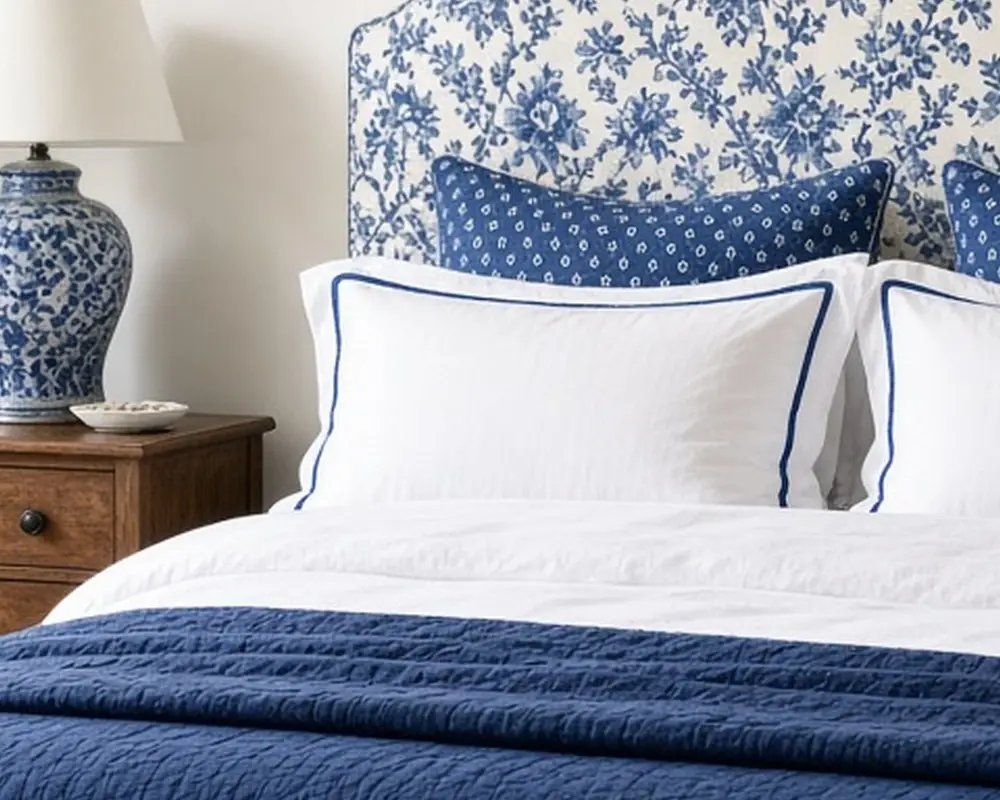
1. Navy and white bedding as the anchor
The simplest blue and white bedroom starts on the bed. Navy and white bedding, whether a solid navy duvet with white sheets or a white duvet with a navy border, gives the room a strong, calm center. It is crisp and grown up, and it works with almost any wall color.
Choose cotton percale for a cool, crisp feel or washed linen for a relaxed look. Avoid shiny polyester, which makes navy look cheap. Add a pair of white Euro shams and you have a bed that looks like a good hotel without any effort.
From there, the rest of the room can stay quiet. White walls, wood furniture, and a simple rug let the bed lead.

Get the look
2. Blue and white porcelain on the nightstand
Blue and white porcelain is the opposite of a beach theme. A ginger jar lamp, a small vase, or a bowl on the nightstand brings in centuries of design history. It looks elegant and a little traditional, and it pairs well with linen and wood.
One or two pieces are enough. A shelf full of porcelain can tip into a collection that feels fussy.
Thrift shops and antique markets are full of blue and white porcelain at modest prices, and odd pieces look better together than matched sets. A cracked ginger jar can still hold dried flowers or sit on a shelf with its best side facing out. Porcelain also suits rooms with dark wood furniture, where its crisp white sparkles.
3. A patterned headboard
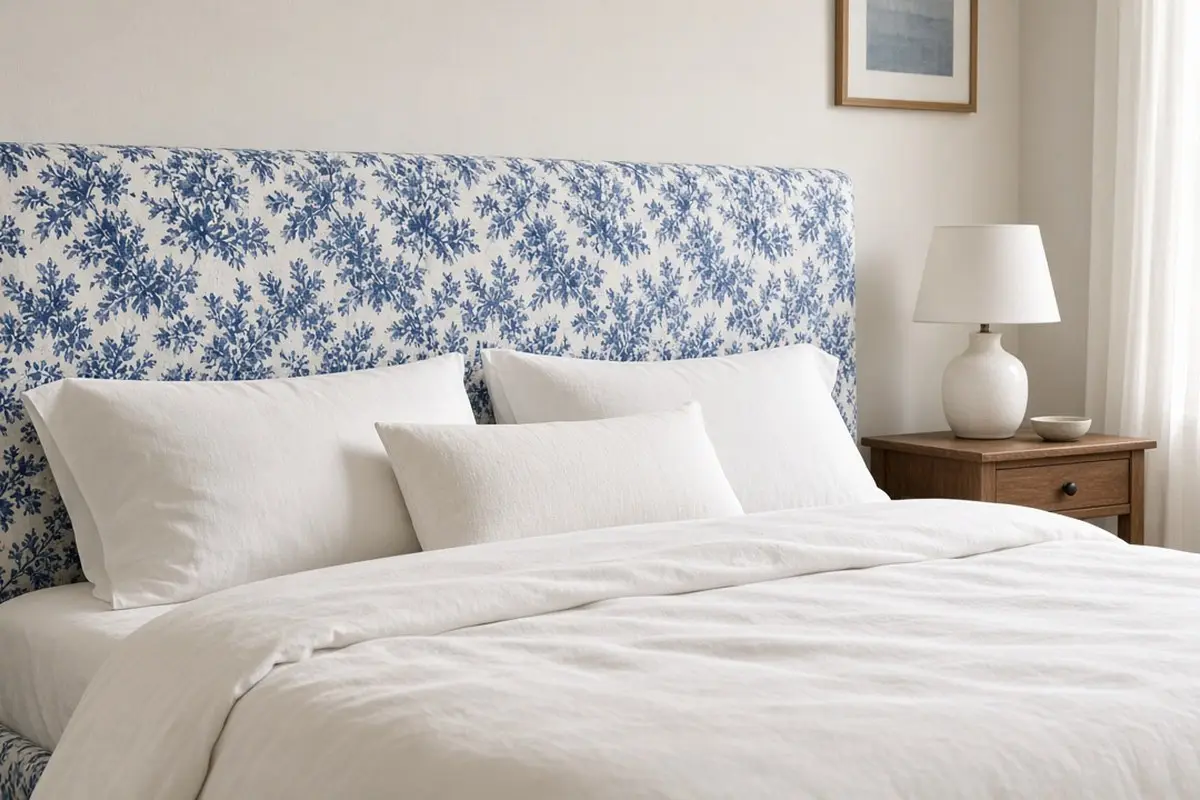
A headboard upholstered in a blue and white print is a striking focal point. Small florals, toile, ikat, or a soft check all work. The pattern brings personality, and the rest of the room can stay plain.
Keep the bedding solid when the headboard is patterned, so the two do not compete.
Get the look
4. White walls with blue accents
For a light, airy bedroom, keep the walls warm white and add blue in accents: a throw, a pillow, a lampshade, a framed print. White bedroom blue accents feel fresh and calm, and they are easy to change.
Choose two or three shades of blue and repeat them in a few places around the room.
This approach is also the easiest to change. If you tire of the blue after a few years, swap the accents for green or rust and the room is new without repainting. For renters, it is the most practical way to bring blue into a bedroom.
Get the look
5. A soft blue wall
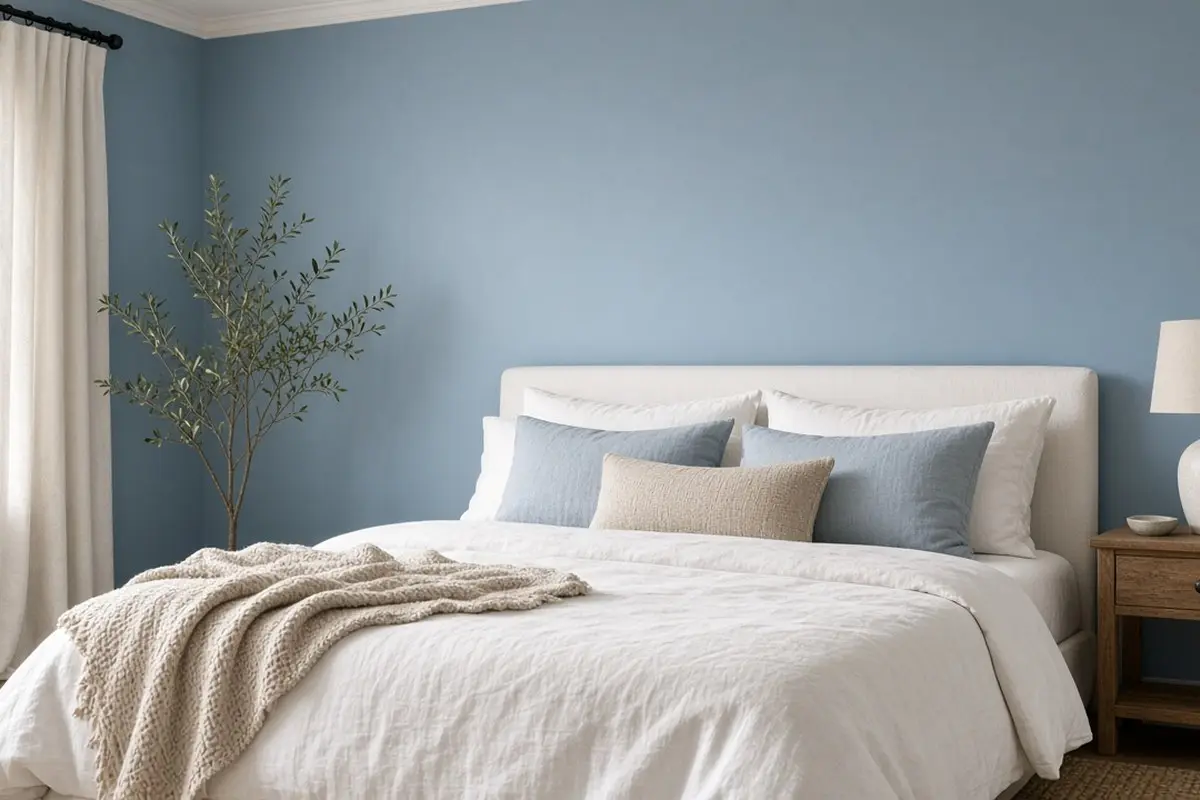
Paint one wall, or all four, a soft blue: dusty blue, powder blue, or a gentle blue-gray. Paired with white bedding and trim, it creates a restful, enveloping room. Soft blue is one of the most sleep-friendly colors.
Test in your light. Blues shift a lot between morning and evening. Choose one that looks calm, not icy, at night.
If a full blue room feels like too much, paint only the wall behind the bed and keep the other three warm white. The blue becomes a soft backdrop for the headboard, and the room stays bright. A blue ceiling, very pale, is another gentle option that makes a bedroom feel like it has a sky.


6. Toile, used once
Blue and white toile, with its pastoral scenes, is classic French and English country. It can be overwhelming on every surface. Use it once: on curtains, on a single pillow, or on one accent wall behind the bed.
Toile next to plain white and natural linen looks fresh rather than fussy.
Modern toiles often have bigger scale and looser drawing, which suits contemporary rooms. Traditional toiles have fine detail that looks lovely up close, such as on a pillow you see every night.
Get the look
7. Stripes that are not sailor stripes
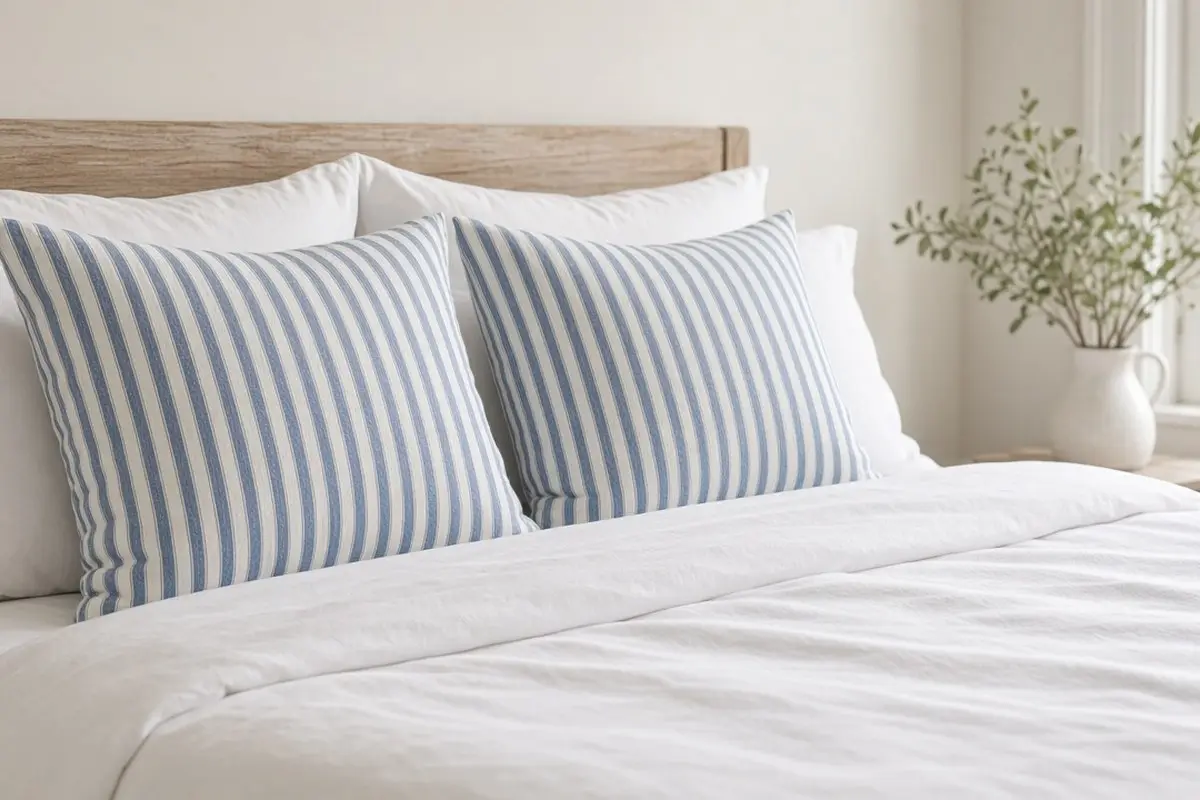
Stripes can look nautical, but not all stripes are. Thin ticking stripes, wide awning stripes in soft blue, or irregular hand-painted stripes feel country or modern rather than seaside. Use them on sheets, a rug, or a pillow.
Avoid crisp navy and white horizontal stripes with red accents, which read as nautical immediately.
Get the look
8. Warm wood to soften the blue
Blue and white can feel cool. Warm wood softens it. Wooden nightstands, a wood headboard, or an oak floor bring warmth that keeps the room cozy. Medium and dark woods look especially rich with navy.
Without any wood, a blue and white bedroom can feel like a showroom.
If your furniture is painted, bring in wood through smaller pieces: a wooden lamp base, a bowl, picture frames, or a bench at the end of the bed. Even a little wood makes a difference.
Get the look
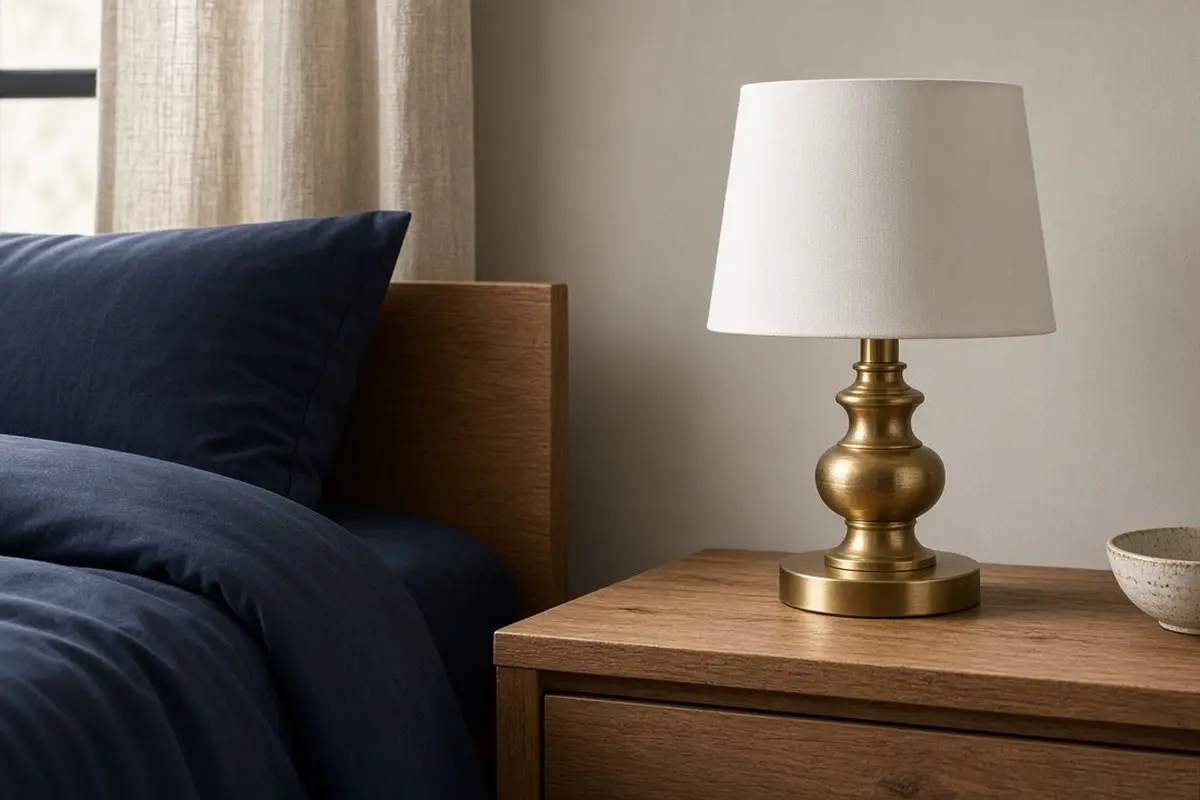
9. Brass for a touch of warmth
Brass lamps, brass frames, or brass drawer pulls add a warm glow to blue and white. The combination looks classic and a little elegant, especially with navy.
Keep it to two or three brass pieces in the room. Aged or brushed brass looks softer than shiny gold and suits the calm mood of a bedroom.
If brass is not your style, warm bronze or black iron work too. Avoid chrome and silver with blue and white, which make the room feel cold and clinical.
Get the look

10. A blue and white rug
A rug in blue and white, whether a vintage-style Persian in indigo and cream, a flat-weave with a simple pattern, or a soft dhurrie, grounds the room and adds pattern underfoot. It is an easy way to add blue without painting.
Choose one where the blue is faded or soft, which suits a calm bedroom better than a bright one.
Size it so it extends at least 18 inches beyond each side of the bed, so your feet land on it when you get up. A rug under the lower two thirds of the bed, with the nightstands off it, is the most common placement.

11. Blue linen curtains
Linen curtains in a soft blue frame the window and filter the light. They add color at eye level and look relaxed and elegant. Hang them high and wide so they make the window look bigger.
Line them for privacy and darkness, or use a separate blackout liner. A blue curtain with sunlight behind it gives the room a soft, cool glow in the morning that many people find calming.

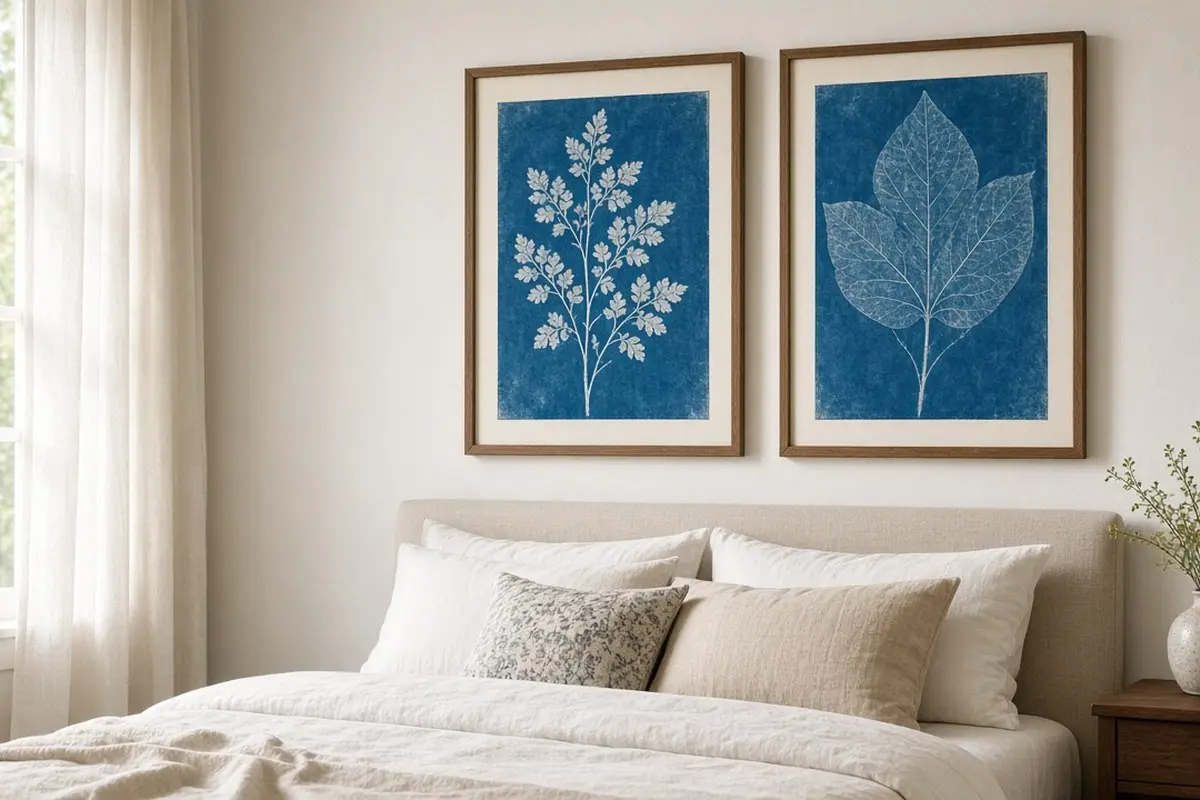
12. Blue and white art
Art in blue and white, such as cyanotype prints, botanical drawings, or abstract ink washes, ties the room together on the walls. A pair above the bed or a single larger piece looks calm.
Frame in white or natural wood. Avoid seascapes and boats to stay away from the beach theme.
Get the look
13. Keep the palette tight
The last rule is restraint. A blue and white bedroom looks best when it sticks to blue, white, wood, and maybe one metal. Add too many other colors and it loses its calm. A touch of green from a plant is fine. Red, yellow, and orange belong in another room.
Tight palettes are calming because the eye has fewer things to sort. When every object in the room relates to blue, white, or wood, the bedroom feels settled and intentional, which is exactly what you want at the end of a long day.
Get the look
Tips Before You Start
- Start with navy and white bedding.
- Add one pattern, such as toile or a print headboard.
- Use warm wood to soften the blue.
- Choose stripes that are not nautical.
- Test blue paint at night.
- Keep the palette to blue, white, wood, and one metal.
FAQ
How do I make a blue and white bedroom not look nautical?
Skip anchors, rope, boats, and red. Use porcelain, toile, florals, and wood instead.
What shades of blue are best for a bedroom?
Soft dusty blue, navy, and indigo are calm and timeless. The calm bedroom paint colors post covers how gentle colors behave at night.
Does blue and white suit a small bedroom?
Yes. White walls with blue accents keep it bright. The small bedroom that feels bigger post has more ideas.
What wood goes with blue and white?
Medium oak and walnut look warm and rich. Pale wood feels lighter and more Scandinavian.
Can I mix different blue patterns?
Yes. Mix one large pattern, one small pattern, and one stripe or check, all in the same blue. Keep plenty of plain white between them so the eye can rest.
Blue and white is calm, classic, and endlessly flexible. Keep it simple, add a little warmth with wood and brass, and leave the anchors at the beach.