
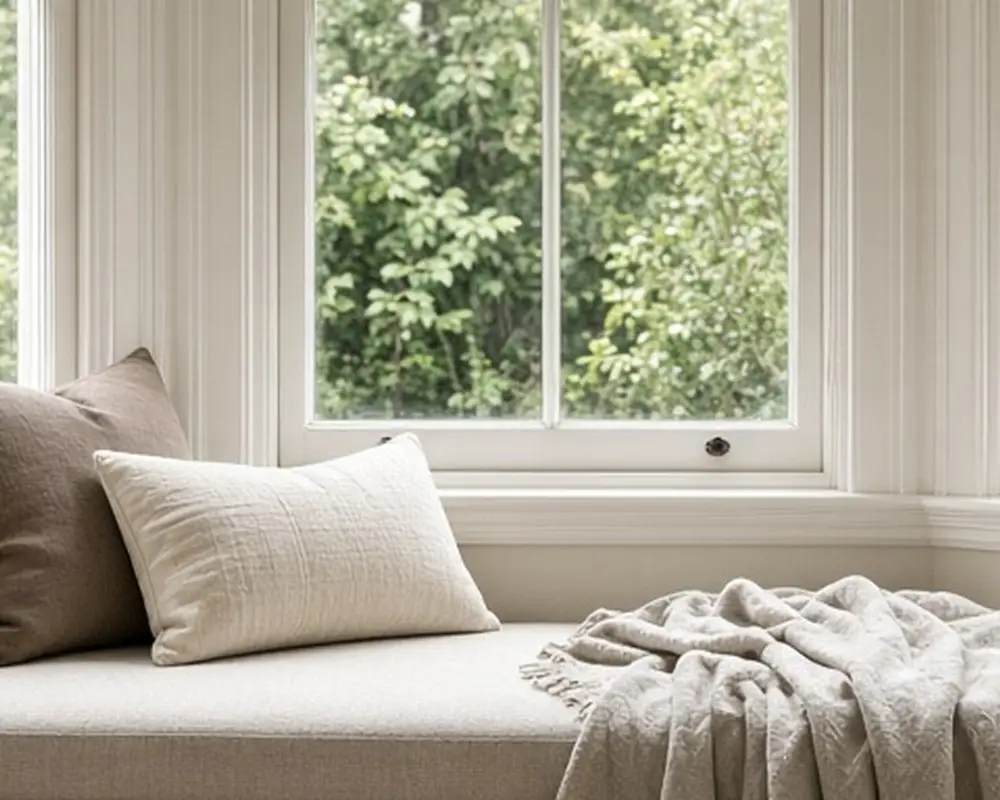
9 Bay Windows With a Seat You Will Actually Use

On this page12 sections
- Get the dimensions right
- A thick cushion cut to the shape
- Back cushions against the side walls
- Deep drawers instead of a lift lid
- A freestanding bench for renters
- Curtains that hang outside the bay
- Shades on each window
- A reading light at one end
- A small table within reach
- Warmth for winter
- Styling the bay without crowding it
- Common questions
Plenty of bay windows have a seat. Far fewer have a seat anyone sits in. The usual problems are easy to spot once you know them: the seat is too shallow to curl up on, the cushion is a thin pad that slides off, there is nothing to lean against, and the glass turns the bay into an icebox for half the year. The seat becomes a shelf for plants and mail.
These nine ideas fix those problems one by one. They work for a classic three-sided bay, a curved bow window, or a shallow box bay, and most of them suit a rental as well as a house you own.
As an Amazon Associate I earn from qualifying purchases.
Get the dimensions right
A comfortable window seat sits 17 to 19 inches off the floor including the cushion, close to the height of a dining chair. Depth matters most. For sitting upright, 18 inches is enough. For sitting sideways with your legs up, which is how most people actually use a window seat, aim for 22 to 26 inches. If the bay is shallow, you can bring the seat forward into the room a few inches, beyond the line of the wall.
Length depends on the bay, but the center section should be at least as long as you are tall from hip to heel when sitting with knees bent, usually around 48 inches.
Check the windows before you finalize the height. If the sills are low, a seat at the usual height may block the bottom of the glass or put the cushion right against a cold pane. Bring the seat down an inch or two, or leave a small gap between the cushion back and the glass. Also look for radiators or heating vents under the bay. You can build around a radiator with a ventilated grille front, but never seal a vent under a solid seat.
1. A thick cushion cut to the shape
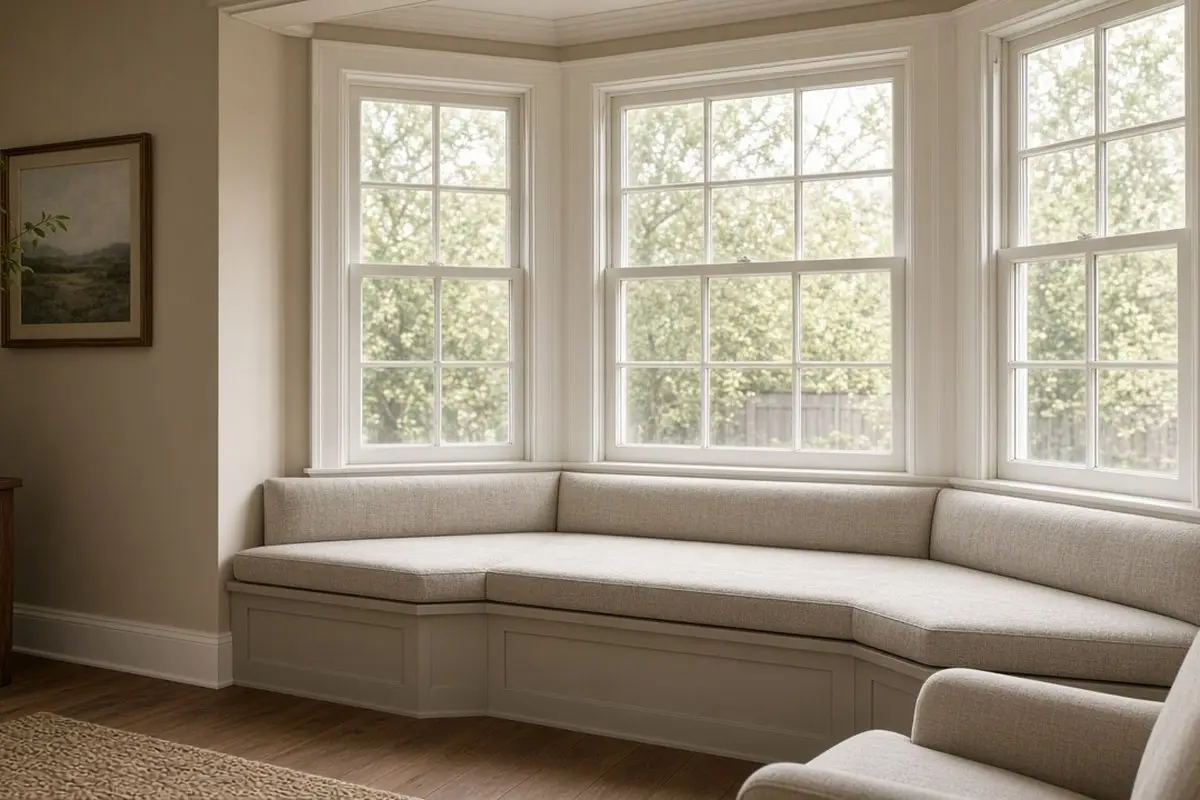
The single biggest upgrade is a proper cushion. Choose high-density foam at least 3 to 4 inches thick, wrapped in batting so the edges look soft, and covered in a removable, washable fabric. In a three-sided bay, have the cushion made in three pieces or one angled piece that follows the shape exactly. Gaps at the corners look unfinished and collect crumbs.
Fabric choice decides how often the seat gets used. A performance velvet or a tightly woven cotton canvas feels good against bare legs and wipes clean. Avoid shiny fabrics, which slide, and very pale colors if the seat faces a busy street with dust. A zip cover lets you wash it each season. If the cushion keeps creeping forward, a rug gripper pad cut to size underneath stops it.
Get the look
2. Back cushions against the side walls
People sit in a window seat sideways, leaning against one end wall with legs stretched toward the other. Give them something to lean on. A firm wedge or a bolster at each end, plus two or three square pillows along the back, makes the seat comfortable for an hour rather than ten minutes.
Mix pillow sizes for comfort: a 22-inch square against the back corner, a 20-inch square beside it, and a lumbar pillow in front. Use feather or down-alternative inserts one size larger than the cover so they stay plump. A long bolster laid along the back wall is a neat trick for a curved bow window, where square pillows tend to topple.
3. Deep drawers instead of a lift lid
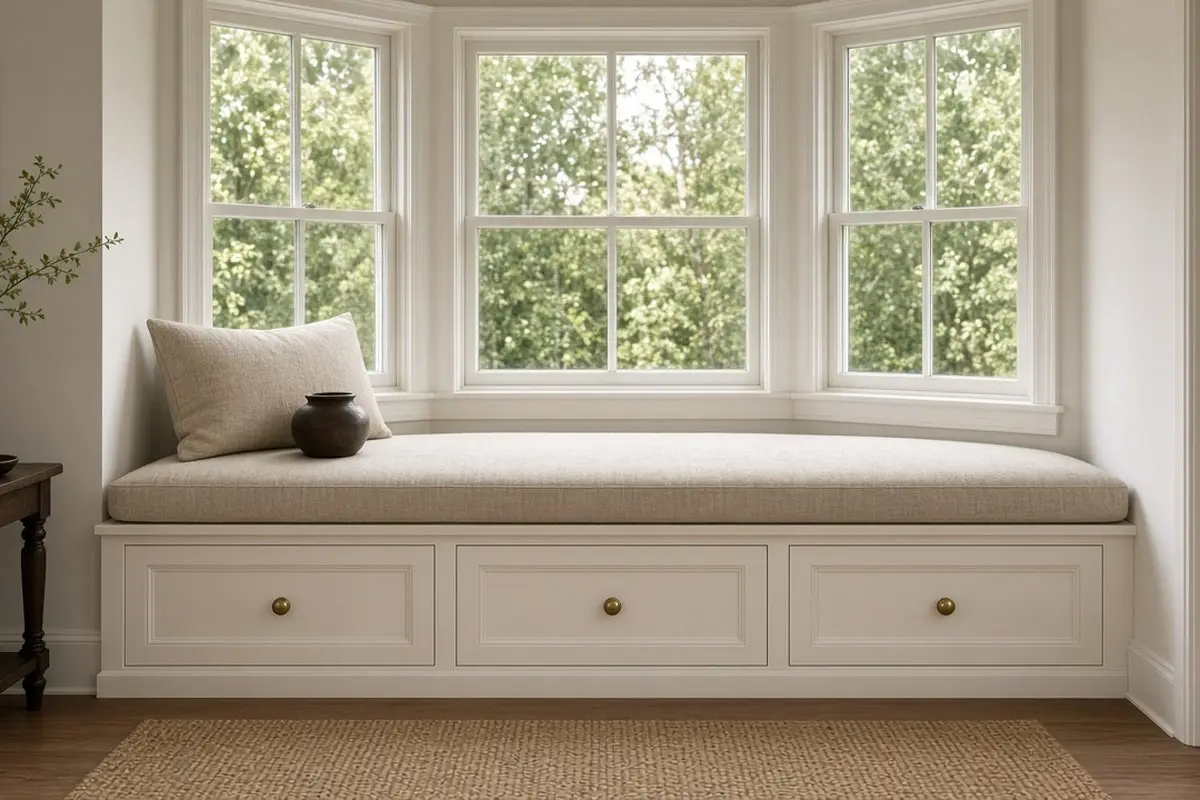
Storage under a window seat is common, but a lift lid means clearing the cushions every time you need something. Drawers on full-extension slides are much easier to use. Store blankets, board games, or out-of-season clothing below, and the seat earns its space twice over.
If you prefer open storage, cubbies with baskets are simpler to build and still neat. Leave a toe kick, a recessed strip about three inches high at the base, so feet tuck under when you sit upright. Without it, heels bang the front panel and the paint chips within a year.
Get the look
4. A freestanding bench for renters
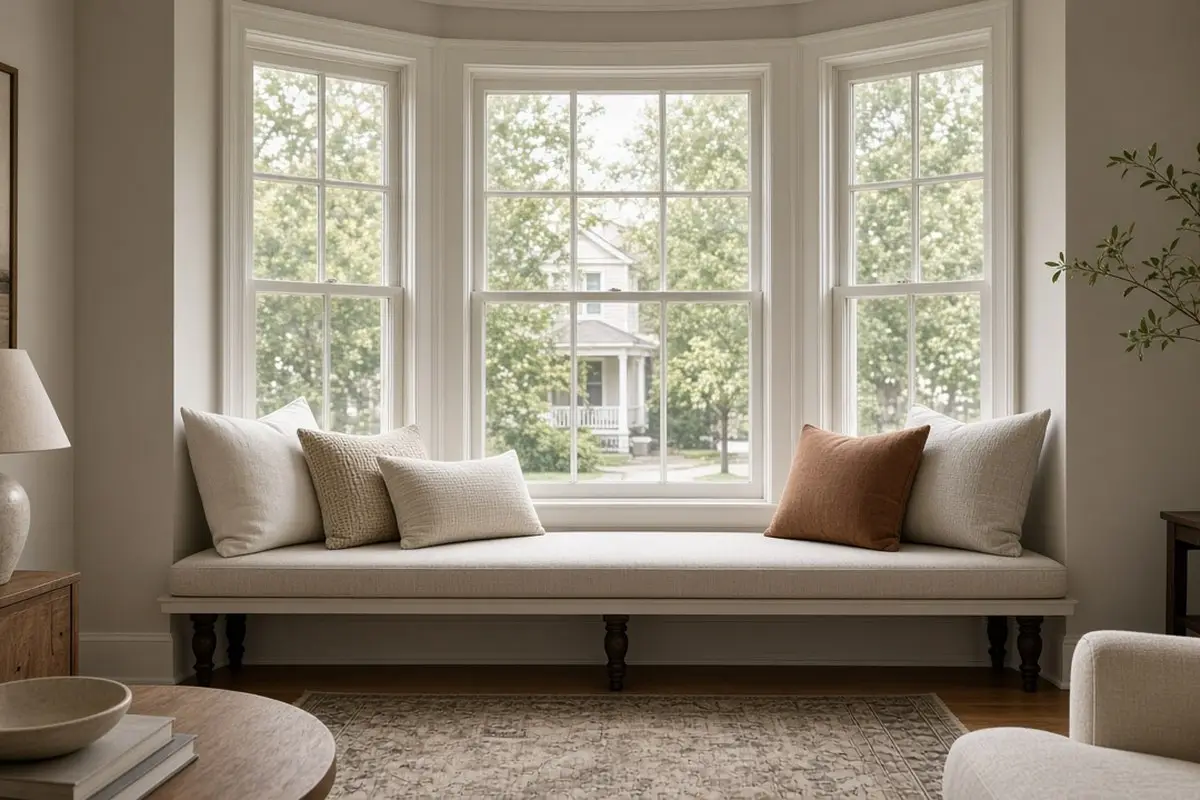
If you cannot build in, a long upholstered bench or a low daybed pushed into the bay gives most of the effect. Measure the depth of the bay at its narrowest point and choose a bench a few inches shorter so it does not wedge against the side walls. Add a cushion and pillows and nobody will know it is not built in.
A daybed suits a wide, deep bay especially well, giving a full-length lounging spot that doubles as a nap bed for a guest. Pick one with a low back so it does not block the windows. Fill the gaps at each end with a narrow plant stand or a stack of baskets so the bench looks fitted rather than floating.
Get the look
5. Curtains that hang outside the bay
Curtains hung inside a bay, on a bent rod around the windows, cut into the light and make the seat feel cramped. Hang them across the mouth of the bay instead, on a straight rod or ceiling track just inside the room. Open, they frame the bay. Closed on a winter evening, they turn the seat into a cozy nook, cut off from the cold room.
Use a rod long enough to clear the opening by at least eight inches on each side, so the stacked curtains sit on the wall rather than over the glass. Mount it high, close to the ceiling, which makes the bay look taller and hides the often awkward top of the window frames. Lined curtains in a heavy linen or a soft wool blend block drafts better than sheers, and they look generous when pulled back in daytime.
6. Shades on each window
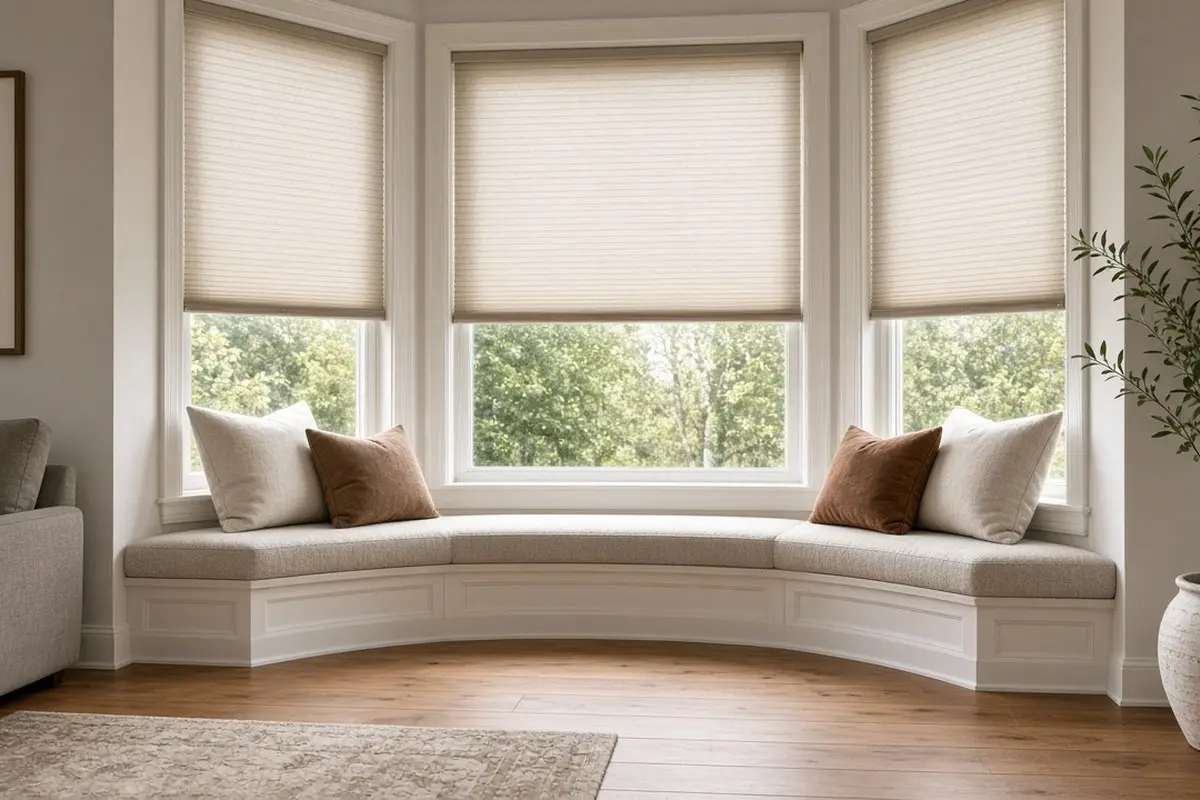
For daytime privacy and glare, fit each window with its own shade. Light-filtering cellular shades insulate well and stack neatly at the top. A top-down, bottom-up shade lets you cover the lower half for privacy and keep the sky in view, which is the whole point of sitting by a window.
Cordless shades are worth the small extra cost in a window seat, since dangling cords tangle with pillows and are a hazard for children and pets curled up on the cushion. Choose a color close to the wall or window frame so the shades disappear when raised and the bay reads as one clean shape.
Get the look
7. A reading light at one end
A window seat is wonderful in daylight and useless after dark without a light. Mount a swing-arm sconce on the side wall above one end, or use a plug-in sconce with a cord cover. Point it down at the cushion where a book would sit.
A warm white bulb, around 2700K, keeps the nook cozy, while a dimmer lets the light double as a soft evening glow. For a symmetrical look, add a sconce at each end; for a simpler fix, a slim arc floor lamp beside the seat can reach over without any drilling.
8. A small table within reach
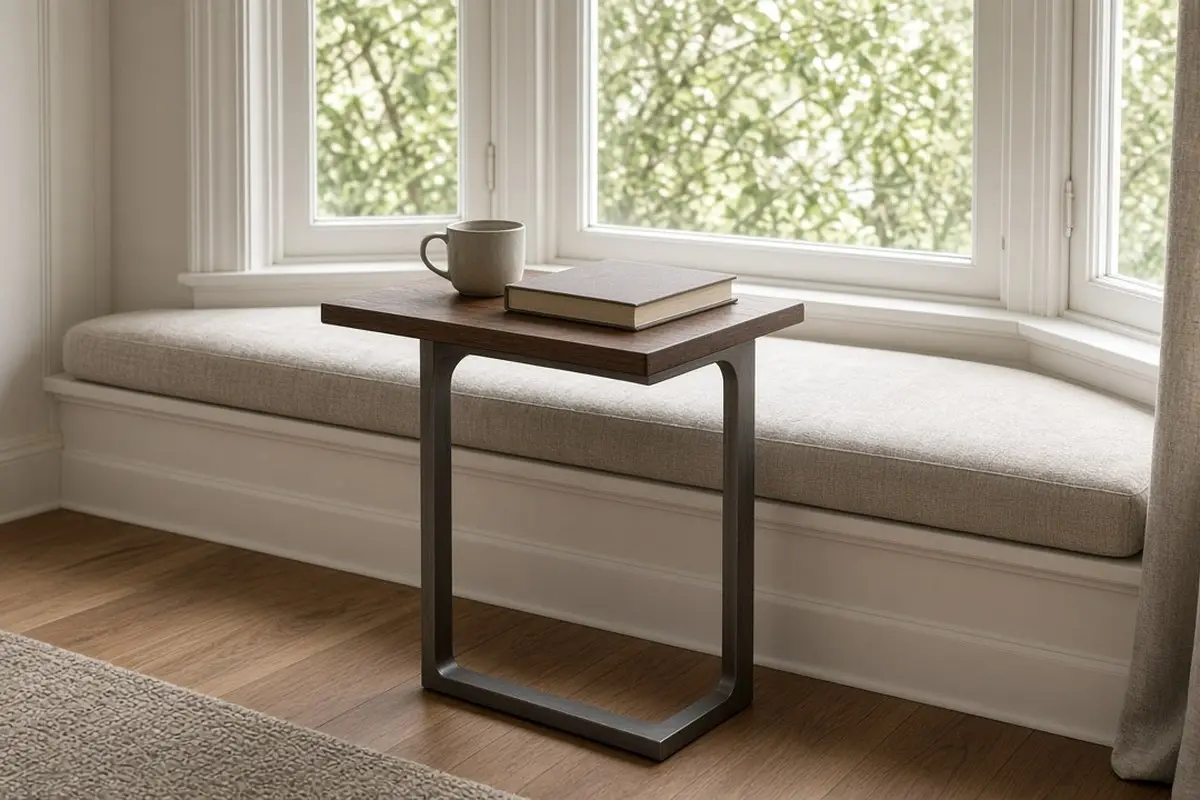
Somewhere to put a mug is what makes a seat a habit. A C-shaped side table slides over the cushion, or a slim shelf can run along the sill if it is deep enough. Keep it stable; a wobbly table on a soft cushion tips easily.
A floating shelf mounted on one side wall of the bay is another option, sized just large enough for a mug and a phone. It keeps the cushion clear and cannot tip. Add a small hook under it for headphones or a tote bag of knitting, and the nook holds everything you need for an afternoon.
Get the look
9. Warmth for winter
Glass on three sides makes a bay cold. Seal gaps around the frames with weatherstripping, add thermal-lined curtains across the bay, and keep a heavy knit throw folded on the seat. A low-wattage heated throw or a rug on the floor in front of the bench helps too. A warm bay window gets used all year.
In summer, the problem flips. A south or west facing bay can overheat by afternoon. Solar-reflective shades or a light-colored exterior awning keep the seat usable, and a breathable cotton slipcover is cooler on the skin than velvet. Swap the heavy throw for a light cotton blanket and the bay stays comfortable through the warm months as well.

Get the look
Styling the bay without crowding it
Keep plants to one or two, set on the ends of the sill or on a stand beside the seat, not on the cushion. Limit pillows to four or five. The seat should look ready to sit on, not like a display.
The floor in front of the bay matters too. A small rug defines the nook and warms bare feet, and a pouf or a low ottoman nearby becomes a footrest or an extra seat when friends gather by the window. Keep the path to the seat clear; if you have to step around a coffee table or a floor lamp to get there, the seat will stay empty. The best window seats are the ones you can drop into on the way past with a cup of tea, without moving anything first.
Common questions
How deep should a bay window seat be? At least 18 inches; 22 to 26 inches if you want to sit sideways with your legs up.
Should curtains go inside or outside a bay window? Usually outside, across the opening, so they frame the bay and keep the light.
What do you put on a bay window seat? A fitted cushion, a few pillows to lean on, and a throw; keep plants and decor to the ends.
How do you keep a bay window warm? Seal the frames, add thermal-lined curtains across the bay, and keep a throw on the seat.
For more, see corner reading nook ideas, stair landings with a chair or a window, and living room ottoman ideas.