
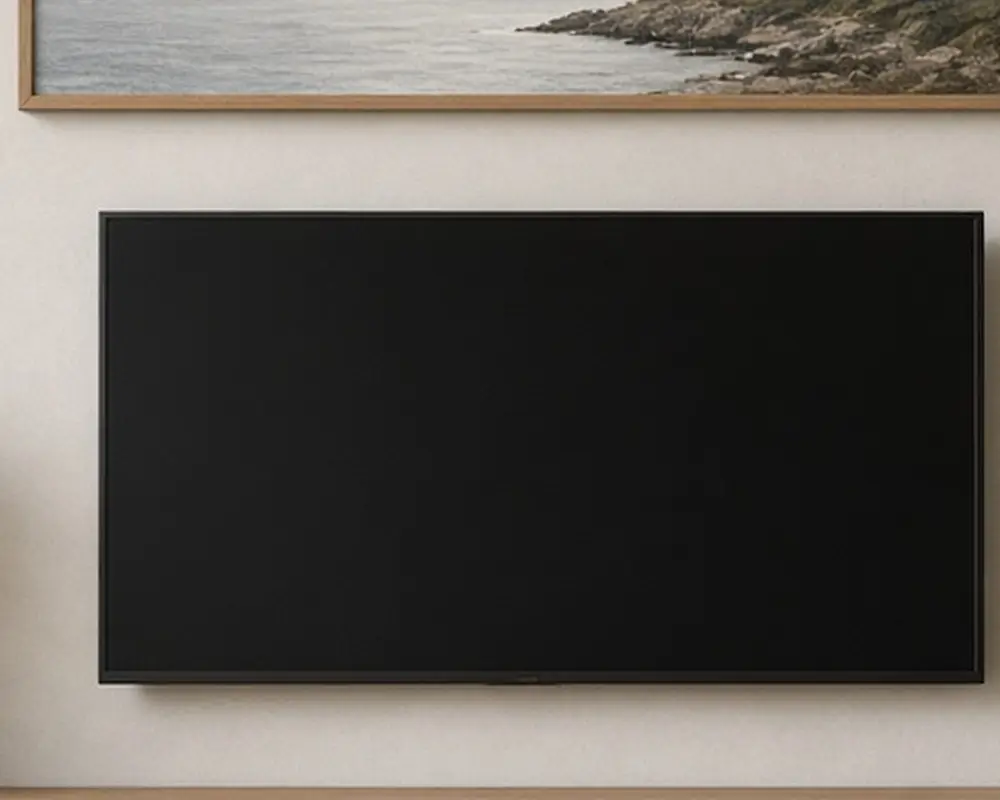
8 What Belongs on the Wall Above a TV

On this page10 sections
The wall above a TV is awkward. It is too close to the screen to hold anything loud, and too large to leave completely bare without the TV looking like it was dropped on an empty wall. Most people end up with a random clock, a word sign, or a few frames that never quite line up with the screen.
The goal is not to decorate the space for its own sake. It is to make the TV wall look like a calm part of the room, so the screen fades a little when it is off. The eight ideas below show what belongs above a TV and how to space it. For the furniture underneath, the living room edits you already own post can help you choose what stays.
As an Amazon Associate I earn from qualifying purchases.
1. Start with the TV at the right height
Everything above the TV depends on where the TV itself sits. Too many TVs are hung far too high, often over a fireplace or centered on the wall. That pushes the space above it into a thin strip near the ceiling and strains your neck when you watch.
The center of the screen should be about 42 inches from the floor for most sofas, which puts it close to seated eye level. Once the TV is there, you will usually have a generous band of wall above it, often three feet or more. That is the space you are styling. Hung lower, the TV also looks more like a piece of furniture and less like a billboard.
If the TV is already mounted high and you cannot move it, skip most of the ideas below and keep the wall above it blank. Adding objects above a high TV makes the whole arrangement climb toward the ceiling.
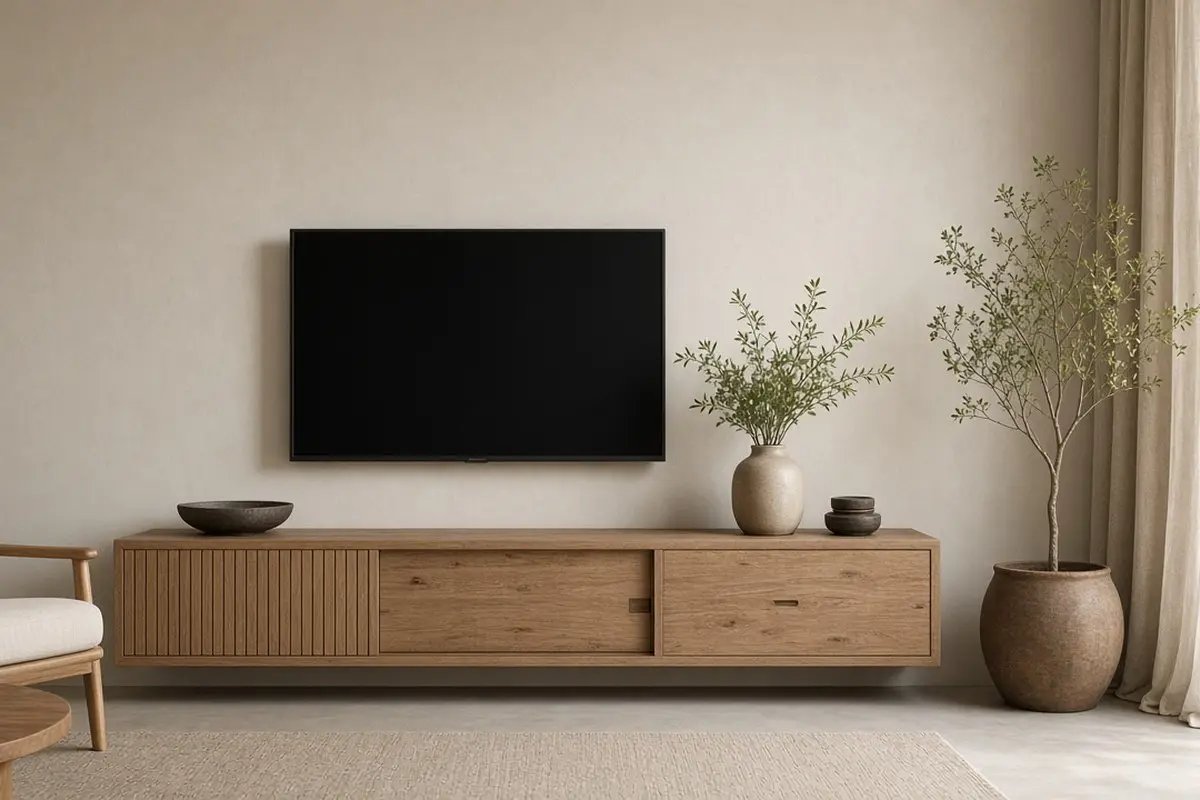

2. One wide, quiet piece of art
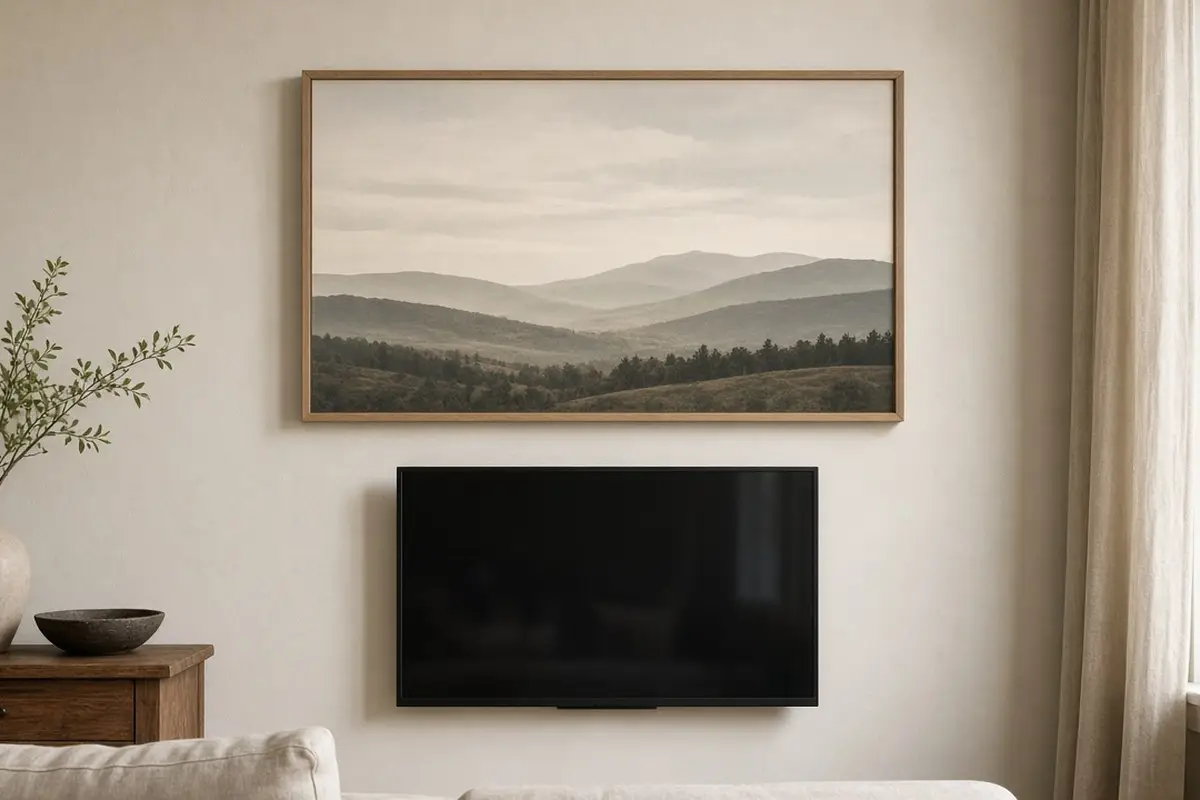
Art above television should be calm. A single wide piece, such as a horizontal landscape, a soft abstract, or a long black and white photograph, gives the wall a finished look without competing with the screen. Choose something with muted colors and little contrast. A busy or bright image above a TV makes both look cluttered.
Match the width of the art to the width of the TV, or make it a little narrower. Hang it with eight to twelve inches between the top of the TV and the bottom of the frame. Closer and it crowds the screen. Farther and the two separate.
A matte or anti-glare glass helps, because a glossy frame above a lit TV can catch reflections from lamps and windows.
Get the look
3. A single long shelf
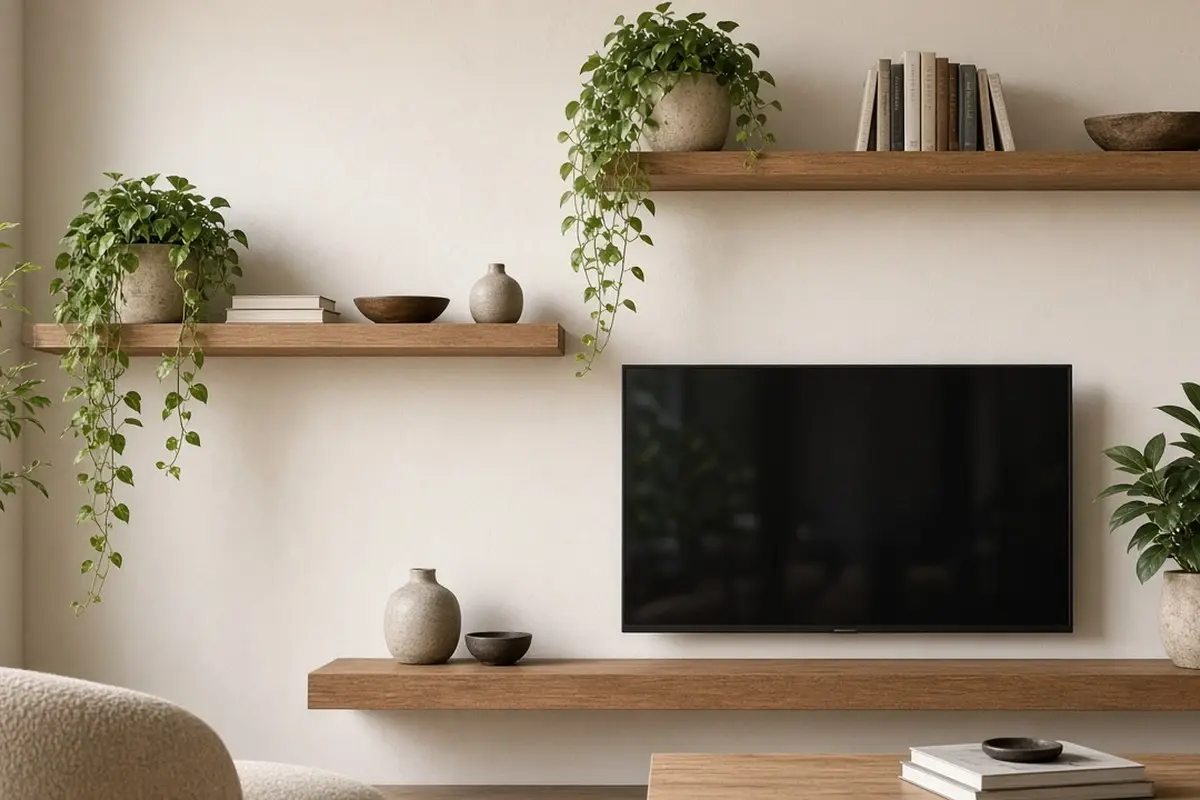
A single floating shelf above the TV, the same width as the screen or a little wider, adds a clean horizontal line. Keep what you put on it simple: a couple of small frames, a short stack of books, one trailing plant. The shelf ties the TV to the wall and gives you a little display space without the scatter of separate frames.
Mount the shelf about ten inches above the top of the TV, into studs. Keep items low, under ten inches, so the shelf reads as a line rather than a display case.
The shelf also gives the soundbar or small speakers a place if you do not want them on the console. Keep cables tight against the wall and run them down behind the TV, where the screen hides them. Paint the cord cover the wall color and it disappears.
Avoid putting anything on the shelf that you need often. Reaching over a TV to grab a book is awkward, and things that get moved a lot end up out of line. Choose objects you are happy to leave in place for months.
4. Frame TV style art mode, without the special TV
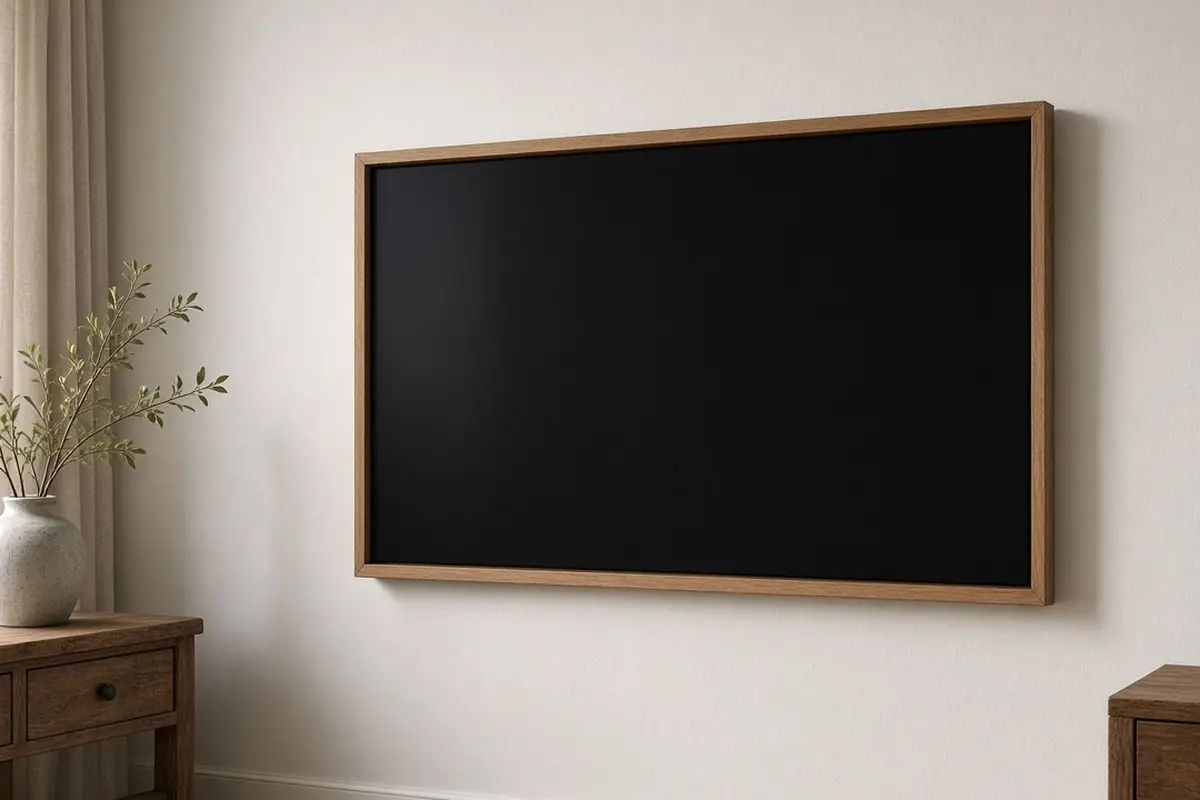
Some TVs disguise themselves as art when switched off. You can get a similar effect with any screen by surrounding it with a simple frame. Stick-on or clamp-on frames in wood or metal make the TV look like a framed picture. Then keep the wall above it nearly empty, maybe one small piece, so the framed TV is the art.
This idea suits rooms where the TV wall is the main wall of the room and you want it to look intentional rather than technical.
Measure the screen carefully before buying a frame, including the bezel, and check how the frame attaches. Some clip onto the edges and some stick to the bezel with tape. Pick a frame finish that matches other wood or metal in the room, such as the console or picture frames, so the TV looks like part of the same family.
When the TV is off, set a calm image or a plain dark screen saver. A slideshow of bright family photos undoes the calm effect.

5. A painted focal wall
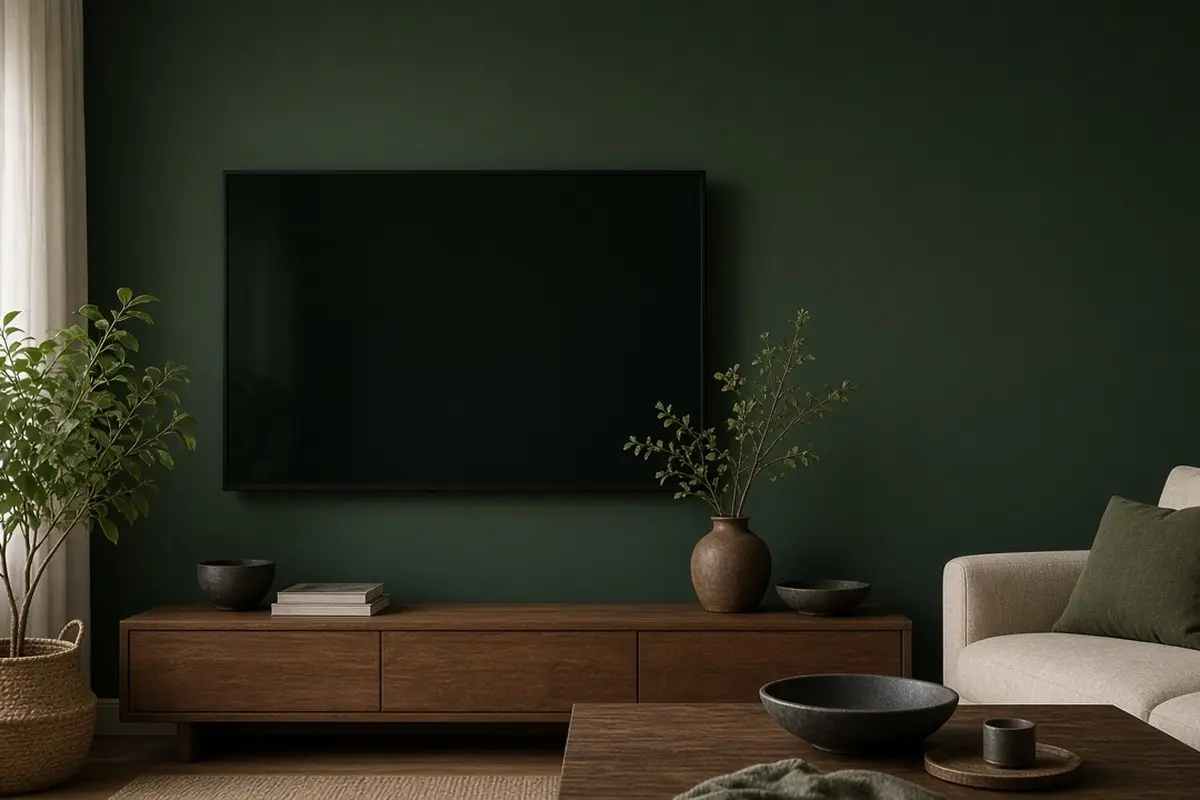
Painting the TV wall a darker, warmer color than the rest of the room makes the black screen blend in. A deep green, navy, charcoal, or rich brown wall swallows the screen when it is off. The TV wall becomes a calm, dark backdrop instead of a bright wall with a black rectangle on it.
Pick a matte or eggshell finish so the wall does not reflect the TV light. Paint the full wall, corner to corner. A painted rectangle only behind the screen looks like a patch. With a dark wall, you may not need anything above the TV at all.


6. Two sconces instead of objects
Instead of decor above the TV, add light beside it. A pair of plug-in sconces, one on each side of the screen at about the height of the top of the TV, gives the wall a finished look and soft light for evening viewing. Light near the screen also reduces eye strain.
Run the cords in paintable cord covers. Choose sconces with fabric shades or glass globes that point light upward or downward, never straight at the screen.
Sconces are also a good answer when the TV is wide and the wall is narrow, leaving no room for art. They fill the sides instead of the top, which keeps the arrangement low and wide, the shape a TV wall wants. Set them on a smart plug and they can switch on with the evening lamps.

7. Shelves around the TV, not just above
If the TV is on a wide wall, open shelves on either side and a single shelf above create a soft frame without a full media wall. Stagger them so nothing feels like a built-in cabinet. Use the shelves for books and a few objects, leaving gaps between groups.
The shelves above the TV should be fewer and emptier than those beside it. Heavy shelves above the screen feel like they are pressing down on it.

8. Leave it clear and style below
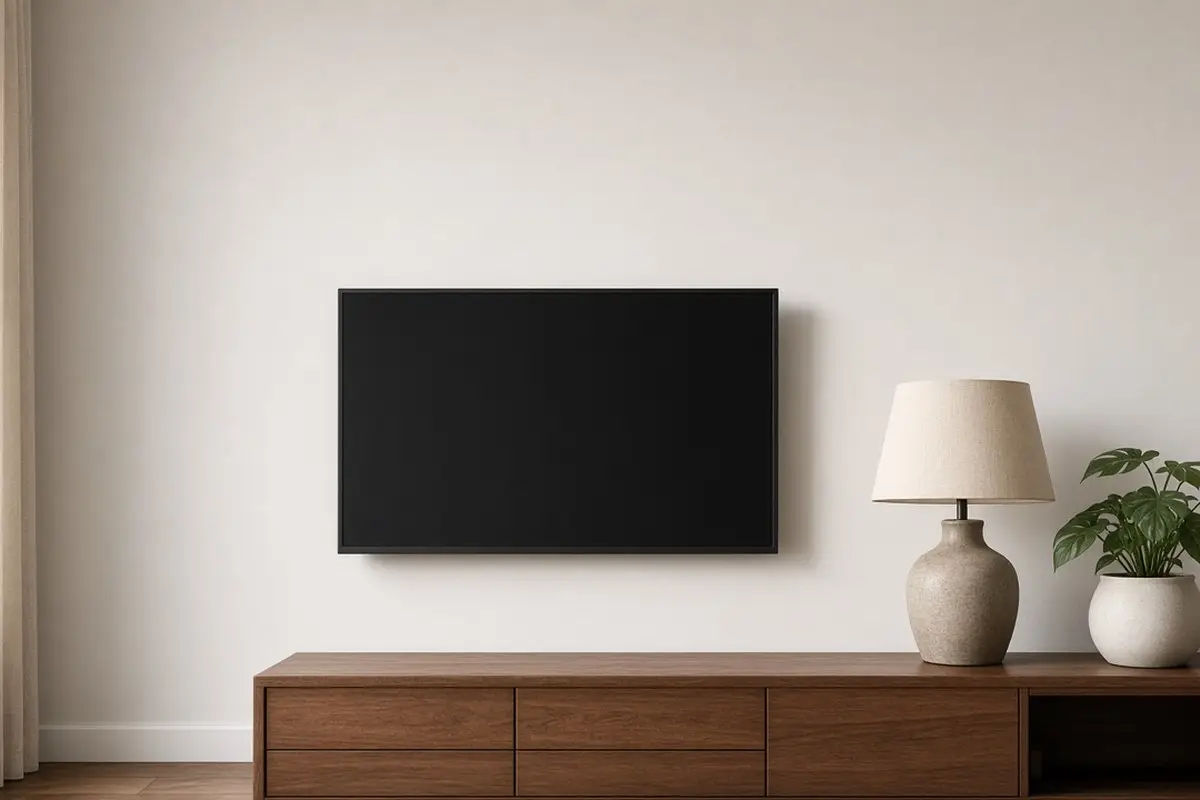
Many TV walls look best with nothing above at all. If the TV is a good size for the wall and hung at the right height, the space above can simply be wall. Put your styling below, on the console: a lamp, a plant, a few books. The TV becomes part of a low, calm arrangement.
This works especially well on a smaller wall or a wall with a window nearby. Too much on a small TV wall makes the room feel crowded.
A clear wall also gives you flexibility. If you change the TV size later, move it, or decide to add art after all, there are no holes or shelves to work around. Living with a blank wall for a few months is often the best way to discover whether it needs anything at all.

Tips Before You Start
- Set the TV center around 42 inches from the floor before anything else.
- Keep art above a TV calm and low in contrast.
- Leave eight to twelve inches between the TV and anything above it.
- Use matte finishes on frames and paint to avoid glare.
- Hide cords with covers or an in-wall kit.
- When in doubt, leave the wall above blank and style below.
FAQ
Should I put anything above my TV?
Only if the TV is hung at a comfortable height and there is at least two feet of wall above it. Otherwise, keep it clear.
How far above the TV should art be?
About eight to twelve inches from the top of the screen to the bottom of the frame.
What color should a TV wall be?
A darker, warmer color helps a black screen blend in. Deep greens, navies, and charcoals work well. The wall updates without furniture post has more painting advice.
Can I hang a TV over a fireplace?
You can, but it often ends up too high. If you do, keep the wall above it clear and consider a mount that pulls down. The calm living room weekend refresh has a simple way to reset that wall.
What about a clock or a word sign?
Both tend to look like an afterthought above a TV. One calm piece of art or a single shelf is usually a better choice.
The wall above a TV does not need much. Set the screen at the right height, choose one quiet idea or none, and let the TV become a calm part of the room rather than the loudest thing in it.