
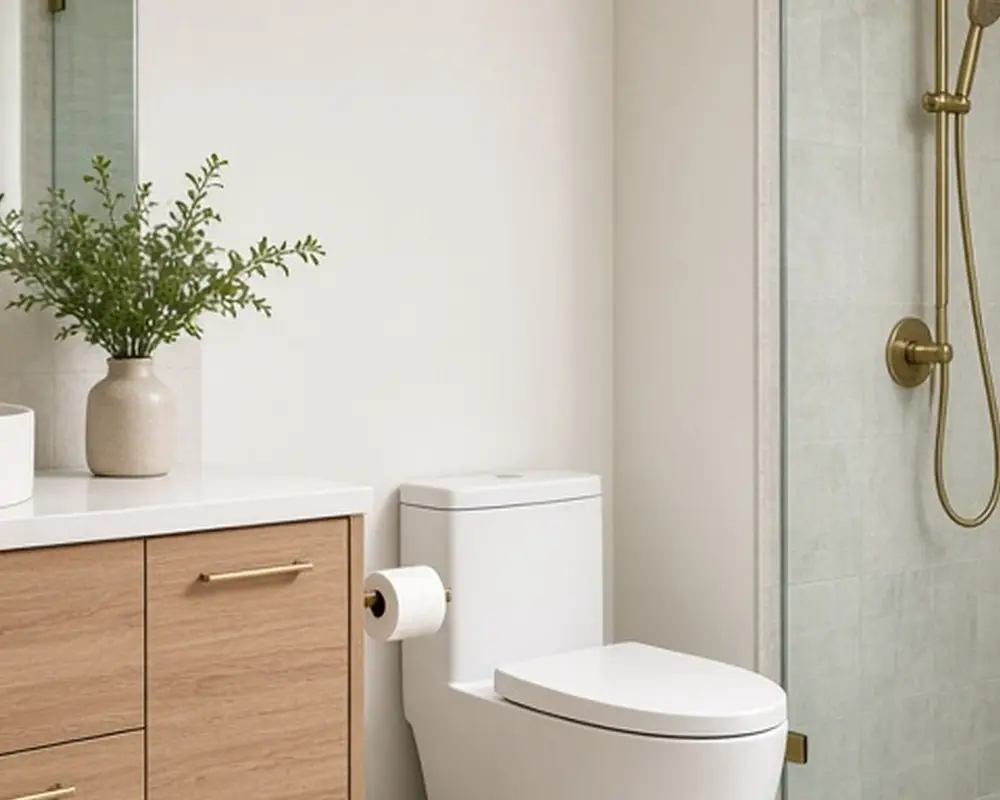
11 Small Bathroom Remodel Choices That Change the Room Most

On this page14 sections
Every small bathroom remodel runs into the same problem: there is never enough money to change everything, and every choice seems to cost more than expected. So the question is not “what would be nice?” but “what changes the room most for the money and effort?” Some choices transform a small bathroom. Others cost a lot and barely show.
This post ranks eleven common remodel decisions by how much they change a small bathroom, roughly from most to least impact. It is meant to help you decide where to spend and where to save. If you are not ready for a remodel at all, the bathroom refresh, not remodel post covers updates that stop short of construction.
As an Amazon Associate I earn from qualifying purchases.
Set the bathroom remodel budget first
Before choosing anything, decide your total budget and keep about 10 to 20 percent aside for surprises. Small bathrooms often hide problems behind walls and under floors, such as old plumbing, water damage, or uneven subfloors, and these must be fixed before anything new goes in.
Then list what bothers you most about the room today. Too dark? Not enough storage? A cramped shower? A dated look? The answers decide which of the choices below matter most for your bathroom.
Where the money usually goes
In most small bathroom remodels, labor is the largest cost, followed by tile, plumbing fixtures, and the vanity. Moving plumbing or walls adds the most labor. Keeping the toilet, sink, and shower in their current positions is the single biggest way to control a bathroom remodel budget, and it still leaves room for dramatic visual change.
Materials vary widely. Mid-range porcelain tile often looks as good as expensive natural stone in a small room, and a well-chosen ready-made vanity can look custom. Spend more on things you touch every day, like the faucet and the shower valve, and on things hidden in walls, like waterproofing and pipes, which are expensive to fix later.
Get at least two quotes for any work involving plumbing, electrical, or waterproofing. Ask each contractor what they would prioritize in your room. Their answers often reveal the best value changes. The budget bathroom updates post covers the small finishing touches once the big work is done.
1. Rethink the small bath layout
The biggest change is moving things: relocating the toilet, swapping a tub for a walk-in shower, or turning the vanity to a different wall. A better small bath layout can make a cramped room feel twice the size.
It is also the most expensive change, because plumbing must move. Before committing, ask a plumber what is possible. Moving a toilet a few inches is very different from moving it to another wall. Often, a smaller change, like replacing a tub with a shower in the same spot, gives most of the benefit.
Sketch the room to scale on graph paper and try a few arrangements. Standard clearances help: about 15 inches from the center of the toilet to any side wall, and about 21 to 30 inches of clear space in front of it. Leave at least 30 inches in front of the vanity. Seeing it on paper makes it clear whether a new layout really gains space.
Get the look
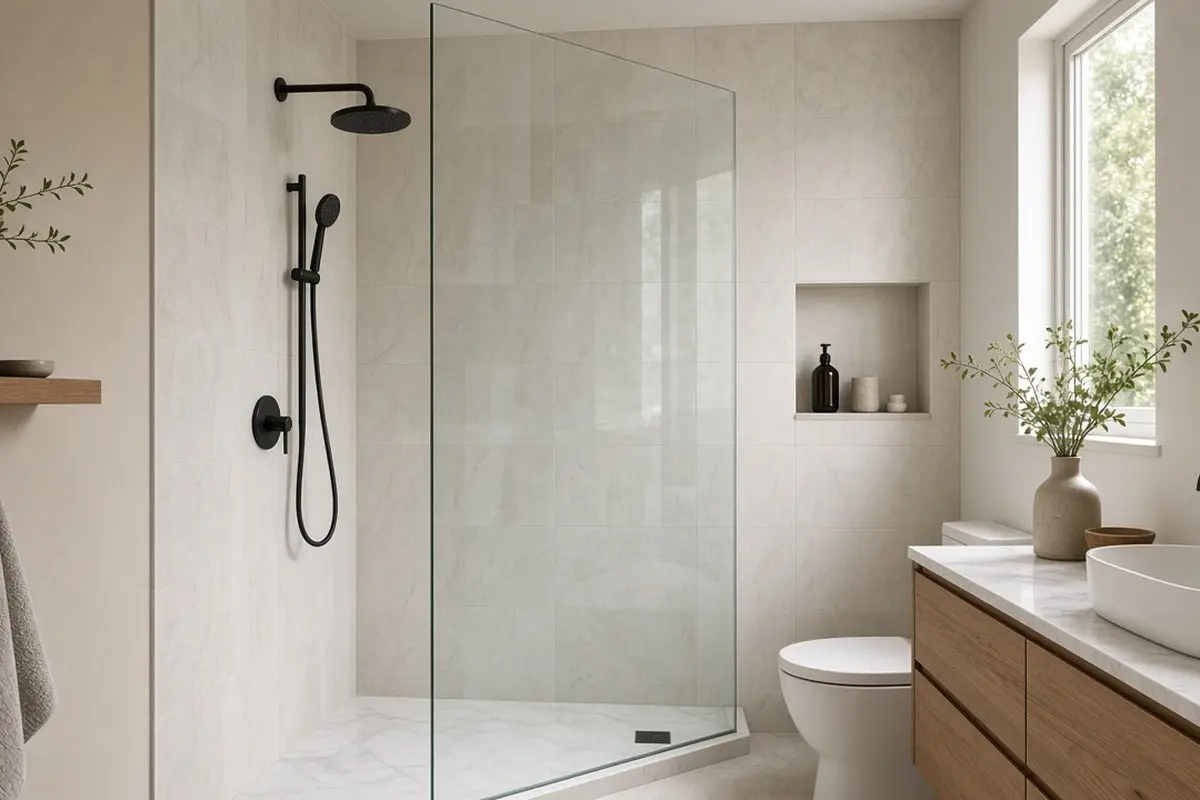
2. Swap the tub for a walk-in shower
In a bathroom where nobody takes baths, replacing the tub with a curbless or low-curb shower opens up the floor and makes the room feel larger. A clear glass panel instead of a curtain lets the eye travel to the back wall.
Think about resale before removing the only tub in a home. Families with young children often want a bathtub, so if this is the only bathroom, keeping a tub may be wiser. If there is another tub elsewhere, a walk-in shower is usually a welcome change.
A curbless shower needs careful waterproofing and a slight slope to the drain across the whole shower area. It is a job for an experienced installer, but the result is easier to use for everyone, including older family members.
Get the look
3. A vanity swap
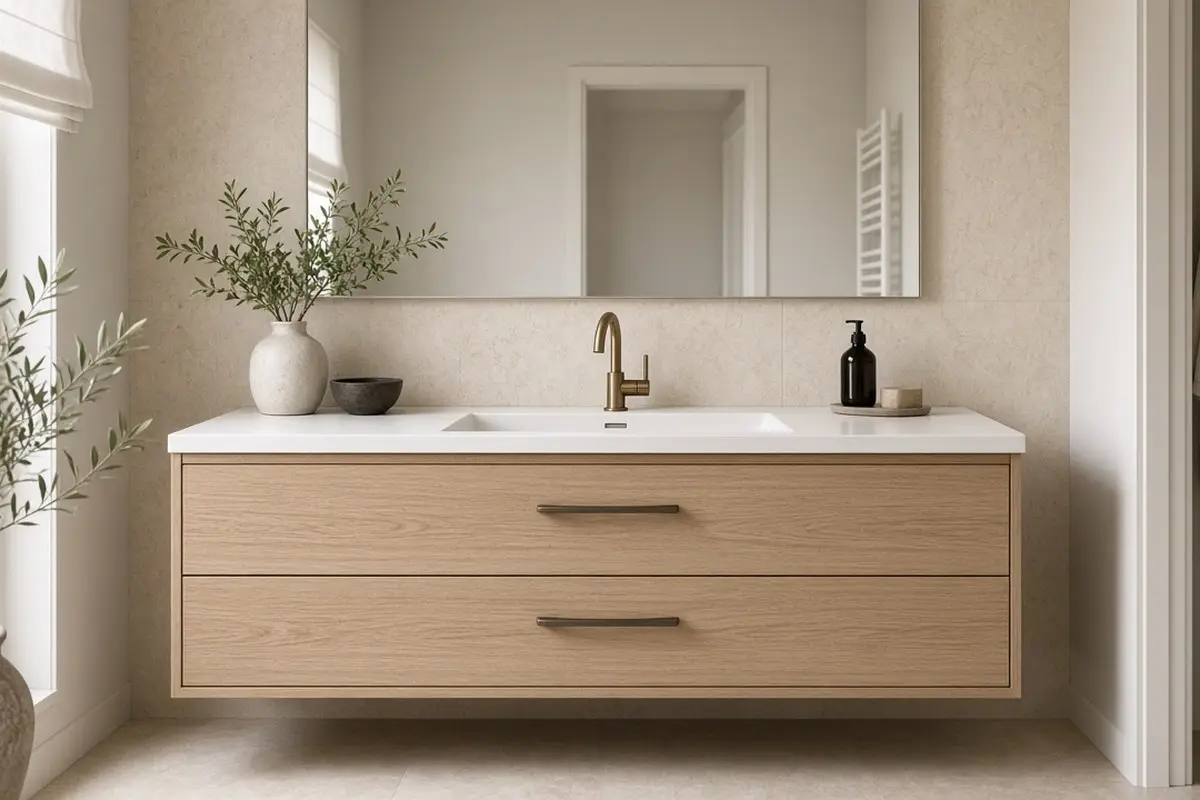
A vanity swap is often the best value change. A floating vanity shows more floor, which makes the room feel bigger, and a new top and sink modernize the whole space.
If the plumbing can stay where it is, a vanity swap is usually a short job. Choose a vanity a little shallower than standard, around 18 inches deep instead of 21, if the room is tight. Drawers are more useful than doors in a small vanity; they bring everything to the front. A wall-mounted faucet frees space on a narrow top.
A vanity swap is often the change that makes people say a bathroom looks new, even if the tile stays.
Get the look
4. Large-format floor tile
Fewer grout lines make a floor look bigger. Large tiles also clean more easily.
In a small bathroom, 12x24 or 24x24 inch tiles work well. Lay them in the same direction as the room’s longest dimension to stretch it visually. Use a grout color close to the tile so the lines nearly disappear. A matte or textured finish is safer when wet than a polished one.
If the floor is being replaced anyway, consider electric underfloor heating. It costs little to add during a remodel and makes a big difference to comfort.
Get the look
5. A bigger mirror
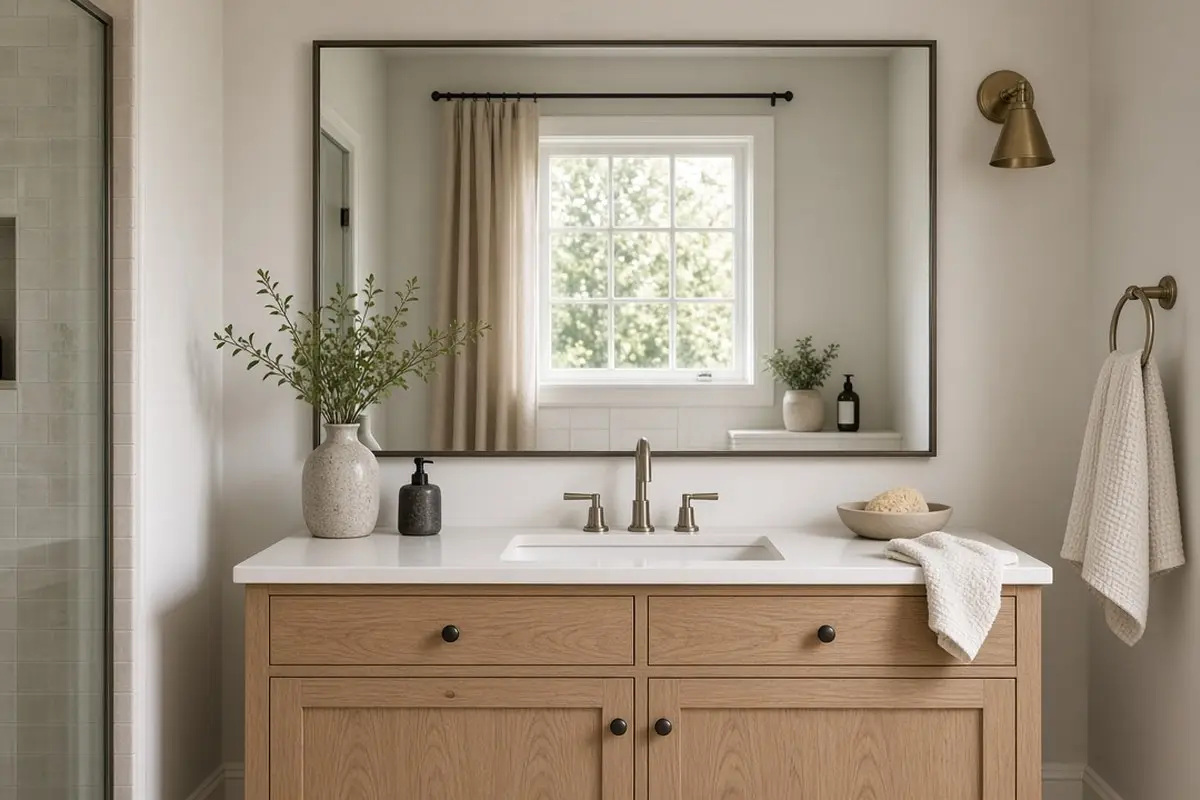
A large mirror, or a mirrored cabinet across the whole vanity wall, doubles the light and the sense of space.
A recessed medicine cabinet adds hidden storage without sticking out from the wall. In a small bathroom, it can replace a separate mirror and a wall shelf. Choose one with mirrored doors inside and out for maximum reflection. Position mirrors to reflect a window if possible, which brings daylight deeper into the room.
Get the look
6. Better lighting
Replace a single ceiling light with layered light: sconces at the mirror and a bright ceiling fixture.
Lighting is cheap compared with tile and plumbing, but it changes how the whole room looks. Sconces on either side of the mirror give even, flattering light for grooming. A bright, damp-rated ceiling light or recessed lights cover the rest of the room. Choose warm white bulbs and add a dimmer for night.
Get the look

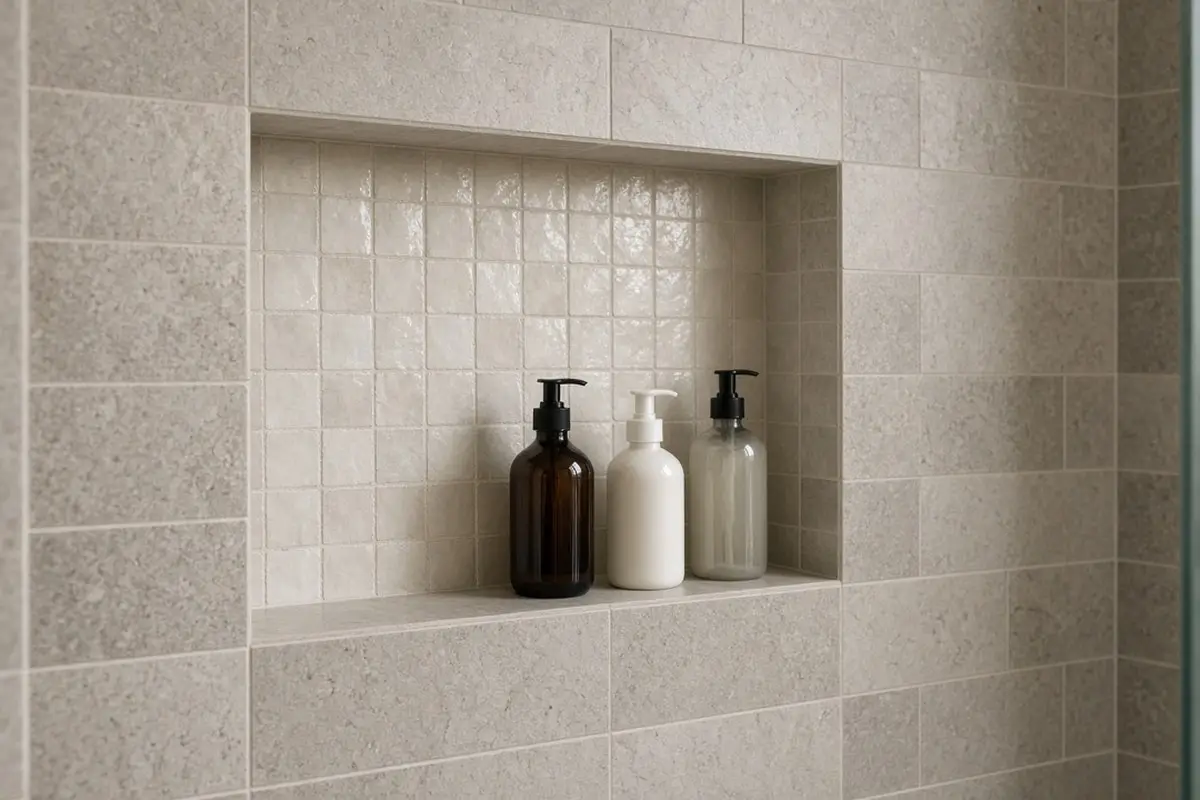
7. A recessed niche
A niche in the shower or wall adds storage without taking floor space.
Niches are easiest to add when the walls are open during a remodel. Place them on an interior wall, not an exterior one, to avoid insulation problems. Size them for the tallest bottle you use. A niche replaces hanging caddies, which rust and collect grime.
Get the look
8. A wall-hung toilet
A wall-hung toilet frees floor space and is easier to clean beneath.
The tank hides inside the wall, which saves several inches of depth. That can make the difference between a cramped room and a comfortable one. It requires a thicker wall or a false wall, so it is best done during a full remodel.
Get the look
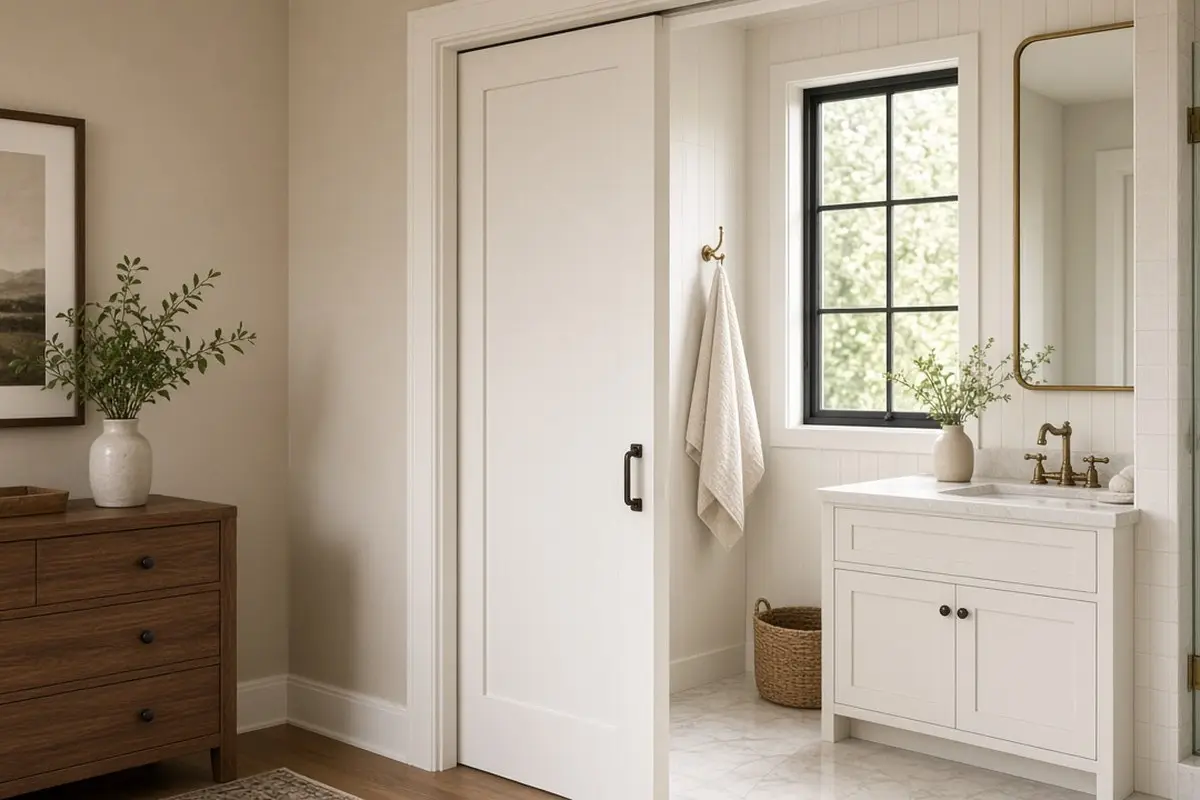
9. A pocket door
A pocket door saves the swing space of a hinged door.
In a tiny bathroom, the door swing can take up a quarter of the floor. A pocket door slides into the wall and frees that space completely. A barn door on a track is an alternative when the wall cannot be opened, though it gives less privacy and sound control.
Get the look
10. Ventilation
A quiet, strong fan protects every other upgrade.
Without good ventilation, moisture damages paint, grout, cabinets, and mirrors. Size the fan for the room and vent it outside, not into the attic. A humidity-sensing switch turns it on automatically. Choose a quiet model so people actually use it.
Get the look
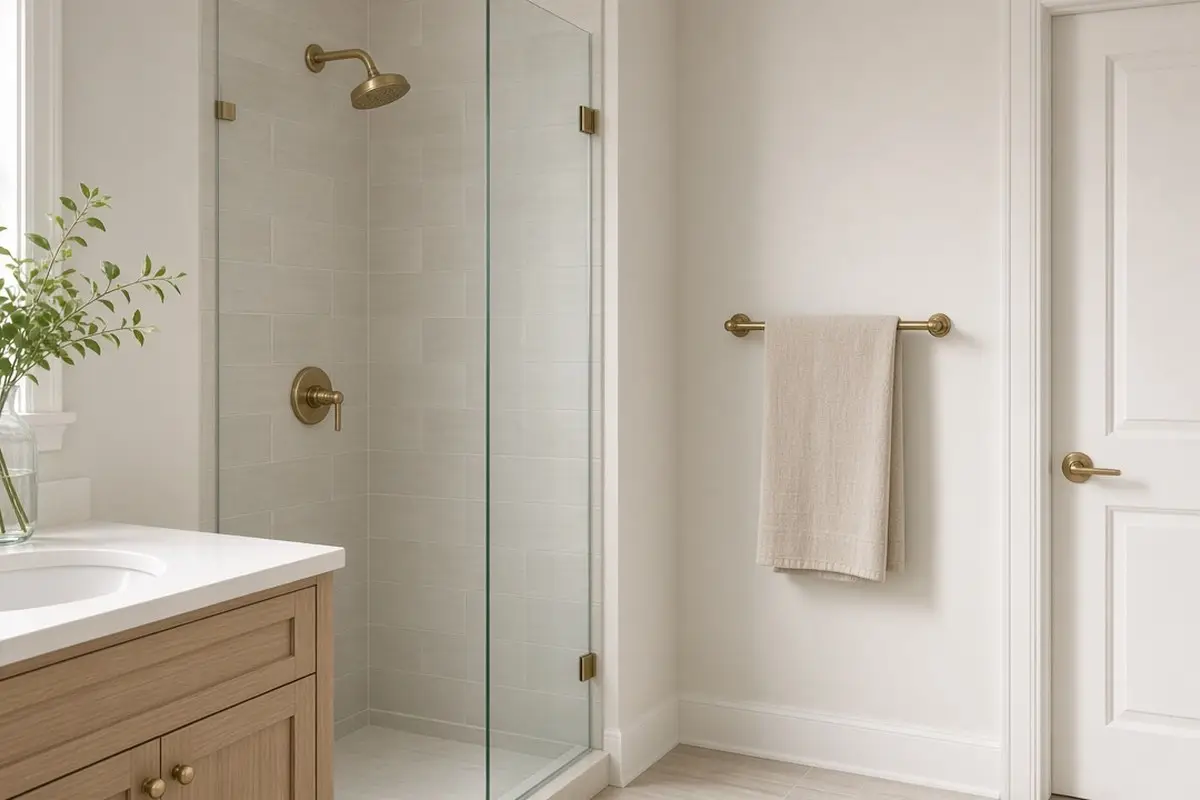
11. Paint and hardware last
Paint and hardware are cheap and easy to change later.
That is why they come last in a remodel budget. Spend on the things that are hard to change, like layout, tile, and plumbing, and keep the easy finishes simple. You can always add color with paint, towels, and art once the major work is done.
FAQ
What gives the most impact in a small bathroom remodel?
Layout, a walk-in shower, and a floating vanity.
Where should I save money?
Paint, accessories, and hardware. They are easy to upgrade later.
Is a vanity swap worth it?
Yes. It is often the best value change. The small bathroom more light post covers lighting choices.
How long does a small bathroom remodel take?
A few days for a vanity swap, and several weeks for a full remodel with new layout and tile. Plan for delays in ordering materials.
Should I hire a designer for a small bathroom?
For a full remodel with layout changes, a short consultation can save money by avoiding mistakes. For a vanity swap or a tile update, careful planning on your own is usually enough.
Spend on what changes the room most. Layout, the shower, the vanity, and light come first. Tile, mirrors, and ventilation follow. Paint and hardware can always wait, and they are the easiest things to change once the room is finished.