
8 Pumpkin Trays That Are Not a Grocery Display

On this page12 sections
- Choose the tray before the pumpkins
- One color, several shapes
- Muted heirlooms in dusty colors
- A single large pumpkin with a few small ones
- Mixed heights with a riser
- Natural texture between the pumpkins
- Candles for evening
- A velvet pumpkin or two
- A kitchen tray with real use
- How to keep real pumpkins fresh
- Change the tray as the season moves on
- Common questions
A tray full of pumpkins is one of the easiest pieces of fall decor, and also one of the easiest to get wrong. Pile a dozen small orange pumpkins on a platter and it looks like the bin by the checkout. The difference between that and a tray you want to keep looking at comes down to a few decisions: how many pumpkins, what colors, how they sit at different heights, and what fills the space between them.
These eight approaches each take a different route to the same goal: a tray that looks put together on purpose. Mix and match the ideas, or follow one closely.
As an Amazon Associate I earn from qualifying purchases.
Choose the tray before the pumpkins
The tray sets the tone. A long, narrow wooden tray suits a dining table or a kitchen island. A round, woven tray suits a coffee table. A shallow metal tray in brass or pewter feels more formal. Size matters most: the tray should leave a margin of a couple of inches around the arrangement so nothing hangs over the edge. A tray that is too small makes the display look crammed, while one that is too large makes a few pumpkins look lost.
Think about where the tray will live, too. A coffee table tray gets seen from above, so the top surfaces of the pumpkins and the texture between them matter most. A dining table tray gets seen from the side by seated guests, so keep it low enough to talk over, ideally under about twelve inches. A tray on a sideboard or console against a wall can be taller at the back and step down toward the front.
Lining the tray protects it. A real pumpkin can leak as it softens, and the moisture stains wood quickly. A layer of parchment, a cloth napkin, or a bed of moss under the pumpkins catches it.
If you prefer to skip real pumpkins for part of the season, a few good faux ones let you set the tray up early in September and swap in fresh pumpkins closer to Thanksgiving. Choose faux pieces with matte finishes and realistic stems; shiny plastic is what makes faux pumpkins look cheap.
1. One color, several shapes
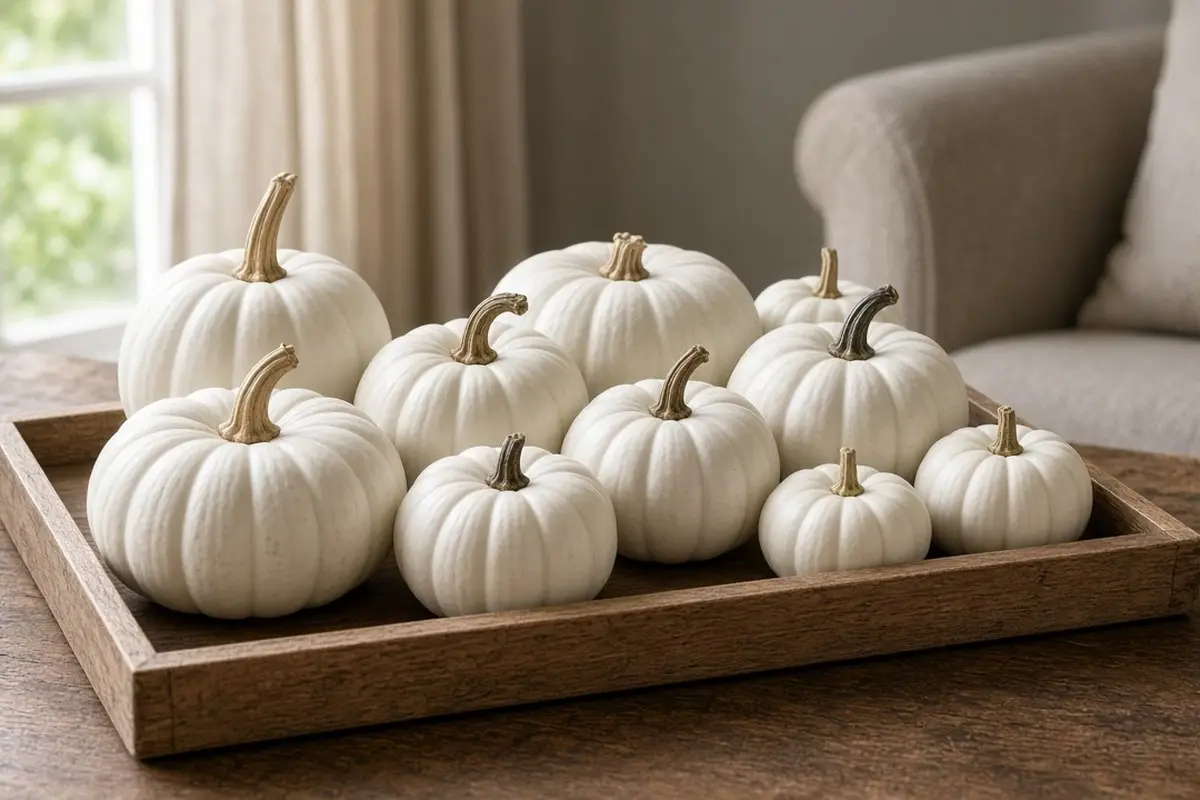
Pick a single color family and vary the shapes. All white, for example: a flat Cinderella-type pumpkin, a small round ghost pumpkin, a ribbed white gourd, and a couple of mini white pumpkins. Because the color is the same, the eye notices the shapes and textures instead, and the result looks calm and intentional.
The same approach works with other colors. An all-green tray of mottled heirloom and acorn squash feels earthy. A tray of deep orange and rust feels warm and traditional, but still deliberate because nothing clashes. Avoid mixing bright orange with pale pastels unless you also add something to bridge them, such as a tan or buff pumpkin.
Get the look
2. Muted heirlooms in dusty colors
Heirloom pumpkins come in colors grocery pumpkins never do: blue-gray, sage, pale peach, buff, and warm tan. A handful of these on a tray look elegant and slightly unexpected. Group three to five, putting the largest off-center and the smaller ones around it, and keep their stems on.
Farm stands and farmers markets usually have the best variety of heirlooms in late September and October, often at the same cost as supermarket pumpkins. Look for names like Jarrahdale, Long Island Cheese, Fairytale, and Porcelain Doll, which all have distinctive colors and flattened, ribbed shapes.
3. A single large pumpkin with a few small ones
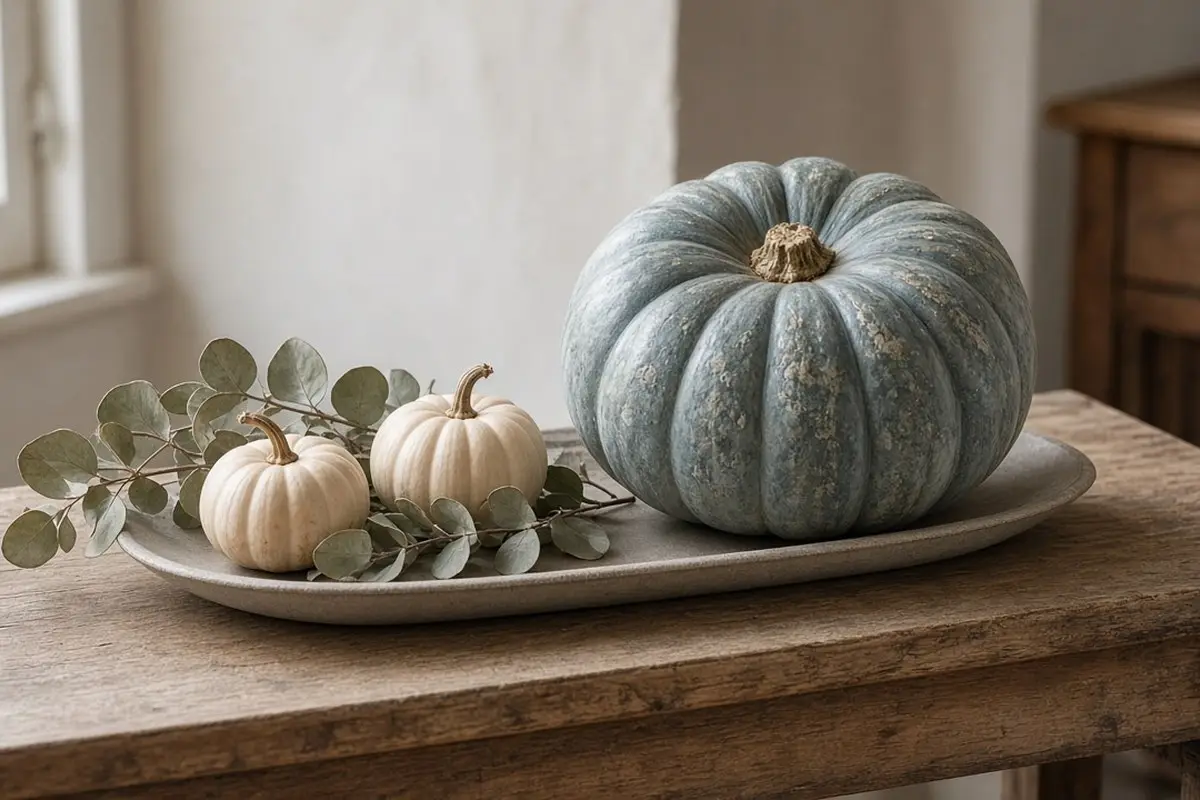
Sometimes less is more. One large, flat heirloom pumpkin set at one end of a long tray, with two or three tiny pumpkins at the other end and a sprig of dried eucalyptus between, reads almost like a still-life painting. The empty space on the tray is part of the design.
This approach suits a minimalist room especially well, where a crowded tray would feel out of place. It is also the easiest to maintain, since there is only one large pumpkin to watch for soft spots.
Get the look
4. Mixed heights with a riser
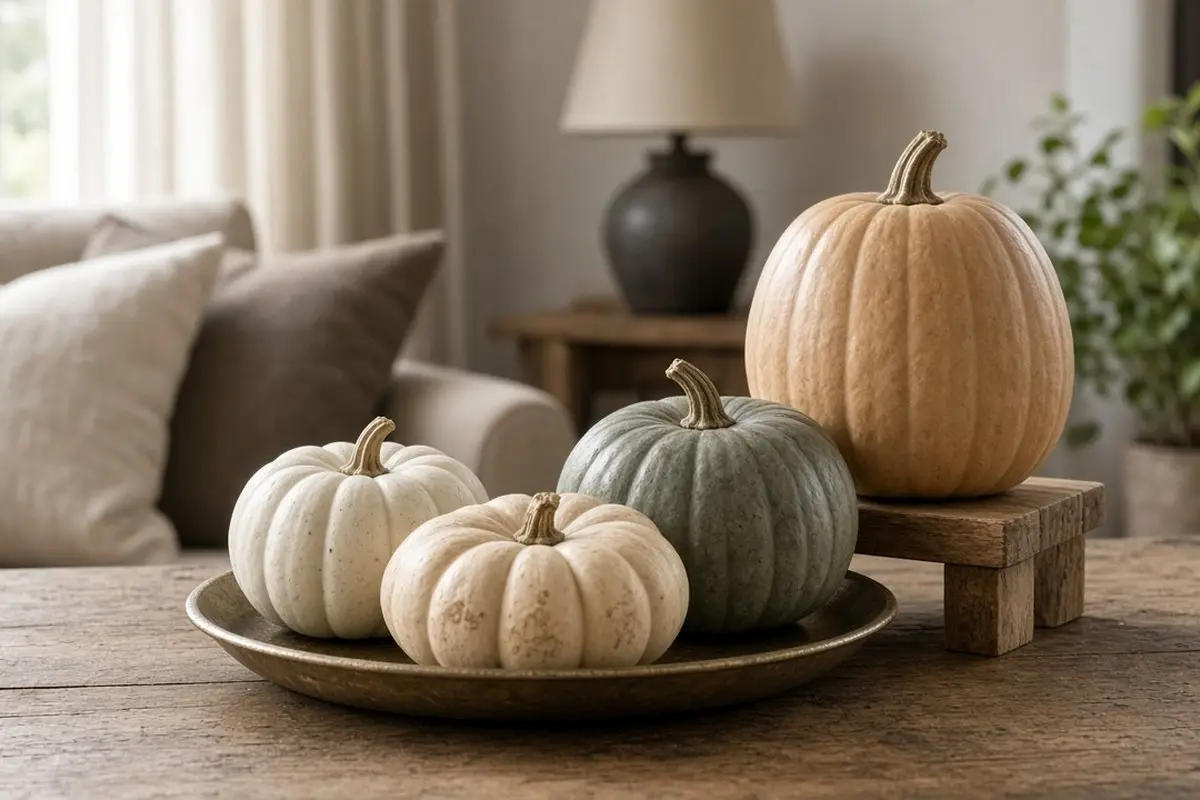
A flat tray of pumpkins all sitting at the same height looks like a display bin. Raise one or two on a small wooden riser, an upturned bowl, or a cake stand. Even a few inches of lift creates movement and lets you see each piece. A stack of two old books wrapped in brown kraft paper works just as well as a purpose-made riser, and you probably already have them. Aim for a loose triangle shape, with the tallest point toward one side and the arrangement tapering down to the opposite end, which looks more natural than a symmetrical mound. Place the riser toward the back if the tray sits against a wall, or in the center if it can be seen from every side.
Get the look
5. Natural texture between the pumpkins
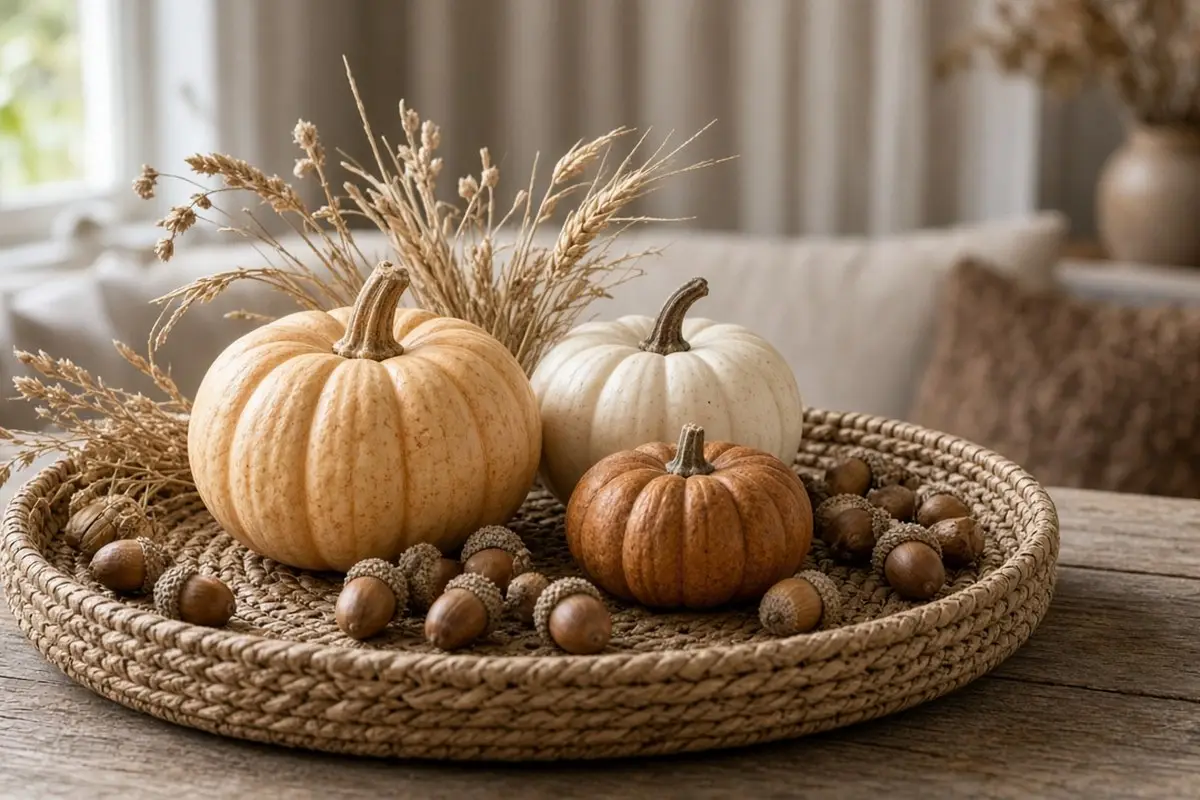
What fills the gaps matters as much as the pumpkins. Use one or two textures, not five. Dried wheat, bunny tail grass, or a handful of acorns and pinecones all work. Moss sheets give a soft, earthy base. Avoid plastic leaves and glittered picks, which instantly push the look toward a store display.
Fresh materials work too, as long as you replace them. A few branches of bittersweet, sprigs of rosemary, or small clusters of crabapples add color and scent. Keep fresh greenery away from the pumpkins’ bottoms, where trapped moisture speeds up rot.
Get the look
6. Candles for evening
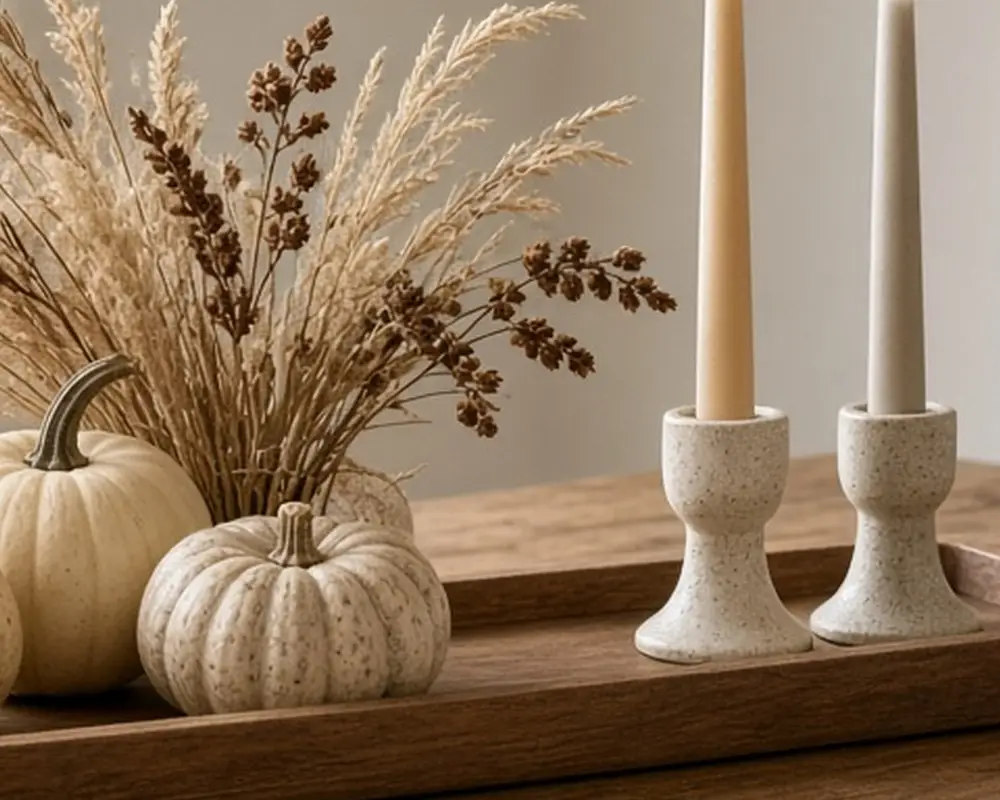
A pair of taper candles in simple holders, or a cluster of pillar candles at one end of the tray, turns a pumpkin arrangement into a centerpiece for dinner. Keep flames well away from dried grasses and leaves, and consider flameless candles if the tray sits where children or pets can reach. Unscented candles keep the focus on the food at the table.
Candle color matters more than you might expect. Ivory or cream tapers suit nearly any pumpkin palette. Deep rust, olive, or chocolate brown tapers echo heirloom tones and feel richer. Bright orange candles alongside orange pumpkins tend to look matchy, so reach for a contrasting neutral instead. Brass holders warm the look; black iron holders sharpen it.
7. A velvet pumpkin or two
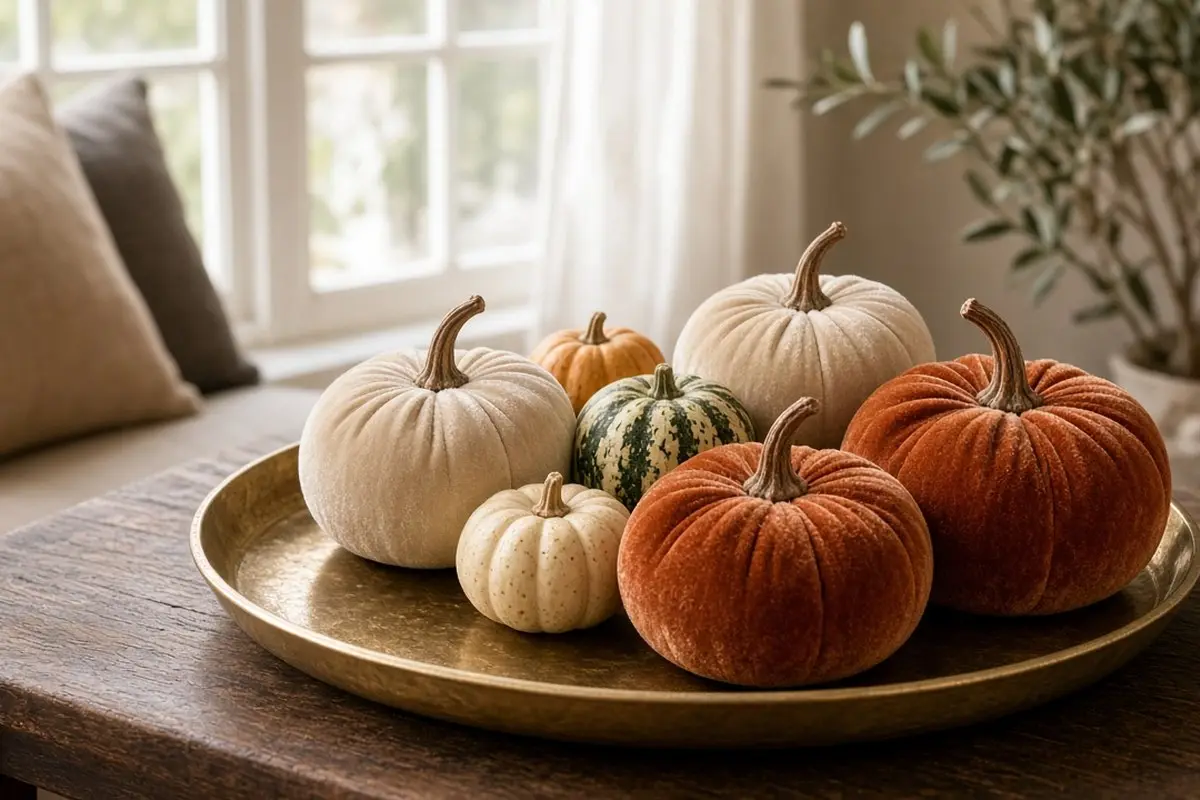
Fabric pumpkins in velvet or linen last for years and add a soft texture that real pumpkins cannot. One or two mixed in among real ones keep the arrangement from looking like a craft project. They also let you build a tray in advance and swap in fresh pumpkins as needed.
Velvet pumpkins are also easy to make at home from a rectangle of fabric, a running stitch, some stuffing, and a real dried stem saved from last year’s pumpkins.
Get the look
8. A kitchen tray with real use
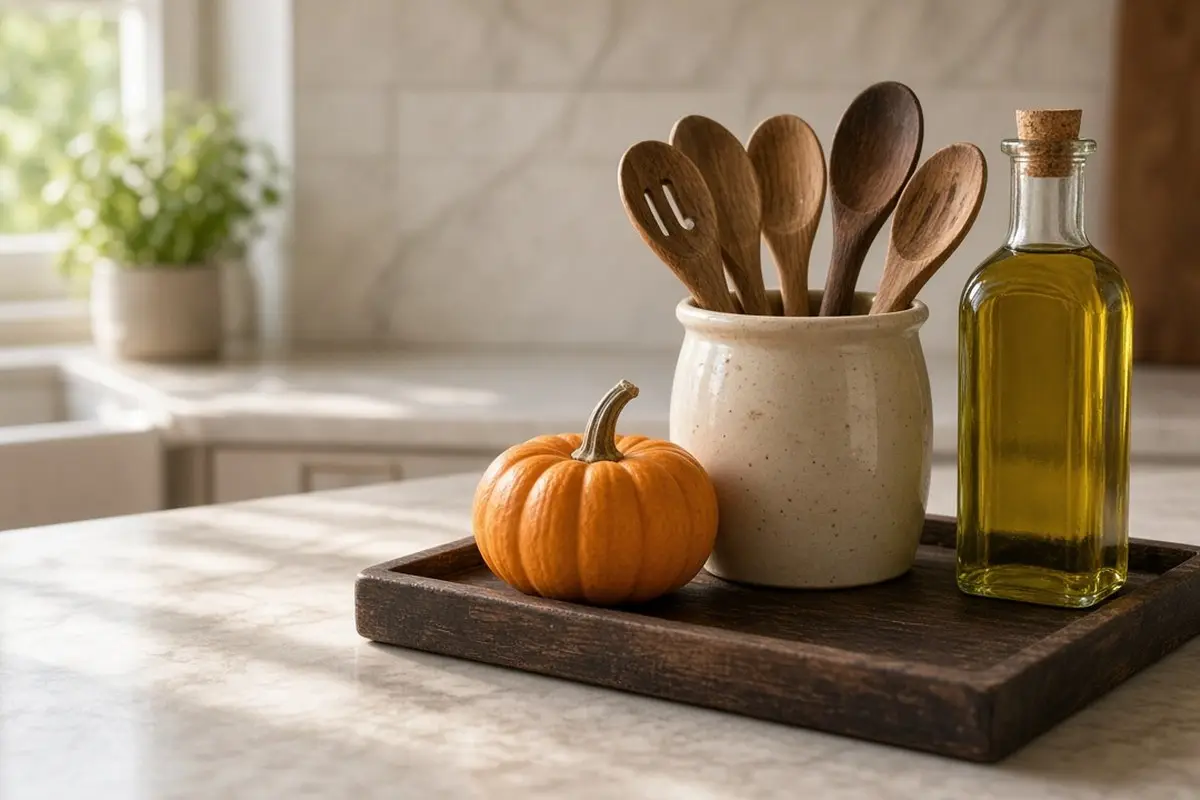
On a kitchen counter, a pumpkin tray can hold everyday things too: a crock of wooden spoons, a bottle of olive oil, a salt cellar, and a small pumpkin or two. It looks seasonal without taking over the workspace.
Keep the pumpkins small here, since the counter is a working surface. A tray with handles lets you lift everything aside in one move when you need the space to roll out dough or set down groceries. Choose a tray that wipes clean, such as sealed wood, marble, or enamel, because a kitchen tray will meet the occasional splash of oil or a wet spoon. Our guide to kitchen counter tray ideas has more on keeping a counter tray useful.
Get the look
How to keep real pumpkins fresh
Buy pumpkins with firm, unbruised skin and a solid, dry stem. Wipe them with a cloth dampened with a weak solution of water and a little white vinegar, then dry thoroughly. Keep them out of direct sun and away from heating vents. Check the bottoms weekly, since rot usually starts underneath where moisture collects. A well-kept pumpkin indoors often lasts several weeks to a couple of months.
If a pumpkin develops a soft spot, remove it right away before it affects its neighbors and the tray beneath. Carved pumpkins do not belong on an indoor tray at all, since they begin to break down within days. Keep the carving for the porch and the whole pumpkins for inside.
When the season is over, many whole pumpkins can be cooked or roasted, and the seeds toasted, as long as they were never treated with sealants or sprays. Otherwise, compost them; break them into pieces first so they decompose faster.
Change the tray as the season moves on
A pumpkin tray does not need to stay the same from September to the end of November. Start early in the season with pale and green pumpkins and fresh herbs, which still feel close to late summer. In October, shift toward richer rust and orange tones and add dried grasses. By Thanksgiving, swap in deeper colors, a few pinecones, and candles, so the tray carries straight onto the holiday table. Changing just one or two elements each time keeps the tray feeling fresh without starting from scratch.
Common questions
How many pumpkins should go on a tray? Usually three to seven. Odd numbers look more natural, and fewer, well-chosen pieces look more deliberate than many identical ones.
Should the pumpkins match the room? They should relate to it. Pull a color from a rug, a pillow, or the walls, and pumpkins in that tone will look as if they belong.
How do you make a pumpkin tray look expensive? Restrict the palette, vary heights, use natural textures, and leave some empty space.
Can you put a pumpkin tray on a coffee table? Yes. Keep it low, use a tray with a raised rim so pieces stay put, and leave room on the table for drinks.
For more fall ideas that do not overwhelm a room, see our short fall home edit and fall kitchen touches.