
8 Fireplace Mantels for Fall Without a Pile of Signs

On this page14 sections
- Begin with an empty mantel
- One large vessel of branches
- Art first, then a few seasonal touches
- A layered art ledge
- A garland, kept simple
- Candlelight in groups
- Pumpkins on the hearth, not the mantel
- A mirror with branches tucked behind
- A symmetrical arrangement for a formal room
- A mantel with a television above
- Keep it safe
- Balance without symmetry
- When to change it over
- Common questions
The mantel is the natural centerpiece of a living room, so it tends to attract more fall decor than anywhere else. That is how it ends up crowded: a wooden sign that says “Gather,” a second one that says “Harvest,” a row of pumpkins, a garland, candles, a lantern, a bunting, and a few faux leaves scattered between. Each piece might be pleasant on its own, but together they compete, and the fireplace disappears.
A better fall mantel has a clear focal point, a few supporting pieces, and some empty space. These eight arrangements each follow that idea in a different way, and none of them needs a single word sign.
As an Amazon Associate I earn from qualifying purchases.
Begin with an empty mantel
Clear everything off, including the things that live there all year. Dust the surface and the wall above. Then add pieces back one at a time, stepping back across the room after each one. You will usually find you need far fewer items than you started with. Taking a photo with your phone helps, because a photo flattens the scene and shows clutter your eye glosses over in person.
Think about the size of the mantel and the wall above. A long, deep mantel with a tall wall can hold larger pieces and more of them. A shallow mantel, or one with a television mounted above, needs low, slim objects that will not block the screen or look precarious. Measure the depth before you buy anything; many mantels are only five or six inches deep, which rules out large urns and wide trays.
Consider what stays all year. A clock, a pair of candlesticks, or a favorite piece of pottery may belong on the mantel permanently. Fall decor can work around those pieces, which saves effort and keeps the room feeling like your own rather than a seasonal set.
1. One large vessel of branches
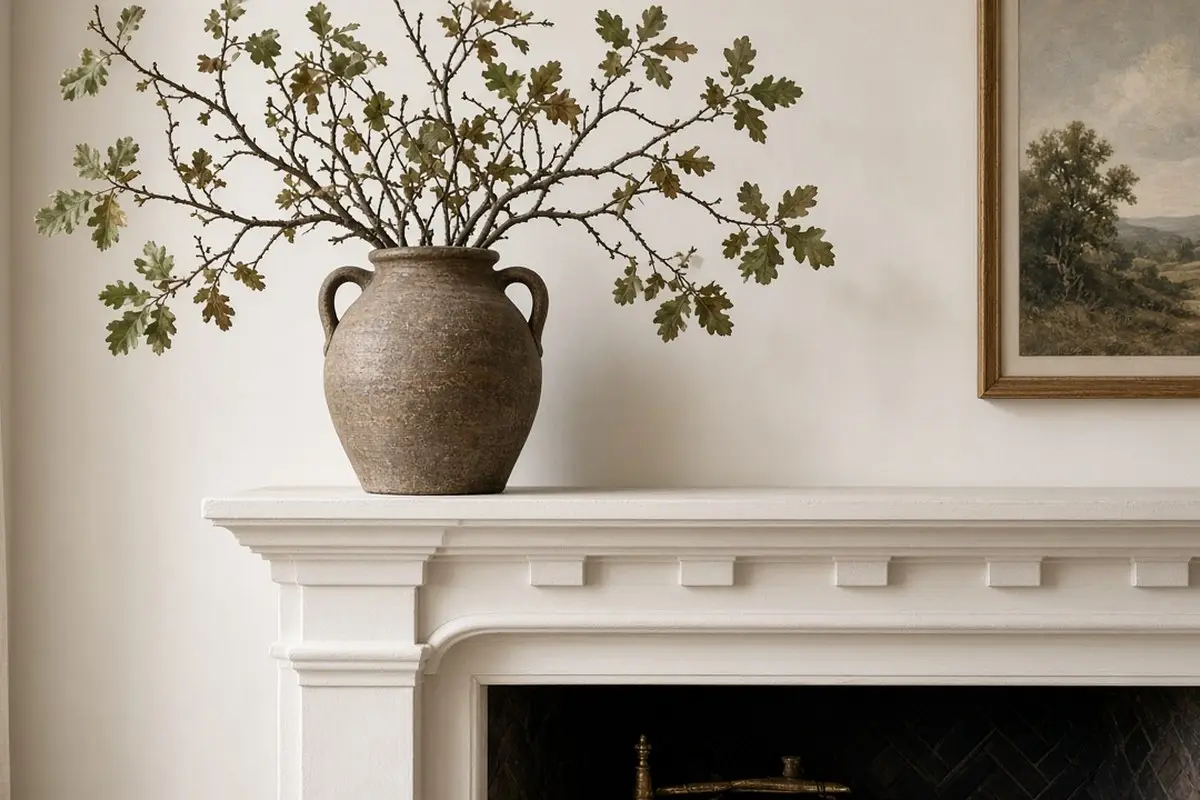
The simplest fall mantel is a single large jug, crock, or vase filled with cut branches of oak, maple, beech, or dried eucalyptus, placed slightly off-center. Its height and loose, organic shape fill the space above the mantel without any other decoration. Balance it with a small stack of books or a single candlestick on the other side.
A vessel with some heft looks best: stoneware, a heavy glass bottle, an old milk can, or a wide-mouthed crock. Fill the bottom with gravel or sand to keep tall branches from tipping it, and add water only if the branches are freshly cut. Dried branches last the whole season and often well into winter.
Get the look
2. Art first, then a few seasonal touches
If you have a painting or print above the mantel, let it stay the star. Add a pair of candlesticks or two small pumpkins at either end, and perhaps a short bundle of dried grasses. The art gives the arrangement weight, and the seasonal pieces simply frame it. A landscape or still life with warm tones suits autumn especially well, and you can swap it for a winter scene later.
If the art is large, keep seasonal objects low so they do not cut across the bottom of the frame. Pieces that stay below the lower third of the art look intentional; pieces that overlap it heavily look crowded.
3. A layered art ledge
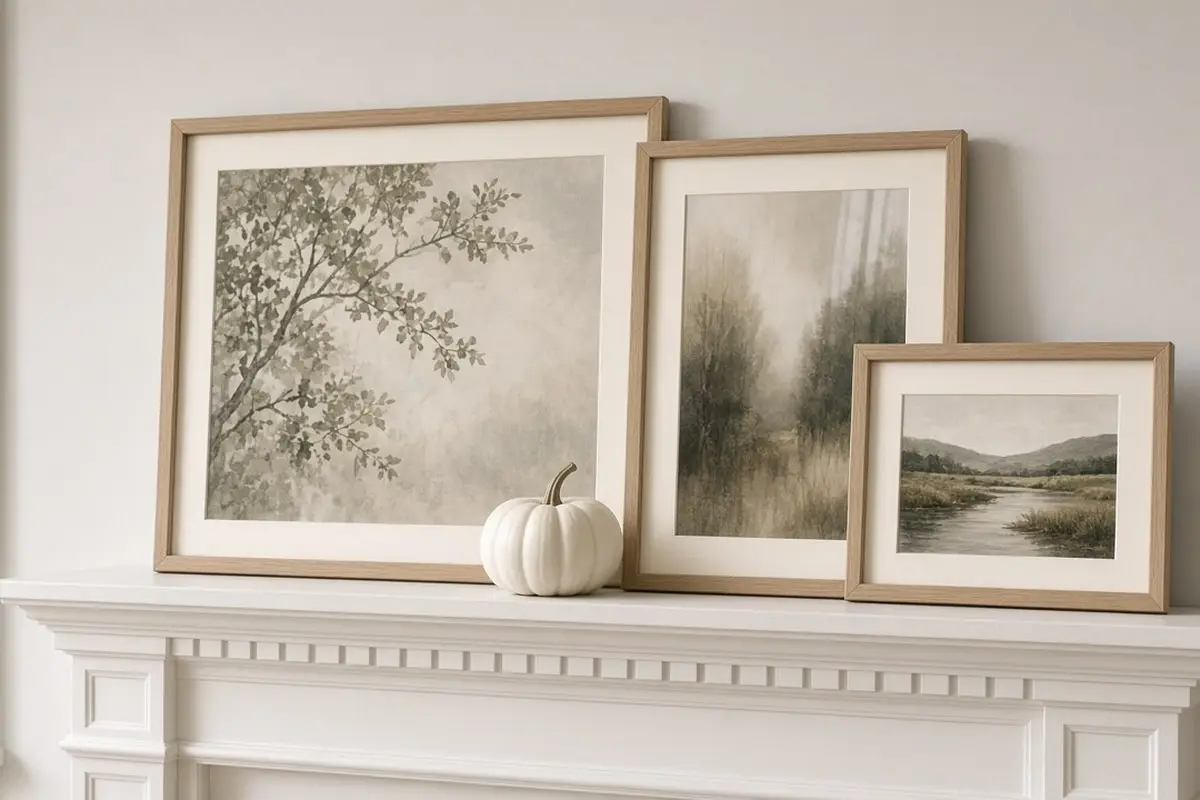
Lean two or three framed pieces against the wall, overlapping slightly, with the largest at the back. Mix one autumn-themed piece, such as a botanical print of leaves, with pieces that stay all year. Add one small object in front, like a bud vase or a pumpkin. Leaning art is easy to change and creates depth without nails.
A narrow lip or a small strip of molding along the back of the mantel keeps frames from sliding. On a smooth mantel, a small dot of museum putty under each frame’s bottom edge does the same job.
Get the look
4. A garland, kept simple
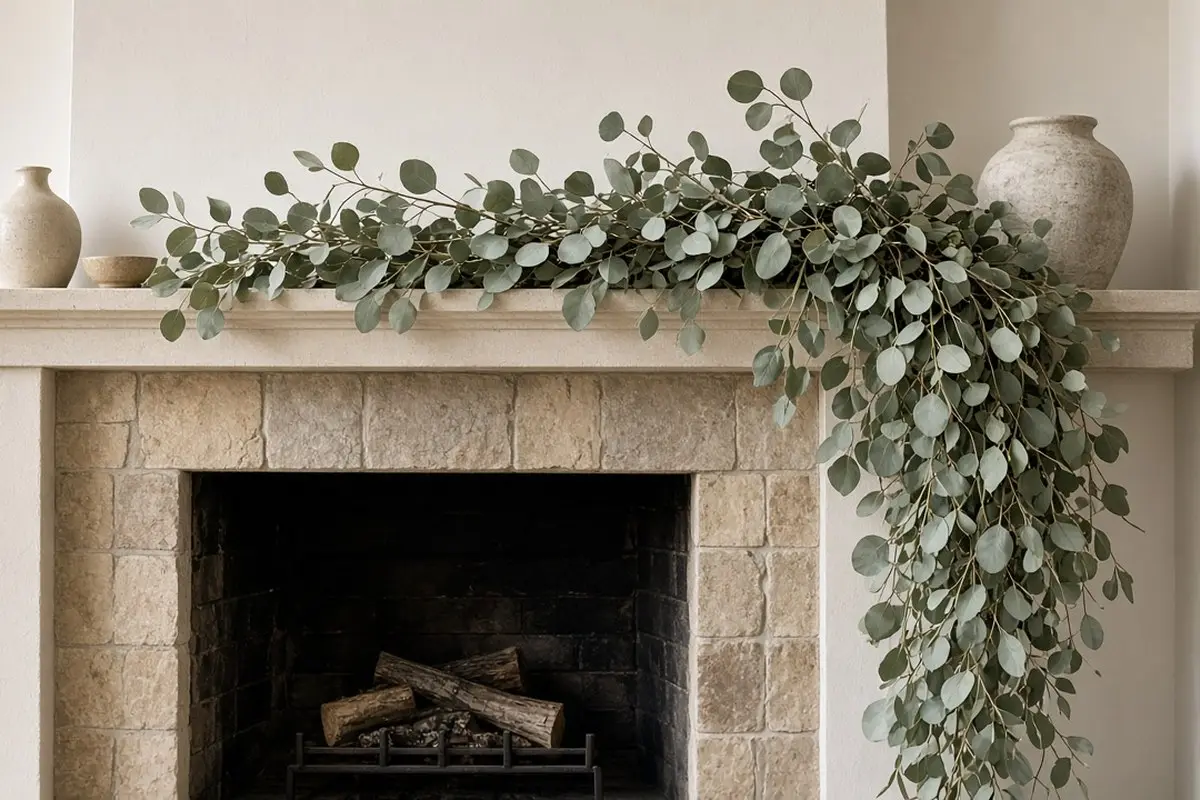
A garland draped across the mantel can look lovely as long as it is the only horizontal element. Choose dried eucalyptus, magnolia leaves, or a loose strand of preserved oak leaves rather than a dense plastic one. Let it spill slightly over one or both ends. A garland that is too short looks skimpy, so measure the mantel and buy one about a foot longer, which lets it drape naturally at the ends. Fresh garlands of real magnolia or eucalyptus can be misted every few days to stay supple, while preserved and dried ones last the whole season and can be stored flat in a box for next year. Then keep everything else minimal, perhaps a pair of candles and nothing more.
Get the look
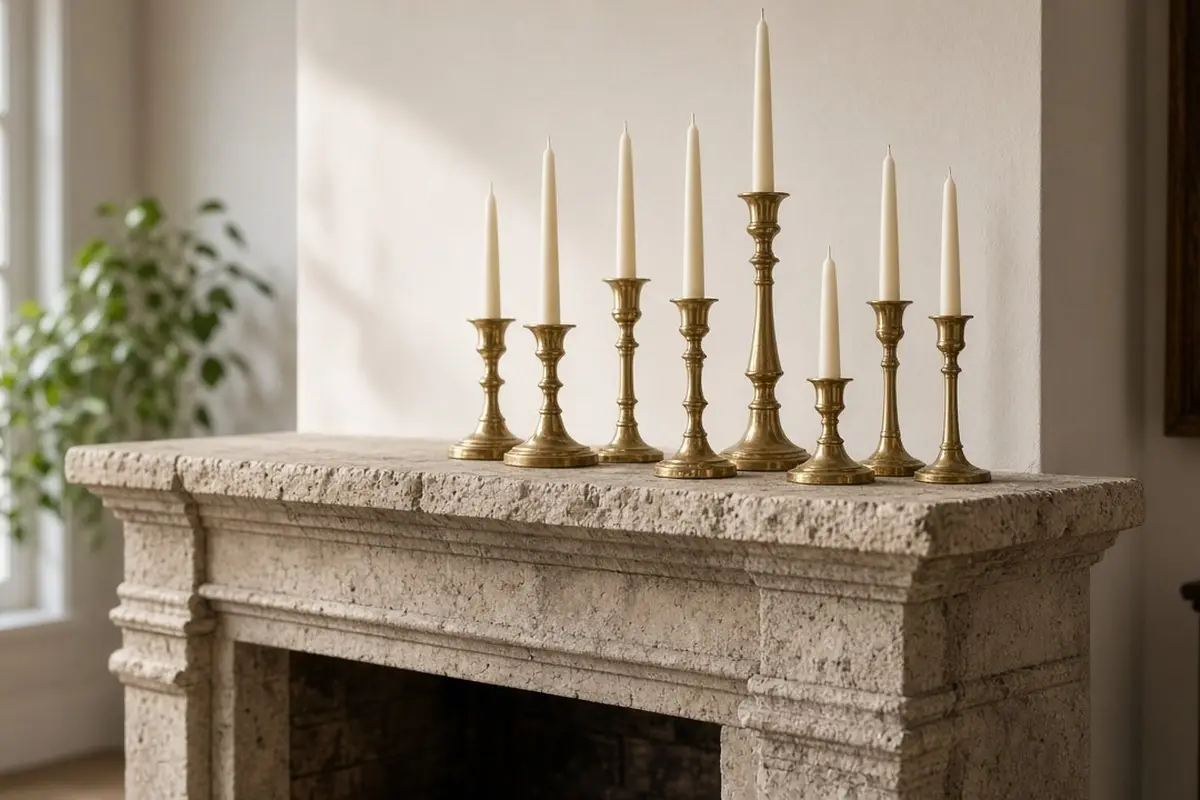
5. Candlelight in groups
Tapers in brass holders, pillars on a wooden board, or votives in amber glass give a mantel a warm glow on autumn evenings. Group them in odd numbers and vary the heights. If the fireplace is used, keep candles back from the edge and away from the heat that rises off the firebox. Flameless candles are a safe alternative and look convincing at a distance.
Choose one candle color and stick with it. All ivory, all deep rust, or all natural beeswax looks calm. Mixing several colors of tapers on one mantel quickly starts to look busy.
Get the look
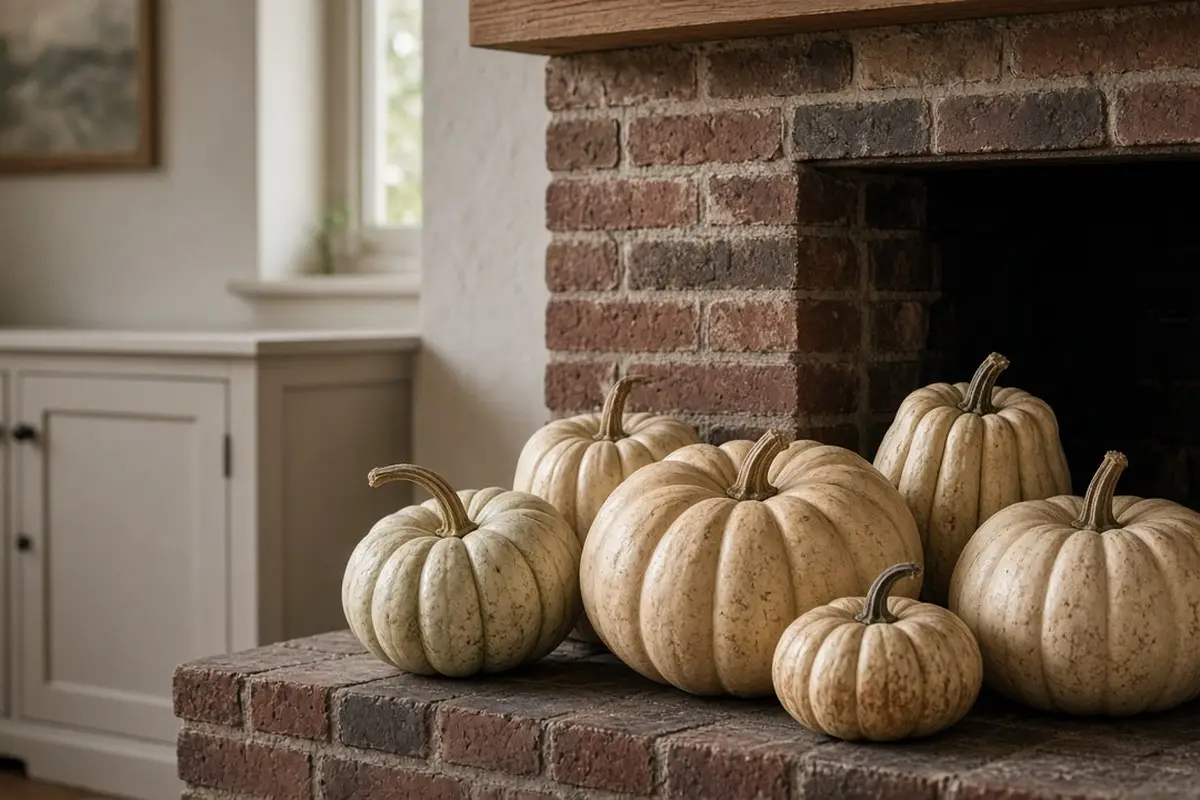
6. Pumpkins on the hearth, not the mantel
Move the pumpkins down to the hearth. A group of three or five pumpkins in different sizes on the floor beside the fireplace grounds the arrangement and frees the mantel for something taller. It also keeps real pumpkins away from the heat of the shelf above a working fireplace. Pale, green, and blue-gray heirlooms look especially good against brick or stone.
Add a basket of firewood or a stack of logs beside the pumpkins if the fireplace is used, and the hearth becomes a working, seasonal vignette. Keep everything well back from the firebox opening and the screen.
Get the look
7. A mirror with branches tucked behind
A large mirror over the mantel reflects light and makes the room look bigger. For fall, tuck a few branches or stems of dried grass behind one top corner of the frame so they reach out across the glass. It is a small change that softens the mirror and introduces the season without adding anything to the mantel surface.
The same trick works on a framed painting. Tuck the stems lightly so they do not scratch the frame or the wall, and remove them before they dry out completely and start to shed.
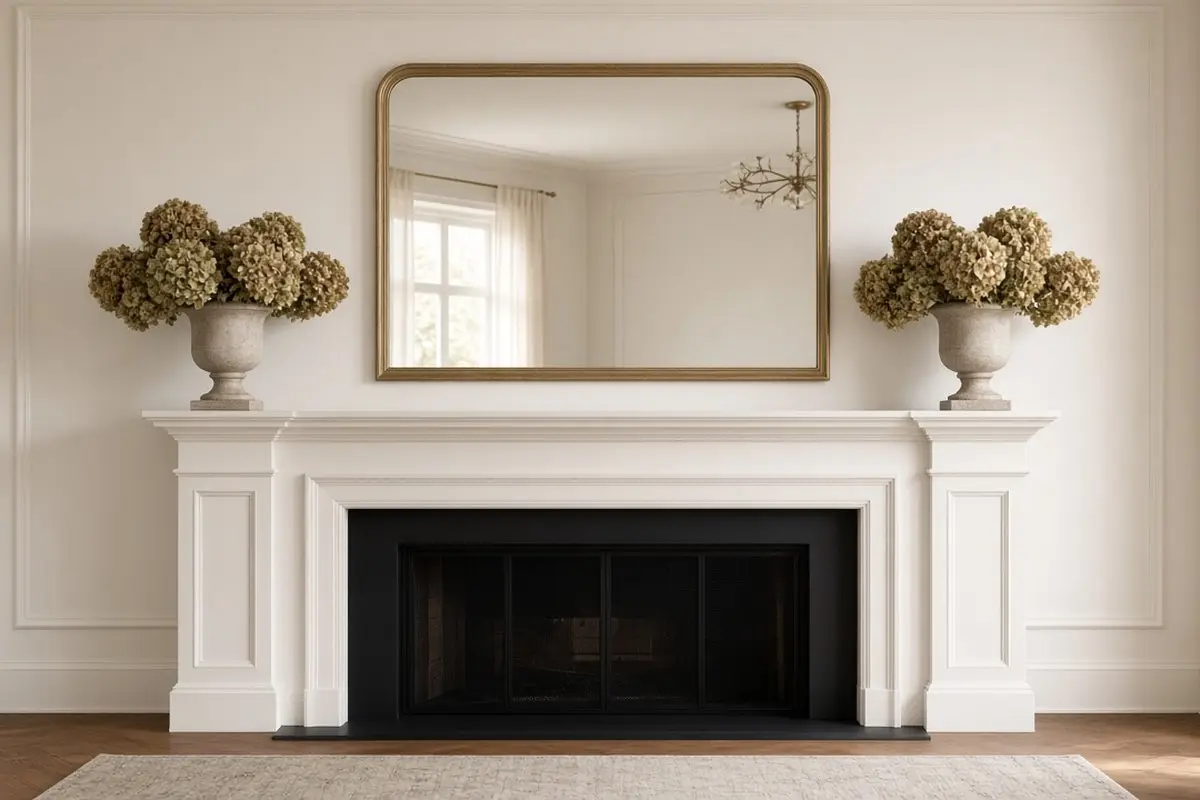
8. A symmetrical arrangement for a formal room
In a traditional living room, symmetry suits the architecture. Place matching pieces at each end, such as two urns of dried hydrangeas, two lanterns, or two topiaries, and a centered piece of art or a mirror between. Keep the center of the mantel itself nearly empty or add one low object, such as a wooden bowl of pinecones.
Symmetry is forgiving because the rules are clear: whatever goes on the left goes on the right. It is a good choice if you find asymmetrical arrangements hard to judge, and it suits paneled walls, classical moldings, and rooms with a pair of matching sofas or chairs.
A mantel with a television above
Many living rooms have a television mounted over the fireplace, which leaves a shallow strip of mantel between the firebox and the screen. Keep everything low here, below the bottom of the screen, so nothing blocks the picture or reflects in it. A slim garland, a row of three small pumpkins, or a few short candles in a line suit this space. Skip tall branches, which would cover the screen, and put any taller seasonal piece on the hearth or on a side table instead. Our guide to fall shelf styling has more low, slim pieces that work in a narrow space.
Keep it safe
If you light fires, check the manufacturer’s clearance guidance for anything combustible on or near the mantel. Dried stems, garlands, and paper should stay well away from the firebox, and real candle flames should never sit directly above a burning fire.
Get the look
Balance without symmetry
Most of these arrangements are asymmetrical, which tends to look relaxed and modern. The trick is visual weight: a tall, full vase on one side balances against a lower group of objects or a wider piece of art on the other. If one end looks heavy, add something to the other end or remove something from the heavy one until it settles.
Color counts toward visual weight too. A dark object feels heavier than a pale one of the same size, so a small black pumpkin can balance a much larger cream vase. Repeating one color at both ends of the mantel helps the two sides feel connected even when the objects are different.
When to change it over
A mantel built around branches, art, and candles transitions easily. In early fall, use green and gold stems. By late October, swap in deeper oak and dried grasses. For Thanksgiving, add a few pinecones and a pair of taper candles in a darker color. When December arrives, replace the branches with evergreens and the mantel is ready for winter without being rebuilt from scratch.
Common questions
How do you decorate a mantel for fall without clutter? Start with an empty mantel, choose one focal piece such as art or a vase of branches, add two or three supporting items, and leave empty space.
What can I use instead of signs on a fall mantel? Branches, art, candles, a simple garland, and natural objects such as pumpkins and pinecones.
How many items should go on a mantel? Usually three to five, including the focal piece. Fewer, larger objects look better than many small ones.
For more inexpensive seasonal pieces, see our budget fall decor guide, and for the rest of the room, our ideas for fall living room seating.