
10 Cream and Brown Bathrooms That Feel Like a Hotel Sink

On this page14 sections
- What makes a bathroom feel like a hotel
- Walnut vanity, cream walls
- Beige zellige behind the sink
- Chocolate towels on a cream base
- Travertine and dark wood
- Cream tub, brown wall
- Wood slat wall and cream tile
- Brown checkerboard floor
- Linen and leather details
- Cream vanity, brown stone top
- Tonal beige with wood accessories
- Choosing the right cream
- Bringing the palette into the rest of the house
- Quick questions
Think about the last hotel bathroom that made you want to linger. Odds are it was not stark white. It was probably cream walls, a warm stone counter, a dark wood vanity, and towels the color of milky coffee. That combination reads as expensive without trying, and it is one of the easiest palettes to bring home.
Cream and brown work because they come from the same family. Cream is a white with warmth in it, and brown is the deep end of the same warm scale. Put them together and you get contrast without any tension. The room feels finished, and it forgives water spots, soap marks, and the slightly yellow light of an evening bath far better than a bright white bathroom does. If you want a cooler take, the gray and blue bathroom post covers the opposite side of the color wheel.
As an Amazon Associate I earn from qualifying purchases.
What makes a bathroom feel like a hotel
One dark anchor. Hotel bathrooms almost always have one heavy element: a dark vanity, a stone floor, or a wood wall. Everything else is light. In a cream and brown room, brown is the anchor and cream is the field.
Matching linens. Hotels buy towels in one color and stack them neatly. Pick one brown or one cream and buy every towel in it. Mixed towels are the fastest way to make a room look like home rather than a suite.
Clear counters. A tray, a soap pump, and maybe one small plant. That is all. Everything else lives in a drawer.
Warm, layered light. Sconces at face height on either side of the mirror, warm bulbs around 2700K, and an overhead light that is not the only light.
1. Walnut vanity, cream walls
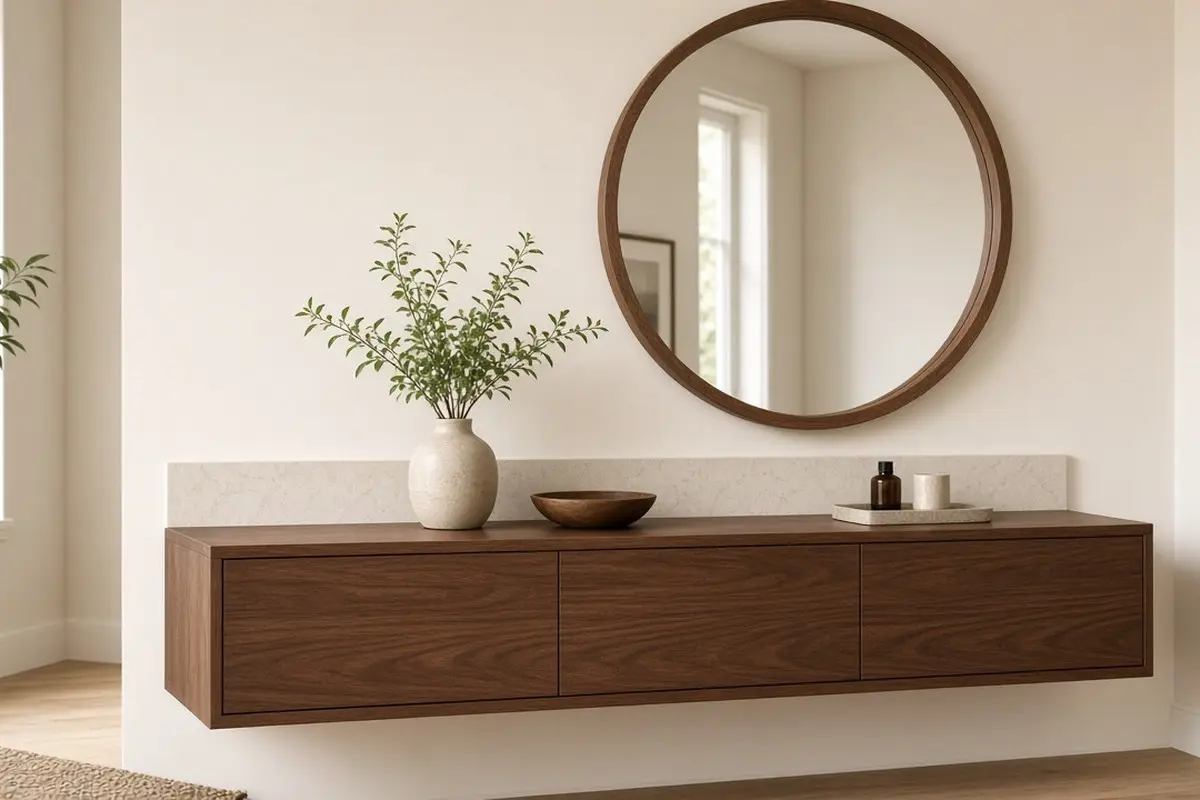
The simplest version: paint the walls a soft cream and install a walnut or walnut-look vanity. The wood grain gives the room its character and the cream keeps it bright. Choose a vanity with a slab front and simple pulls so the wood does the talking. Walnut has a reddish undertone, so it pairs best with creams that lean slightly pink or peach rather than green. If the vanity is a laminate or veneer, check the edges in person or in reviews; a thin edge band peels quickly in a damp room. A matching walnut shelf above the toilet repeats the wood and makes the vanity look planned rather than standalone. Finish the wall with a round mirror in a thin wood or bronze frame so the shape softens the long straight lines of the cabinet.
Get the look
2. Beige zellige behind the sink
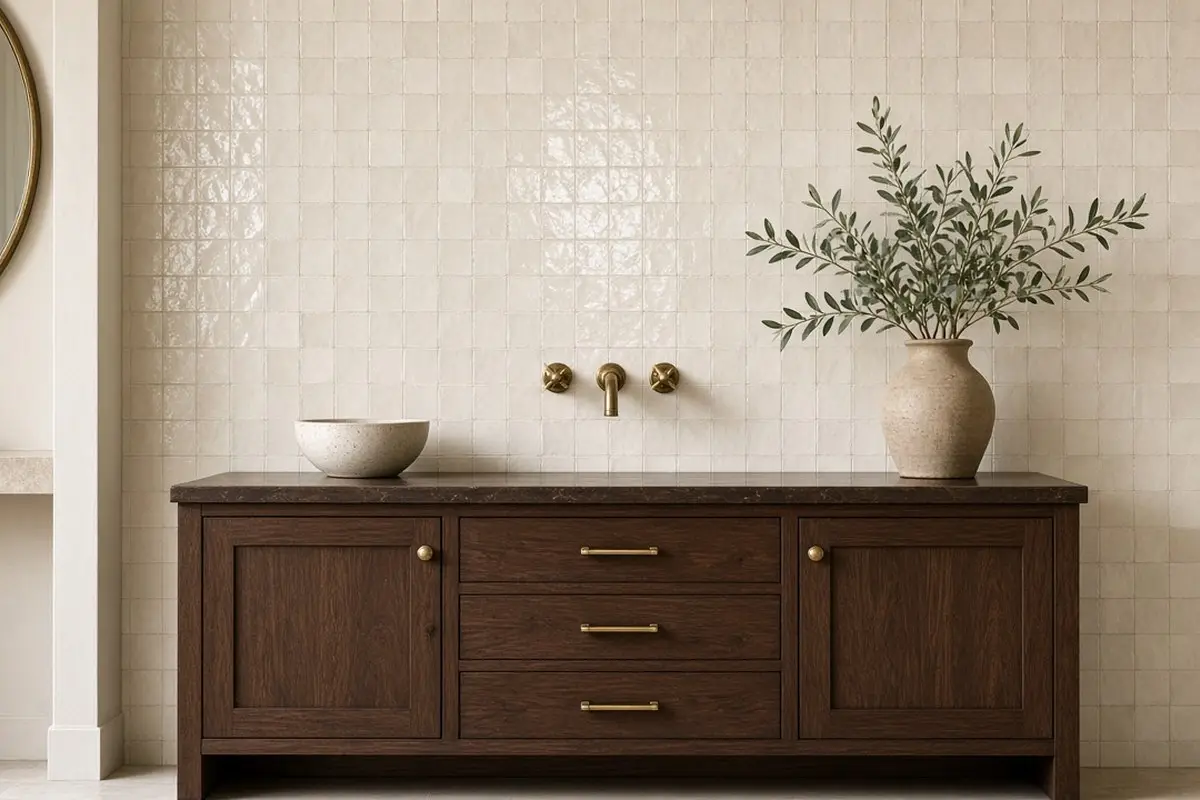
Handmade-look zellige tile in a sand or cream shade adds movement and a soft sheen. Run it from the counter to the ceiling behind the sink and pair it with a dark brown vanity. The glaze catches the light at different angles, so a single wall feels rich even in a small bathroom.
If real zellige is out of reach, ceramic tiles with an irregular glaze give a similar look for much less work. Use cream grout so the surface reads as one soft plane.
3. Chocolate towels on a cream base
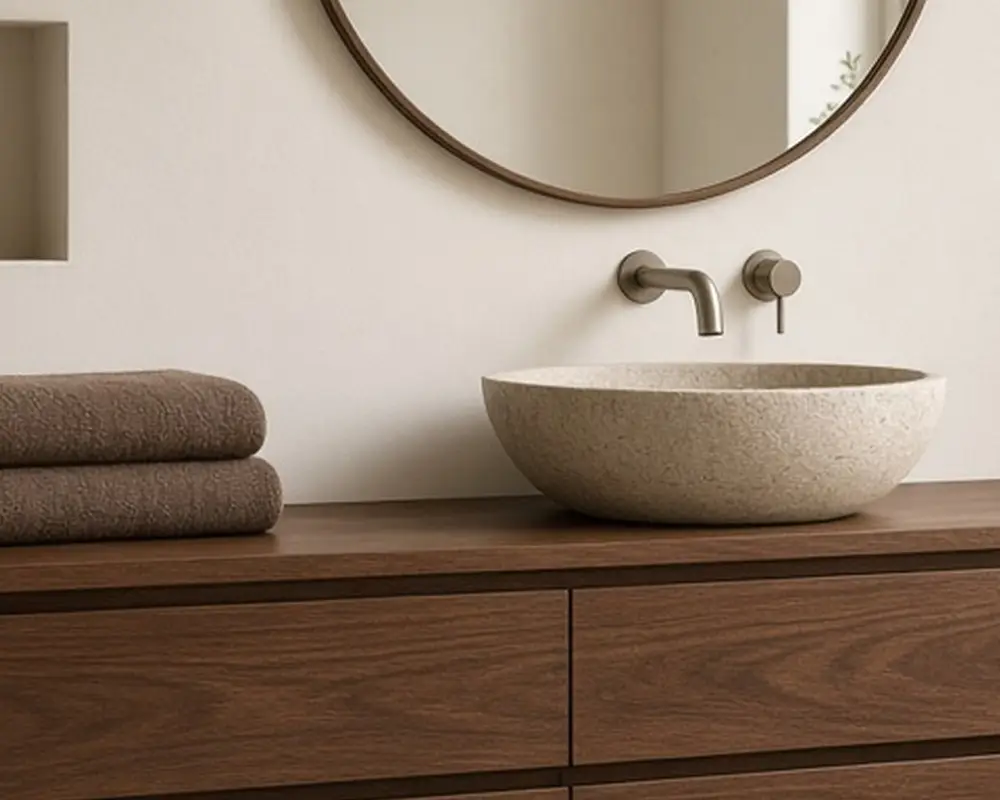
Not ready for a new vanity? Start with textiles. A full set of chocolate brown towels, a matching bath mat, and a brown shower curtain can turn a plain cream or beige bathroom into a warm neutral bathroom in an afternoon. Stack the towels on an open shelf so the color is always on display. Buy at least two full sets so one can be in the wash while the other is out. Brown towels hide makeup and hair dye marks far better than white, which is a quiet practical win. Look for cotton with a dense loop and wash new brown towels alone a few times, since dark dyes can bleed in the first cycles. A brown waffle hand towel at the sink and a plush bath sheet by the tub give two textures in one color, which keeps the look from feeling flat.
4. Travertine and dark wood
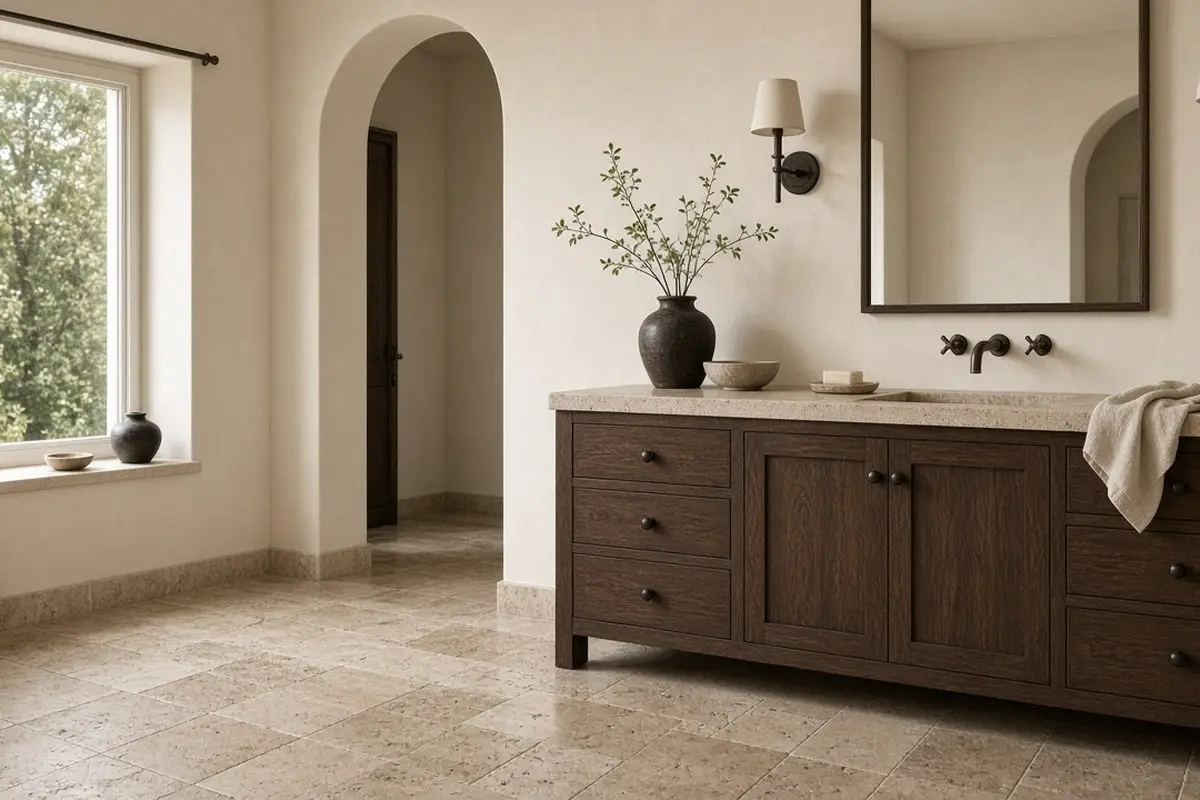
Travertine, with its cream and honey tones, is the classic hotel stone. Use it on the floor or as a vanity top and pair it with dark-stained oak. The natural pits and veins give the room an old-world calm. Seal it well; travertine is porous and needs a little care.
5. Cream tub, brown wall
Flip the usual order. Paint one wall a deep coffee brown and keep the tub, sink, and toilet cream or white. The fixtures glow against the dark wall, and the room feels like a cozy den. Choose an eggshell or satin finish made for bathrooms so the wall can be wiped down. Keep the ceiling cream rather than white; a bright white ceiling against coffee brown can look harsh. A brass or bronze tub filler and a single framed print in a cream mat complete the look. If you are nervous about the color, try a brown wainscot height first, painting only the lower third of the wall, and see how you feel after a month. This works especially well behind a freestanding tub.
6. Wood slat wall and cream tile
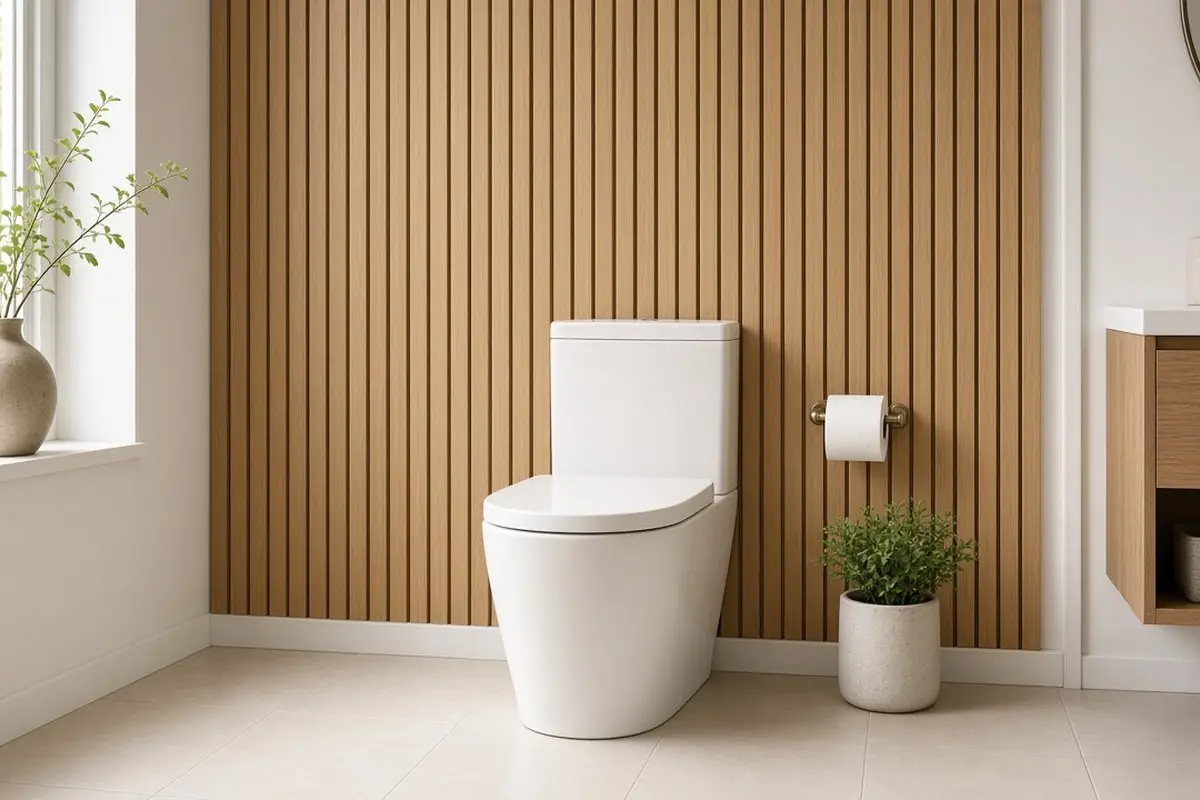
A wood slat panel behind the toilet or along the vanity wall adds warmth and a spa feel. Pair it with cream floor tile and cream walls so the wood is the only dark element. Choose panels rated for humid rooms or seal them well.
7. Brown checkerboard floor
A checkerboard floor in cream and brown is softer than black and white but has the same vintage charm. It works in older homes and powder rooms and pairs well with simple white walls and bronze fixtures.
8. Linen and leather details
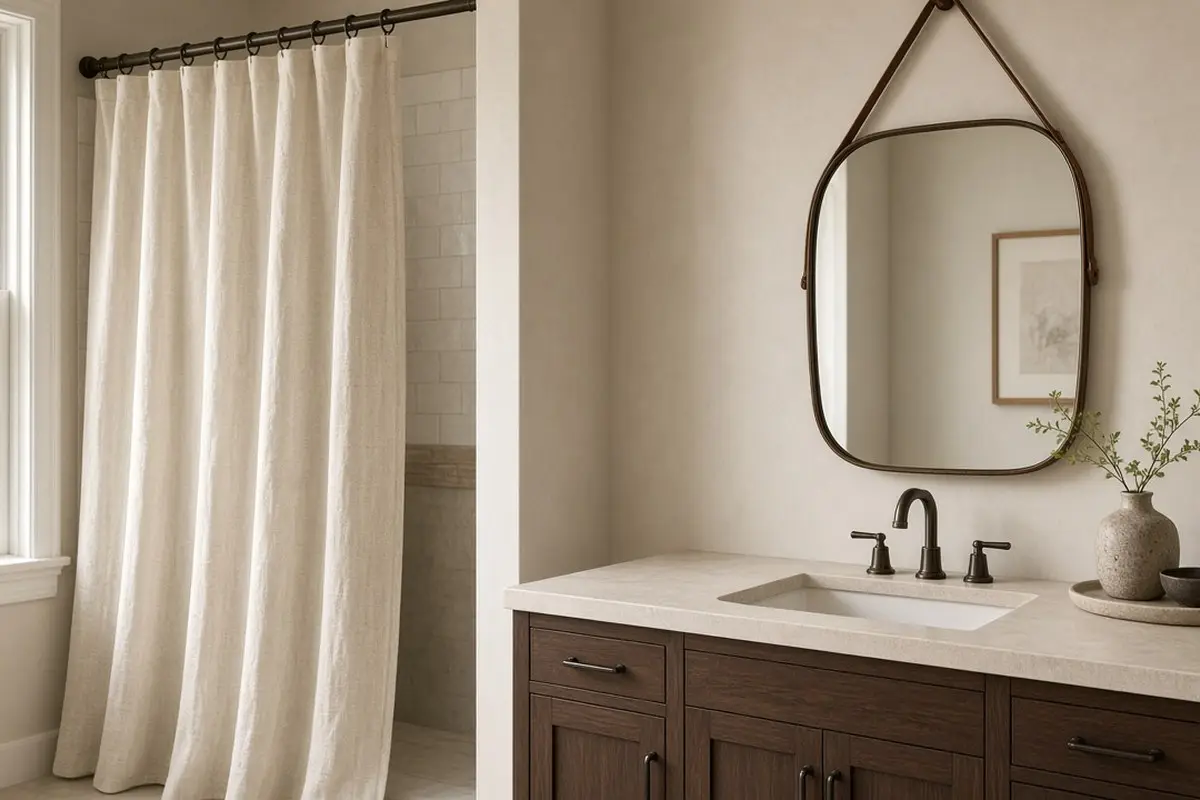
Small materials do a lot. A leather strap mirror, a linen shower curtain, and a leather-wrapped towel hook bring brown in as texture rather than paint. This is ideal for renters who cannot change tile. Leather and humidity need a little care, so keep leather pieces away from direct spray and wipe them dry if they get splashed. Faux leather and cork are good stand-ins in a small bathroom with poor ventilation. A woven jute or seagrass basket for spare rolls adds a third natural texture in the same warm range. If your existing tile is white or gray, these brown details will still pull the room toward warm, especially if you swap a chrome towel bar for bronze.
9. Cream vanity, brown stone top
Reverse it again: a painted cream vanity with a brown granite or brown quartz top. It is a good way to update an older bathroom with a brown counter you cannot replace. Paint the cabinet cream, swap the hardware, and the old stone suddenly looks intentional. Start by cleaning the cabinet with a degreaser, then sand lightly and use a bonding primer before the cream topcoat. Two thin coats of a cabinet enamel hold up to water far better than one thick coat. Pick hardware in oil-rubbed bronze or dark brass to echo the speckles in the stone. This approach is covered in more depth in the small bathroom remodel priorities post, which explains why a vanity refresh often beats a full replacement.
10. Tonal beige with wood accessories
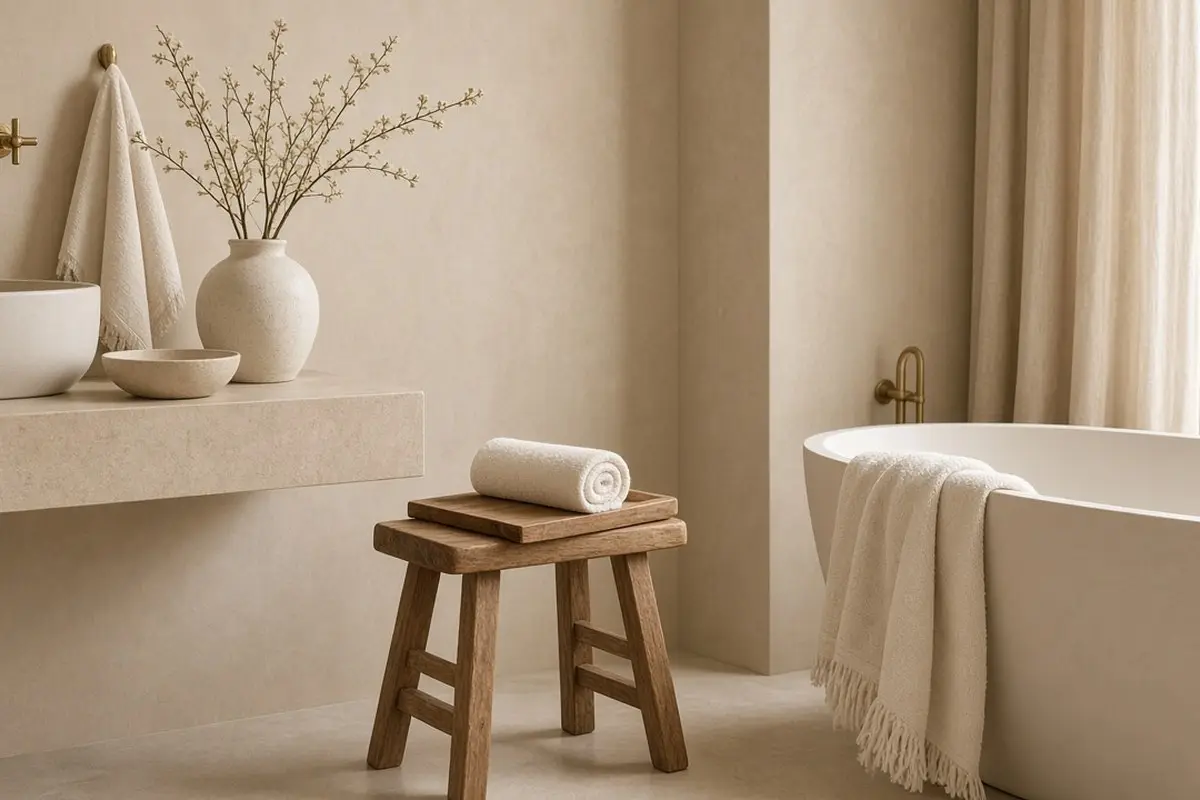
For a quieter room, go fully tonal: beige walls, beige tile, cream towels, and then brown only in small wooden pieces like a stool, tray, and soap dish. The result is calm and very spa-like.

Choosing the right cream
Not every cream works with brown. Creams with a yellow base can turn buttery next to dark wood, while creams with a slight gray or pink base stay calm. Test samples on the wall next to your vanity, look at them in the morning and at night, and pick the one that still looks soft under your bathroom bulbs.
Bringing the palette into the rest of the house
A cream and brown bathroom sits happily next to almost any hallway or bedroom because both colors are neutral. If the bedroom next door is cool gray, add one warm wood frame or brass lamp there to bridge the two rooms. If your living room already uses warm neutrals, the brown and beige living room ideas show how the same palette scales up to a larger space with more furniture.
Quick questions
Will brown make a small bathroom feel smaller? Not if it is used as an anchor. Keep brown to the vanity, floor, or one wall, and keep the rest cream. Dark colors low in the room actually ground a small space and make the ceiling feel higher.
What metal finish suits cream and brown? Aged brass, bronze, and matte black all work. Brass is the warmest and the most hotel-like. Chrome can look cold here, though polished nickel is a softer middle ground.
Do brown towels fade? Cheaper ones can. Wash them in cold water with a detergent made for darks, skip bleach entirely, and dry them on a medium setting. Good towels hold their color for years.
What grout color works best? Match grout to the lightest tile. Cream or warm white grout keeps cream tile reading as one calm surface. Avoid bright white grout, which looks stark next to warm tile and shows stains sooner.
Cream and brown is the palette for anyone who wants a bathroom that feels calm, warm, and pulled together. Pick one dark anchor, keep the rest light, buy matching towels, and clear the counter. That is the whole hotel trick, and it works in any size room.