
9 Small Bathrooms With One Unexpected Material

On this page12 sections
Small bathrooms are often designed to be invisible: white tile, white fixtures, a plain mirror, and nothing to remember. That is practical, but it can feel bland. The opposite approach, filling a small room with pattern and color everywhere, often feels cramped and chaotic.
There is a middle path. It borrows from the way designers treat a small hotel bathroom or a restaurant powder room: one confident decision, everything else calm. Keep the room simple and neutral, then add one unexpected material in one place. A wall of glossy green tile, a vanity top in terrazzo, a cork floor, a copper sink. Because everything else is quiet, that single choice becomes the personality of the room. It feels deliberate and memorable rather than busy. The nine materials below each work as that one bold move in a small bathroom. For color choices that support them, the bathroom colors with white fixtures post is a good next read.
As an Amazon Associate I earn from qualifying purchases.
How to use one bold material
Choose one surface and commit. Indecision is what makes small bathrooms look busy; a single firm choice is what makes them look designed. The best places for a bold material in a small bathroom are the wall behind the vanity, the floor, the vanity top, or the shower wall. Use it on that one surface only, and keep the others plain.
Repeat a color from the material once or twice elsewhere in the room, perhaps in towels or a print, so it connects to the space. And keep the fixtures simple, so they do not compete.
Think about light, too. Glossy materials bounce light and suit dark, windowless bathrooms. Matte and textured materials, like cork, wood, and limewash, absorb light and feel calm and cozy. In a small room with little daylight, a reflective feature is usually the better choice.
Finally, test before committing. Order samples, tape them up in the room, and look at them in morning and evening light for a few days. Bold materials can look very different in a small bathroom than in a large showroom.
Keep everything else quiet
The supporting cast matters as much as the star. Choose white or very simple fixtures, a plain mirror, and one metal finish for the faucet, towel bar, and hardware. Towels in white or a color pulled from the feature material keep the palette tight. Skip patterned shower curtains, busy bath mats, and lots of small accessories; they dilute the impact of the one bold choice.
Lighting should show off the material. A sconce or a picture light aimed at a tiled wall makes glossy tile shimmer. A warm bulb flatters wood, cork, and copper. A cool, harsh ceiling light flattens almost everything, so avoid it where you can. The small bathroom more light post covers lighting a small bathroom well.
1. Glossy handmade tile
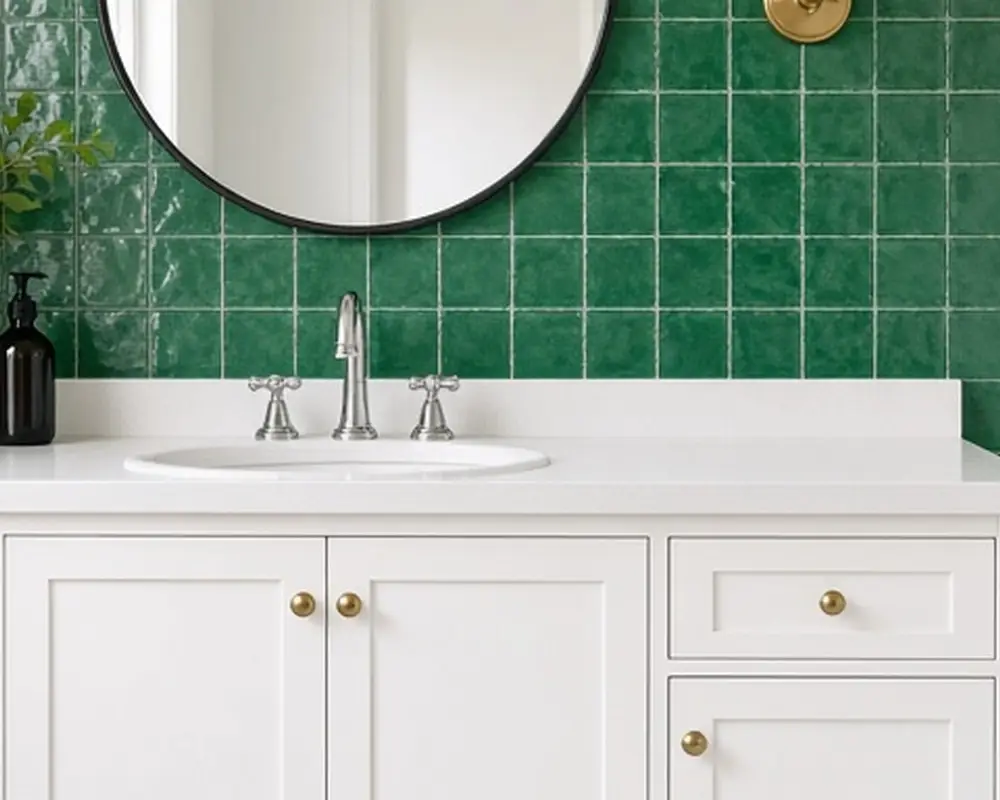
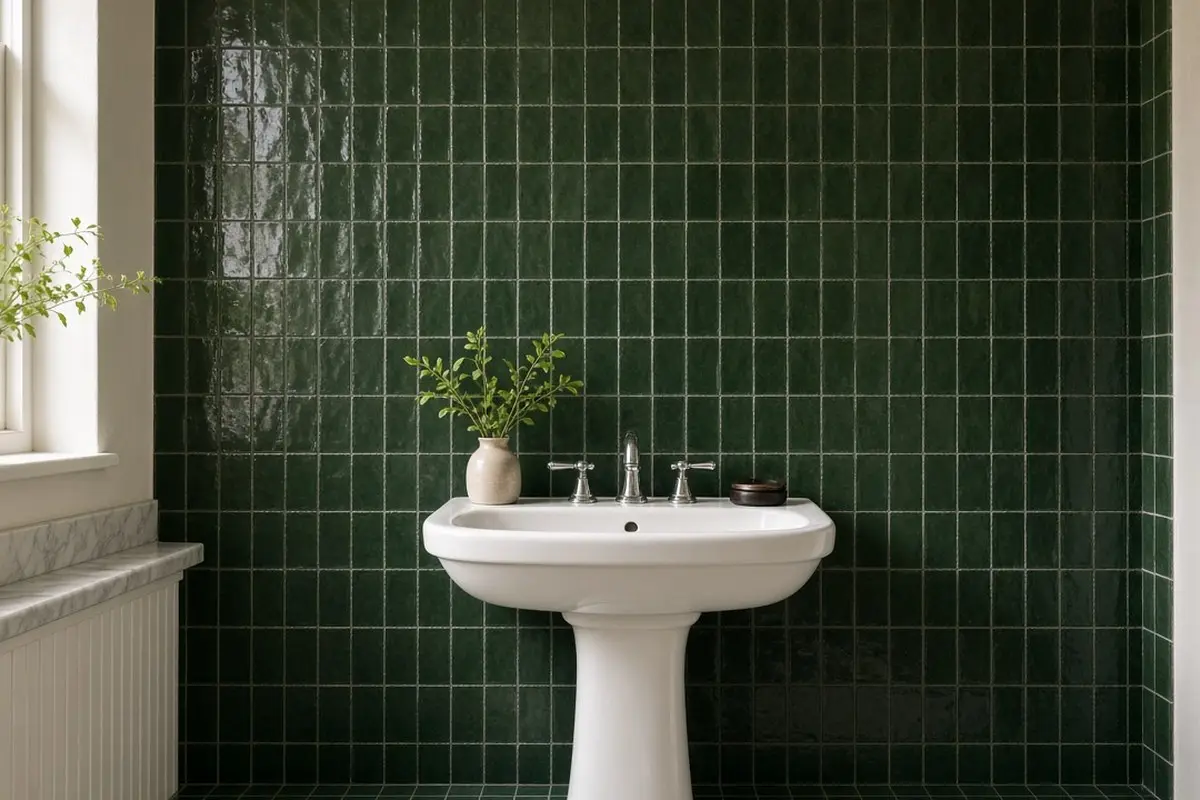
Handmade or zellige-style tile in a strong color, such as deep green, cobalt, terracotta, or ochre, transforms a vanity wall. The glossy, uneven surface catches light and makes a small room sparkle. It also hides water spots better than flat, perfectly smooth tile, which makes it practical around a busy sink.
Use it on the wall behind the sink, from counter to ceiling, for the most impact. Keep the rest of the walls white or a pale tint of the tile color.
Handmade tile varies from piece to piece, which is part of its charm. Lay the tiles out on the floor before fixing them, mixing boxes so the color spreads evenly. Use a grout color close to the tile or a soft white, depending on whether you want the pattern of the grid to show. In a small room, a matching grout looks calmer.
Get the look
2. Terrazzo
Terrazzo, with its speckles of stone and glass, adds playful pattern in a single material. Use it as a vanity top, a floor, or a tiled wall. It is durable, easy to clean, and hides small splashes and specks of toothpaste well, which makes it far more practical than it first looks. Choose a palette that matches the room.
Terrazzo comes in endless combinations, from soft white with gray chips to bold pink with green and black. In a small bathroom, choose a base color close to the walls and let the chips add the interest. A terrazzo vanity top is often the easiest way in; for a smaller step, terrazzo accessories like a soap dish or tray hint at the look.
3. Cork
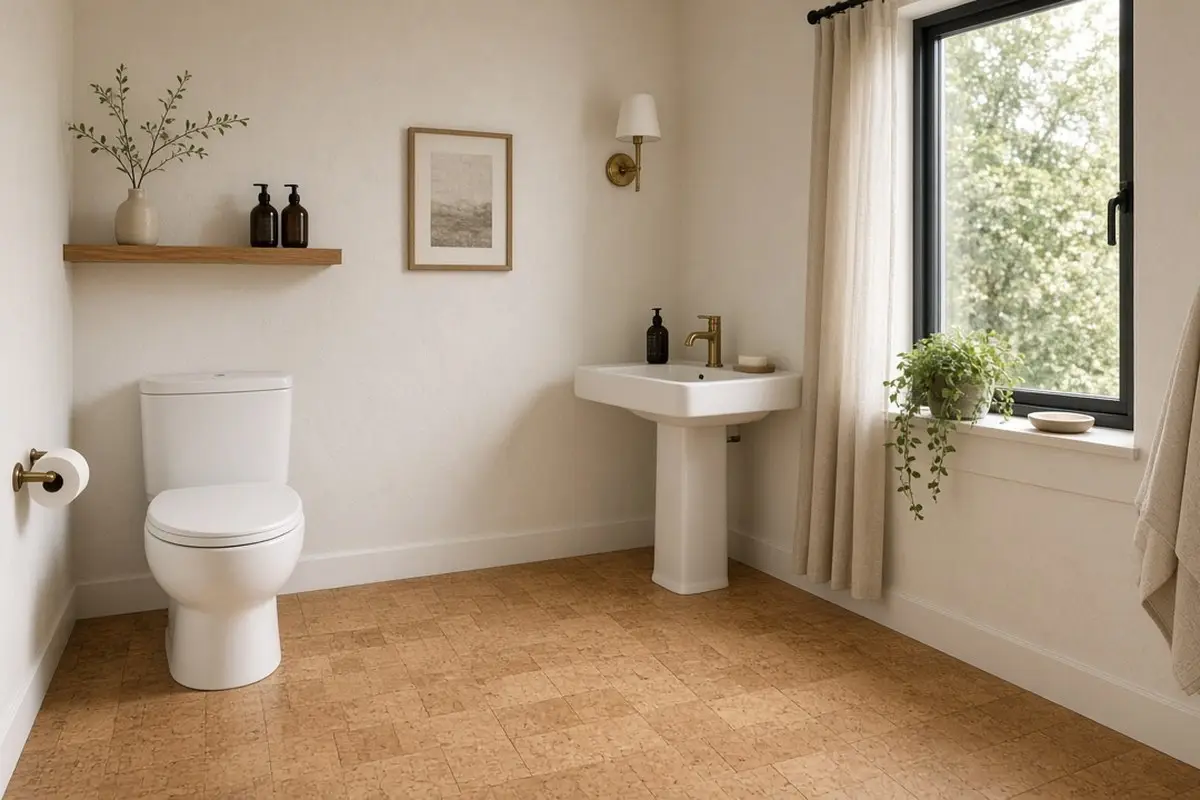
Cork is warm, soft underfoot, naturally water-resistant when sealed, and unusual in a bathroom. It is also renewable, since cork is harvested from the bark of living trees, and it dampens sound in a room full of hard surfaces. Use cork tiles on the floor or a wall for a cozy, natural look. Its honey tones suit white and green.
Cork is warm to the touch, which makes it lovely on a bathroom floor in winter. It must be properly sealed, with several coats of a water-based polyurethane, and resealed every few years. Wipe up standing water promptly. It suits bathrooms used by adults more than splash-heavy family bathrooms.
4. Copper or brass sink
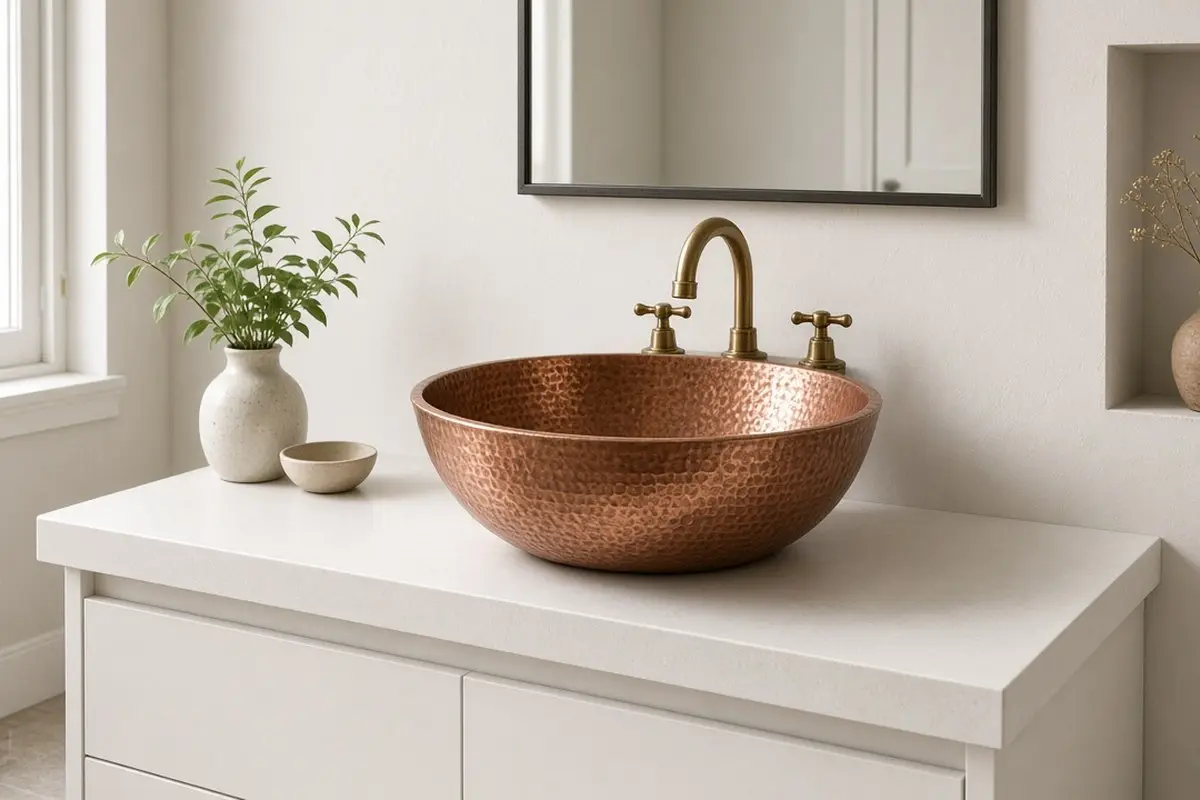
A hammered copper or brass sink is a striking single feature. It develops a patina over time.
You can let the patina develop naturally for a warm, aged look, or polish the sink regularly to keep it bright. Pair it with a simple faucet in a matching or contrasting metal, and keep the rest of the vanity plain. Copper and brass look especially good against white, green, and deep blue walls.
5. Bold wallpaper
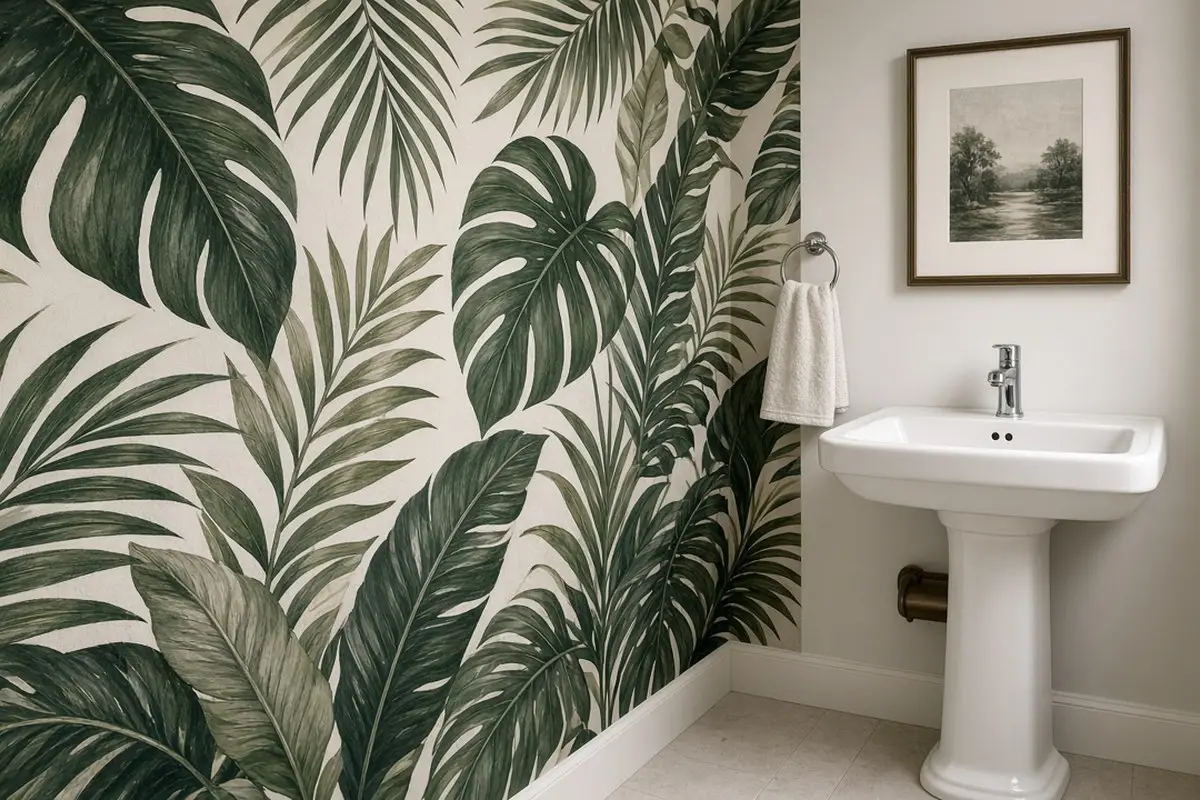
A water-resistant wallpaper in a large pattern on one wall, away from the shower, adds instant character.
Powder rooms are the ideal place for bold wallpaper, because there is no shower and little steam. In a full bathroom, choose a vinyl or specially coated paper and keep it away from direct splashes. A large-scale pattern looks better than a small busy one in a tiny room; it reads as one strong statement.
Get the look
6. Marble with strong veining
A dramatic marble, like a green or dark-veined stone, on the vanity top makes a small bathroom feel luxurious.
Because a small vanity top uses very little stone, you can often afford a more dramatic slab than you would for a kitchen. Remnants from stone yards are a good source. Seal natural marble regularly, and wipe off toothpaste and cosmetics promptly to avoid etching.
Get the look
7. Painted ceiling
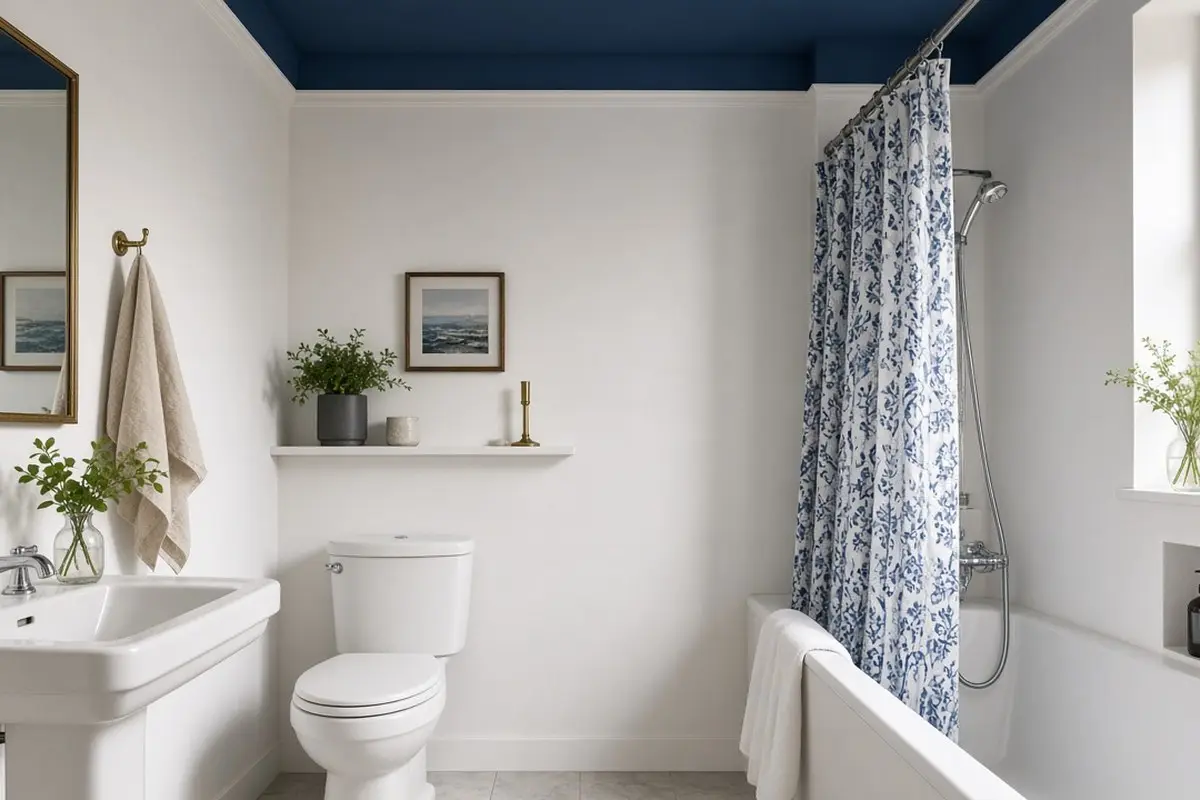
Paint the ceiling a strong color, like deep blue or terracotta, while keeping walls white.
The ceiling is the most overlooked surface in a small bathroom and often the easiest to paint. A dark ceiling makes the room feel cozy and enclosed, like a jewel box; a bright one adds cheer. Use a mildew-resistant bathroom paint, and run the fan during showers.
Get the look

8. Wood paneling
Sealed wood slats or tongue-and-groove on one wall add warmth, like a sauna.
Choose a wood that handles moisture, such as cedar, teak, or thermally treated pine, and seal it with a marine varnish or oil. Keep it away from direct water in the shower. Vertical slats make a low ceiling feel taller.
9. Patterned floor tile
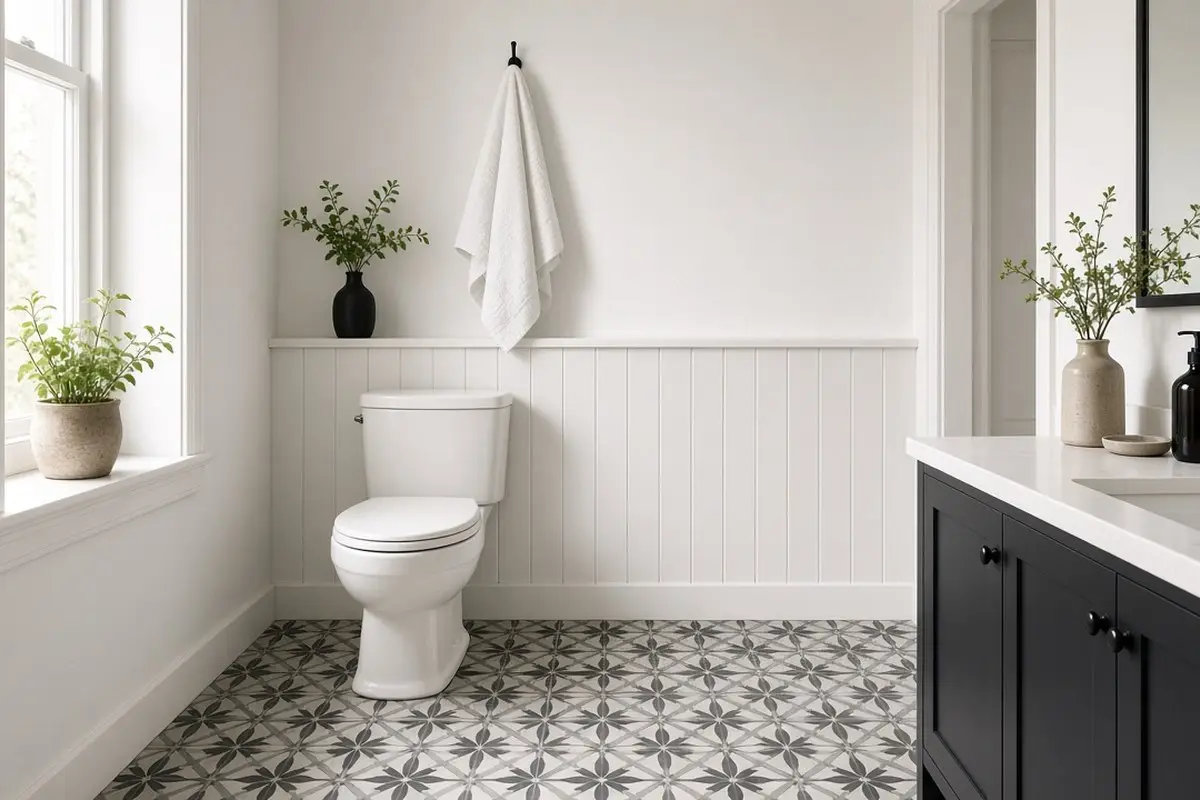
Encaustic-look cement tiles on a small floor add bold pattern underfoot.
A small floor uses few tiles, so a bold pattern is affordable here. Black and white is classic; blue, green, or terracotta patterns feel warmer. Porcelain tiles with a printed pattern are easier to care for than real cement tiles, which need regular sealing.
Get the look
FAQ
How do I add personality to a small bathroom?
Use one bold material on one surface.
Will a bold material make my bathroom look smaller?
Not if the rest is simple.
What is the best bold material for a rental?
Peel-and-stick tile or wallpaper. The budget bathroom updates post covers more.
Can I combine two bold materials?
It is risky in a small room. If you do, keep them in the same color family and on different surfaces, such as a patterned floor and a plain colored wall tile.
Where should the bold material go in a powder room?
On the wall you face when you walk in, usually behind the sink. It is the first thing guests see and the place where a strong material makes the biggest impression.
Is a bold material a good idea if I plan to sell?
Choose something removable or easy to change, like wallpaper, paint, or a vanity top, rather than a full tiled floor. Buyers usually respond well to one tasteful feature, but not to a room full of them.
What colors work best for a bold bathroom tile?
Deep green, cobalt, terracotta, ochre, and black all look striking against white. Choose a color that appears somewhere else in your home so the bathroom feels connected to the rest of the house.
How do I choose between tile and wallpaper?
Tile is best near water and lasts for decades. Wallpaper is cheaper, easier to change, and best in powder rooms or on walls away from the shower.
One bold material gives a small bathroom character. Pick it carefully, give it the best spot, and let it shine.