
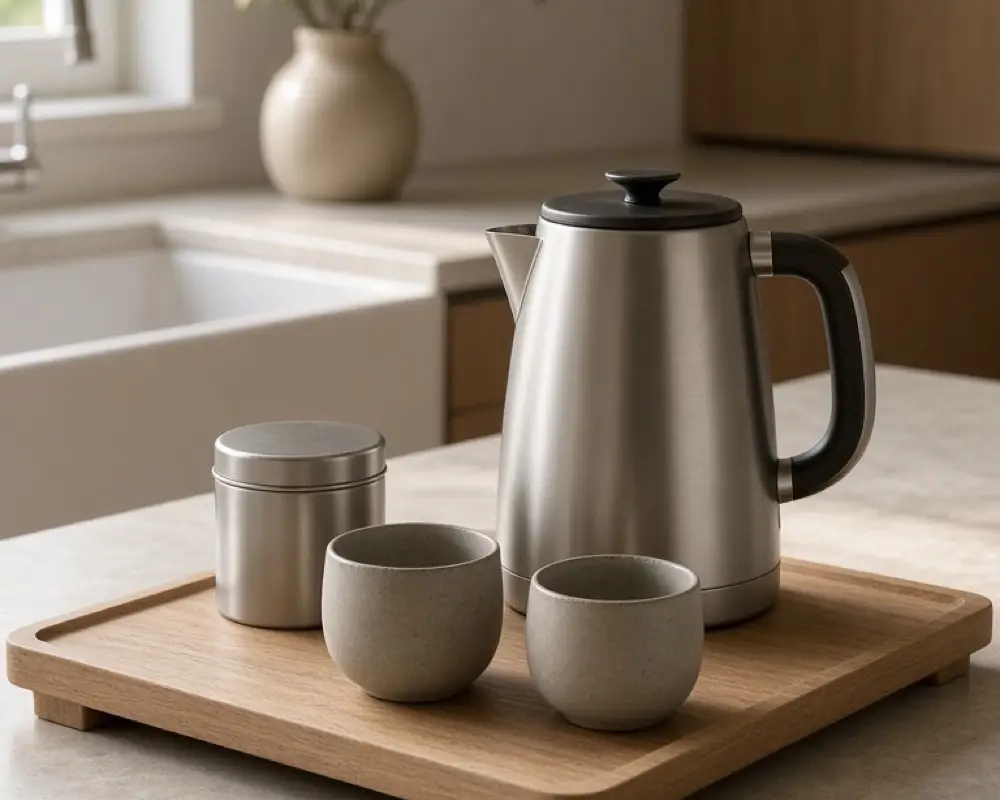
8 Tea Stations That Are Not Just a Second Coffee Bar

On this page10 sections
- Start with the kettle, not a brewer
- Close the tea in a tin
- Use a cup you can hold, not a mug wall
- Give the wet spoon a dish
- Steep in a pot or a basket, then remove it
- Keep honey or sugar, not a syrup flight
- Put the tray where steam will not hit the wall
- Keep it a separate tray from the coffee
- Tips Before You Start
- FAQ
Tea station ideas copied from a coffee bar end up with a machine you do not use and a row of syrups. Tea needs a kettle, a tin you can close, a strainer, and a cup that is wide enough to cool a sip. It can share a kitchen with coffee. It should not be the coffee tray with the word tea written on a jar.
If the counter is the one you also cook on, the tea things follow the same 18-inch rule as the coffee corner. One tray. Off the prep run described in the very small kitchen layout. The difference is what sits on the tray. Measure the tray before you buy the kettle. If the kettle, the tin, and the cup do not fit on a 12 by 15 inch tray with the lid open, the set is too big for a shared counter. A station that only works when the counter is empty is a display you will stop clearing. Keep the spare tin in the cabinet.
As an Amazon Associate I earn from qualifying purchases.
1. Start with the kettle, not a brewer
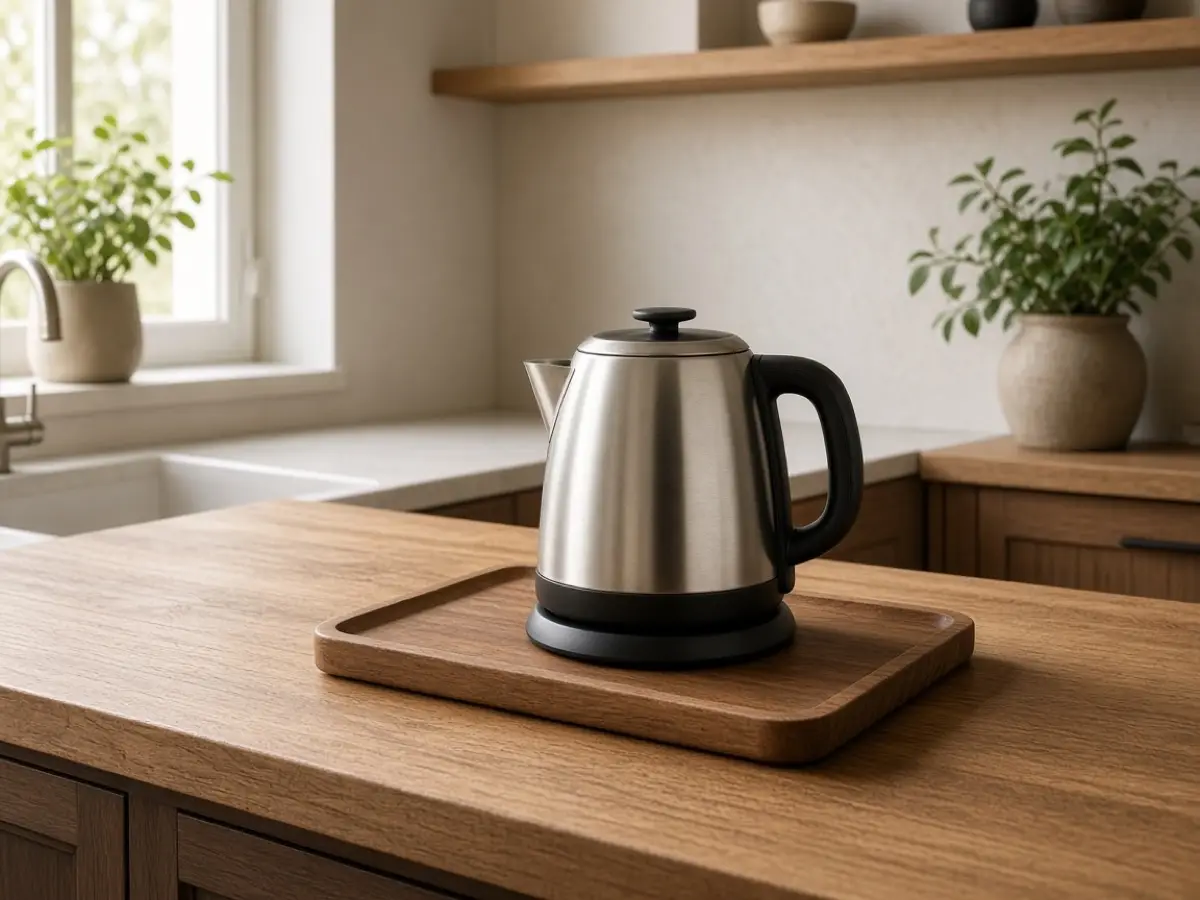
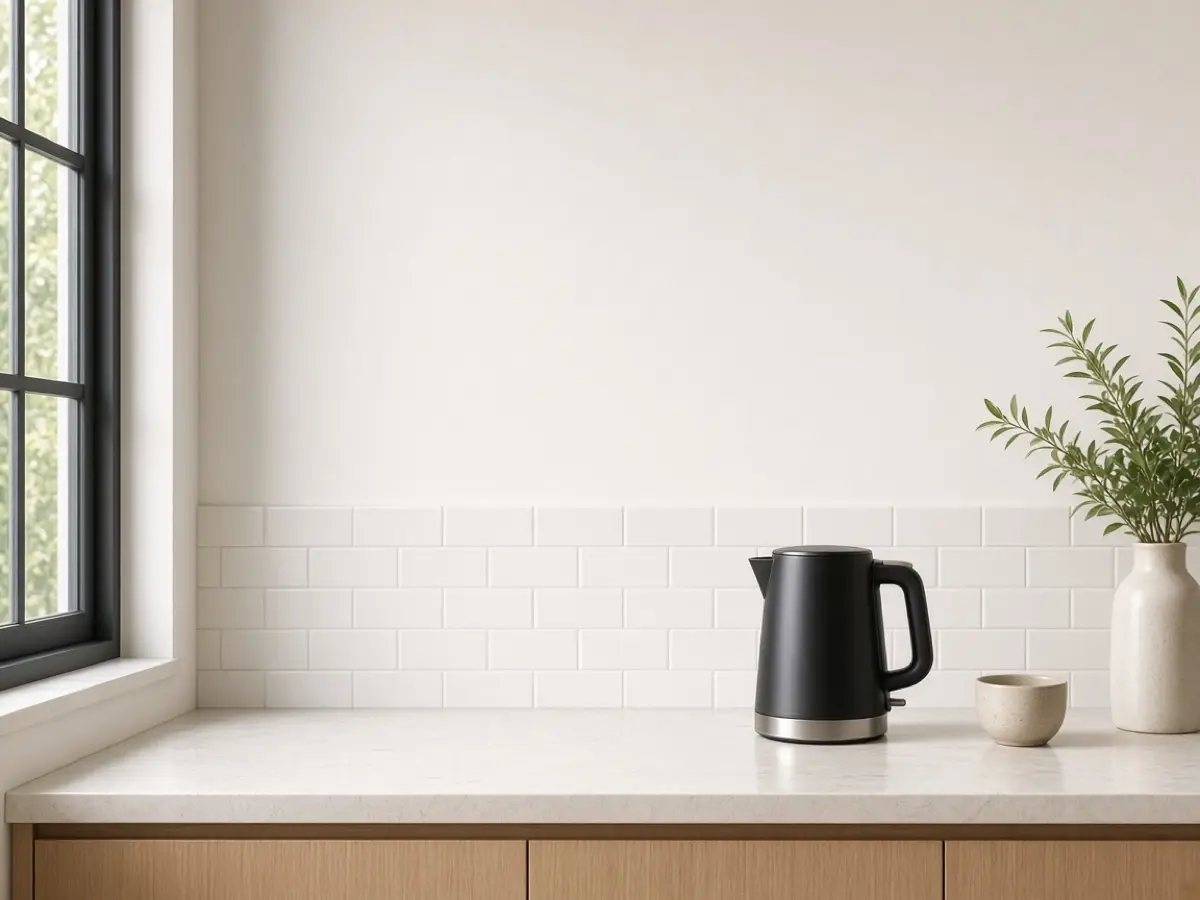
An electric kettle that holds about a liter is the whole appliance. You do not need a machine that steeps for you unless you already love it and it fits the strip. A kettle boils, you pour, and the counter is free again. Pick one with a water-level window so you are not boiling a full pot for one cup. A gooseneck helps if you pour over leaves. A standard spout is fine if you use bags.
Set the kettle on a trivet if the tray is wood. The base gets hot. Leave cord room along the back, the same way the coffee cord stays off the front edge of the counter. If coffee already owns the only outlet, the kettle can live at the stove you have and come to the tray for the pour. Do not buy a second machine to solve a plug.


2. Close the tea in a tin
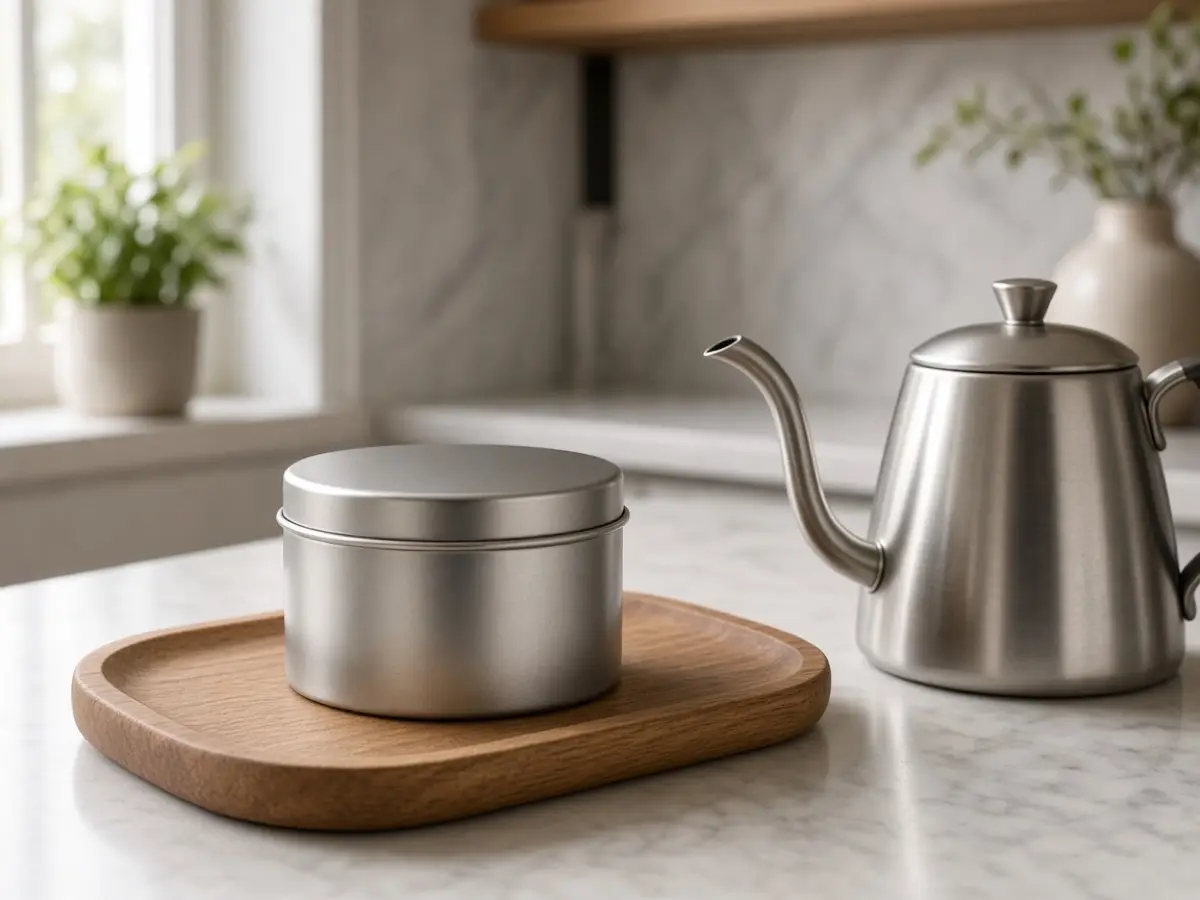
Light and air stale tea faster than they stale a lot of other pantry foods. A tin with a tight lid, no taller than the kettle, holds the one tea you drink this month. A glass jar looks pretty and lets the leaves fade. If you want to see the leaf, open the tin. The rest of the time it is shut. Skip a rack of ten canisters. That is a shop, and a shop does not fit next to dinner prep.
Write the name on a piece of tape on the bottom if you have more than one tin in the cabinet. On the tray, one tin is enough. Bags, if you use them, live in the same tin so the box is not a second object. When the tin is empty, you buy more. You do not line up backups “so it looks full.”


3. Use a cup you can hold, not a mug wall
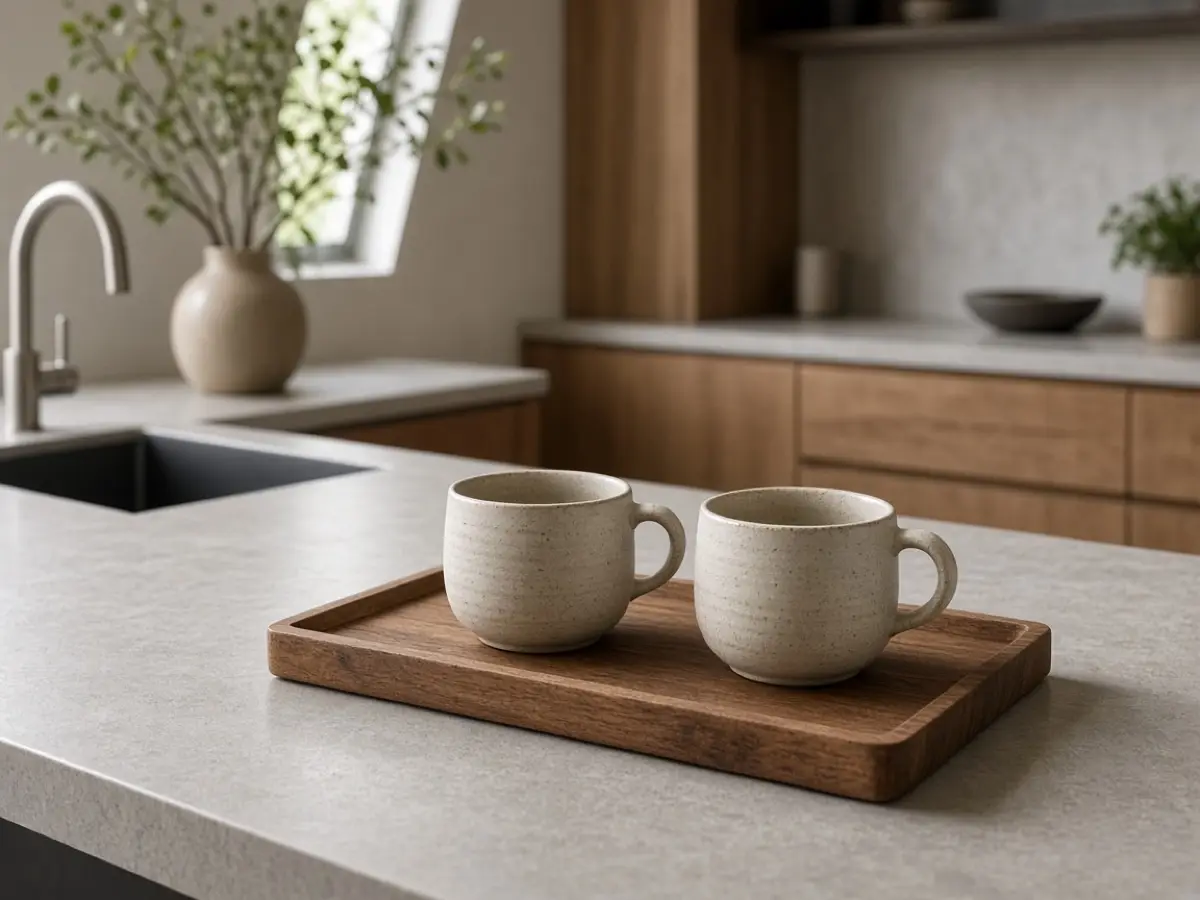
A tea cup or a small bowl-shaped cup lets the tea cool and gives you a place to see the color. A wall of coffee mugs says coffee even when the drink is tea. Hang two cups if you have hooks. Do not hang eight. The coffee post already claimed the mug hooks if coffee lives here too. Tea can use a different hook, or the cups can sit on the tray stacked by two.
Choose a cup that is comfortable at the rim, not a thimble. About 8 to 12 ounces is a normal cup. A handle that stays cool matters if you pour water that is still near a boil. Thin porcelain looks right and chips. A thicker stoneware survives a shared kitchen. Pick the one you will actually put in the dishwasher. If the cup does not stack, you only own two.


4. Give the wet spoon a dish
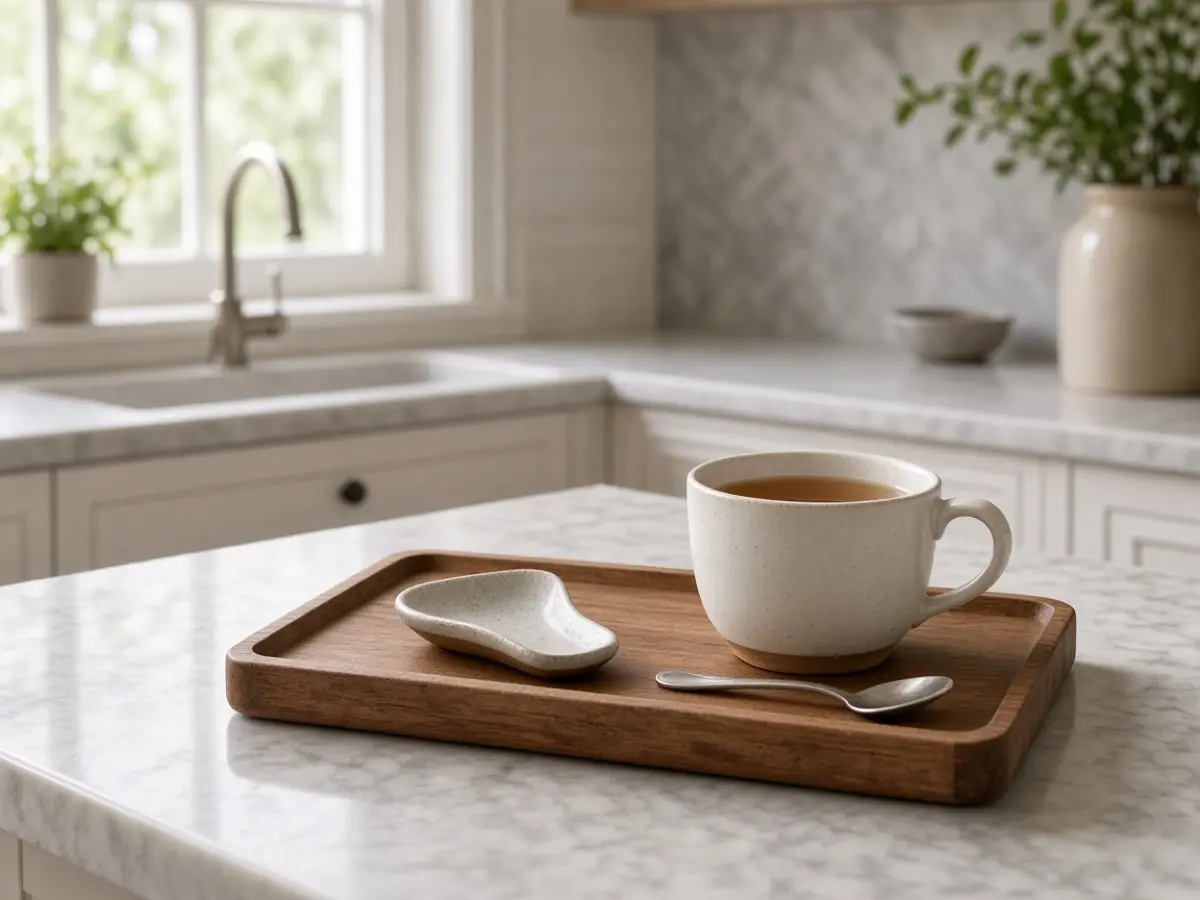
Tea makes a wet spoon, a drip from the pot, and sometimes a leaf on the tray. A spoon rest or a tiny dish, about 3 inches across, keeps that off the wood. The coffee station often ignores this because a drip goes in the sink. Tea is slower, and the spoon sits. Without a dish, the tray stains in a ring you will notice in a week.
Empty the dish when you empty the cup. A rest full of yesterday’s honey is how a calm tray becomes sticky. Rinse it with the cup so the job is one trip to the sink, not a second project later. If you use bags, the dish is also where the bag sits so it does not weep on the counter. One dish. A stack of tasting bowls is for a class, not a Tuesday.


5. Steep in a pot or a basket, then remove it
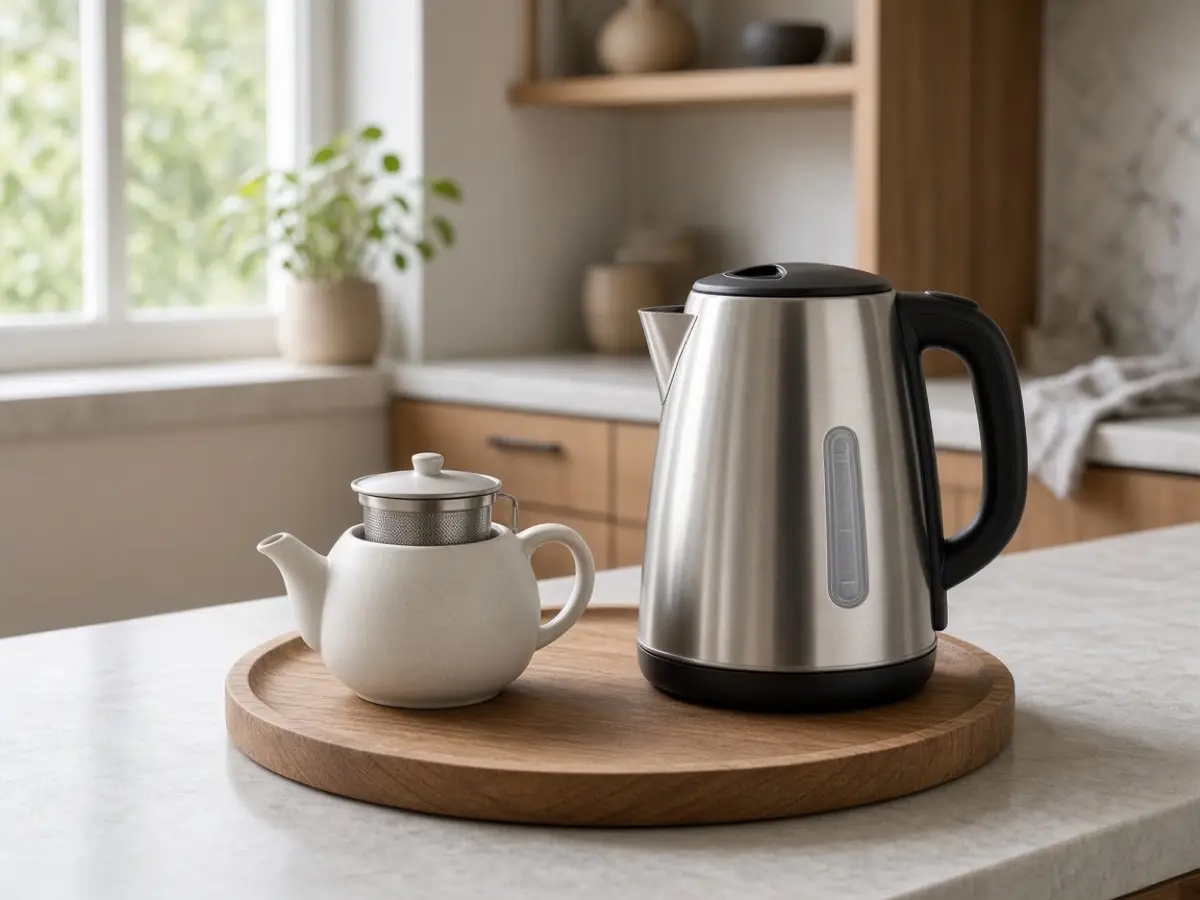
Loose leaf in the cup keeps steeping until the tea is bitter, unless you scoop it out. A small pot with a basket, or a basket that sits in the cup and lifts out, fixes that. The pot can be 16 ounces, small enough to live on the tray beside the tin. Rinse it when you rinse the cup. A pot left with leaves until evening smells like the cabinet.
Do not buy a pot so large it becomes the centerpiece. The kettle is the center. The pot is a tool. If you only use bags, you still need a place for the used bag that is not the sink edge. The spoon dish from the last idea covers it. Skip the gadget that spins, lights up, or times your tea unless you will use it every day. A clock you already own is a timer.


6. Keep honey or sugar, not a syrup flight
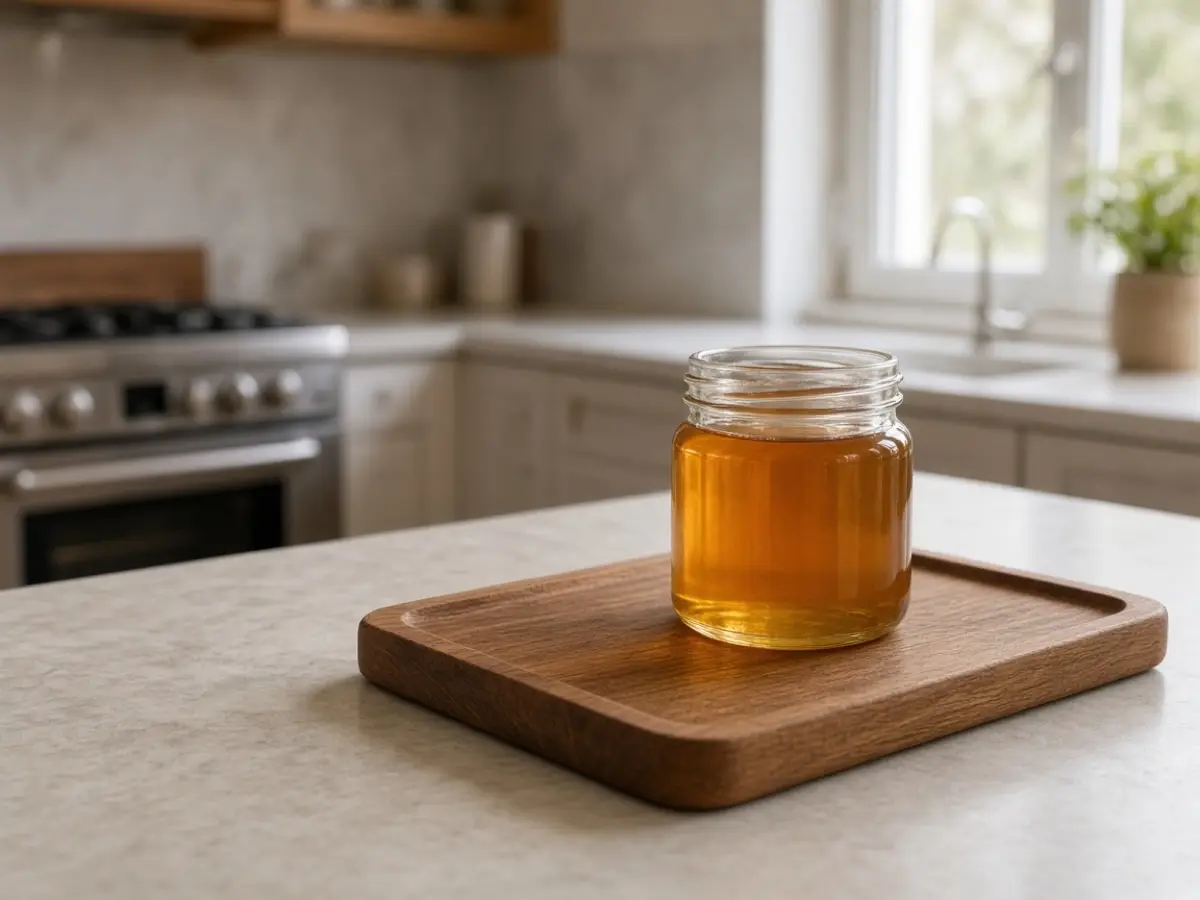
One small jar of honey or a lidded sugar bowl is the sweetener. A flight of flavored syrups belongs to the coffee bar you are not building. Honey lives better at room temperature in a jar you can wipe. A sticky jar on a wood tray will mark it. Put the jar on the spoon dish’s side of the tray, and wipe the lip.
If you take milk, a small pitcher that goes back to the fridge is enough. Do not put a milk carton on the tray. Tea is not a diner station. The pitcher should be small enough to hide behind the tin when you are not using it. Lemon, if you want it, is a wedge you cut when you pour, not a bowl of lemons living next to the tin. The tray should still lift with one hand when you need the counter for dinner.


7. Put the tray where steam will not hit the wall
A kettle throws steam. Under a cabinet, that steam hits the door and the underside and, over months, the finish. Leave a few inches of open wall above the kettle, or pull the kettle forward while it boils and push it back after. If the only spot is under a cabinet, open the door while it boils or accept that you will wipe the underside. Know which you are choosing.
Do not park the kettle beside a paper recipe or a wicker basket. Steam wilts both. The kitchen wall you just painted does not want a constant cloud on one spot. A tile or a painted band behind the kettle is a better back than bare drywall if you boil every morning. If the wall is the plain one you left alone, a small sheet of metal or a tile on a lean is enough of a shield.


8. Keep it a separate tray from the coffee
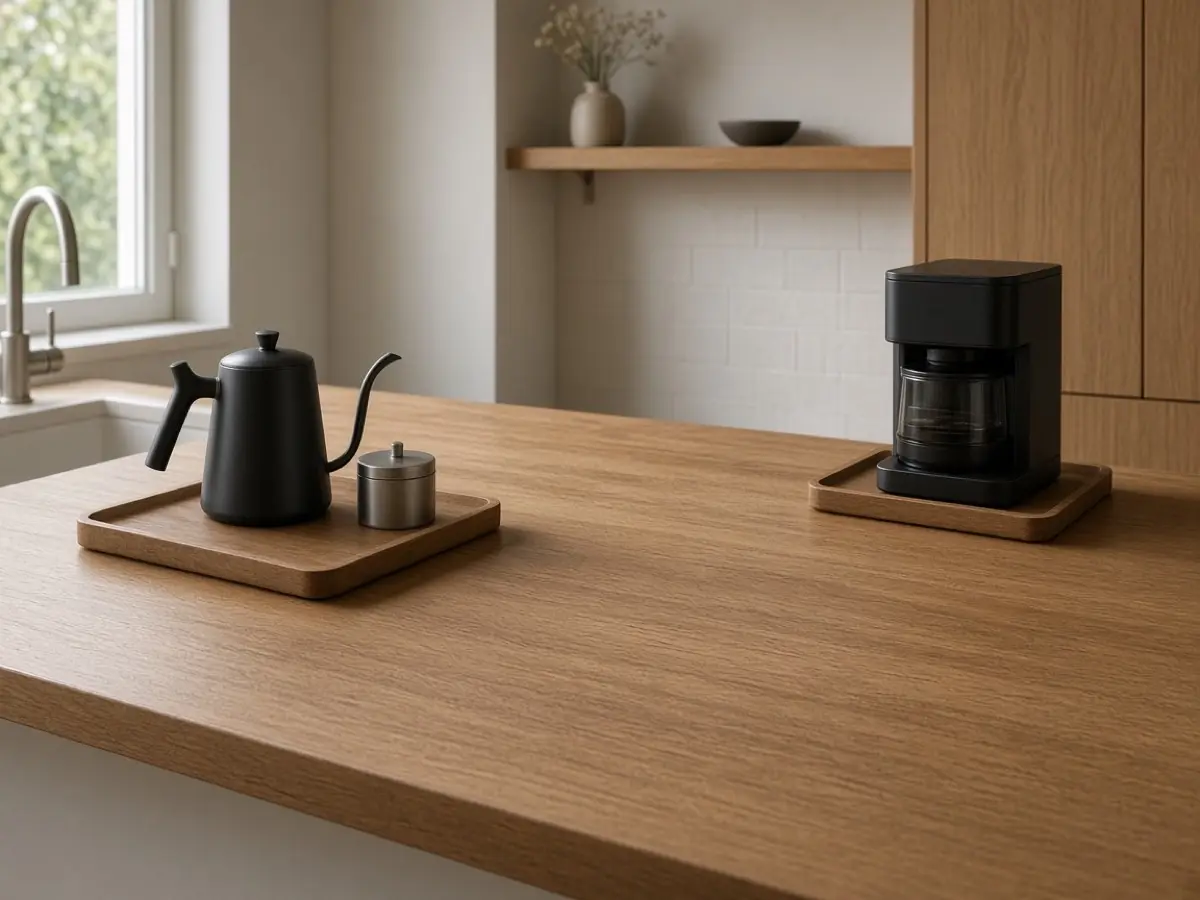
If both drinks live in the kitchen, they get two trays or they get one drink on the counter and the other in a cabinet. A shared tray becomes a pile of beans, bags, and spoons, and then neither station is the one you meant. The coffee tray can stay at its end of the counter. The tea tray can be the one you bring out and put away, especially if tea is the evening drink and coffee is the morning one.
When tea is done, the cup is washed, the tin is closed, and the tray is wiped. That reset is shorter than a coffee clean because there is no grounds bin. Use that advantage. A tea station that stays out all day in a small kitchen is just another appliance. A tray you can clear is the version that fits the house.


Tips Before You Start
- A kettle and a tin are the station. A brewer is optional and usually extra.
- Close the tea. A clear jar on the counter fades the leaf.
- Use a cup and a strainer, not a wall of coffee mugs.
- Give the wet spoon a dish and empty it with the cup.
- One sweetener. Syrups are a different drink.
- Keep the tea tray separate from the coffee tray so they do not merge.
FAQ
How is a tea station different from a coffee bar?
Coffee is a machine, beans, and mugs. Tea is a kettle, a closed tin, a strainer or a small pot, and a cup. It should not inherit the syrups and the mug wall.
Where should I put a tea station in a small kitchen?
On a tray at the end of the counter, off the prep run, with space above the kettle so steam does not live under a cabinet. If coffee already has the outlet, boil at the stove and pour at the tray.
What do I need for loose leaf tea at home?
A tin, a kettle, a basket or strainer, a spoon rest, and a cup. A large teapot is optional. Most people are making one or two cups.
Can coffee and tea share a counter?
Yes, if they do not share one tray. Give each a tray, or keep tea in the cabinet until you want it. A single mixed tray stops being either station.
A tea station is a kettle, a closed tin, and a cup you can clear away. Leave the coffee machine to coffee, and the counter can still make dinner. If the tray does not fit in one hand, it is too big for this kitchen. Put the extra tin in a cabinet before it becomes a second row. One cup, then the tray goes back, and the prep counter is a counter again.